
The China’s teapot refineries are facing an unprecedented operational nightmare as the global energy landscape shifts under the weight of geopolitical conflict. These independent processing plants, primarily located in the industrial heartland of Shandong province, have long served as the flexible backbone of the nation’s private fuel sector. However, the recent escalation in the Middle East has disrupted the delicate flow of discounted crude that these facilities rely on for survival. As international pressures mount, the economic viability of these once-profitable entities is being called into serious question by analysts.
Recent reports indicate that the China’s teapot refineries are now struggling to navigate a market where the traditional advantages of sanctioned oil are rapidly evaporating. For decades, these refineries operated on the fringes of the global financial system, utilizing non-dollar transactions to secure energy supplies that state-owned giants avoided. This isolation from the U.S. banking system was once a strategic shield, but it has now become a source of intense vulnerability as supply chains tighten. The sudden surge in procurement costs is forcing many plant managers to reconsider their production schedules for the coming fiscal quarter.
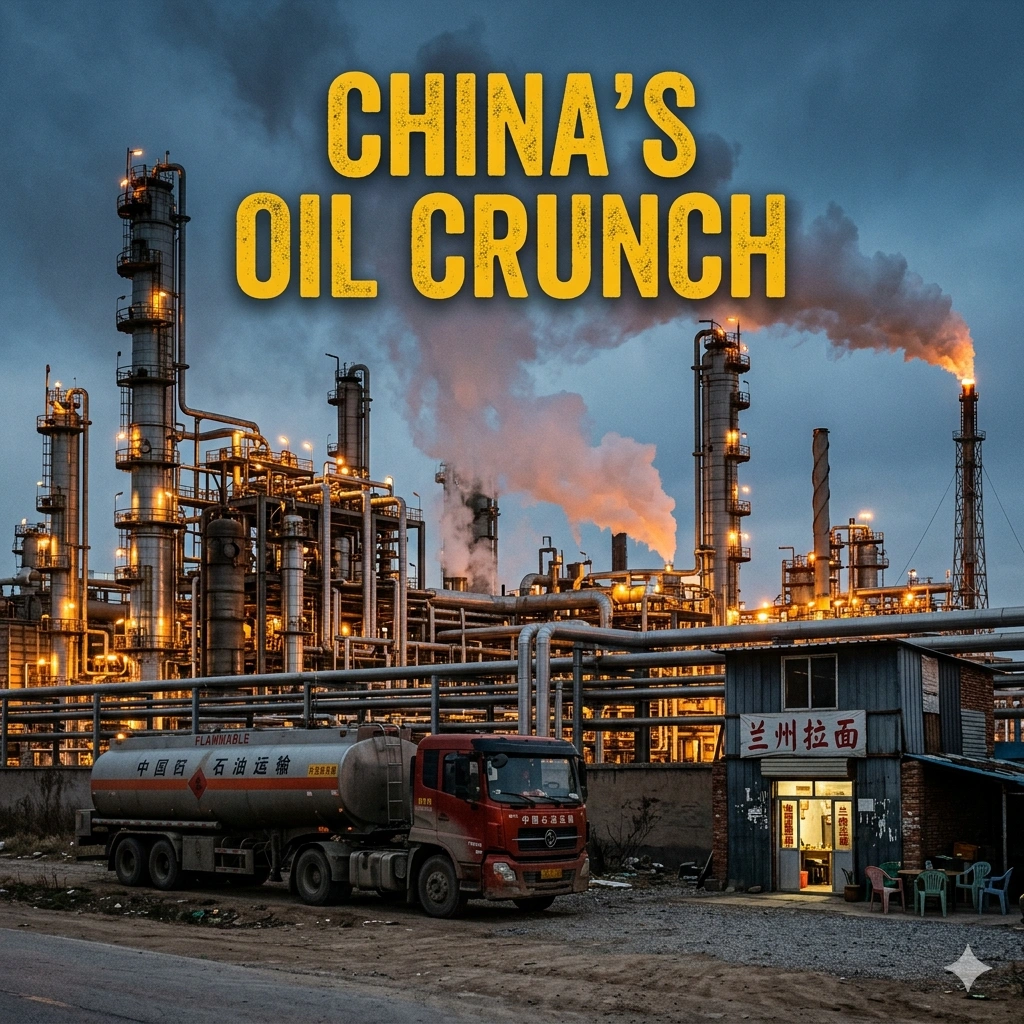
China’s teapot refineries
The China’s teapot refineries are currently grappling with the most significant financial headwind in their history due to the near-total disappearance of the Iranian oil discount. Historically, these independent refiners could count on a substantial price gap between sanctioned Iranian light crude and the global Brent benchmark. This gap, which often exceeded ten dollars per barrel, provided the necessary cushion to cover the higher logistics and middleman costs associated with “dark fleet” shipping. Now that this discount has plummeted to a mere two dollars, the fundamental business model of these refineries is effectively broken.
Without the massive savings provided by discounted crude, the China’s teapot refineries find it nearly impossible to compete with state-owned enterprises that benefit from larger economies of scale. These smaller plants lack the sophisticated deep-conversion units found in modern mega-refineries, meaning they require a lower feedstock cost to remain profitable. The disappearance of the “sanctioned oil premium” means that every barrel processed at a Shandong facility now carries a much higher risk of financial loss. Consequently, many independent operators have been forced to reduce their run rates to the lowest levels seen since the early pandemic era.
The strategic importance of China’s teapot refineries to the regional economy of Shandong cannot be overstated, as they support hundreds of thousands of ancillary jobs. From specialized trucking fleets to local maintenance contractors, the entire ecosystem is built around the consistent throughput of these private processing hubs. If the China’s teapot refineries continue to face these crushing input costs, the resulting layoffs could lead to significant social and economic instability in the province. Local officials are reportedly in talks with central planners to determine if any temporary tax relief can be provided to stave off a total industrial collapse.
Vanishing Discounts on Iranian Crude Oil
The primary driver behind the current struggle of China’s teapot refineries is the dramatic tightening of the Iranian oil market following the recent regional conflicts. As the U.S.-Israel-Iran tensions escalated, the logistical risks of transporting oil through the Strait of Hormuz skyrocketed, leading to higher insurance and freight premiums. These added costs have been passed directly to the independent buyers, effectively eating away at the discount that previously incentivized the trade. For the China’s teapot refineries, the math no longer adds up when the cost of risk exceeds the benefit of the bargain.
Furthermore, the global demand for any available crude has increased, allowing Iranian exporters to demand prices closer to international market rates. This shift has left the China’s teapot refineries in a defensive position, as they have few alternative sources of cheap feedstock that do not involve the U.S. dollar. Unlike the major state-run firms that can pivot to Russian or African grades through official channels, the teapots are often locked into specific supply chains. The loss of their primary competitive advantage is forcing a radical reassessment of their procurement strategies for the remainder of 2026.
Industry observers note that the China’s teapot refineries are also facing increased scrutiny from international maritime regulators, which adds another layer of cost to their operations. The “shadow fleet” of tankers used to move Iranian oil is facing stricter enforcement and higher maintenance requirements, further narrowing the profit margins. When the China’s teapot refineries calculate the total cost of delivery including these hidden fees, the final price is often higher than the prevailing local market rate for refined products. This inverted margin environment is unsustainable for any private business, regardless of its size or strategic niche.
Impacts of the Strait of Hormuz Closure
The effective closure of the Strait of Hormuz has sent shockwaves through the supply lines of China’s teapot refineries, creating a physical bottleneck that is difficult to bypass. Since a vast majority of the “dark” oil destined for Shandong must pass through this narrow waterway, the military tensions have resulted in significant delays and diversions. For the China’s teapot refineries, these delays translate directly into higher demurrage charges and increased capital tied up in floating inventory. The unpredictability of arrivals makes it nearly impossible for refinery managers to plan their production cycles with any degree of accuracy.
- Shipping insurance for vessels traversing the Persian Gulf has increased by over 300% in the last month.
- Alternative routes for oil delivery add thousands of miles and several weeks to the standard transit time for Shandong-bound tankers.
- Increased patrols by international naval forces have made it more difficult for “ship-to-ship” transfers to occur undetected in traditional staging areas.
The physical scarcity of prompt-loading Iranian barrels has forced some of the China’s teapot refineries to look toward more expensive domestic domestic crude or Russian grades. However, switching feedstocks is not always a seamless process for older refineries designed for specific crude qualities. The China’s teapot refineries often lack the flexibility to process heavier or more acidic blends without damaging their equipment or reducing their yield of high-value products. This technical limitation further traps them in a cycle of high costs and diminishing returns as the maritime crisis persists.
Labor Market Strain in Shandong Province
The economic pressure on China’s teapot refineries is manifesting in a painful way for the local workforce, with reports of widespread salary cuts and reduced hours. In industrial hubs like Dongying and Weifang, the refinery gate is the heartbeat of the community, and its slowing pulse is felt in every local business. Workers at the China’s teapot refineries are seeing their bonuses slashed and their overtime eliminated as companies scramble to preserve cash. This reduction in purchasing power is already leading to a noticeable slowdown in the local service economy and retail sectors.
At major plants such as Luqing Petrochemical, the mood is reportedly somber as the management communicates the necessity of “austerity measures” to survive the year. The China’s teapot refineries have historically been seen as stable employers, offering better wages than typical manufacturing jobs in the region. Now, the fear of permanent layoffs is hovering over the workforce, as many plants are operating at only 40% to 50% of their nameplate capacity. If the China’s teapot refineries cannot find a way to lower their crude costs, the social contract between these firms and their employees may begin to fray.
- Average monthly take-home pay for refinery technicians has dropped by approximately 15% since the conflict began in February.
- Ancillary businesses, such as industrial cleaning and specialized logistics, have reported a 30% drop in contract renewals from the refineries.
- Local government tax revenues, which heavily depend on the output of the China’s teapot refineries, are projected to fall short of annual targets.
Government Intervention and Fuel Subsidies
In response to the crisis facing China’s teapot refineries, the central government has stepped in with significant retail fuel subsidies to prevent inflation from spiraling. By subsidizing the price at the pump by up to 50%, the state is protecting consumers from the true cost of the global oil spike. However, this policy does little to help the China’s teapot refineries themselves, as it effectively caps the price at which they can sell their finished products. The refineries are caught in a “price jaws” effect: paying near-market rates for crude while receiving capped prices for their gasoline and diesel.
The intervention highlights a difficult balancing act for Beijing, which wants to maintain social stability while also reforming the inefficient energy sector. While the subsidies prevent a public outcry over fuel prices, they place the China’s teapot refineries in a position where they are essentially subsidizing the public out of their own dwindling reserves. Many analysts believe that the government may be intentionally allowing the China’s teapot refineries to struggle as a way to force consolidation into larger, state-aligned groups. This “survival of the fittest” approach could lead to a more streamlined but less competitive private refining landscape.
The China’s teapot refineries are also finding it harder to access credit from local banks, which are becoming wary of the sector’s rising insolvency risk. Without the ability to bridge their cash flow gaps through short-term loans, the China’s teapot refineries are finding it difficult to purchase the very crude they need to stay operational. The government’s focus on supporting the consumer has left the private refiner in a precarious middle ground, lacking the “too big to fail” status of Sinopec or PetroChina. This lack of a financial safety net is perhaps the greatest threat to the continued existence of the independent refinery model in China.
Long Term Threats from Electric Vehicles
While the immediate focus of the China’s teapot refineries is on the Iranian oil crisis, the rapid adoption of electric vehicles (EVs) represents a permanent structural threat. China is the world leader in EV sales, and the displacement of traditional internal combustion engines is accelerating faster than most industry projections. For the China’s teapot refineries, this means that even if the oil discounts return, their primary market is slowly but surely disappearing. The strategic landscape is shifting from a struggle for supply to a desperate search for future demand.
- EV market share in China is expected to surpass 50% of new car sales by the end of the next year.
- Expansion of high-speed rail and electric public transport is reducing the demand for long-haul diesel fuel across the country.
- New environmental regulations are making it more expensive for older China’s teapot refineries to comply with emissions standards.
The China’s teapot refineries must now decide whether to invest billions in upgrading their facilities to produce petrochemicals and specialty plastics or to face a slow decline. Petrochemical production offers a potential lifeline, as demand for high-end polymers remains strong even in a decarbonizing economy. However, the capital required for such a pivot is immense, and many of the China’s teapot refineries are already drowning in debt from previous expansions. The transition to a post-oil world is no longer a theoretical concern for these operators; it is a clear and present danger that requires immediate action.
Strategic Shifts and Future Outlook
The future of China’s teapot refineries will likely be defined by their ability to adapt to a world of higher transparency and lower carbon intensity. Some of the more resilient independent firms are already looking to diversify their energy portfolios by investing in hydrogen production or carbon capture technologies. For the majority of the China’s teapot refineries, however, the path forward involves joining larger industrial conglomerates that can provide the necessary scale and political protection. The era of the “lone wolf” independent refiner in Shandong may be coming to an end as the global and domestic pressures converge.
Despite the current gloom, the China’s teapot refineries have proven to be remarkably resilient in the past, surviving multiple rounds of regulatory crackdowns and tax audits. Their ability to find niche markets and operate with lower overhead than state giants remains a core strength if they can solve the feedstock problem. If the China’s teapot refineries can successfully navigate the current Iranian oil crisis, they may emerge as leaner and more specialized players in the global energy market. The coming months will be a critical test of their ingenuity and their willingness to transform in the face of overwhelming odds.
Ultimately, the story of the China’s teapot refineries is a microcosm of the broader challenges facing the global energy transition and the shifting geopolitical order. As long as there is a need for liquid fuels, there will be a role for refineries, but the terms of engagement have changed forever. The China’s teapot refineries must now operate in a world where geopolitical discounts are no longer guaranteed and where the environmental cost of business is finally being accounted for. Whether they can bridge the gap to a more sustainable future remains the most pressing question for the industry and the millions who depend on it.
Economic Resilience in the Refining Heartland
The China’s teapot refineries are also exploring new ways to enhance their operational efficiency through digital transformation and AI-driven process optimization. By reducing waste and improving the yield of high-value products, some plants hope to offset the loss of the Iranian oil discount through sheer technical performance. These innovations are being supported by local tech hubs in Shandong, creating a new intersection between traditional heavy industry and modern software solutions. For the China’s teapot refineries, the “smart refinery” model might be the only way to maintain a competitive edge in a high-cost environment.
Furthermore, the China’s teapot refineries are increasingly looking toward the export market to find higher margins for their refined products. While domestic prices are capped, the international market for gasoline and jet fuel remains lucrative, provided the refineries can secure the necessary export quotas from the central government. Gaining these quotas is often a political process, but it represents a vital “escape valve” for the China’s teapot refineries when domestic demand is weak. This outward-looking strategy signals a significant shift in the focus of the Shandong independent refining sector toward global integration.
The China’s teapot refineries are currently at a crossroads where the decisions made by management today will echo for decades. The loss of cheap Iranian oil is a painful catalyst for change, forcing a long-overdue reckoning with the realities of the modern energy market. While the road ahead is fraught with risk, the China’s teapot refineries have the opportunity to reinvent themselves as modern, efficient, and diversified energy providers. The world is watching to see if these industrial icons can withstand the heat or if the “teapots” will finally boil over in the face of unprecedented global pressure.
Analyzing the Global Supply Chain Shifts
The China’s teapot refineries are deeply integrated into a global supply chain that is currently undergoing a massive reorganization. As Western nations move to diversify away from traditional energy sources, the movement of oil is becoming more opaque and complex, creating both risks and opportunities. For the China’s teapot refineries, navigating this “new world order” requires a sophisticated understanding of international law, maritime logistics, and currency fluctuations. The days of simple, straightforward oil trades are gone, replaced by a high-stakes game of geopolitical chess.
- The rise of “middleman” nations in Southeast Asia has provided new hubs for the blending and rebranding of oil destined for the China’s teapot refineries.
- Digital tracking of carbon footprints is becoming a requirement for refined products, even those sold in domestic Chinese markets.
- The use of local currencies like the Yuan for international oil trades is increasing, helping the China’s teapot refineries bypass some traditional financial hurdles.
In this environment, the China’s teapot refineries that can most effectively manage their logistics and compliance risks will be the ones that survive. The current crisis is a Darwinian event, weeding out the most inefficient and poorly managed plants while rewarding those with foresight and flexibility. The China’s teapot refineries are no longer just local factories; they are participants in a global energy drama that spans continents and affects millions. Their survival is not just a matter of local economics, but a testament to the enduring complexity of the global pursuit of energy.
The China’s teapot refineries remain a fascinating and essential part of the global energy landscape, embodying the tension between private enterprise and state control. As they battle surging costs and vanishing discounts, their struggle offers valuable lessons for other industries facing similar geopolitical disruptions. The China’s teapot refineries are a reminder that in the world of energy, nothing is permanent, and the only constant is the need for adaptation. Whether through government support, technological innovation, or strategic consolidation, the independent refiners of Shandong will continue to play a pivotal role in shaping China’s industrial future.
For more details & sources visit: The Guardian
Read more about China news on 360 News Orbit – China.