
Since the escalation of the regional conflict in early March 2026, the humanitarian landscape has shifted dramatically, leading to a Lebanese migration crisis that has caught the attention of global relief agencies. The International Organization for Migration (IOM) has confirmed that approximately 130,000 individuals have crossed the border from Lebanon into Syria to escape relentless airstrikes.
This sudden movement represents a historical reversal of migration patterns, as Syrian nationals who once sought refuge in Lebanon are now returning to their homeland. The volatile nature of the U.S.-Israel-Iran war has turned previously stable Lebanese cities into high-risk zones, forcing families to make impossible choices. This mass displacement is characterized by a sense of urgency and desperation as the conflict expands toward critical infrastructure.
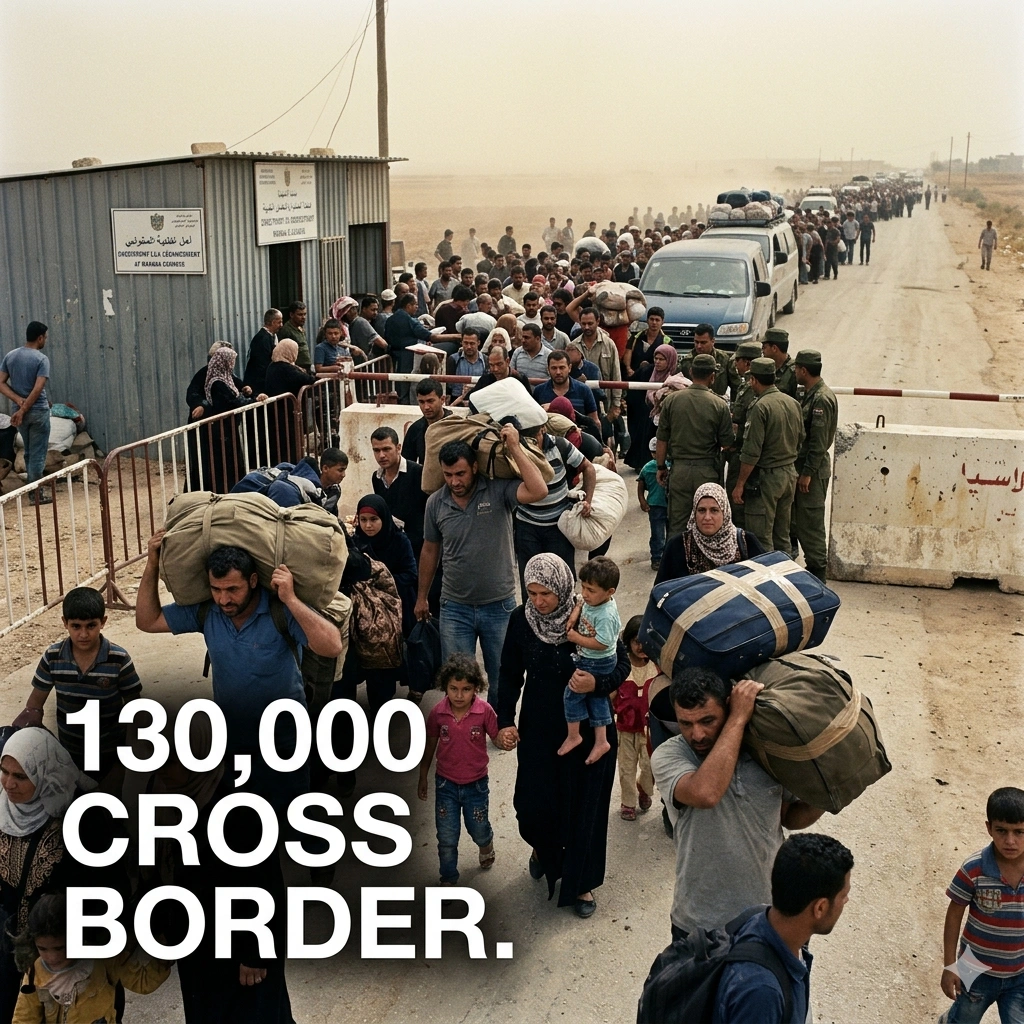
Lebanese migration crisis deepens as border crossings surge
The Lebanese migration crisis is currently defined by the massive flow of displaced people at the Syrian border recorded between March 2 and March 18. Most of these individuals are Syrian nationals who had been living in Lebanon for years but are now returning to a country still stabilizing after the 2024 political shifts. These returnees are entering a landscape that is still recovering, making their reintegration a complex humanitarian challenge. They are largely reliant on the hospitality of relatives or the limited capacity of temporary shelters near the frontier.
The sheer volume of people moving across the border has put immense pressure on transit points that were not designed for such heavy traffic. International aid workers describe scenes of long queues and families carrying only their most essential belongings in the heat. The Lebanese migration crisis is not just a logistical hurdle but a psychological one, as many of these people are fleeing war for the second or third time in their lives. The lack of a permanent ceasefire in the region means that these movements are likely to continue as long as the aerial bombardments persist.
Resources at the border are being stretched to their absolute breaking point, with a desperate need for cash and food assistance. The IOM has noted that while the Syrian government is attempting to facilitate the entry of its own citizens, the infrastructure to support them is lacking. This creates a secondary crisis within the returnee population, where health and nutrition are at risk. The Lebanese migration crisis is therefore a multi-layered emergency that requires a coordinated international response to prevent a total collapse of the border management system.
Barriers for Lebanese citizens seeking safety
While Syrian nationals are returning home, Lebanese citizens facing the Lebanese migration crisis encounter much stricter entry requirements when attempting to cross into Syria. Syrian authorities currently demand proof of property ownership or documented family ties before allowing Lebanese nationals to settle even temporarily. This has left many Lebanese families trapped in a “no-man’s land” near the border, unable to move forward and too terrified to return to their homes. These administrative hurdles add a layer of bureaucracy to an already life-threatening situation.
For those who do not meet these strict criteria, the internal displacement within Lebanon is the only other option available. This has led to a concentration of over one million internally displaced persons (IDPs) within Lebanese borders, primarily fleeing from southern villages and parts of Beirut. The Lebanese migration crisis is thus bifurcated between those who can leave the country and those who are forced to hide in overcrowded schools and public buildings. The strain on Lebanon’s internal resources is catastrophic, with the national grid and water supply unable to keep up with the demand.
The distinction between “precautionary” and “permanent” movement is also blurring as the conflict shows no signs of abating. Many who initially viewed their departure as a temporary safety measure are now beginning to look for more permanent housing solutions in Syria. This shift suggests that the Lebanese migration crisis could have long-term demographic impacts on both nations. The psychological toll on Lebanese citizens who feel rejected by their neighbors adds to the overall sense of regional instability and despair.
Lebanese migration crisis
The Lebanese migration crisis is the most pressing humanitarian issue in the Levant today, requiring immediate attention from the United Nations and regional powers. As the war between the U.S., Israel, and Iran intensifies, the safety of civilians must remain the primary focus of all diplomatic efforts. The IOM emphasizes that these movements are a direct result of the kinetic strikes targeting Hezbollah infrastructure and energy sectors. The visual of thousands of people moving through dusty border crossings highlights the human cost of this high-stakes military theater.
- Provide immediate cash assistance to families at the border.
- Establish mobile health clinics to treat exhaustion and injuries.
- Negotiate the relaxation of entry requirements for Lebanese nationals.
- Supply temporary shelter materials like tents and blankets.
Without these interventions, the Lebanese migration crisis will only worsen, potentially leading to a breakdown in border security. The international community has a responsibility to ensure that those fleeing violence are met with dignity and support. Every day that the conflict continues, more families are forced to join the exodus toward the Syrian border. The resilience of the displaced is being tested, but their strength alone cannot overcome the lack of food, water, and basic medical care.
Humanitarian impact on Syrian returnees
For the Syrian nationals involved in the Lebanese migration crisis, the return to Syria is a bittersweet journey filled with uncertainty. Many are returning to areas that were devastated during previous conflicts and have yet to be fully rebuilt. The collapse of the old regime in late 2024 provided a glimmer of hope for stability, but the current regional war threatens to derail that progress. These returnees are often arriving with no assets, having left their jobs and homes in Lebanon in a matter of hours.
The dependence on relatives is a significant feature of this specific wave of the Lebanese migration crisis. Unlike traditional refugee camps, many of these 130,000 people are being absorbed into existing households, which creates a “hidden” humanitarian crisis. Overcrowded homes lead to poor sanitary conditions and increased competition for scarce food supplies in Syrian villages. This community-based hosting is noble but unsustainable without significant external support from global NGOs and the IOM.
Furthermore, the threat of air strikes is not entirely absent in Syria, as regional players continue to target various factions across the border. This means that the Lebanese migration crisis does not necessarily end once the border is crossed; it merely changes in its nature. The returnees must navigate a landscape of shifting alliances and potential military targets while trying to find a sense of normalcy. The international community’s failure to provide a safety net for these people would be a catastrophic oversight in the current geopolitical climate.
Internal displacement and the siege of Beirut
While the border crossings dominate the news, the internal aspect of the Lebanese migration crisis is equally devastating for the population. Beirut, once a bustling Mediterranean hub, has seen entire neighborhoods emptied as residents flee Israeli strikes. The infrastructure of the capital is under immense pressure, with hundreds of thousands of people seeking shelter in the northern and mountain regions. This internal movement has created a logistical nightmare for the Lebanese government, which is already struggling with a pre-existing economic collapse.
The Lebanese migration crisis has turned schools and community centers into makeshift refugee camps where families live in cramped conditions. There is a severe shortage of clean water and medicine, leading to fears of an outbreak of preventable diseases. Local volunteers are doing their best to provide meals, but the scale of the displacement is simply too large for grassroots organizations to handle alone. The targeting of infrastructure has also made it difficult to transport aid to those who need it most within the country.
The psychological impact on the Lebanese people is profound, as they watch their nation’s progress being erased by a conflict they did not choose. The Lebanese migration crisis is a visual representation of a country being torn apart by regional proxy wars. Many residents express a feeling of abandonment, as they perceive the world’s attention to be focused on the military maneuvers rather than the human suffering. Restoring a sense of security will take years, even if a ceasefire were to be signed tomorrow.
The role of the International Organization for Migration
The IOM has been the primary source of data and logistics management during the Lebanese migration crisis, providing a vital link between the ground reality and the global community. Their reports have been essential for tracking the flow of 130,000 people and identifying the most vulnerable groups, such as unaccompanied minors and the elderly. By maintaining a presence at the border, the IOM is able to provide a degree of protection and advocacy for those in transit. Their work is often dangerous, as border areas remain high-risk zones for military activity.
Funding for the IOM’s operations is a critical component of managing the Lebanese migration crisis effectively. The agency has called for millions in emergency funding to cover the costs of transportation, food, and basic healthcare for the displaced. Without this financial support, the agency will be forced to scale back its operations at a time when they are needed most. The Lebanese migration crisis is a test of the international humanitarian system’s ability to respond to rapid-onset emergencies in a complex war zone.
Collaborative efforts between the IOM and the Syrian Arab Red Crescent are also underway to manage the influx of returnees. This cross-border cooperation is one of the few silver linings in the current situation, demonstrating that humanitarian needs can sometimes transcend political divisions. However, the sheer scale of the Lebanese migration crisis means that even the best-coordinated efforts are struggling to keep up with the demand for services. Continued international advocacy is necessary to keep the border open and safe for all those seeking refuge.
Economic consequences of the mass exodus
The economic ramifications of the Lebanese migration crisis are being felt across the entire Middle East. Lebanon has lost a significant portion of its labor force in just a few weeks, which will have a long-term impact on its ability to recover. Many of the 130,000 who fled were skilled workers or small business owners who contributed to the local economy. Their departure leaves a vacuum that will be difficult to fill, especially given the damage to the country’s physical infrastructure.
In Syria, the influx of people is putting a strain on a currency that is already fragile. The increased demand for basic goods has led to price spikes in border towns, making it harder for the local population to afford necessities. The Lebanese migration crisis is essentially exporting inflation and resource scarcity from one war-torn nation to another. This economic contagion is a major concern for regional leaders who are trying to maintain a semblance of order amidst the chaos of the U.S.-Iran conflict.
- Loss of agricultural labor in Southern Lebanon.
- Spike in housing prices in safe zones in Syria.
- Decline in regional trade due to closed or congested border routes.
- Increased reliance on international aid, creating a long-term debt cycle.
The recovery process for both nations will be inextricably linked to how the Lebanese migration crisis is managed in its early stages. If the displaced are allowed to fall into extreme poverty, it could sow the seeds for future social unrest and further instability. Addressing the economic needs of the displaced is therefore a security imperative as much as it is a humanitarian one.
Regional security and the threat to civilians
The Lebanese migration crisis is a direct indicator of the deteriorating security situation in the Levant. As long as the war between the major powers continues, the risk to civilians will only increase. The use of high-tech weaponry and targeted strikes means that no area is truly safe, driving the constant movement of people seeking refuge. The Lebanese migration crisis is a warning that the regional conflict has reached a point where the civilian population can no longer coexist with the level of military activity.
There is a growing fear that the displacement could become permanent if the conflict drags on for several years. Historical precedents in the region show that once people leave their homes during a war, the path to returning is often blocked by political and physical obstacles. The Lebanese migration crisis could result in a permanent shift in the demographic makeup of Lebanon and Syria, with lasting consequences for the social fabric of both countries. Protecting the right to return is a key demand of humanitarian organizations working in the area.
Military commanders must also take the Lebanese migration crisis into account when planning operations. The presence of millions of displaced people on the roads and in temporary shelters makes the risk of “collateral damage” extremely high. Ensuring that humanitarian corridors remain open and that civilian infrastructure is protected is a legal and moral obligation under international law. The Lebanese migration crisis serves as a stark reminder that the true cost of war is measured in human lives and shattered families.
Future outlook and the path to stability
The resolution of the Lebanese migration crisis is entirely dependent on a de-escalation of the regional war. Without a comprehensive peace agreement involving the U.S., Israel, and Iran, the cycle of displacement will continue. The international community must move beyond providing aid and start addressing the root causes of the conflict. The Lebanese migration crisis is a symptom of a much larger geopolitical failure that has left millions of people at the mercy of military strategists.
In the short term, the focus must remain on the 130,000 individuals who have already crossed the border and the million more who are displaced internally. Providing them with the basic necessities of life is the first step toward restoring their dignity. The Lebanese migration crisis is a challenge that no single nation can solve alone, but through collective action, the worst of the suffering can be mitigated. The resilience of the people of Lebanon and Syria has been proven time and again, but they should not have to face this trial without the support of the world.
As we look toward the end of March 2026, the hope is that the flow of people will slow down and the process of rebuilding can begin. However, the situation remains extremely volatile, and the Lebanese migration crisis could enter a new, even more dangerous phase if the strikes on nuclear or energy infrastructure continue. For now, the world watches the Syrian border, where the faces of 130,000 people tell the story of a region on the brink. Every effort must be made to ensure that their journey leads to safety rather than further tragedy.
Summary of the humanitarian response
The Lebanese migration crisis has forced a massive reorganization of humanitarian priorities in the Middle East. The IOM and its partners are working tirelessly to provide a safety net for the 130,000 people who have fled Lebanon for Syria. This crisis is a reminder of the fragility of peace and the speed at which a civilian population can be displaced. By focusing on the Lebanese migration crisis, we acknowledge the human suffering that often gets lost in the headlines of military maneuvers and geopolitical posturing.
The road ahead is long and filled with challenges, but the immediate response to the Lebanese migration crisis has shown that there is still a global commitment to humanitarian principles. The displaced people deserve more than just survival; they deserve a future where they can live in peace in their own homes. Until that day comes, the support of the international community is their only lifeline. The Lebanese migration crisis is a call to action for everyone who believes in the sanctity of human life and the importance of regional stability.
For more details & sources visit: Arab News (citing IOM)
Read more about Syria news on 360 News Orbit – Syria.