
The Indonesian government is currently navigating a complex global economic landscape by implementing the Indonesia fiscal resilience policy to maintain a state budget deficit below the critical 3% threshold. This strategic framework, orchestrated by Coordinating Minister Airlangga Hartarto and President Prabowo Subianto, emerges as a response to intensifying international conflicts that threaten energy security and commodity pricing.
By integrating a mandatory work-from-home initiative with an aggressive expansion of domestic energy production, the administration seeks to insulate the national treasury from external shocks. These measures are designed to take full effect following the Eid al-Fitr celebrations, marking a significant shift in how the nation manages its resources. The policy emphasizes a “tighten the belt” philosophy, ensuring that the domestic economy remains robust despite the ongoing disruptions in global supply chains and the volatile nature of the international oil market.
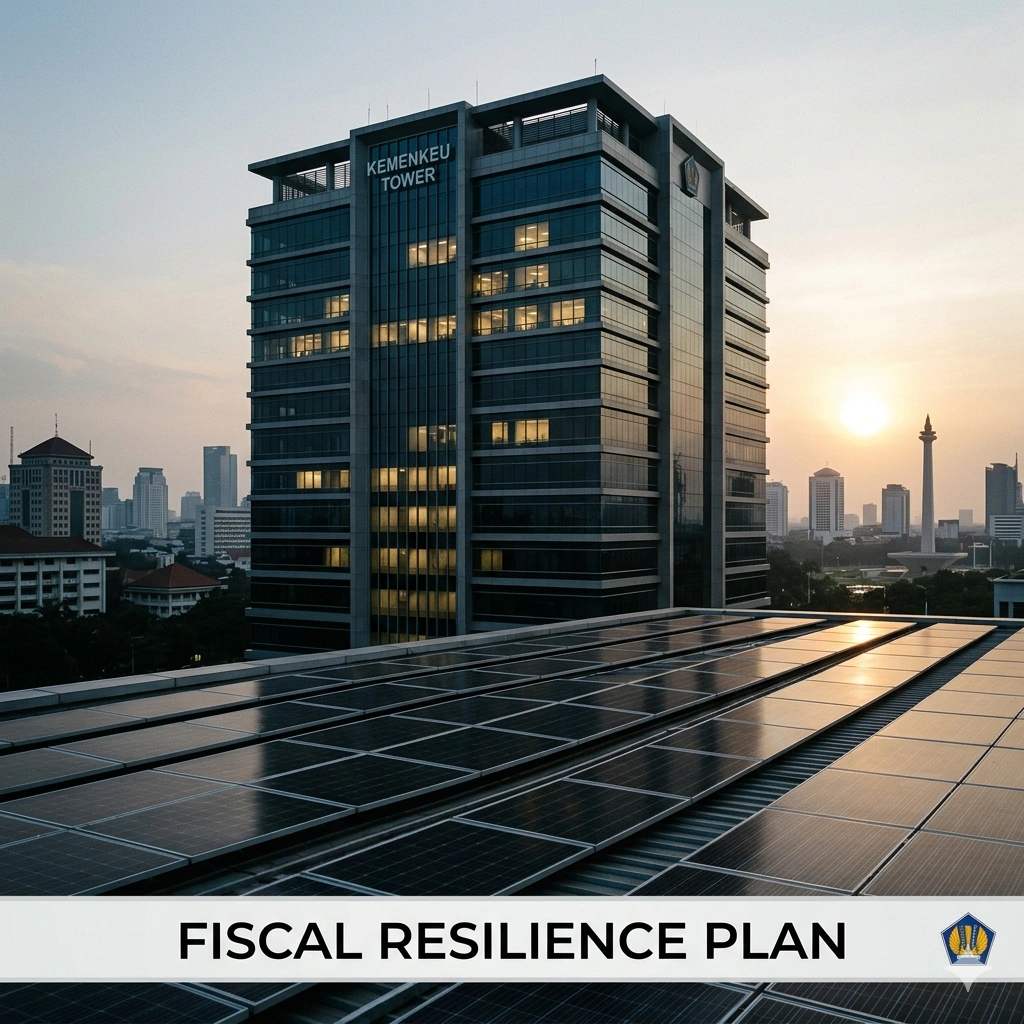
Understanding the Indonesia Fiscal Resilience Policy
The Indonesia fiscal resilience policy represents a comprehensive blueprint aimed at safeguarding the nation’s financial health against the ripple effects of the U.S.-Israel-Iran conflict. Central to this strategy is the preservation of the state budget’s integrity, ensuring that government spending remains within sustainable limits while maximizing revenue streams from the extractive sector. By focusing on internal efficiency, the government intends to create a buffer that can absorb the impact of rising import costs and fluctuating currency values.
Government officials have highlighted that this policy is not merely a temporary fix but a long-term adjustment to the new global economic reality. The integration of various sectors, from labor to energy, demonstrates a holistic approach to fiscal management that prioritizes national stability over short-term convenience. As the administration prepares for the implementation phase, the emphasis remains on agility and the ability to pivot strategies based on real-time economic data and geopolitical developments.
The success of the Indonesia fiscal resilience policy hinges on the seamless coordination between central and regional authorities, as well as the cooperation of the private sector. By setting clear targets for deficit reduction and energy conservation, the state provides a roadmap for sustainable growth that other emerging economies might look to emulate. This proactive stance is essential for maintaining investor confidence and ensuring that the rupiah remains stable in a period of significant global uncertainty.
Indonesia Fiscal Resilience Policy
The implementation of the Indonesia fiscal resilience policy serves as the cornerstone of President Prabowo’s economic agenda for the 2026 fiscal year. This specific mandate requires all ministries to prioritize cost-cutting measures and revenue-generating activities that align with the broader goal of deficit control. By codifying these measures into a formal policy, the government provides a clear legal and operational framework for all state-affiliated entities to follow.
One of the primary objectives within the Indonesia fiscal resilience policy is the optimization of state-owned enterprises to ensure they contribute more effectively to the national treasury. This includes restructuring debt, improving operational efficiency, and exploring new markets for Indonesian exports. The policy also outlines strict guidelines for government procurement, aiming to reduce waste and ensure that every rupiah spent contributes directly to national economic growth.
Furthermore, the Indonesia fiscal resilience policy addresses the need for social safety nets to protect the most vulnerable populations from the impact of rising commodity prices. By balancing fiscal discipline with targeted social spending, the government aims to maintain social stability while pursuing its macroeconomic objectives. This delicate balance is what defines the current administration’s approach to governance in a time of unprecedented global challenges and shifting geopolitical alliances.
Remote Work as a Tool for Fuel Conservation
A pivotal component of the Indonesia fiscal resilience policy is the introduction of a mandatory one-day-a-week work-from-home (WFH) policy for government and private sector employees. This initiative is strategically designed to slash fuel consumption across the archipelago, thereby reducing the state’s burden on fuel subsidies. Initial estimates suggest that this single day of reduced commuting could lower national fuel expenses by up to 20%, providing immediate relief to the state budget.
The transition to a hybrid work model under the Indonesia fiscal resilience policy is also expected to have positive externalities, such as reduced traffic congestion in major urban centers like Jakarta and Surabaya. By lowering the demand for gasoline and diesel, the government can effectively manage its energy reserves and reduce its reliance on expensive oil imports. This move is a practical application of fiscal prudence that leverages modern working habits to achieve macroeconomic stability.
Moreover, the WFH mandate within the Indonesia fiscal resilience policy encourages businesses to invest more heavily in digital infrastructure, which could lead to long-term productivity gains. As employees spend less time in transit, the potential for a better work-life balance emerges, which may indirectly support domestic consumption in other sectors. The government plans to monitor the impact of this policy closely to determine if additional remote work days are necessary to meet fiscal targets.
Coal Production Expansion and Export Tax Adjustments
To bolster the Indonesia fiscal resilience policy, the administration is accelerating coal production and revising export tax structures to capitalize on high global demand. Indonesia remains one of the world’s largest coal exporters, and the current global energy crisis presents a unique opportunity to increase state revenue through higher export volumes. By adjusting the levy on coal exports, the government can capture a larger share of the windfall profits generated by mining companies.
- Adjustment of coal production quotas to meet rising international demand from European and Asian markets.
- Revision of the progressive export tax to ensure that high commodity prices translate directly into state budget gains.
- Implementation of stricter monitoring for domestic market obligations (DMO) to ensure local energy needs are met first.
- Reinvestment of coal revenues into renewable energy projects to facilitate a long-term green transition.
The expansion of coal activities under the Indonesia fiscal resilience policy is a calculated move to ensure immediate liquidity for the state. While the global trend is shifting toward renewables, the Indonesian government recognizes the strategic importance of its coal reserves in maintaining fiscal solvency during periods of crisis. This “coal-for-fiscal-space” strategy allows the nation to fund other critical areas of the economy while keeping the deficit in check.
The role of coal in the Indonesia fiscal resilience policy is also tied to the stabilization of the national electricity grid. By ensuring a steady and affordable supply of coal for domestic power plants, the government can prevent sharp increases in electricity tariffs for households and industries. This stability is crucial for maintaining the competitiveness of Indonesian manufacturing and ensuring that the cost of living remains manageable for the general population.
Solar Power Acceleration via Danantara
The Indonesia fiscal resilience policy places a heavy emphasis on energy diversification, specifically through the acceleration of solar power projects managed by the sovereign wealth fund, Danantara. The goal is to rapidly convert existing diesel-fired power plants into solar-hybrid facilities, which significantly reduces the country’s dependence on imported fuel. This transition is not only environmentally responsible but is a core fiscal strategy to permanently lower the energy subsidy burden.
Danantara has been given a direct mandate to secure international partnerships and funding for these solar initiatives, ensuring that the transition does not drain the immediate state budget. By leveraging the Indonesia fiscal resilience policy, the fund can attract green financing from global investors who are keen on supporting Indonesia’s shift toward a lower-carbon economy. This move positions Indonesia as a leader in renewable energy adoption within the Southeast Asian region.
The focus on solar energy within the Indonesia fiscal resilience policy also includes the development of localized microgrids in remote areas of the country. By providing decentralized and renewable power sources, the government can reduce the logistical costs associated with transporting fuel to distant islands. This creates a more resilient energy infrastructure that is less susceptible to the price shocks of the global oil market, further securing the nation’s long-term fiscal outlook.
Austerity Measures and Cabinet Salary Cuts
In a symbolic yet impactful move, the Indonesia fiscal resilience policy includes potential salary cuts for cabinet members and high-ranking government officials. This “lead by example” approach is intended to demonstrate the administration’s commitment to fiscal discipline and to encourage a culture of efficiency throughout the bureaucracy. By streamlining executive spending, the government aims to redirect every available resource toward the Indonesia fiscal resilience policy objectives.
These austerity measures extend beyond salaries to include a rigorous review of official travel budgets, ceremonial expenses, and non-essential departmental projects. The Indonesia fiscal resilience policy demands that all government spending be scrutinized for its direct impact on economic stability and public welfare. This disciplined approach to budgeting is designed to ensure that the 3% deficit limit is not breached, even if global conditions worsen.
The public perception of these austerity measures is a critical component of the Indonesia fiscal resilience policy. By showing that the highest levels of government are willing to make sacrifices, the administration fosters a sense of national unity and shared responsibility. This social capital is essential when asking the private sector and the general public to adapt to new policies like the mandatory WFH day or changes in energy consumption habits.
Managing Global Geopolitical Risks
The overarching goal of the Indonesia fiscal resilience policy is to navigate the turbulent waters of international geopolitics, particularly the conflicts in the Middle East. These tensions have a direct impact on shipping lanes, oil prices, and global supply chains, all of which affect Indonesia’s import-dependent sectors. The policy acts as a shield, allowing the government to maintain a steady hand on the economy even when external factors are highly unpredictable.
- Developing alternative supply routes for essential imports like wheat, fertilizer, and specialized machinery.
- Strengthening bilateral trade agreements with non-aligned nations to diversify export destinations.
- Increasing national stockpiles of strategic commodities to prevent domestic shortages during supply chain disruptions.
- Enhancing maritime security to protect Indonesian waters and ensure the safety of vital shipping lanes.
Through the Indonesia fiscal resilience policy, the government is also addressing the challenges faced by the fisheries and aquaculture sectors, which have been hit by rising logistics costs. By providing targeted support and improving cold-chain infrastructure, the state aims to maintain the export competitiveness of Indonesian seafood. This proactive risk management is a testament to the comprehensive nature of the current fiscal strategy and its focus on long-term endurance.
Long-term Economic Stability and Outlook
Looking ahead, the Indonesia fiscal resilience policy is expected to lay the groundwork for a more self-sufficient and technologically advanced economy. By forcing an acceleration in digital work and renewable energy, the government is inadvertently fast-tracking the modernization of the national workforce and infrastructure. The fiscal discipline practiced today will likely result in a much stronger credit rating and lower borrowing costs for Indonesia in the future.
The resilience built through the Indonesia fiscal resilience policy will be tested in the coming months as the global economic environment continues to evolve. However, the diverse nature of the strategies employed—from coal exports to solar power and fuel conservation—provides multiple layers of protection. This multifaceted approach ensures that the Indonesian economy is not overly reliant on any single sector, making it one of the most stable markets in the region.
Ultimately, the Indonesia fiscal resilience policy is about more than just numbers on a balance sheet; it is about ensuring the continued prosperity of the Indonesian people. By maintaining a deficit below 3%, the government avoids the traps of excessive debt and high inflation, which have plagued other developing nations. The strategic foresight shown by the current administration in implementing the Indonesia fiscal resilience policy will likely be remembered as a turning point in the nation’s economic history.
Impact on Private Sector Operations
The private sector is a vital partner in the success of the Indonesia fiscal resilience policy, particularly regarding the implementation of hybrid work models. Many corporations have already begun aligning their operational strategies with the government’s WFH mandate, recognizing the potential for reduced overhead costs. This alignment between public policy and private interest is a key driver of the Indonesia fiscal resilience policy’s effectiveness in the corporate world.
However, the Indonesia fiscal resilience policy also presents challenges for industries that cannot easily transition to remote work, such as manufacturing and logistics. To address this, the government is offering incentives for energy-efficient upgrades and providing support for companies that demonstrate significant reductions in fuel usage. This inclusive approach ensures that the entire economy moves toward a more resilient and sustainable model, rather than leaving certain sectors behind.
- Provision of tax breaks for companies investing in solar panels and energy-efficient machinery.
- Grants for digital transformation projects that enable more effective remote work environments.
- Support for logistics firms to optimize their routes and reduce empty-mile fuel consumption.
- Workshops and training programs to help SMEs adapt to the changing economic landscape.
As the Indonesia fiscal resilience policy matures, the dialogue between the government and business leaders will be essential for refining these measures. By fostering a collaborative environment, the state can ensure that fiscal resilience does not come at the expense of business growth. Instead, the Indonesia fiscal resilience policy aims to create a more efficient and competitive private sector that is better equipped to handle future global economic shocks.
Strategic Role of Danantara in Fiscal Management
The emergence of Danantara as a central player in the Indonesia fiscal resilience policy marks a shift toward more sophisticated sovereign wealth management. By directing the fund to prioritize energy conversion and infrastructure, the government is effectively using its national wealth to generate long-term fiscal savings. This strategic use of capital is a core pillar of the Indonesia fiscal resilience policy, ensuring that the nation’s assets are working to stabilize the economy.
Danantara’s involvement in the Indonesia fiscal resilience policy also extends to the management of state-owned enterprises in the energy sector. By consolidating these assets under a single investment vehicle, the government can achieve greater economies of scale and drive innovation more effectively. This centralized approach allows for a more rapid deployment of resources toward the solar and renewable projects that are vital for reducing oil import dependency.
The transparency and governance of Danantara are also highlighted within the Indonesia fiscal resilience policy to maintain international investor confidence. By adhering to global standards of sovereign wealth fund management, Indonesia can attract the massive amounts of foreign direct investment required for its energy transition. This influx of capital is a critical secondary benefit of the Indonesia fiscal resilience policy, providing the liquidity needed to fund large-scale infrastructure projects without increasing the national debt.
Conclusion and Future Projections
In conclusion, the Indonesia fiscal resilience policy is a robust and necessary response to the volatile global economic environment of 2026. By combining immediate fuel-saving measures with long-term energy shifts and strict budget management, the Indonesian government is positioning the nation for continued growth. The commitment to keeping the deficit below 3% is a clear signal to the world that Indonesia is a responsible and stable economic actor.
As the Indonesia fiscal resilience policy continues to be rolled out, its success will depend on the government’s ability to remain flexible and responsive to new challenges. The lessons learned from this period of fiscal tightening will likely inform Indonesian economic policy for decades to come, leading to a more efficient, sustainable, and resilient nation. The Indonesia fiscal resilience policy stands as a testament to the power of proactive and integrated governance in the face of global uncertainty.
For more details & sources visit: Tempo.co
For the latest updates from Indonesia, visit our Indonesia news page.