
Antarctica Climate Future represents a critical crossroads for the planet as new scientific data outlines two divergent paths for the icy continent. A groundbreaking study led by Professor Bethan Davies at Newcastle University suggests that our current global emission pathways will dictate whether the Southern Ocean remains stable or collapses. The research emphasizes that aggressive emission cuts are the only way to preserve the current state of the polar ecosystem and prevent catastrophic shifts.
The scientific community is raising alarms as the world appears to be tracking toward a medium-to-high emission scenario. This trajectory puts global sea-level stability at immense risk, with the potential for irreversible environmental changes to occur within a human lifetime. Understanding the Antarctica Climate Future is no longer just a matter of polar preservation; it is a fundamental requirement for maintaining the climate balance of the entire inhabited world.
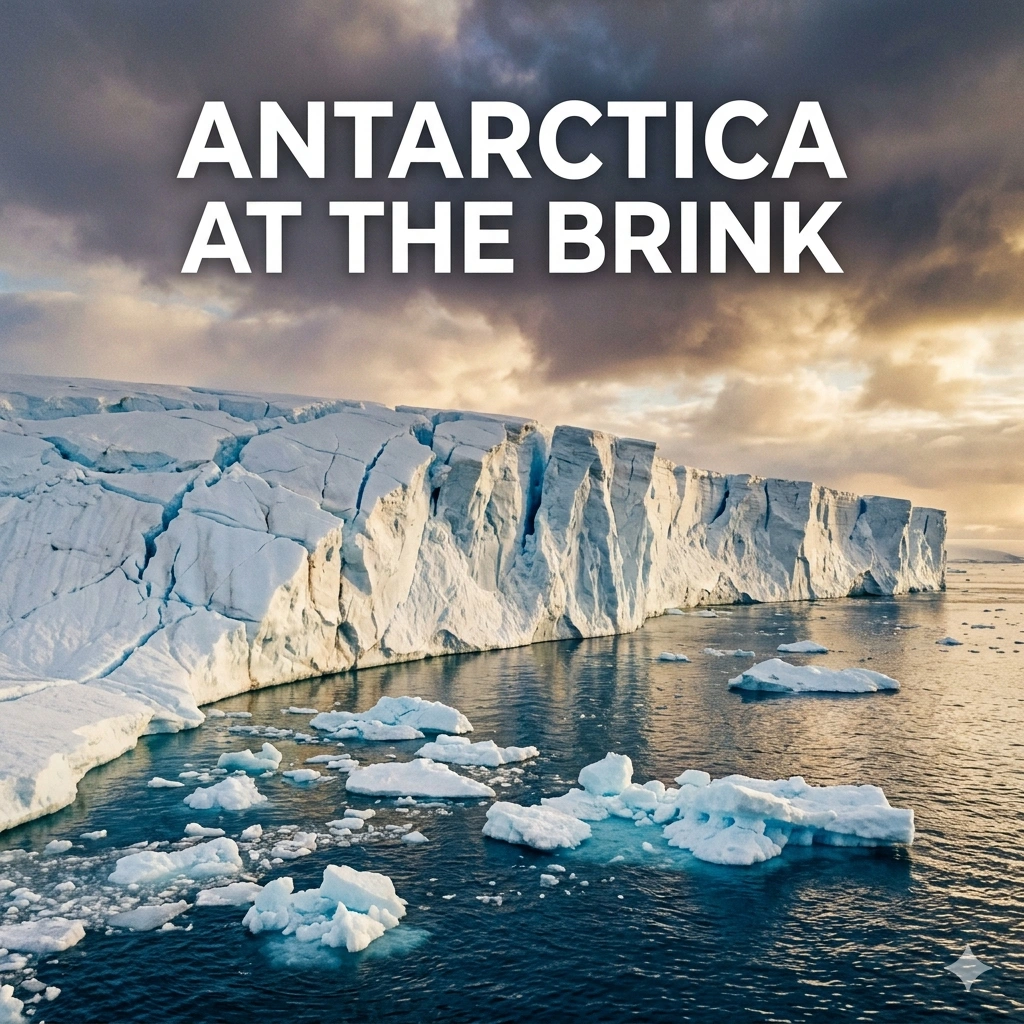
The Tipping Point for Antarctica Climate Future
Antarctica Climate Future is currently hovering at a dangerous tipping point that could redefine global geography by the year 2100. Scientists have modeled three distinct temperature scenarios that illustrate how sensitive the ice sheets are to atmospheric carbon levels. Under a low-emissions pathway, the continent might see a manageable 1.8 °C increase, which would allow the majority of the ice shelves to remain intact and functional.
However, the “business-as-usual” approach presents a much darker reality for the southern pole and the nations that rely on stable sea levels. If current trends continue, a 4.4 °C surge in temperature is projected, leading to the rapid disintegration of the Antarctic Peninsula. This level of warming would fundamentally alter the Antarctica Climate Future, shifting it from a stable ice-covered mass to a rapidly melting environment that contributes significantly to global flooding.
Sea Ice Loss and Antarctica Climate Future
The projected loss of sea ice is a primary concern for researchers studying the Antarctica Climate Future over the next several decades. High emission pathways are predicted to trigger a 20% loss in sea ice, a figure that experts describe as a catastrophic threshold for marine life. This reduction would not only destroy habitats for penguins and seals but also disrupt the Southern Ocean’s ability to reflect solar radiation away from the Earth.
When sea ice disappears, the darker ocean water absorbs more heat, creating a feedback loop that accelerates further melting. This cycle is a central component of the Antarctica Climate Future models that predict a collapse of weather patterns across the Northern Hemisphere. The loss of a fifth of the continent’s sea ice would effectively remove one of the planet’s most important cooling mechanisms, leading to more frequent and intense heatwaves globally.
Antarctica Climate Future
The stability of the Antarctic Peninsula is the most urgent variable in the Antarctica Climate Future equation today. Experts are particularly worried about the 1.5 °C threshold, a limit that many climate models suggest we are fast approaching. Exceeding this temperature in the peninsula region could lead to permanent environmental damage that cannot be reversed by future cooling efforts or carbon capture technologies.
The Southern Ocean acts as a massive heat sink, but its capacity is not infinite, and signs of stress are already appearing. As the peninsula warms, the frequency of extreme weather events in the region is expected to climb to unprecedented levels. Ensuring a positive Antarctica Climate Future requires an immediate international commitment to emission reduction targets that specifically account for the fragility of the West Antarctic ice sheet and its surrounding waters.
Global Sea Level Stability and Antarctica Climate Future
Maintaining global sea-level stability is directly tied to the Antarctica Climate Future and the preservation of its land-based ice. Unlike sea ice, the melting of massive glaciers on the continent contributes directly to rising oceans, threatening coastal cities from New York to Shanghai. The Newcastle University study highlights that a failure to curb emissions will lead to a surge in sea levels that could displace millions of people by the end of the century.
The research indicates that the current medium-to-high emission path is the most dangerous because it provides a false sense of security while structural damage occurs. While the ice may appear stable to the naked eye, the warming of sub-surface currents is hollowing out the glaciers from beneath. Securing a safer Antarctica Climate Future means addressing these hidden thermal changes before the ice shelves reach a point of mechanical failure and slide into the sea.
Irreversible Ecosystem Shifts in Antarctica Climate Future
The potential for irreversible ecosystem shifts is a haunting aspect of the Antarctica Climate Future research published this year. Martin Siegert and other leading glaciologists emphasize that once these systems pass their breaking point, they cannot be restored to their original state. The transition from a frozen desert to a moss-covered landscape would represent a total failure of the global climate regulation system that has existed for millennia.
- Loss of krill populations would cause a total collapse of the Antarctic food web.
- Disruption of deep-sea currents would stop the transport of nutrients to other oceans.
- Increased calving of icebergs would create new hazards for international shipping lanes.
- The migration of invasive species could permanently displace native Antarctic flora.
Temperature Scenarios and Antarctica Climate Future
The three temperature scenarios modeled for 2100 provide a clear roadmap of the Antarctica Climate Future based on human choices. These scenarios serve as a warning to policymakers that the window for action is closing rapidly. While a 1.8 °C rise is the goal of the Paris Agreement, the lack of aggressive implementation is pushing the world toward the 4.4 °C “business-as-usual” disaster.
Each degree of warming significantly compounds the risks associated with the Antarctica Climate Future. At lower temperatures, the ice remains largely grounded and stable, but as the heat increases, the structural integrity of the entire continent is compromised. This study proves that the Antarctica Climate Future is a direct reflection of global energy policies and the speed at which the world transitions away from fossil fuels and toward sustainable alternatives.
Scientific Consensus on Antarctica Climate Future
There is a growing scientific consensus that the Antarctica Climate Future is the most important environmental indicator of the 21st century. Research teams from around the world are collaborating to monitor ice thickness and water temperatures with increasing precision. Their findings consistently point toward the same conclusion: the southern continent is changing faster than previously thought, and our current protective measures are insufficient.
Professor Bethan Davies has noted that the divergent trajectories for the Antarctica Climate Future depend on immediate international cooperation. The “stark dual futures” described in her research are not inevitable, but they are becoming more likely as global emissions remain high. The scientific community is calling for a unified approach to polar protection that transcends national borders and prioritizes the long-term health of the global climate over short-term economic gains.
Impacts on Global Weather and Antarctica Climate Future
The Antarctica Climate Future will have a profound effect on global weather patterns, including the intensity of hurricanes and the duration of droughts. The cold air masses generated by the Antarctic ice sheet play a vital role in driving atmospheric circulation. If the continent warms significantly, these air currents will weaken, leading to more stagnant and extreme weather conditions in temperate zones across the globe.
Many people living far from the poles do not realize how much the Antarctica Climate Future dictates their local environment. From the timing of monsoon rains in Asia to the severity of winter storms in Europe, the southern ice sheet is the silent regulator of the world’s climate. Protecting this frozen landscape is therefore a matter of national security for every country, as no region is immune to the atmospheric changes triggered by a melting Antarctica.
Emission Reductions and Antarctica Climate Future
The only viable method to prevent a catastrophic collapse of the polar ecosystem is a radical reduction in global emissions. The Antarctica Climate Future is still within our control, provided that the international community acts before the 1.5 °C threshold is breached. This requires not just promises, but measurable decreases in carbon output from the world’s largest economies starting immediately.
- Phasing out coal and gas power plants is essential for a stable polar climate.
- Protecting the Southern Ocean from commercial exploitation helps maintain biodiversity.
- Investing in carbon removal technology may provide a safety net for the ice.
- Increasing funding for polar research ensures we have the data needed for early warnings.
The Role of International Law in Antarctica Climate Future
International law must evolve to better protect the Antarctica Climate Future as the continent faces new threats from warming and human activity. The Antarctic Treaty System has successfully managed the continent for decades, but it was designed for a different era of climate stability. New protocols are needed to address the rapid changes documented in the latest research and to ensure that no nation exploits the melting ice for resource extraction.
Stronger legal frameworks would provide a buffer for the Antarctica Climate Future by creating protected marine zones where ecosystems can recover from thermal stress. These legal protections must be paired with global enforcement of emission targets to be effective. Without a binding international commitment, the “stark dual futures” predicted by Professor Davies will likely tilt toward the more destructive path, leaving future generations to deal with a flooded and unstable world.
Humanity’s Legacy and Antarctica Climate Future
The Antarctica Climate Future will ultimately be the legacy of our current generation’s relationship with the environment. We are the first generation to fully understand the mechanics of polar melt and the last generation with a realistic chance to stop it. Deciding which trajectory the continent takes is a moral responsibility that extends beyond the realm of pure science or economics.
If we choose the path of preservation, the Antarctica Climate Future will remain one of a pristine, icy wilderness that keeps our oceans at bay. If we choose the path of inaction, we will be remembered as the architects of a global crisis that began at the bottom of the world. The stark dual futures are laid out before us; the research is clear, and the time for debating the reality of the situation has long since passed.
Regional Risks to the Antarctica Climate Future
Specific regions within the continent face unique risks that contribute to the overall Antarctica Climate Future outlook. The West Antarctic Ice Sheet is considered particularly vulnerable because much of it sits on land that is below sea level. This geographical quirk makes it susceptible to “marine ice sheet instability,” where warming ocean water can cause rapid and unstoppable retreat once a certain point is reached.
In contrast, East Antarctica was long thought to be more stable, but recent data included in the Antarctica Climate Future models suggests it too is feeling the heat. Small changes in the East can lead to massive sea-level contributions due to the sheer volume of ice stored there. This regional diversity means that a “one size fits all” approach to monitoring will not work; researchers must continue to probe every corner of the continent to predict the global impact accurately.
The Southern Ocean’s Role in Antarctica Climate Future
The Southern Ocean is the primary driver of the Antarctica Climate Future, acting as both a shield and a potential trigger for collapse. This body of water absorbs a vast majority of the excess heat trapped in the atmosphere by greenhouse gases. As the ocean warms, it transfers that energy to the base of the ice shelves, melting them from below and causing them to crack and splinter.
Changes in the Southern Ocean also affect the global “conveyor belt” of ocean currents. If the Antarctica Climate Future involves a significant freshening of the water due to ice melt, it could slow down the currents that bring warmth to the North Atlantic. This would lead to a paradoxical cooling in some parts of the world while the rest of the planet continues to bake, further complicating global climate adaptation efforts.
Future Research Directions for Antarctica Climate Future
Ongoing studies are essential to refine our understanding of the Antarctica Climate Future and provide better tools for policymakers. Scientists are now using autonomous underwater vehicles to map the undersides of ice shelves that were previously inaccessible. These high-tech missions are providing the data needed to calibrate the next generation of climate models and offer more precise timelines for sea-level rise.
- AI-driven modeling can predict ice shelf fractures weeks before they happen.
- Satellite observations are tracking the movement of meltwater lakes on the ice surface.
- Borehole sensors are measuring the temperature deep within the ancient ice sheets.
Economic Costs of a Failed Antarctica Climate Future
The economic consequences of a negative Antarctica Climate Future are staggering and often overlooked in policy debates. The cost of building sea walls and moving coastal infrastructure is estimated to be in the trillions of dollars. Furthermore, the disruption to global agriculture caused by changing weather patterns would lead to food insecurity and price volatility on a scale never seen before in modern history.
Investing in a positive Antarctica Climate Future is not just an environmental choice; it is a sound economic strategy. The cost of transitioning to a green economy is significantly lower than the cost of responding to a permanent global flood. Business leaders are beginning to recognize that their long-term interests are tied to the stability of the polar ice, leading to increased corporate support for aggressive climate action.
Antarctica Climate Future and Human Displacement
One of the most tragic outcomes of a poor Antarctica Climate Future would be the mass displacement of human populations. As sea levels rise, low-lying island nations and coastal deltas will become uninhabitable. This will create a global refugee crisis that will strain the resources and political stability of every nation on Earth. The research from Newcastle University makes it clear that the “stark dual futures” have real human faces attached to them.
Predicting the Antarctica Climate Future is, therefore, a task of humanitarian importance. By identifying the tipping points now, we can develop better migration and urban planning strategies for the future. However, the far better option remains the prevention of the melt altogether. The social and political costs of losing the Antarctic ice would be an unbearable burden for a global society already facing numerous other challenges.
Final Assessment of Antarctica Climate Future
In conclusion, the Antarctica Climate Future is the definitive environmental challenge of the 2026 era and beyond. The research led by Professor Bethan Davies provides a clear and urgent warning: we are currently on a path toward environmental disaster, but a safer alternative is still within our grasp. The 20% loss in sea ice and the 4.4 °C temperature surge are not inevitable destinies if we act with the necessary speed.
The Antarctica Climate Future will be decided by the actions taken in the next five to ten years. If we can achieve the low-emission pathway, we will preserve the world’s greatest cooling system and protect the future of coastal civilization. The choice is stark, the science is settled, and the responsibility lies with every individual, corporation, and government to ensure that the icy continent remains a frozen guardian of our planet.
Transitioning to a Stable Antarctica Climate Future
The transition to a stable Antarctica Climate Future requires a complete reimagining of our relationship with energy and nature. We must move beyond incremental changes and embrace a systemic shift toward sustainability. This includes not only reducing carbon but also protecting the wild places that remain, ensuring they have the resilience to withstand the changes already baked into the climate system.
As we look toward the year 2100, the Antarctica Climate Future serves as a mirror for our global values. Will we be a society that prioritized immediate convenience over the stability of the Earth, or will we be the generation that saved the poles? The researchers have done their part by outlining the risks; now it is up to the rest of the world to choose the right path for the icy continent and all of us who depend on it.
Urgent Call for Action on Antarctica Climate Future
There is no more time for delay in securing the Antarctica Climate Future. Every ton of carbon emitted today contributes to the thermal energy that will eventually reach the Southern Ocean. The call for an immediate international commitment is not just scientific rhetoric; it is a practical necessity based on the physical realities of ice and heat. We must act now to ensure that the dual future we choose is the one where Antarctica remains white, cold, and stable.
For more details & sources visit: TSN.ua / 112.ua
Read more on Antarctica news: 360 News Orbit – Antarctica.