
Sudan Financial Inclusion is entering a transformative era as the Ministry of Digital Transformation and the Central Bank launch USSD technology for the national banking sector. This strategic move aims to provide offline financial services to millions of citizens residing in regions with limited internet infrastructure or low smartphone penetration. By prioritizing accessible technology, the government is tackling the long-standing challenge of integrating rural and underserved populations into the formal economy. This initiative represents a massive leap forward in bridging the digital divide and fostering nationwide economic stability through modern fintech solutions.
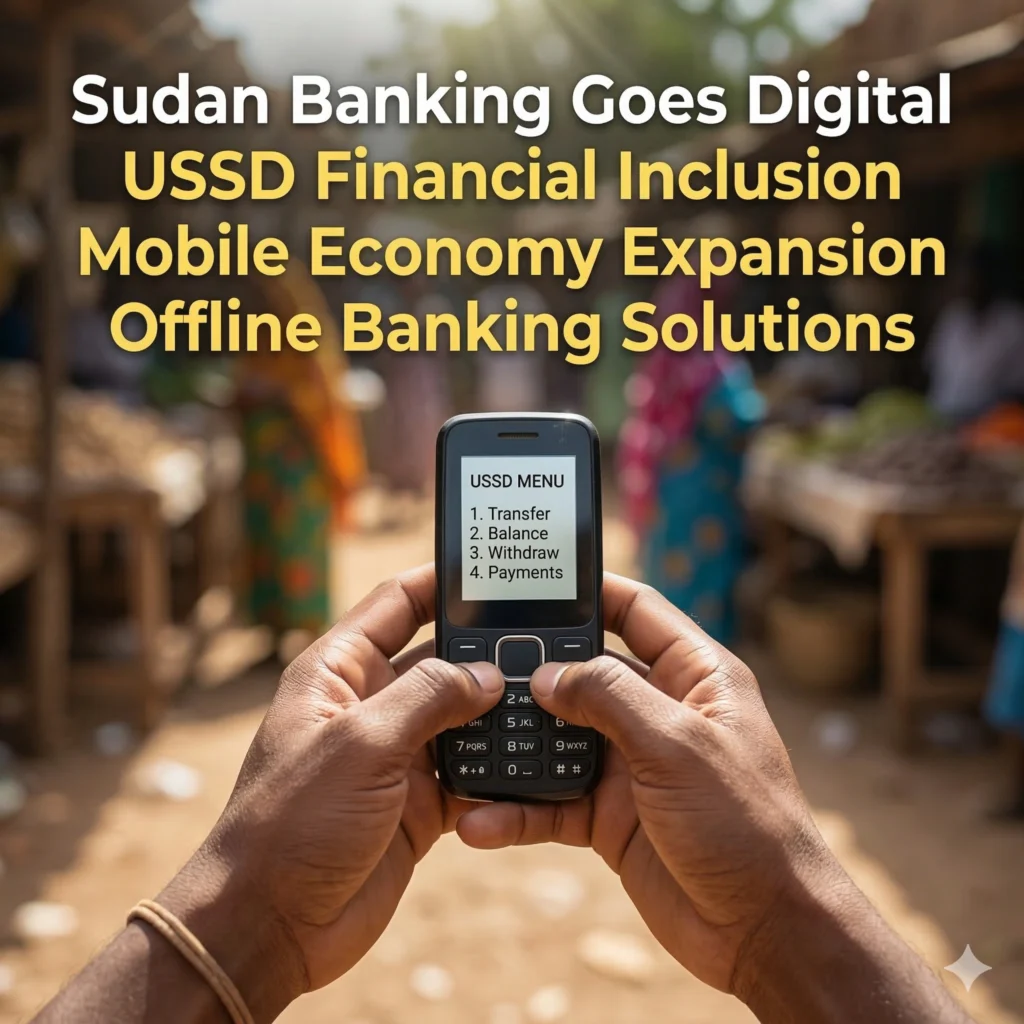
The coordination between the Ministry of Digital Transformation and Communications and the Central Bank of Sudan ensures that Sudan Financial Inclusion remains a top priority. This official rollout was developed alongside the Telecommunications and Postal Regulatory Authority to create a seamless user experience for all mobile subscribers. USSD technology allows users to access financial menus by simply dialing short codes, which eliminates the requirement for an active internet connection. Such a low-barrier entry point is critical for a nation where high mobile penetration exists alongside relatively low formal banking usage statistics.
Driving National Economic Integration
Government officials stated the initiative is designed specifically to bridge the gap between the 70% mobile phone ownership rate and the 30% formal banking rate. Sudan Financial Inclusion depends heavily on making banking services as simple as sending a text message to ensure widespread adoption across all demographics. The protocol enables essential operations such as money transfers, balance inquiries, and transaction history views on basic feature phones. This approach effectively turns every mobile device in the country into a potential bank branch, regardless of the user’s location or device type.
The program seeks to integrate millions of unbanked individuals, particularly those in rural and mining regions, into the formal national economy. Sudan Financial Inclusion is not just about convenience; it is about providing a secure platform for savings and commerce in areas far from physical bank locations. By utilizing existing mobile network infrastructure, the government aims to significantly reduce the high costs associated with physical bank branch expansion. This efficiency allows financial institutions to scale their services rapidly without the massive capital expenditure typically required for traditional brick-and-mortar growth.
Sudan Financial Inclusion
The launch of Sudan Financial Inclusion through USSD builds upon earlier mobile payment experiences from 2015 to create a more integrated ecosystem. The Central Bank will strictly oversee security standards and data protection to ensure that user trust remains high during this digital transition. Meanwhile, the Ministry of Digital Transformation manages the telecommunications network stability to prevent service interruptions for these critical financial tools. This dual-layered governance model provides a robust framework for long-term success and protection against potential cyber threats or technical failures.
Authorities expect the transition to digital payments to increase transparency and support the efficiency of government social transfer programs significantly. Sudan Financial Inclusion allows the state to deliver aid and subsidies directly to citizens’ mobile wallets, reducing the risk of leakage or administrative delays. Strategic experts highlight that simple, accessible technology remains the most effective tool for deepening economic participation across the vast Sudanese landscape. As more people join the digital grid, the national economy gains better data insights and a more resilient foundation for future technological advancements.
Modernizing Infrastructure Without High Costs
By leveraging the Unstructured Supplementary Service Data protocol, the government is bypassing the need for expensive smartphone upgrades for its citizens. Sudan Financial Inclusion is achieved through “short codes” that work on even the most basic mobile handsets available in local markets. This ensures that the most vulnerable populations are not left behind as the nation moves toward a digital-first financial model. The focus on “offline” capability is a masterstroke in regions where data signals are often inconsistent or prohibitively expensive for the average user.
Furthermore, the stability of the USSD network is far superior to mobile apps that require constant updates and high-bandwidth connections. Sudan Financial Inclusion thrives on this reliability, ensuring that a merchant in a remote village can confirm a payment instantly without searching for a Wi-Fi signal. This reliability encourages local businesses to move away from cash-only transactions, which are often risky and difficult to track. The move toward a cashless society, supported by government regulation, is a cornerstone of the broader national development strategy.
Enhancing Transparency in Social Programs
One of the primary goals of Sudan Financial Inclusion is to streamline the delivery of social services and government-to-person payments. When every citizen has access to a USSD banking menu, the government can distribute funds with a high degree of precision and accountability. This reduces the bureaucratic layers that often slow down emergency relief or monthly social security payments to the elderly and displaced. By digitizing these flows, the central bank can also monitor the velocity of money and inflation trends with much greater accuracy.
Strategic experts have pointed out that the success of Sudan Financial Inclusion will depend on continuous public education and outreach. The ministry plans to launch awareness campaigns to teach citizens how to use the new short codes safely and avoid common phishing scams. Training local community leaders to act as “digital ambassadors” will help demystify the technology for those who have never interacted with a formal bank. This human-centric approach to a technical rollout is what will ultimately determine the project’s long-term impact on the national poverty rate.
Bridging the Rural-Urban Financial Divide
The divide between urban centers and rural districts has historically been a barrier to equitable economic growth in the country. Sudan Financial Inclusion acts as a bridge, allowing a farmer in a distant province to receive payments for crops directly into a regulated account. This prevents the need for dangerous long-distance travel with large amounts of cash, which has been a major security concern in the past. The ability to view transaction histories on a basic phone also empowers small business owners to manage their finances with professional-grade tools.
- Key benefits of USSD banking include:
- Access to services without an internet connection.
- Compatibility with 100% of existing mobile handsets.
- Instant money transfers and balance checks.
- Lower transaction fees compared to physical banking.
The implementation of Sudan Financial Inclusion through mobile technology also opens doors for micro-lending and insurance products tailored to the needs of the unbanked. Once an individual has a digital footprint via USSD, financial institutions can assess their creditworthiness based on transaction patterns rather than physical collateral. This democratizes access to capital, allowing small-scale entrepreneurs to grow their businesses and contribute more robustly to the national GDP. The ripple effects of this technological launch will likely be seen across multiple sectors of the economy for years to come.
Strengthening Regulatory Oversight and Security
The Central Bank of Sudan is taking a proactive role in ensuring that the Sudan Financial Inclusion project meets international security benchmarks. Data protection is a major priority, as the move to digital banking inevitably attracts the attention of bad actors looking to exploit new users. By centralizing the USSD menus and requiring PIN authentication for every transaction, the system provides a high level of security for end-users. Regulatory bodies are also working closely with mobile network operators to ensure that SIM-swapping fraud is minimized through stricter identity verification.
- Regulatory focus areas for USSD:
- Strict encryption of financial data.
- Mandatory multi-factor authentication for transfers.
- Real-time monitoring of large-volume transactions.
- Consumer protection and dispute resolution protocols.
As the Sudan Financial Inclusion initiative matures, the integration with other regional payment systems will likely become a secondary objective. This would allow for easier cross-border trade and remittances, which are vital components of the Sudanese economy. For now, the focus remains on domestic stability and ensuring that every citizen, from Khartoum to the furthest mining camp, has a bank in their pocket. The successful rollout of this technology marks a new chapter in the nation’s journey toward a modern, inclusive, and transparent financial future.
Future Outlook for Digital Banking
The long-term vision for Sudan Financial Inclusion involves a gradual transition from USSD to more advanced mobile banking as infrastructure improves. However, for the foreseeable future, USSD will remain the “gold standard” for mass-market financial access due to its unmatched reach. The government intends to use the data gathered from this platform to identify where internet infrastructure needs the most urgent upgrades. This data-driven approach ensures that future investments in digital transformation are targeted where they can provide the most significant social and economic returns.
In conclusion, Sudan Financial Inclusion is more than just a technical upgrade; it is a social mission to empower the disenfranchised. By removing the barriers of cost, location, and technology, the Ministry and Central Bank are laying the groundwork for a more prosperous nation. The $9 billion potential increase in liquidity from the unbanked sector could provide the necessary spark for a national economic revival. As millions of new users dial their first short codes this week, the face of Sudanese banking changes forever.
For more details & sources visit: Sudan Horizon
Read more on Sudan news: 360 News Orbit – Sudan.