
Trump Nuclear Deal With Saudi Arabia faces intense scrutiny as President Donald Trump moves forward with a civil nuclear agreement that lacks traditional non-proliferation safeguards. This decision marks a significant shift in American foreign policy regarding energy cooperation in the Middle East. While the administration argues that the partnership is essential for maintaining American influence in the region, critics warn of long-term security risks. The deal aims to foster a multi-billion-dollar energy partnership, yet the absence of the “gold standard” safety protocols has sparked a heated debate within the halls of Congress and among international arms control experts.
The move comes at a particularly volatile time when the United States and Israel are engaged in a military conflict with Iran over its own nuclear activities. By facilitating a program in Saudi Arabia without the usual restrictions on uranium enrichment or spent fuel reprocessing, the administration is accused of lowering the bar for nuclear safety. Proponents of the deal suggest that if the United States does not provide this technology, the kingdom will simply turn to rivals like Russia or China. However, the lack of the standard additional protocol for intrusive United Nations inspections remains a central point of contention for those worried about a regional arms race.
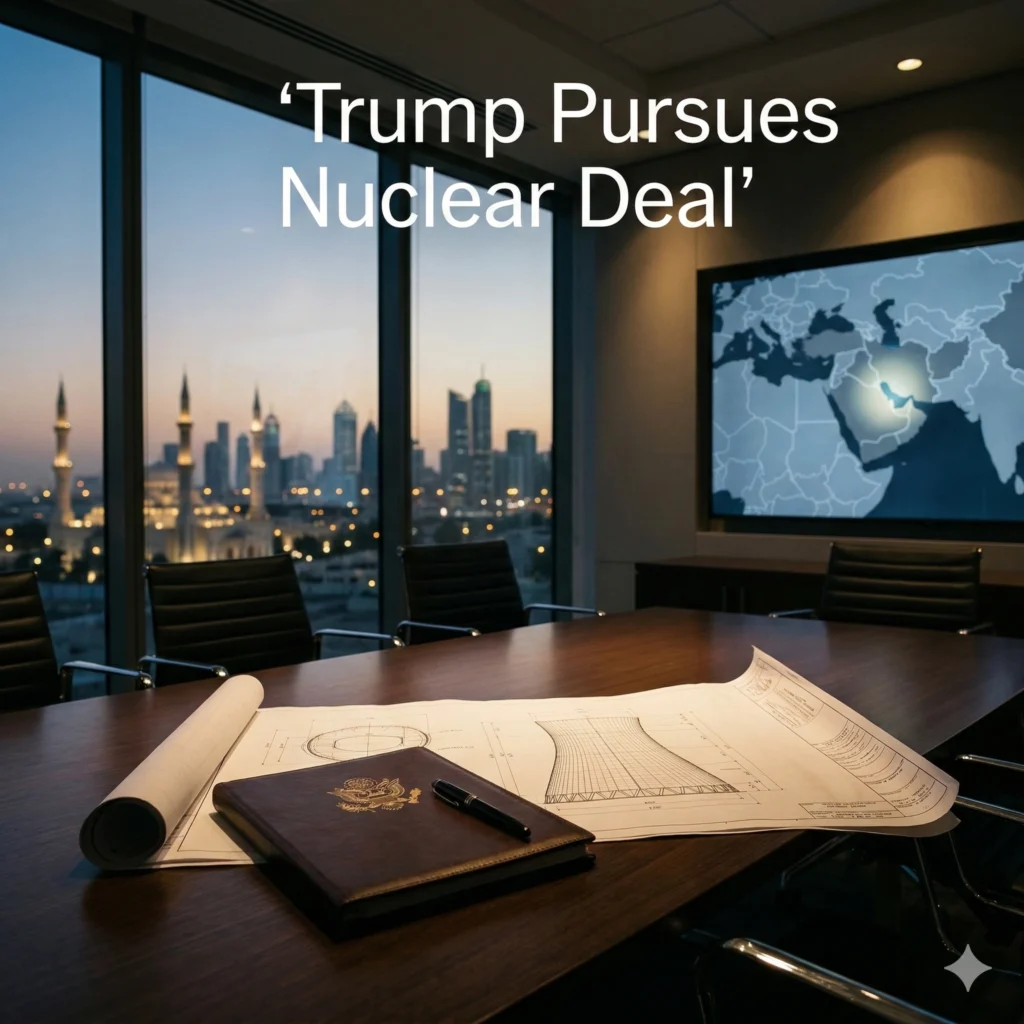
Strategic Implications of the Trump Nuclear Deal With Saudi Arabia
The geopolitical landscape of the Middle East is currently undergoing a rapid transformation driven by energy needs and security alliances. By pursuing the Trump Nuclear Deal With Saudi Arabia, the White House is prioritizing a long-term energy partnership that could redefine the economic ties between Washington and Riyadh. This agreement is designed to place American technology at the center of the Saudi civil nuclear program, ensuring that the United States remains a primary stakeholder in the kingdom’s infrastructure development.
Officials within the administration believe that this level of involvement is the only way to exert influence over the direction of Saudi Arabia’s nuclear ambitions. They argue that a total withdrawal from negotiations would leave a vacuum that adversarial nations would eagerly fill. Consequently, the deal is framed as a pragmatic necessity to prevent the loss of a multi-billion-dollar industry to competitors. Despite these strategic justifications, the departure from established non-proliferation norms continues to draw fire from veteran diplomats who fear the precedents being set for future international agreements.
Congressional Resistance to the Trump Nuclear Deal With Saudi Arabia
Lawmakers on both sides of the aisle have expressed significant reservations regarding the notification sent to Congress about the intent to finalize this pact. The primary concern is that the Trump Nuclear Deal With Saudi Arabia excludes prohibitions on uranium enrichment, which is a critical step in creating fuel for nuclear weapons. Many senators have historically insisted that any nuclear cooperation in the Middle East must meet the highest possible standards of transparency and oversight to prevent the misuse of technology.
Democratic leaders have been particularly vocal, suggesting that the lack of guardrails represents a reckless gamble with global security. Some Republicans have also joined the chorus of concern, noting that the Middle East is far too volatile for such a relaxed approach to nuclear exports. As the review period begins, Congress faces a limited window to evaluate the specifics of the pact before it potentially becomes active under federal law. The intensity of this legislative scrutiny highlights the deep divide between the executive branch’s vision for energy diplomacy and the legislative branch’s commitment to non-proliferation.
Potential Risks of the Trump Nuclear Deal With Saudi Arabia
Non-proliferation experts have sounded the alarm over the absence of the standard additional protocol in the current framework. Without these intrusive international inspections, the global community has fewer tools to ensure that civilian nuclear materials are not being diverted for military purposes. The Trump Nuclear Deal With Saudi Arabia essentially relies on a level of trust that many arms control advocates find inappropriate given the high stakes of nuclear proliferation in a conflict-prone region.
Furthermore, Saudi officials have previously stated that they would seek nuclear weapons if they felt threatened by a nuclear-armed regional rival. This statement haunts the current negotiations, as the lack of stringent limitations increases the risk of the enrichment program being repurposed. Critics argue that once a nation possesses the technical capability to enrich uranium, the path to a weapon becomes a matter of political will rather than technological hurdles. Therefore, the current deal is seen by some as providing the foundational blocks for a future weapons program under the guise of energy independence.
Trump Nuclear Deal With Saudi Arabia
The administration maintains that the Trump Nuclear Deal With Saudi Arabia is the most effective way to keep the United States at the core of the Saudi energy sector. By providing the reactors and the technical expertise, the U.S. hopes to create a dependency that ensures long-term cooperation and compliance with American interests. This approach favors economic engagement and industrial partnership over the rigid, often stalled, diplomatic negotiations of the past. The White House believes that a strong commercial relationship is the best safeguard against a pivot toward eastern powers.
However, the report viewed by Reuters indicates that the primary focus of the deal is a multi-billion-dollar energy partnership that could boost the American domestic nuclear industry. This economic incentive is a powerful motivator for an administration that prioritizes American jobs and industrial dominance. While the financial benefits are clear, the security community remains divided on whether the price of economic gain is too high if it results in reduced oversight. The tension between commercial interests and security protocols remains the defining characteristic of this controversial civil nuclear pact.
Global Reactions to the Trump Nuclear Deal With Saudi Arabia
International observers are closely watching the development of the Trump Nuclear Deal With Saudi Arabia to see how it affects the global nuclear market. If the United States successfully exports technology without the usual safeguards, it could lead to a “race to the bottom” where other exporters lower their standards to remain competitive. This potential shift threatens decades of international efforts to standardize nuclear safety and non-proliferation requirements. European allies, in particular, have expressed concern that the deal undermines the collective pressure used to manage nuclear ambitions elsewhere.
The reaction from regional rivals is also a major factor in the escalating tension. Iran has already cited the proposed Saudi deal as a justification for its own nuclear activities, pointing to a perceived double standard in American policy. This dynamic creates a feedback loop where perceived imbalances in nuclear capability drive further investment in sensitive technologies across the region. As a result, the Trump Nuclear Deal With Saudi Arabia is not just a bilateral agreement but a catalyst for broader regional shifts that could have unforeseen consequences for decades to come.
Economic Impact of the Trump Nuclear Deal With Saudi Arabia
Beyond the security concerns, the Trump Nuclear Deal With Saudi Arabia represents a massive opportunity for the American energy sector. The construction and maintenance of nuclear facilities in the kingdom would require a massive influx of American engineers, components, and long-term service contracts. This partnership is expected to sustain thousands of high-tech jobs within the United States, providing a significant boost to the domestic energy industry. For proponents, this is a clear “America First” victory that secures a dominant position in a critical global market.
- The deal involves the export of advanced American reactor technology.
- It establishes a long-term maintenance and fuel supply framework.
- The partnership aims to modernize the Saudi power grid for the 2030s.
- American firms are positioned to lead the construction of multiple sites.
This economic roadmap is central to the administration’s argument that the deal is a win for the American taxpayer. By locking in Saudi Arabia as a customer for decades, the U.S. ensures that its standards—even if slightly relaxed in this specific agreement—will be the baseline for the kingdom’s nuclear evolution. This perspective suggests that the risks are manageable when compared to the certainty of losing the market entirely. Whether this economic gamble pays off remains to be seen as the deal enters its final stages of legal and legislative review.
Assessing the Safety Protocols of the Trump Nuclear Deal With Saudi Arabia
The technical aspects of the Trump Nuclear Deal With Saudi Arabia are where the most intense debates occur. Traditional “123 Agreements” usually include specific language that prevents the partner country from enriching uranium or reprocessing spent fuel on their own soil. These two activities are the primary pathways to producing weapons-grade material. By omitting these specific prohibitions, the current agreement leaves a legal gray area that many find dangerous. The administration counters that the deal still includes rigorous reporting requirements and technical checks that go beyond standard commercial contracts.
- Uranium enrichment capabilities remain a point of high-level negotiation.
- Spent fuel management protocols are intended to follow international norms.
- The agreement focuses on light-water reactors, which are harder to use for weapons.
Despite these technical assurances, the lack of the “gold standard” label continues to haunt the deal’s public perception. The fear is that the kingdom could eventually build its own enrichment facilities using the knowledge gained from this partnership. Without the additional protocol for inspections, verifying the peaceful nature of all Saudi nuclear activities becomes significantly more difficult for international watchdogs. This lack of transparency is the core issue that has united diverse groups of critics against the administration’s current path.
Future Outlook for the Trump Nuclear Deal With Saudi Arabia
As the 2026 deadline for Congressional review approaches, the Trump Nuclear Deal With Saudi Arabia sits at a crossroads. The administration is pushing for a quick resolution to begin the implementation phase, while opponents are looking for ways to block or amend the agreement. The outcome of this struggle will determine the future of American nuclear exports and the security architecture of the Middle East for the next generation. If the deal goes through as currently written, it will represent a landmark shift in how the United States balances its economic interests with its global security responsibilities.
The long-term success of the Trump Nuclear Deal With Saudi Arabia will ultimately depend on the kingdom’s willingness to remain transparent even without the strictest legal requirements. If Saudi Arabia uses this technology to diversify its energy mix while adhering to peaceful norms, the administration will be vindicated. However, if the program leads to further regional instability or a secret arms program, the decision to bypass traditional safeguards will be remembered as a historic failure of non-proliferation policy. The world now waits to see how this high-stakes diplomatic maneuver will unfold in the coming months.
- Monitoring of Saudi nuclear infrastructure will be a priority for intelligence.
- Congressional oversight committees will hold regular briefings on compliance.
- Diplomatic efforts will continue to encourage the adoption of the additional protocol.
The Trump Nuclear Deal With Saudi Arabia remains one of the most consequential foreign policy initiatives of the decade. It challenges the established norms of nuclear diplomacy and forces a reassessment of what constitutes a safe and effective international partnership. As the global energy transition accelerates, the role of nuclear power continues to grow, making the lessons learned from this specific deal relevant for future agreements across the globe. For now, the focus remains on Washington and Riyadh as they navigate the complexities of this unprecedented nuclear cooperation pact.
For more details & sources visit: Responsible Statecraft
For the latest updates from Saudi Arabia, visit our Saudi Arabia page.