
Jakarta Celebrates Cap Go Meh Festival With Fusion Of Chinese And Betawi Cultures is the vibrant theme that defined the city’s atmosphere this week. As the Lunar New Year celebrations reached their grand conclusion, the streets of Glodok and Taman Sari transformed into a stage for unity. This annual tradition, marking the fifteenth day of the first lunar month, has evolved into a symbol of Jakarta’s pluralistic identity.
By blending ancient traditions from mainland China with the soulful folk arts of the Betawi people, the city demonstrates how diversity fuels creative energy. Residents and tourists alike flocked to the historic Chinatown district to witness a spectacle that transcends religious or ethnic boundaries. This year, the festival not only honored spiritual roots but also acted as a powerful engine for local tourism and social cohesion.
The Jakarta Celebrates Cap Go Meh Festival With Fusion Of Chinese And Betawi Cultures event officially kicked off at Pancoran China Town Point with a thunderous display of percussion. High-energy drumming filled the air as lion dancers, known locally as Barongsai, leaped across platforms with breathtaking agility. These mythical creatures were soon joined by the towering Ondel-ondel puppets, the iconic symbols of Jakarta’s indigenous Betawi culture.
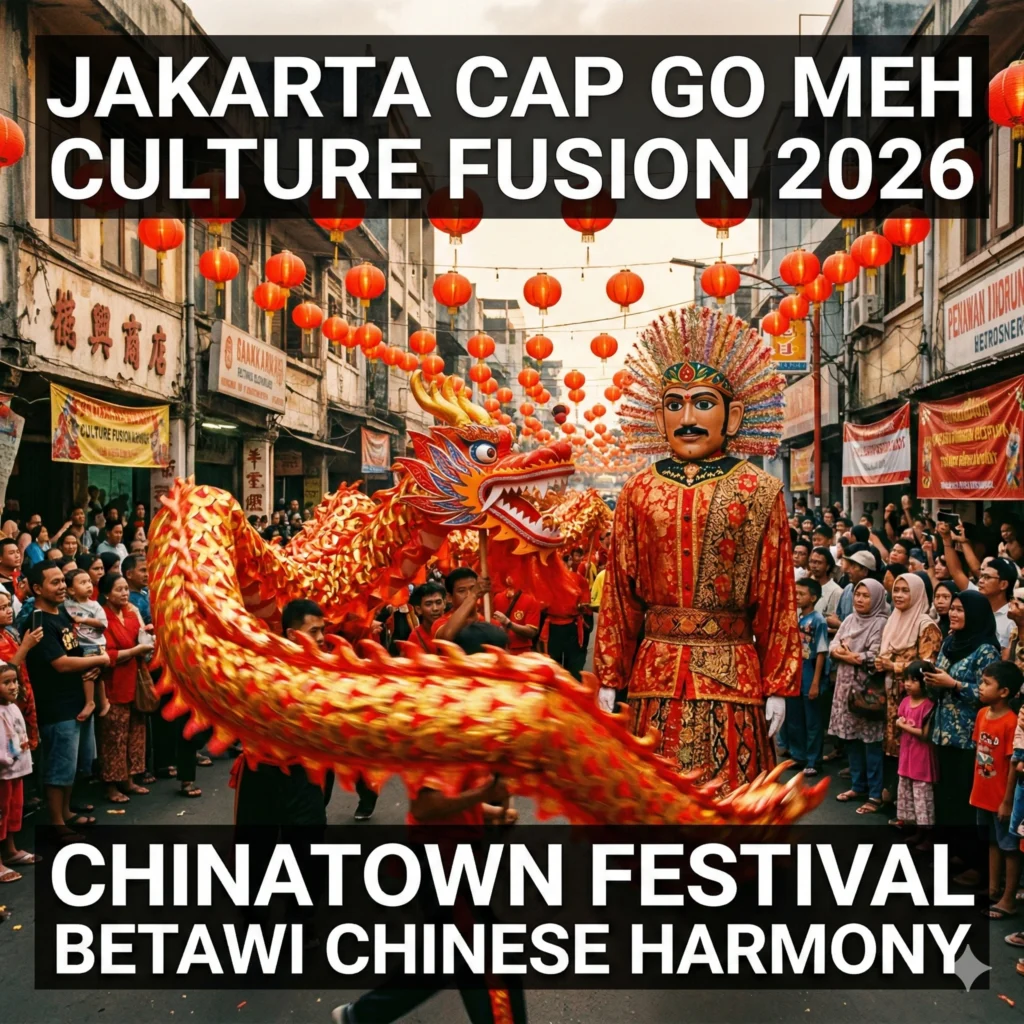
Jakarta Celebrates Cap Go Meh Festival With Fusion Of Chinese And Betawi Cultures
The official theme of Jakarta Celebrates Cap Go Meh Festival With Fusion Of Chinese And Betawi Cultures was visible in every corner of the parade route. Organized by local community leaders and supported by the provincial government, the event aimed to solidify Jakarta’s reputation as a global melting pot. While the Barongsai and Liong dances remain the core attraction, the inclusion of Tanjidor brass bands added a unique local flavor.
These musical ensembles, which trace their roots back to colonial-era influences, provided a rhythmic backdrop that resonated with the diverse crowd. Organizers emphasized that this fusion is not merely for show but reflects the actual lived experience of Jakarta’s residents. By bringing these traditions together, the city preserves its history while moving toward a more inclusive and modern future.
The economic impact of the Jakarta Celebrates Cap Go Meh Festival With Fusion Of Chinese And Betawi Cultures was felt immediately by hundreds of small businesses. Throughout the Chinatown area, temporary stalls were erected to showcase a variety of traditional goods, from lunar ornaments to Betawi handicrafts. Local food vendors reported a significant surge in sales as visitors sampled Lontong Cap Go Meh, a dish that itself embodies cultural fusion.
This savory rice cake dish, served with rich coconut milk soup and spicy condiments, is a staple of the festival in Indonesia. The presence of international tourists also provided a boost to the local hospitality sector, with nearby hotels reaching near-full occupancy. This synergy between cultural celebration and economic activity highlights the importance of festivals in supporting the city’s creative economy.
Strengthening Social Harmony Through Public Art
Public participation was a key element of the Jakarta Celebrates Cap Go Meh Festival With Fusion Of Chinese And Betawi Cultures festivities this Tuesday. Unlike private temple ceremonies, this street festival encouraged people of all backgrounds to join in the merriment and interactive games. Traditional stilt-walking, or Egrang, proved to be a popular attraction for younger generations who are often disconnected from heritage sports.
Children and adults took turns trying to balance on the wooden poles, guided by experienced performers who shared stories of the game’s origin. This hands-on approach ensures that the significance of the day is passed down to the youth in an engaging way. Such initiatives are crucial for maintaining the social fabric of a mega-city like Jakarta, where traditional values often compete with rapid modernization.
The local government views the Jakarta Celebrates Cap Go Meh Festival With Fusion Of Chinese And Betawi Cultures as a cornerstone of its cultural tourism strategy. By promoting events that highlight tolerance, the city sends a message of peace and stability to the global community. Officials noted that the seamless coordination between security forces and festival volunteers allowed thousands of people to navigate the area safely.
The narrow streets of Glodok, usually congested with commerce, became a pedestrian-friendly zone for the duration of the parade. This successful management of a large-scale public event serves as a blueprint for future cultural festivals in the capital. The commitment to maintaining safety while celebrating heritage reinforces Jakarta’s position as a welcoming destination for all.
Preserving Heritage in a Modern Urban Landscape
As the sun began to set, the Jakarta Celebrates Cap Go Meh Festival With Fusion Of Chinese And Betawi Cultures reached its peak with the glowing Liong dance. The long, illuminated dragon wound its way through the crowds, symbolizing luck and prosperity for the coming year. This spectacle was complemented by the rhythmic sounds of the Tanjidor, creating a sensory experience that was uniquely Indonesian.
Historians point out that such hybrid celebrations have existed for generations but are now gaining more formal recognition. The evolution of these traditions shows that culture is not static but grows and adapts to its environment. Jakarta’s ability to protect its old-world charm while embracing new artistic expressions is what makes its Chinatown district so special.
The conclusion of the Jakarta Celebrates Cap Go Meh Festival With Fusion Of Chinese And Betawi Cultures marks the end of a weeks-long journey of renewal. For many, the festival is a time to reflect on the importance of community and the strength found in diversity. The collaboration between the ethnic Chinese community and the Betawi artists serves as a reminder that shared joy can bridge any gap.
As the final drums faded into the night, the message of the festival remained clear: unity is the city’s greatest asset. With plans already in motion for next year, the event is set to become even more expansive. Jakarta continues to prove that it can celebrate its past while building a harmonious and prosperous future for every resident.
Educational Value for Future Generations
Integrating educational components into the Jakarta Celebrates Cap Go Meh Festival With Fusion Of Chinese And Betawi Cultures has become a priority for local educators. Many schools organized field trips to the Chinatown district to allow students to witness the historical sites and cultural rituals firsthand. Learning about the origins of the Barongsai and the significance of the Ondel-ondel helps students appreciate the complexity of Indonesian history.
These experiences foster a sense of national pride and teach the value of respecting different religious and ethnic practices. By engaging with the festival on an academic level, the city ensures that its diverse roots are never forgotten. This focus on education guarantees that the spirit of Cap Go Meh will continue to thrive in the hearts of young Jakartans.
Furthermore, the Jakarta Celebrates Cap Go Meh Festival With Fusion Of Chinese And Betawi Cultures serves as a platform for contemporary artists to innovate. Modern dance troupes and graphic designers often collaborate with traditional artisans to give the festival a fresh, updated look. This year saw the introduction of digital storytelling booths that explained the history of the Glodok area through augmented reality.
These high-tech additions attract a younger demographic and make heritage more accessible in the digital age. The blend of ancient customs with modern technology is a testament to the city’s dynamic spirit. It shows that Jakarta is a place where tradition and innovation do not just coexist but actively inspire one another.
Global Recognition of Indonesian Pluralism
The international media coverage of the Jakarta Celebrates Cap Go Meh Festival With Fusion Of Chinese And Betawi Cultures has brought global attention to Indonesia’s pluralism. Foreign dignitaries and tourists expressed their admiration for the peaceful and joyous atmosphere that permeated the entire event. In an era where cultural divisions are often highlighted, Jakarta’s example of ethnic harmony stands as a beacon of hope.
The festival showcases the “Bhinneka Tunggal Ika” or “Unity in Diversity” philosophy that is the foundation of the Indonesian state. This global exposure helps to attract foreign investment and strengthens diplomatic ties with other nations. The success of the festival is a win for the city’s reputation and its long-term development goals.
In the final hours of the event, the Jakarta Celebrates Cap Go Meh Festival With Fusion Of Chinese And Betawi Cultures organizers thanked the thousands of volunteers who made it possible. From trash collectors to parade marshals, the collective effort of the community was the true engine behind the celebration. This grassroots involvement is what gives the festival its authentic and welcoming feel.
Every person who attended, whether as a performer or a spectator, contributed to the success of this cultural milestone. As the city returns to its daily routine, the memories of the vibrant parade and the shared laughter remain. The festival has once again proven that when people come together to celebrate their differences, the entire community becomes stronger.
Traditional Culinary Delights and Local Artisans
The culinary aspect of the Jakarta Celebrates Cap Go Meh Festival With Fusion Of Chinese And Betawi Cultures cannot be overstated in its importance. Vendors sold thousands of portions of traditional snacks, ensuring that the flavors of the festival were as memorable as the sights. Many of these recipes have been passed down through families for decades, representing a living history of the region.
Local artisans also found a platform to sell their handmade wares, ranging from intricate paper lanterns to hand-painted Betawi masks. This direct support for the local economy is a vital part of the festival’s mission to uplift the community. By purchasing these items, visitors help to sustain the livelihoods of those who keep these traditions alive.
The Jakarta Celebrates Cap Go Meh Festival With Fusion Of Chinese And Betawi Cultures also provides a space for spiritual reflection for those who observe the religious aspects of the day. Temples in the area, such as the historic Kim Tek Ie, saw a steady stream of devotees offering prayers for health and prosperity. The peaceful coexistence of these sacred rituals with the loud, public festivities is a hallmark of Jakarta’s religious tolerance.
It demonstrates that the city can accommodate both the solemnity of faith and the exuberance of a street party. This balance is key to the enduring appeal of the Cap Go Meh celebrations in the heart of the capital. It is a time when the sacred and the secular meet to celebrate the gift of a new year.
Infrastructure and Urban Development Impacts
Large-scale events like the Jakarta Celebrates Cap Go Meh Festival With Fusion Of Chinese And Betawi Cultures often prompt improvements in local infrastructure. Leading up to the festival, the city government worked to clean and renovate parts of the Old Town and Chinatown districts. Better lighting, repaired walkways, and improved waste management systems were implemented to accommodate the expected crowds.
These enhancements provide long-term benefits to the residents of the area well after the festival has concluded. Urban renewal projects focused on cultural heritage sites help to preserve the aesthetic and historical value of the city. The festival acts as a catalyst for these necessary improvements, ensuring that Jakarta remains a functional and beautiful place to live.
The success of the Jakarta Celebrates Cap Go Meh Festival With Fusion Of Chinese And Betawi Cultures also encourages more public-private partnerships. Major corporations often sponsor the event, recognizing the value of aligning their brand with messages of unity and tradition. These partnerships provide the necessary funding for elaborate floats and high-quality sound systems that enhance the visitor experience.
The collaboration between the government, the business sector, and the local community is essential for the festival’s growth. It shows that when all sectors of society work together, they can create something truly extraordinary. This model of cooperation is one that other cities in the region look to emulate.
Environmental Consciousness in Public Festivals
This year, the Jakarta Celebrates Cap Go Meh Festival With Fusion Of Chinese And Betawi Cultures took steps toward becoming more environmentally friendly. Organizers implemented a “green festival” initiative, encouraging vendors to use biodegradable packaging and providing more recycling bins throughout the site.
Educational signs were posted to remind visitors of the importance of keeping the historic streets clean. This shift toward sustainability reflects a growing awareness of environmental issues within the city. By integrating these practices into a major cultural event, the organizers are setting a positive example for other festivals. It shows that heritage can be celebrated in a way that also protects the planet for future generations.
The Jakarta Celebrates Cap Go Meh Festival With Fusion Of Chinese And Betawi Cultures remains a highlight of the city’s cultural calendar for many reasons. It is a time when the past is honored, the present is celebrated, and the future is embraced with optimism. The fusion of Chinese and Betawi cultures is a testament to the resilience and creativity of the people of Jakarta.
As the lanterns are packed away and the streets are swept, the spirit of the festival continues to inspire. It serves as a reminder that no matter our background, we are all part of the same vibrant community. Jakarta stands tall as a city of harmony, ready to face the challenges of tomorrow with a unified heart.
Reflections on Cultural Continuity
The endurance of the Jakarta Celebrates Cap Go Meh Festival With Fusion Of Chinese And Betawi Cultures over the centuries is a remarkable feat of cultural preservation. Despite the pressures of globalization and the changing political landscape, the festival has only grown in significance. It acts as an anchor for the community, providing a sense of continuity and belonging.
Every year, new elements are added, but the core values of gratitude and unity remain unchanged. This ability to evolve while staying true to its roots is what makes the festival a vital part of Jakarta’s identity. The city’s commitment to hosting this event year after year shows its dedication to its diverse heritage.
As we look back on the Jakarta Celebrates Cap Go Meh Festival With Fusion Of Chinese And Betawi Cultures of 2026, we see a city that is proud of its history. The vibrant colors, the rhythmic sounds, and the delicious smells all combined to create a truly magical experience. It was a day where the boundaries between “us” and “them” dissolved, replaced by a shared sense of joy.
The festival is more than just a parade; it is a celebration of the human spirit’s ability to find common ground. Jakarta has once again set a high standard for how a modern city can celebrate its multifaceted identity. The legacy of this year’s Cap Go Meh will undoubtedly influence cultural celebrations for years to come.
Looking Forward to Future Celebrations
Preparation for the next Jakarta Celebrates Cap Go Meh Festival With Fusion Of Chinese And Betawi Cultures begins almost as soon as the current one ends. Community leaders and city officials are already discussing ways to make the event even more inclusive and sustainable.
There is a desire to include even more ethnic groups in the parade, further highlighting Indonesia’s vast cultural landscape. The goal is to make the festival a truly national event that attracts visitors from across the archipelago. With each passing year, the celebration becomes more sophisticated and more deeply integrated into the city’s life. Jakarta’s Chinatown will continue to be the heart of this spectacular display of unity.
The Jakarta Celebrates Cap Go Meh Festival With Fusion Of Chinese And Betawi Cultures is a shining example of what can be achieved through mutual respect. It proves that cultural differences are not obstacles but opportunities for collaboration and beauty.
The city’s streets, filled with the sounds of Barongsai and Tanjidor, tell a story of a people who choose harmony over division. This narrative is essential for the continued progress of Jakarta as a global city. As the world watches, Jakarta continues to demonstrate the power of a unified community. The festival is a gift to the city, a reminder of its strength, and a celebration of its vibrant, diverse soul.
For more details & sources visit: Independent Observer
For the latest updates from Indonesia, visit our Indonesia news page.