
F-15 fighter jets were confirmed downed by the United States Central Command in a highly distressing friendly fire incident over Kuwait early this morning during active combat operations. This unexpected loss of three advanced F-15E Strike Eagles marks a significant moment of tension within the coalition forces as they navigate the complexities of Operation Epic Fury. The crews involved were operating under extreme pressure while defending regional airspace against a multi-layered Iranian offensive.
The incident occurred as Kuwaiti air defense systems were actively engaging a variety of incoming threats, including ballistic missiles and long-range drones. Unfortunately, the F-15 fighter jets were misidentified in the heat of the moment, leading to their accidental engagement by allied batteries. Despite the destruction of the aircraft, all six aircrew members successfully initiated ejection sequences and were recovered safely by search and rescue teams.
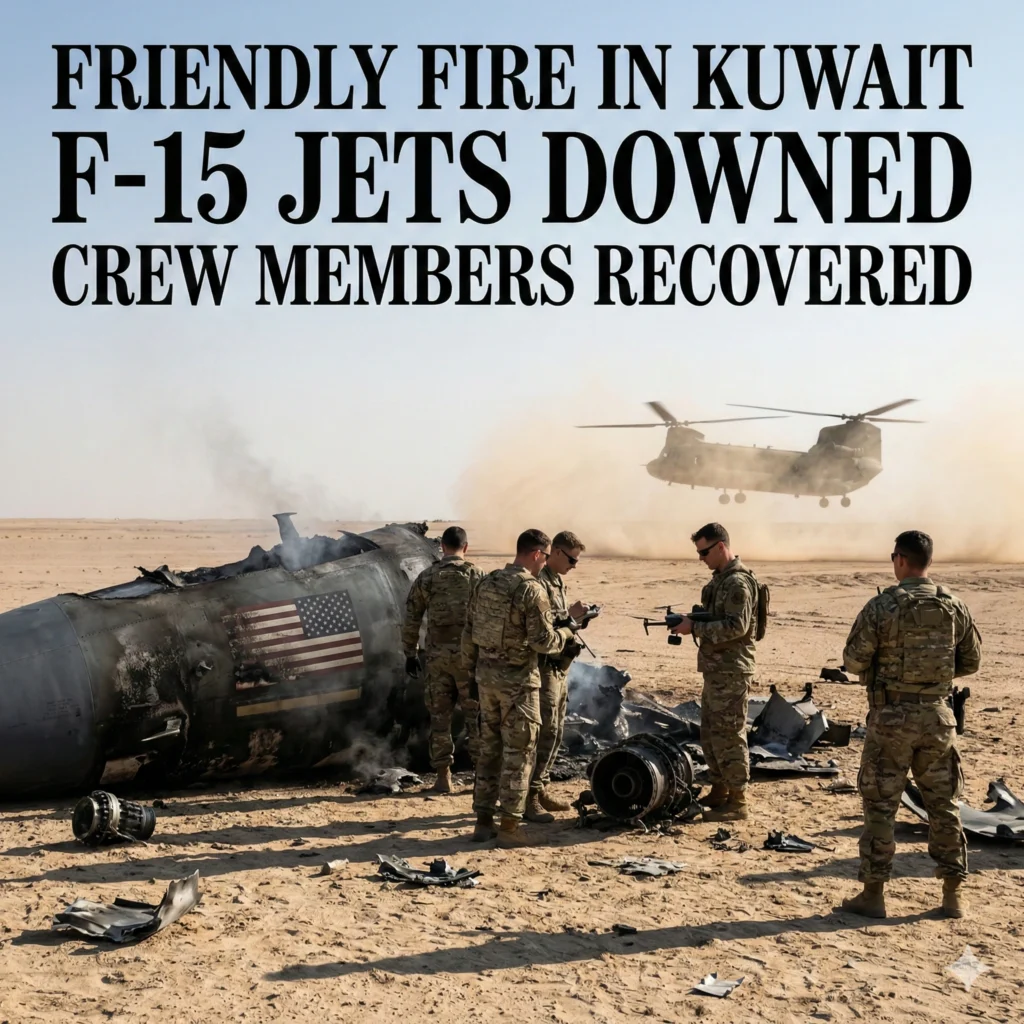
F-15 Fighter Jets Facing Friendly Fire
The engagement of F-15 fighter jets by friendly forces represents a catastrophic failure in the identification friend or foe protocols. During the early hours of the morning, Kuwaiti air defense operators were on high alert due to a massive wave of incoming Iranian projectiles. The chaos of the radar environment likely contributed to the tragic misidentification of the American strike aircraft as hostile targets.
Consequently, the automated and manual systems of the Kuwaiti defense network locked onto the F-15 fighter jets before the flight leads could communicate their positions. This specific incident serves as a grim reminder that even the most advanced technological systems are susceptible to human error during the fog of war. Military leaders are now reviewing the data logs to understand why the transponder signals failed to prevent the engagement.
Furthermore, the loss of these F-15 fighter jets significantly impacts the immediate sorties planned for Operation Epic Fury. While the airframes are replaceable, the loss of tactical momentum is a concern for commanders on the ground. The investigation will prioritize whether the error was due to software glitches or a fundamental breakdown in bilateral communication channels.
Operational Impact of Losing Tactical Assets
The sudden removal of three advanced aircraft from the active roster creates a temporary gap in the coalition’s strike capabilities. These aircraft are known for their dual-role proficiency, capable of both air-to-air combat and precision ground attacks. Losing such versatile platforms in a single incident forces a rapid reallocation of existing resources to maintain the current mission tempo.
Moreover, the psychological impact on the remaining pilots flying these F-15 fighter jets cannot be ignored. Knowing that friendly air defenses might mistakenly target them adds an immense layer of stress to already dangerous missions. Commanders are currently conducting safety briefings to reassure aircrews while technical teams work to synchronize the coalition’s integrated air defense systems.
In addition to the immediate tactical concerns, the destruction of these platforms carries a high financial and logistical cost. Each Strike Eagle represents a massive investment in national defense and specialized maintenance. The logistics chain must now pivot to bring in replacement airframes from European or domestic bases to ensure that the defense of Kuwait remains uncompromised.
F-15 Fighter Jets
The F-15 fighter jets involved in the crash are among the most capable fourth-generation aircraft in the world today. Specifically, the F-15E variant used in this theater is designed for deep-strike missions and can carry a massive payload of ordnance. Its ability to operate in all weather conditions makes it a cornerstone of the United States Air Force’s regional strategy.
The loss of these aircraft is particularly notable because of their historical record of air-to-air dominance. Since their introduction, these jets have maintained a stellar reputation for survivability and combat effectiveness. Seeing them downed by friendly fire is a rare and painful anomaly for the aviation community and military planners alike.
Technical experts are examining the wreckage of the F-15 fighter jets to ensure that the ejection seats and life-support systems functioned as intended. The fact that all six crew members survived is a testament to the robust engineering of these legendary aircraft. Moving forward, the focus remains on upgrading the communication suites within the fleet to avoid a repeat of this tragedy.
Kuwaiti Air Defense Integration Challenges
The relationship between Kuwaiti air defense batteries and American strike wings has historically been one of seamless integration. Kuwait utilizes a variety of high-tech defense systems, many of which are purchased directly from Western allies. These systems are designed to communicate with the onboard electronics of coalition aircraft to prevent exactly what happened today.
However, during the massive Iranian drone swarm, the sheer volume of targets may have overwhelmed the sensor arrays near the F-15 fighter jets. When radar screens are cluttered with dozens of hostile signatures, the margin for error becomes razor-thin. It appears the Kuwaiti operators acted on the information they had, which unfortunately led them to target the F-15 fighter jets.
This incident has prompted an immediate review of the Rules of Engagement for all units operating alongside allied wings. Kuwaiti officials have expressed deep regret and are working transparently with the US Central Command. The goal is to establish a more rigorous verification process that can function even under the most intense combat conditions imaginable.
Strategic Consequences for Regional Superiority
The strategic role of F-15 fighter jets in the Middle East has never been more critical than during Operation Epic Fury. These aircraft serve as a primary deterrent against regional aggression and provide the necessary muscle for precision strikes. The loss of three units under friendly fire conditions could embolden adversaries who are looking for cracks in the coalition’s unity.
To counter this, the United States has emphasized that the loss of these F-15 fighter jets does not diminish the overall resolve of the mission. Additional squadrons are being alerted for potential deployment to fill the void left by the downed aircraft. Maintaining a visible presence of these airframes in the region is essential for preserving the balance of power.
Diplomatic efforts are also underway to ensure that the bond between the United States and Kuwait remains strong despite the recent tragedy. High-level meetings are scheduled to discuss the implementation of new “no-fire” zones and improved electronic identification protocols. The resilience of the alliance will be measured by how effectively they learn from this tragic mistake.
Search and Rescue Success in the Desert
One of the few positive outcomes of the F-15 fighter jets crash was the flawless execution of the search and rescue mission. As soon as the ejection signals were detected, recovery teams were dispatched to the coordinates in the Kuwaiti desert. The rapid response ensured that all six personnel were brought to safety before any hostile elements could interfere.
The pilots and weapon systems officers involved are currently undergoing medical evaluations at a regional military hospital. Early reports suggest they escaped with only minor injuries, which is remarkable given the speed and altitude of the engagement. Their survival provides a significant boost to the morale of other units operating F-15 fighter jets in the area.
Training for such emergencies is a routine part of the curriculum for crews flying these advanced airframes. The success of the ejection systems confirms that safety remains a top priority even in high-threat environments. This successful recovery operation highlights the professionalism and readiness of the joint American and Kuwaiti rescue coordination centers during a crisis.
Future Safety Protocols for Combat Aviation
Following the loss of the F-15 fighter jets, the military is moving toward a more automated approach to friendly fire prevention. New software patches are being considered for the integrated air defense network to provide redundant verification of friendly assets. This would involve cross-referencing GPS data with traditional radar signatures to ensure a positive ID.
Moreover, the training programs for ground-based interceptor crews will now include specific scenarios involving F-15 fighter jets in crowded airspaces. Realistic simulations can help operators distinguish between the flight patterns of friendly strike aircraft and incoming enemy missiles. The lessons learned from this morning’s disaster will be integrated into the global standard for air defense operations.
The commitment to protecting F-15 fighter jets and their crews is absolute. While no battlefield is entirely without risk, the goal is to reduce the probability of fratricide to the absolute minimum. As the investigation concludes, the findings will be shared with all allied nations that operate alongside these platforms to improve collective security.
Regional Stability and Defense Cooperation
The presence of F-15 fighter jets in Kuwait is a key component of regional stability and mutual defense agreements. These jets provide a protective umbrella over critical infrastructure and civilian populations. The accidental downing of the aircraft is a setback, but it does not change the underlying necessity of their mission in the Middle East.
Regional partners have expressed their solidarity with the crews of the F-15 fighter jets and the families involved. There is a collective understanding that the threat from Iran requires a unified and vigilant response. These aircraft will continue to fly, serving as a symbol of the enduring commitment to regional security and the rule of law.
As the smoke clears, the focus shifts back to the primary objectives of Operation Epic Fury. The coalition remains dedicated to degrading the military capabilities of those who threaten peace. The legacy of the F-15 fighter jets is one of strength and resilience, and these traits will carry the mission forward despite the recent challenges on the ground.
Technical Review of Aviation Sensors
A deep technical review is now underway to determine if the electronic countermeasure suites on the F-15 fighter jets were active during the incident. These systems are designed to jam enemy radar but should ideally remain visible to friendly systems. Investigators are checking if a malfunction caused the aircraft to appear hostile to the Kuwaiti batteries.
Standard operating procedures for F-15 fighter jets require pilots to maintain specific electronic signatures when entering friendly air defense zones. Any deviation from these protocols could lead to a catastrophic misunderstanding. The flight data recorders from the downed aircraft will be essential in piecing together the final moments before the engagement.
The complexity of modern avionics in F-15 fighter jets means that even a minor software conflict can have deadly consequences. Engineers from the aircraft’s manufacturer are collaborating with military investigators to rule out any systemic flaws. Ensuring the electronic integrity of every airframe in the fleet is now a top-tier priority for the Air Force.
Coordination Issues and Tactical Breakdown
Effective coordination is the backbone of any successful military operation involving F-15 fighter jets. In this case, it appears there was a delay in relaying flight path updates to the ground-based air defense units. When the strike aircraft entered the engagement zone, the ground crews were not fully aware of their presence.
To prevent this in the future, real-time data sharing between F-15 fighter jets and air defense hubs must be tightened. New communication links are being established to provide an unfiltered view of the battlespace to all participants. The goal is to ensure that the location of every friendly aircraft is known to every friendly radar operator at all times.
This breakdown serves as a case study for military academies on the importance of the “Common Operating Picture.” Without a shared understanding of the environment, the risk to F-15 fighter jets remains unacceptably high. The coalition is determined to fix these structural communication issues to honor the service of those who fly these missions.
Public Reaction to the Defense Incident
The public reaction to the downing of the F-15 fighter jets has been a mix of concern and relief that the crews survived. Social media has been flooded with discussions regarding the safety of our airmen and the volatility of the current conflict. These aircraft remain a high-profile symbol of American power, and their loss is felt deeply by the public.
Government officials have been quick to address these concerns, emphasizing that the F-15 fighter jets incident was an accident, not an act of hostility by an ally. Transparency in the investigation process is being promised to maintain public trust. The focus remains on the bravery of the pilots who operate these systems in such dangerous conditions.
In the coming days, more information will likely be released regarding the status of the aircrew and the recovery of the wreckage. The resilience of the American spirit is often mirrored in the strength of its military technology. Despite the loss, the community stands behind the mission and the continued use of F-15 fighter jets to protect global interests.
International Response to the Kuwait Event
Allies around the world have reached out to offer support following the news about the F-15 fighter jets. Nations that also operate the F-15 platform are particularly interested in the findings of the investigation. The global fleet of these aircraft relies on shared intelligence and safety data to maintain its operational edge.
The incident has also caught the attention of international defense monitors who track friendly fire statistics. While rare, the downing of F-15 fighter jets by an ally is a significant data point for future defense planning. It highlights the need for universal standards in identification technology across all coalition forces.
Furthermore, the loss of these F-15 fighter jets has prompted a discussion in international forums about the escalation of the conflict. The high-stress environment that led to the mistake is a direct result of the intense aerial warfare taking place. Ensuring the safety of pilots is now a topic of discussion at the highest levels of international diplomacy.
Maintenance and Fleet Readiness
The maintenance crews responsible for the F-15 fighter jets are working overtime to ensure the rest of the fleet is ready for action. Every aircraft is being triple-checked for sensor accuracy and communication reliability. The loss of three units means that the remaining planes must carry a heavier operational load.
Readiness levels for the F-15 fighter jets squadrons are being monitored closely by the Pentagon. There is no room for error when the stakes are this high and the environment is this hostile. The dedicated men and women who maintain these aircraft are the unsung heroes of this effort, ensuring that every takeoff is as safe as possible.
The supply chain for F-15 fighter jets parts is also being accelerated to handle the increased demand. From engines to advanced avionics, every component is critical for the mission success of the wing. The focus on logistical excellence ensures that the coalition remains a formidable force in the face of adversity.
Lessons for Future Combat Sorties
Every mission involving F-15 fighter jets provides valuable data that can be used to improve future operations. The tragedy in Kuwait is being dissected to extract every possible lesson regarding air defense integration. These insights will be used to rewrite the training manuals for both pilots and air defense operators.
One key takeaway is the need for more frequent joint exercises between US F-15 fighter jets and local defense forces. Practice in a controlled environment can help build the trust and familiarity needed for high-stress combat. The goal is to make the identification of friendly assets a second-nature process for all allied troops.
Ultimately, the goal is to emerge from this incident with a stronger and more capable force. The F-15 fighter jets will remain a central part of the strategy, but with enhanced safeguards to protect them from friendly fire. The dedication to continuous improvement is what keeps this platform at the forefront of aviation technology.
Final Summary of the Strategic Loss
In summary, the downing of three F-15 fighter jets over Kuwait is a sobering event that highlights the complexities of modern warfare. While the loss of the aircraft is significant, the survival of the six aircrew members is a major victory for search and rescue efforts. The crews performed their duty until the very end and demonstrated incredible skill during the emergency.
For more details & sources visit: The Times of Israel
Read more about Kuwait news on 360 News Orbit – Kuwait.