
Iran expands regional conflict with missile and drone attacks, marking a terrifying escalation in the heart of the Persian Gulf. The United Arab Emirates and Bahrain have intercepted hundreds of Iranian ballistic missiles and drones targeting both military and civilian infrastructure. The Iranian government claims it is targeting United States military presence rather than neighboring nations despite significant damage to airports and hotels. This aggressive shift has sent shockwaves through global markets and left the international community scrambling for a coordinated response.
The United Arab Emirates defense ministry reported the interception of 165 ballistic missiles and 541 drones as of Sunday afternoon. Iranian forces expanded their target sets beyond military installations to include luxury hotels and major shopping malls in Abu Dhabi. Witnesses in Bahrain reported multiple explosions and sirens at the national airport following a sleepless night of heavy aerial bombardment. The United States Navy 5th Fleet headquarters in Bahrain remains a primary focal point for ongoing Iranian missile operations.
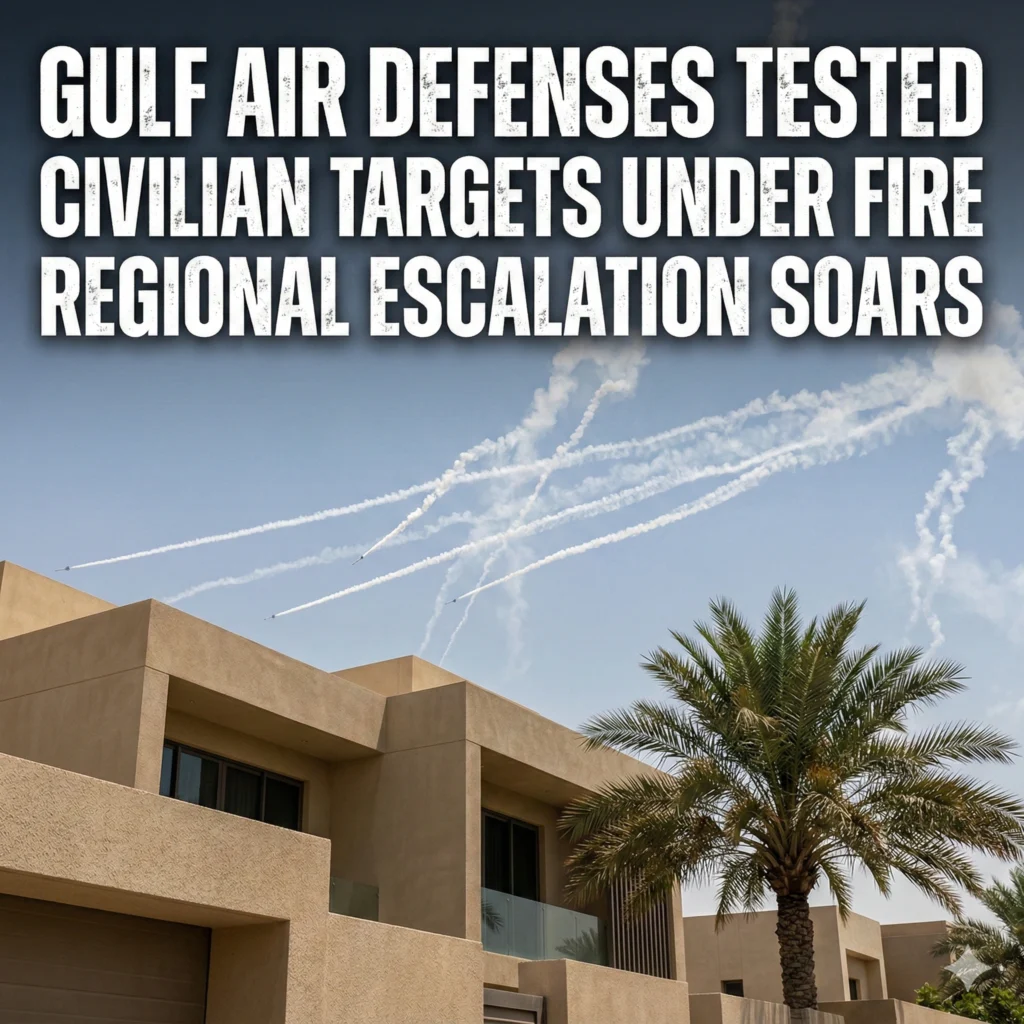
Iran Expands Regional Conflict with Missile and Drone Attacks
The sheer volume of ordnance being directed at the UAE and Bahrain is unprecedented in the modern era of Gulf warfare. As Iran expands regional conflict with missile and drone attacks, the technological limits of sophisticated air defense systems are being tested to their breaking point. While the Patriot and THAAD systems have proven effective, the saturation of the airspace makes total protection nearly impossible. Consequently, the psychological impact on the civilian population in cities like Dubai and Abu Dhabi is reaching a critical level.
Strategic analysts suggest that the targeting of civilian sites indicates a broader Iranian strategy to expel Western military influence. By making the cost of hosting American bases prohibitively high, Tehran hopes to force a regional realignment. However, this tactic may backfire by solidifying the resolve of the conservative dynastic monarchies to seek even deeper security guarantees. The total breakdown in diplomatic relations with the Islamic Republic’s leadership suggests that a peaceful resolution is farther away than ever before.
Massive Interceptions Over Abu Dhabi and Dubai
The UAE defense ministry’s report of nearly 700 combined missile and drone threats illustrates the magnitude of the current crisis. Because Iran expands regional conflict with missile and drone attacks, the “Iron Dome” of the Gulf is facing its ultimate trial by fire. Even successful interceptions carry the risk of falling debris, which has already caused significant structural damage to high-rise apartment blocks. The disruption to international travel through the world’s busiest airport hubs is causing a secondary economic shockwave globally.
Furthermore, the expansion of targets to include shopping malls and luxury hotels signifies a departure from traditional rules of engagement. This “total war” approach is designed to cripple the tourism and investment sectors that underpin the UAE’s economic diversification. As luxury towers in Abu Dhabi face the threat of fire and collapse, the stability of the entire region hangs in the balance. The international community is now watching to see if the UAE will officially enter the offensive campaign in response.
The Siege of Bahrain and the 5th Fleet
Bahrain has found itself at the epicenter of the storm due to its hosting of the United States Navy 5th Fleet. As Iran expands regional conflict with missile and drone attacks, the small island nation has faced a relentless barrage aimed at American naval assets. The sirens at the national airport have become a constant backdrop to daily life for the citizens of Manama. This direct challenge to the US military presence is the most significant since the start of the current hostilities.
The Iranian leadership has been vocal about its intention to dismantle what it calls “foreign interventionism” in the Persian Gulf. By targeting Bahrain, they are striking at the very nerve center of Western maritime security. If the 5th Fleet is forced to relocate or reduce its footprint, the balance of power in the region would shift dramatically. This high-stakes game of chicken has put the sovereignty of Bahrain in a precarious position as it defends against a much larger neighbor.
Diplomatic Breakdown Between Tehran and GCC States
The current escalation marks a violent shift in the historical “policeman of the Gulf” role once held by Iranian authorities. Because Iran expands regional conflict with missile and drone attacks, the diplomatic bridges built over decades have been burned in a matter of days. The conservative dynastic monarchies now view Tehran not just as a rival, but as an existential threat to their survival. This perception makes the possibility of a “credible deal” or a ceasefire increasingly remote for the foreseeable future.
Iranian Foreign Minister Abbas Aragchi’s comments suggest that Tehran feels justified in its actions, blaming “decision-makers of the war” for the chaos. This rhetoric is clearly aimed at Washington and its allies, yet it is the Gulf citizens who are paying the price. The attempt by nations like the UAE and Saudi Arabia to distance themselves from the conflict has largely failed. Iran’s policy of “complicity equals targets” has effectively dragged the entire region into a war that many had hoped to avoid.
Impact on Global Energy Markets and Supply Chains
The Persian Gulf is the world’s most vital energy artery, and any disruption there has immediate global consequences. As Iran expands regional conflict with missile and drone attacks, the price of Brent crude has seen a record-breaking surge in international markets. Investors are increasingly worried that the Strait of Hormuz could be closed, leading to a catastrophic global energy shortage. The safety of tankers moving through these waters can no longer be guaranteed despite the presence of international naval task forces.
Moreover, the damage to industrial sites and logistics hubs like Jebel Ali port is hindering the flow of non-oil goods. This disruption comes at a time when the global economy is already struggling with inflationary pressures and post-conflict recovery. If the attacks on infrastructure continue, the cost of insurance for shipping and aviation in the Gulf will skyrocket. The economic “sanctuary” that the UAE once provided to global businesses is under direct and sustained assault.
Technological Warfare: Drones vs. Air Defenses
The use of 541 drones in a single weekend highlights the evolution of modern asymmetric warfare. Because Iran expands regional conflict with missile and drone attacks, it is utilizing “swarm” technology to overwhelm traditional radar systems. These low-cost, high-impact assets are difficult to track and even harder to intercept without wasting expensive surface-to-air missiles. This imbalance in the cost of warfare is a major strategic advantage for Tehran in a prolonged war of attrition.
On the other side, the deployment of electronic warfare and directed-energy weapons is being accelerated to counter this drone threat. The Gulf states are rapidly integrating new technologies to create a more resilient defensive umbrella. However, the sheer persistence of the Iranian aerial campaign means that some threats will inevitably get through the gaps. The sight of drones over major city skylines has become a grim reality for residents of the Gulf’s futuristic metropolises.
Humanitarian Concerns Amidst Urban Bombardment
While the focus is often on military assets, the human toll of the bombardment in Abu Dhabi and Manama is growing. As Iran expands regional conflict with missile and drone attacks, the safety of millions of expatriates and locals is at risk. Many residents have reported a total breakdown in their sense of security, leading to a potential exodus of foreign talent. The psychological trauma of living under a constant state of aerial alert cannot be underestimated in its long-term impact on society.
The destruction of apartment blocks and the risk to shoppers in malls represent a clear violation of civilian protection norms. Humanitarian organizations are calling for an immediate cessation of strikes on non-military targets to prevent a wider catastrophe. If the conflict shifts into a more intense urban phase, the casualty numbers could rise exponentially. The international community must now prioritize the protection of non-combatants in one of the world’s most densely populated urban corridors.
The Role of the United States and Israel in the Defense
The joint US and Israeli strikes on Iran were the catalyst for this latest round of regional retaliation. Since Iran expands regional conflict with missile and drone attacks, the US has increased its military presence in the Gulf to bolster its allies. This includes the deployment of additional fighter squadrons and missile defense batteries to the UAE and Bahrain. The goal is to provide a “deterrence by denial” strategy that makes Iranian attacks ineffective and costly for the regime.
However, the presence of more American hardware can also serve as a magnet for further Iranian aggression. This “security dilemma” is the central challenge facing Gulf leaders today. They need the protection of the US military, but that very protection makes them targets for Iranian missiles. Navigating this paradox requires a level of diplomatic and military coordination that is currently being tested in real-time. The results of this defensive effort will determine the future of Western influence in the Middle East.
Future Projections for Gulf Security Architecture
The current crisis will likely lead to a permanent change in how Gulf nations approach their national security. Because Iran expands regional conflict with missile and drone attacks, there is a renewed push for a unified “Arab NATO” structure. A more integrated air defense network that shares radar data across borders would be much more effective than the current fragmented systems. This integration would require overcoming long-standing political rivalries between the various monarchies in the region.
Furthermore, the reliance on Western technology may be supplemented by domestic military production to ensure supply chain resilience. The UAE and Saudi Arabia have already been investing heavily in their own defense industries, and this conflict will only accelerate those efforts. In the long run, the Gulf may move toward a more self-reliant security model that doesn’t depend solely on the 5th Fleet. However, in the short term, the partnership with Washington remains the only viable shield against Iranian expansionism.
Conclusion and Final Strategic Assessment
The escalation of the past week has fundamentally altered the geopolitical calculus of the Middle East. As Iran expands regional conflict with missile and drone attacks, the dream of a peaceful and economically integrated Gulf seems to be slipping away. The resilience of the UAE and Bahrain in the face of this onslaught has been remarkable, but the cost is mounting daily. The world now waits to see if Tehran will double down on its aggression or if a path to de-escalation can be found amidst the ruins.
The final outcome of this conflict will depend on whether the international community can provide a united front against the targeting of civilians. The protection of global trade routes and the safety of millions of people must remain the top priority for all global powers. While the military situation is dire, the strength of the regional alliances and the sophistication of modern defenses provide some hope for stability. For now, the people of the Gulf remain on high alert, watching the skies for the next wave of a conflict that has truly expanded beyond all previous boundaries.
For more details & sources visit: BBC News
Read more about Behrain news on 360 News Orbit-Behrain.