
Russia and Iran Strategic Partnership remains the central pillar of a shifting geopolitical landscape as we move into the second quarter of 2026. This comprehensive alliance has matured from a tactical necessity into a long-term structural bond that fundamentally alters the power dynamics across Eurasia and the Middle East. Following the landmark 20-year agreement signed in early 2025, the two nations have successfully integrated their financial systems and energy grids to create a specialized economic zone.
This development effectively shields both Moscow and Tehran from external economic pressures while providing a blueprint for other nations seeking autonomy from Western-centric financial architectures. As regional tensions continue to fluctuate, the depth of this cooperation signals a permanent departure from previous diplomatic norms in the Caspian and Persian regions.
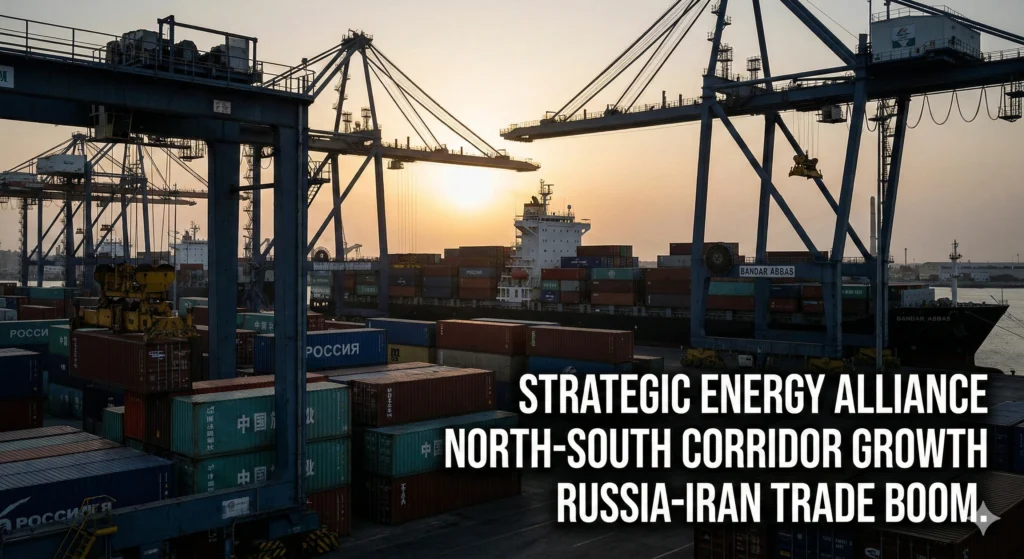
Evolution of the Russia and Iran Strategic Partnership
The modern framework of the Russia and Iran Strategic Partnership is built upon a foundation of shared necessity and complementary economic goals. Historically, these two nations maintained a complex relationship characterized by cautious cooperation, but the events of the mid-2020s catalyzed a rapid convergence. The signing of the 20-year Comprehensive Strategic Partnership Agreement in January 2025 served as the formal starting point for this new era of deep integration. This document provides a legal and political roadmap for collaboration in sectors ranging from space exploration to agricultural trade.
Economic data from 2025 indicates that the Russia and Iran Strategic Partnership has already yielded significant dividends for both participating countries. Bilateral trade reached a record $5.3 billion last year, representing a 13 percent increase that was largely driven by Russian agricultural exports and Iranian manufactured goods. Furthermore, Russia has solidified its position as the primary foreign investor in the Iranian energy sector, injecting nearly $3 billion into local infrastructure projects. These investments are specifically designed to modernize aging oil fields and expand natural gas production capabilities within the Islamic Republic.
Geopolitically, the Russia and Iran Strategic Partnership functions as a stabilizing force for two regimes facing intense international scrutiny and sanctions. By synchronizing their foreign policies within the BRICS+ framework, Moscow and Tehran have effectively created a diplomatic shield that amplifies their voices on the global stage. This coordination extends to intelligence sharing and joint naval exercises in the Persian Gulf, although both parties have been careful to avoid a formal mutual defense clause. This strategic ambiguity allows for maximum flexibility while signaling a high level of military and political trust.
Russia and Iran Strategic Partnership
The energy sector serves as the primary engine driving the current Russia and Iran Strategic Partnership toward unprecedented levels of cooperation. As Iran aims to maintain its production of 3.5 million barrels of crude oil per day, Russian technical expertise has become indispensable for maintaining infrastructure. Rosatom is currently leading the discussions for the development of eight new nuclear power plants across Iran to modernize the nation’s industrial power base. These reactors are designed to utilize low-enriched uranium, ensuring they meet international safety standards while providing reliable carbon-neutral energy.
Logistical connectivity is another critical pillar of the Russia and Iran Strategic Partnership that has seen massive growth over the last twelve months. The International North-South Transport Corridor (INSTC) has become a viable alternative to traditional maritime routes, linking Russian ports directly to the Persian Gulf. By utilizing this multimodal supply chain, cargo transit times have been reduced by 40 percent compared to the traditional Suez Canal route. This efficiency has made Iran a vital transport hub for Russian goods destined for the burgeoning markets of the Global South and Southeast Asia.
- Completion of the Rasht-Astara railway link to close the final gap in the INSTC corridor.
- Expansion of port facilities at Bandar Abbas to accommodate increased Russian container traffic.
- Simplification of customs procedures through a unified digital tracking system for transborder trade.
- Development of a shared tanker fleet to facilitate the movement of petroleum products across the Caspian Sea.
Financial Integration and BRICS Cooperation
A major milestone for the Russia and Iran Strategic Partnership was the successful de-dollarization of their bilateral trade accounts through the Mir and Shetab payment systems. This integration allows businesses in both countries to settle transactions in their local currencies, bypassing the SWIFT network and mitigating the impact of sanctions. In 2025, over 80 percent of trade between the two nations was conducted in rubles or rials, providing a stable financial environment for long-term investments. This financial autonomy is a core component of their shared strategy to build a multipolar economic order.
Iran’s full membership in BRICS, supported heavily by Moscow, has provided a massive boost to the Russia and Iran Strategic Partnership on the international stage. Through this platform, Tehran has gained access to the New Development Bank, which offers alternative funding sources for large-scale infrastructure projects. This membership has also facilitated deeper trade ties with other emerging economies, particularly China and India, who are major consumers of Iranian energy. The synergy between Moscow’s influence and Tehran’s regional position has made this partnership a formidable bloc within the BRICS organization.
The technological exchange within the Russia and Iran Strategic Partnership has also expanded into the realm of digital governance and cybersecurity. Both nations have faced significant cyber threats to their critical infrastructure, leading to a robust agreement on sharing defensive technologies. This collaboration includes the development of localized internet protocols and secure communication channels for government officials. By pooling their technical resources, Russia and Iran are creating a digital fortress that protects their domestic stability from external interference or hybrid warfare tactics.
Regional Security and Intelligence Sharing
While the Russia and Iran Strategic Partnership lacks a formal “Article 5” style defense pact, the level of military cooperation has reached historic highs. Joint exercises in the Indian Ocean and the Caspian Sea have become regular occurrences, focusing on counter-piracy and search-and-rescue operations. These drills serve a dual purpose of enhancing interoperability between the two militaries and signaling a united front against regional adversaries. Intelligence sharing regarding extremist movements in Central Asia and the Caucasus remains a top priority for both Moscow and Tehran.
The stabilization of the Caucasus region is a specific area where the Russia and Iran Strategic Partnership plays a decisive role in preventing conflict. Both nations share an interest in maintaining the territorial integrity of regional states while limiting the influence of outside powers. This alignment of interests has led to several high-level diplomatic initiatives aimed at resolving long-standing border disputes and promoting economic connectivity. The partnership ensures that neither country is marginalized in discussions regarding the future of the strategic land bridge between Europe and Asia.
- Implementation of a real-time data sharing agreement regarding maritime traffic in the Strait of Hormuz.
- Joint development of unmanned aerial vehicle (UAV) technology for border surveillance and agricultural monitoring.
- Cooperation in satellite launches, with Russia providing launch services for Iranian communication satellites.
Industrial Modernization and Agricultural Trade
The Russia and Iran Strategic Partnership has transformed the agricultural landscape of both nations, ensuring food security in an era of global supply chain disruptions. Russia has become the primary supplier of grain, oilseeds, and sunflower oil to the Iranian market, filling the void left by other exporters. In exchange, Iran provides high-quality produce, petrochemicals, and specialized industrial equipment to the Russian Federation. This barter-style arrangement helps preserve foreign currency reserves while ensuring that the basic needs of both populations are met.
In the industrial sector, the Russia and Iran Strategic Partnership is focusing on the localization of manufacturing for automotive and aerospace components. Russian manufacturers have begun setting up assembly lines in Iran to leverage lower labor costs and proximity to Middle Eastern markets. Conversely, Iranian engineering firms are providing specialized parts for Russian oil and gas turbines that were previously sourced from Western companies. This mutual industrial support is crucial for maintaining the operational capacity of their respective energy sectors amid ongoing technological restrictions.
Furthermore, the Russia and Iran Strategic Partnership is exploring opportunities in the pharmaceutical and biotechnology sectors to reduce dependence on foreign medicines. Joint ventures are currently underway to produce essential vaccines and oncology treatments in state-of-the-art facilities located in Tehran and St. Petersburg. These projects not only improve public health outcomes but also create high-skilled jobs in both countries. The collaboration in science and technology is perhaps the most enduring aspect of their relationship, fostering a new generation of experts committed to bilateral success.
Future Outlook for Eurasian Integration
The trajectory of the Russia and Iran Strategic Partnership suggests that the two nations will continue to converge on almost all strategic fronts over the next decade. As the INSTC reaches full operational capacity, the economic gravity of the region will likely shift toward this new North-South axis. This shift will force other regional players to reassess their diplomatic stances, potentially leading to a broader realignment across Eurasia. The partnership is not merely a reaction to sanctions but a proactive effort to build a self-sustaining geopolitical ecosystem.
One of the most significant challenges for the Russia and Iran Strategic Partnership will be managing the expectations of neighboring states who may feel sidelined by this powerful duo. However, Moscow and Tehran have expressed a willingness to include other nations in their transport and energy initiatives, such as Azerbaijan and Turkmenistan. By positioning their partnership as an inclusive regional framework, they hope to foster a broader “Greater Eurasia” project. This vision relies on the continued stability and growth of the bilateral bond between the Kremlin and the Iranian leadership.
- Potential for a unified currency or digital token to facilitate trade within the INSTC framework.
- Expansion of educational exchange programs to train the next generation of Eurasian logistics experts.
- Increased cooperation in environmental protection and water management in the Caspian Sea basin.
- Collaboration on high-speed rail projects connecting Moscow to Tehran via the Caucasus.
Conclusion and Strategic Significance
In summary, the Russia and Iran Strategic Partnership has evolved into a cornerstone of contemporary international relations, challenging the traditional hegemony of Western alliances. Through deep financial integration, massive energy projects, and a shared vision for a multipolar world, these two nations have secured their interests in a volatile global environment. The 20-year agreement is more than a piece of paper; it is a living document that guides the daily cooperation of thousands of officials and business leaders. As we look toward the late 2020s, this partnership will undoubtedly remain a defining feature of the global geopolitical landscape.
The success of the Russia and Iran Strategic Partnership serves as a case study for how medium and large powers can collaborate to overcome external pressures. By focusing on tangible economic benefits and logistical advantages, Moscow and Tehran have created a relationship that is resilient to political shifts. Their ability to bypass sanctions and build independent infrastructure proves that the world is no longer dominated by a single economic pole. The continued growth of this alliance will continue to influence global trade routes and security architectures for years to come.
Ultimately, the Russia and Iran Strategic Partnership reflects a broader trend of regionalization in global politics. As nations prioritize local and regional stability over global integration, alliances like the one between Moscow and Tehran become increasingly attractive. The strategic depth provided by this partnership ensures that both countries can navigate the complexities of the 21st century with greater confidence and autonomy. The world is watching as these two historic civilizations forge a common path toward a shared future.
For more details & sources visit: Russia’s Pivot to Asia
For more regional updates and industry insights, visit our Russia News Page