
The death of Supreme Leader Khamenei has sent shockwaves across the globe as Iranian state media officially confirms the end of an era. This monumental shift in Middle Eastern geopolitics follows a series of devastating joint military operations conducted by the United States and Israel. As the dust settles over Tehran, the international community is now grappling with the immediate consequences of this unprecedented escalation. The following report provides an exhaustive analysis of the strikes, the internal power vacuum within the Islamic Republic, and the potential for a wider regional conflagration.
The death of Supreme Leader Khamenei marks a definitive turning point in the decades-long tension between Iran and Western powers. Following the confirmation from Tehran, officials in Washington and Tel Aviv have released detailed accounts of the precision strikes that targeted the heart of the Iranian leadership. This operation was not merely a tactical victory but a strategic maneuver intended to dismantle the command structure of the Iranian regime. Consequently, the global energy markets have already begun to react to the news of the death of Supreme Leader Khamenei with significant volatility.
Observers suggest that the death of Supreme Leader Khamenei will lead to an internal struggle for control among the remaining elite. While a transitional council has been established, the long-term stability of the nation remains in serious doubt. The sudden absence of the ultimate arbiter of Iranian policy creates a vacuum that various factions may attempt to fill through force or political maneuvering. Therefore, the next few weeks will be critical in determining whether Iran moves toward a more moderate path or descends into further radicalization.
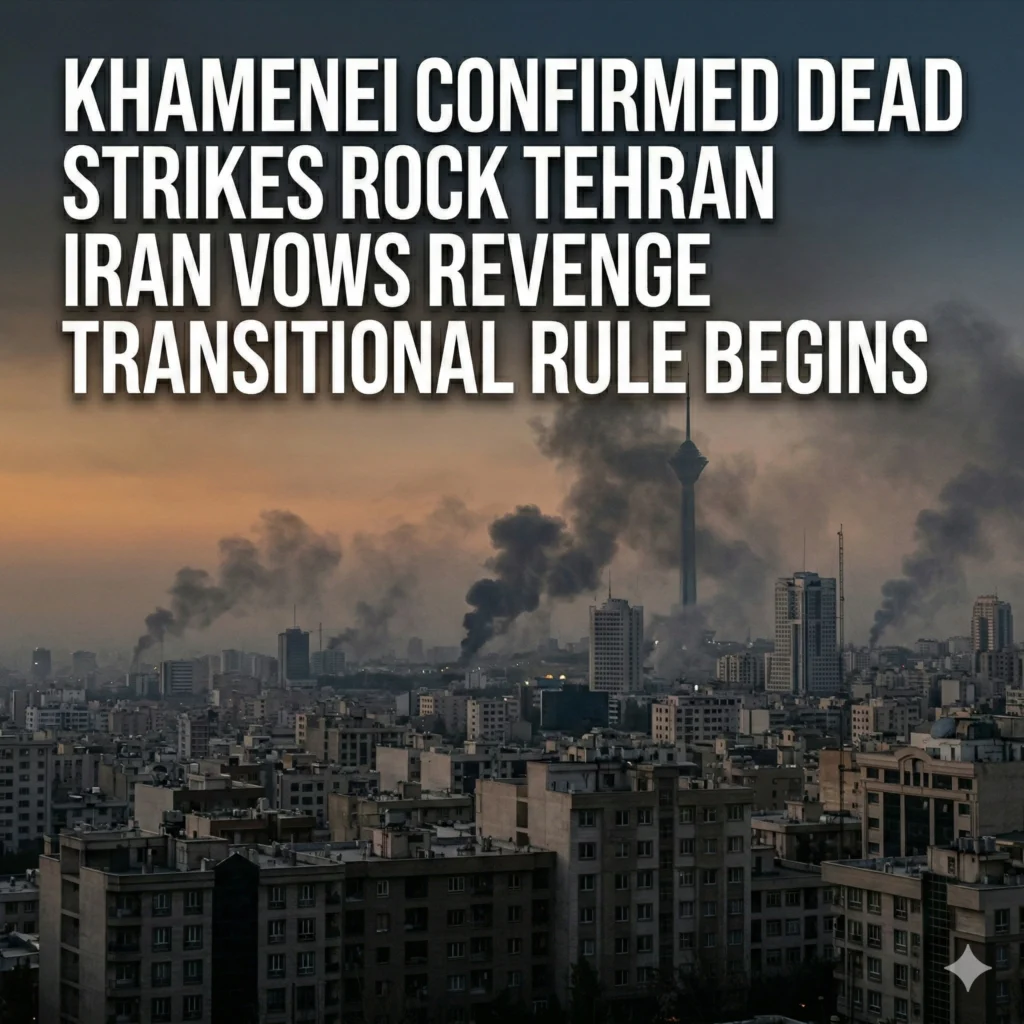
Death of Supreme Leader Khamenei
The official announcement regarding the death of Supreme Leader Khamenei was broadcast via state television, ending hours of intense speculation. Iranian officials described the event as a martyrdom, signaling their intent to use the leader’s passing as a rallying cry for the population. Despite this rhetoric, the atmosphere in Tehran is described as one of profound shock and uncertainty. Many citizens are reportedly staying indoors as security forces increase their presence across major urban centers to prevent potential unrest.
International reaction to the death of Supreme Leader Khamenei has been sharply divided along traditional geopolitical lines. While Western leaders view the event as an opportunity for regional liberation, allies of Iran have condemned the strikes as a violation of international law. This division suggests that the diplomatic fallout from the operation will be just as complex as the military execution itself. As a result, the United Nations Security Council is expected to hold an emergency session to address the escalating crisis.
The logistical details surrounding the death of Supreme Leader Khamenei reveal a highly sophisticated intelligence operation that spanned several months. Intelligence assets on the ground likely provided the real-time telemetry needed to ensure the strikes hit their intended targets with maximum impact. This level of infiltration suggests that the Iranian security apparatus may have been compromised at a very high level. Such a breach will likely lead to extensive purges within the Revolutionary Guard as they attempt to identify potential informants.
Military Dynamics of the Tehran Airstrikes
The aerial campaign that resulted in the death of Supreme Leader Khamenei involved approximately 200 Israeli jets and various U.S. support assets. These aircraft targeted over 500 strategic sites, focusing on command and control centers, missile silos, and communication hubs. By neutralizing these assets simultaneously, the coalition effectively blinded the Iranian military during the most critical moments of the operation. This comprehensive approach was designed to minimize the risk of a sustained Iranian counter-offensive.
In the hours following the death of Supreme Leader Khamenei, Iran attempted to launch a retaliatory wave of drones and missiles. However, a significant portion of these projectiles was intercepted by regional defense systems, including the Iron Dome and Aegis-equipped destroyers. This failed retaliation highlights the defensive superiority of the coalition forces in the current conflict. It also raises questions about the remaining offensive capabilities of the Iranian military after such a punishing series of strikes.
The precision of the strikes leading to the death of Supreme Leader Khamenei has set a new precedent for targeted military interventions. Satellite imagery has since verified that the structural damage to the Leadership House was absolute, leaving little room for survival for those inside. This level of accuracy is a testament to the advancements in modern electronic warfare and kinetic strike technology. Consequently, other regional actors are likely re-evaluating their own security protocols in light of these developments.
Internal Power Struggle and Succession
The death of Supreme Leader Khamenei has triggered the immediate formation of a transitional leadership group to manage state affairs. This council includes President Masoud Pezeshkian and the head of the judiciary, who are tasked with maintaining order during the mourning period. However, the underlying tensions between the pragmatic wing of the government and the hardline Revolutionary Guard are expected to surface quickly. The outcome of this internal friction will dictate the future of Iran’s foreign policy and nuclear ambitions.
Historically, the process of choosing a successor in Iran is shrouded in secrecy and dominated by the Assembly of Experts. With the death of Supreme Leader Khamenei, this body now faces its most significant challenge since the passing of Ayatollah Khomeini in 1989. There is no clear, singular heir to the position, which could lead to a protracted period of institutional instability. Investors and diplomats are watching closely for any signs of who might emerge as the next ideological leader of the nation.
The public reaction to the death of Supreme Leader Khamenei has been a mixture of state-mandated mourning and private apprehension. While the government has declared 40 days of mourning, reports from within the country suggest a significant portion of the youth may see this as a chance for change. The duality of the Iranian social fabric is currently being tested as the state attempts to project a unified front of grief. Whether this translates into sustained political support or sparks further protests remains to be seen in the coming months.
Regional Retaliation and Gulf Security
Immediately after the news of the death of Supreme Leader Khamenei broke, several Gulf Arab nations were placed on high alert. Iran’s military doctrine often involves targeting neighboring states that host U.S. military bases, such as Bahrain and Qatar. These nations now find themselves in the crossfire of a conflict that threatens to engulf the entire Persian Gulf. The security of the Strait of Hormuz, a vital artery for global oil shipments, is currently the primary concern for international maritime authorities.
- U.S. bases in Kuwait and the UAE have increased their force protection levels to the highest possible state.
- Regional air defense networks are now operating in a fully integrated mode to track potential incoming threats.
- Diplomatic channels between the Gulf states and Iran remain strained as the threat of further missile strikes persists.
- Commercial shipping companies have been advised to exercise extreme caution or reroute vessels away from the conflict zone.
The threat of asymmetric warfare has increased significantly following the death of Supreme Leader Khamenei and the subsequent military losses. Pro-Iranian militias in Iraq, Syria, and Lebanon may seek to avenge the leader through proxy attacks on Western interests. This decentralized threat makes it difficult for coalition forces to declare a total victory, as the conflict could simply shift to different theaters. Therefore, the strategic focus is now shifting toward containment and the protection of vulnerable diplomatic installations.
Economic Impact and Global Market Reactions
The global economy is feeling the immediate aftershocks of the death of Supreme Leader Khamenei, particularly in the energy and gold sectors. Crude oil prices spiked by over 10% in the hours following the confirmation of the Tehran strikes. Analysts warn that if the conflict leads to a prolonged closure of the Strait of Hormuz, the world could face a severe energy crisis. This economic pressure adds another layer of complexity to the already volatile political situation in the Middle East.
- Global stock indices experienced a sharp sell-off as investors sought the safety of government bonds and precious metals.
- Insurance premiums for maritime cargo in the Persian Gulf have reached historic highs, impacting the cost of goods.
- Central banks are monitoring the situation closely to determine if emergency liquidity measures will be required.
Despite the initial shock, some market experts believe that the death of Supreme Leader Khamenei could eventually lead to lower prices if a more stable government emerges. However, this is a long-term projection that depends entirely on the resolution of the current military hostilities. In the short term, the world must prepare for a period of high inflation driven by energy costs. The resilience of the global supply chain is once again being put to the test by geopolitical instability.
Diplomatic Fallout and International Law
The death of Supreme Leader Khamenei has sparked a heated debate regarding the legality of targeted assassinations of state leaders. Critics argue that such actions bypass traditional diplomatic norms and set a dangerous precedent for international relations. Conversely, supporters of the operation contend that the Iranian regime’s support for global terrorism made the leader a legitimate military target. This legal and ethical debate is likely to dominate the discourse at the United Nations for the foreseeable future.
- Several European nations have called for an immediate ceasefire to prevent the conflict from escalating into a total regional war.
- Russia and China have issued strong statements condemning the strikes, citing the need for national sovereignty and territorial integrity.
- The United States has defended the action as a necessary step to prevent the Iranian nuclear program from reaching a point of no return.
The failure of recent nuclear negotiations served as the immediate backdrop to the death of Supreme Leader Khamenei. With the diplomatic path exhausted, the military option became the primary tool for Western policy. This shift suggests that the era of “strategic patience” has officially ended, replaced by a more assertive and interventionist doctrine. The long-term implications for non-proliferation efforts are currently being assessed by experts worldwide.
Future Outlook for the Iranian People
For many Iranians, the death of Supreme Leader Khamenei represents a moment of both fear and potential liberation. The rigid social and political structures maintained by the leader for decades are now without their primary architect. While the state security apparatus remains formidable, the ideological core has been severely shaken. The coming months will reveal whether the Iranian people are ready to push for significant domestic reforms in the wake of this leadership change.
The humanitarian situation in Iran must also be considered as the conflict continues to unfold. Sanctions and the physical damage from the strikes have put immense pressure on the country’s infrastructure and healthcare systems. International aid organizations are concerned about the welfare of the civilian population during this period of transition. Ensuring that basic needs are met will be a major challenge for the interim government as they navigate the death of Supreme Leader Khamenei.
Ultimately, the death of Supreme Leader Khamenei is a catalyst for a new chapter in Middle Eastern history. The old certainties of the region are being dismantled, replaced by a volatile and unpredictable landscape. Whether this leads to a more peaceful and democratic Iran or a cycle of endless violence remains the most pressing question of 2026. The world remains watchful, hoping that the current crisis can be resolved without further loss of life or global catastrophe.
The death of Supreme Leader Khamenei is also being documented through various media formats. [Image Alt Text: A high-resolution satellite image showing the structural damage to the Leadership House in Tehran following the death of Supreme Leader Khamenei.] This visual evidence is crucial for providing transparency regarding the scale of the military operation. As more information becomes available, the full extent of the damage and the details of the strike will be analyzed by military experts around the world.
The death of Supreme Leader Khamenei will undoubtedly be studied by historians for decades to come. It serves as a stark reminder of the rapidly changing nature of global power and the consequences of failed diplomacy. As the international community moves forward, the lessons learned from this event will shape the strategies of nations for the remainder of the century. The focus now remains on stabilizing the region and preventing further escalation.
For more details & sources visit: BBC News
Read more on global developments: 360 News Orbit – Extended Orbit