
The Taiwan Chip Dependency has reached a critical breaking point as national security officials issued a formal warning to tech giants on February 27, 2026. This urgent briefing highlighted that a potential Chinese blockade of Taiwan could effectively paralyze the United States economy and the global technology sector. Despite years of financial incentives and mounting tariff threats from successive administrations, Silicon Valley remains dangerously tethered to Taiwanese semiconductor production. This reliance has created a strategic vulnerability that experts describe as an impending economic apocalypse if supply chains are severed.
Federal officials have spent a significant portion of the last decade attempting to mitigate the Taiwan Chip Dependency by encouraging domestic manufacturing. However, the complexity of high-end computer chip fabrication means that shifting these supply chains is a slow and arduous process. Executives from trillion-dollar companies like Apple and AMD were recently called into high-level security briefings to discuss the reality of the situation. They were warned that China is actively refining its plans to retake the island territory, which would immediately choke the global flow of semiconductors.
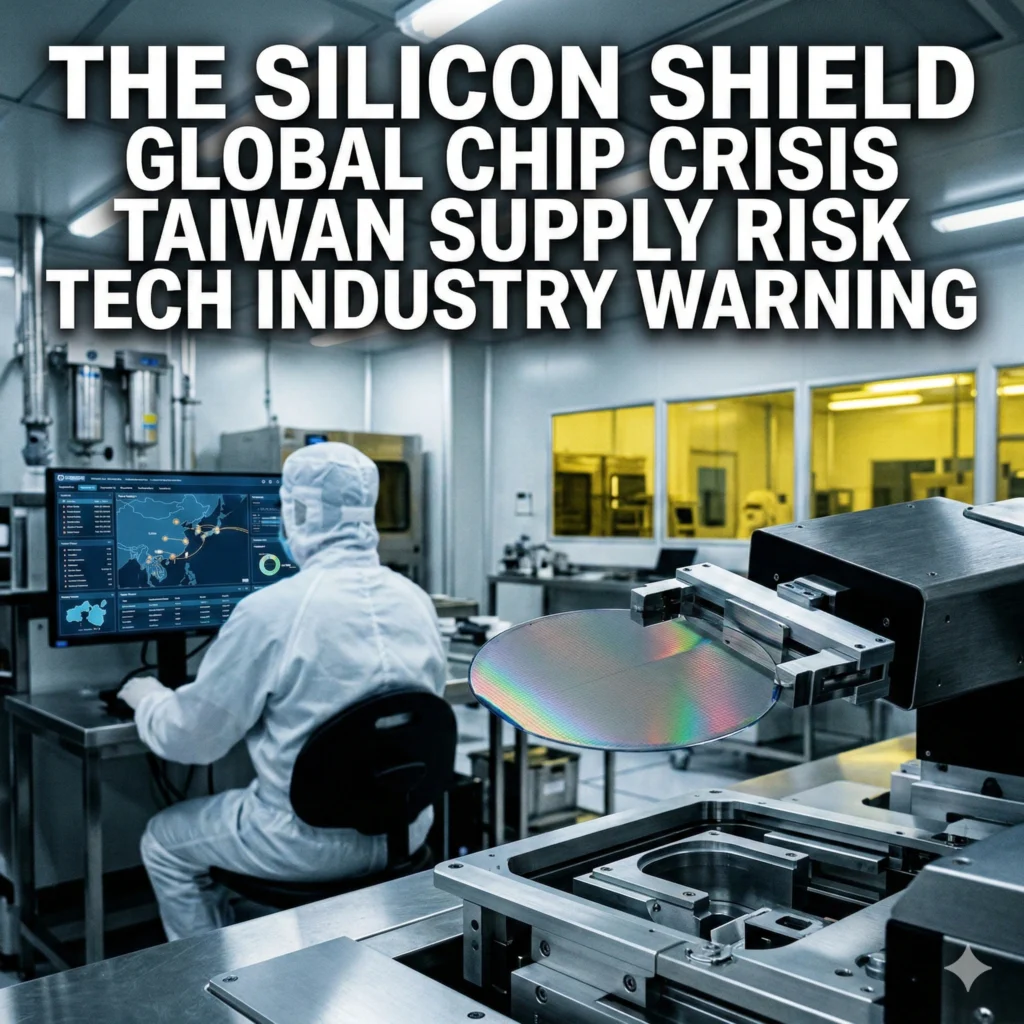
The potential for a total cutoff has prompted the Treasury Department to label this situation the single greatest threat to global financial stability. Treasury Secretary Scott Bessent has been vocal about the catastrophic consequences of a blockade, noting that the impact would likely dwarf the 2008 financial crisis. Without a steady stream of advanced processors, the production of everything from smartphones to advanced medical equipment would grind to a halt. This Taiwan Chip Dependency is no longer just a business concern; it is a matter of survival for the modern American way of life.
The Economic Impact of a Semiconductor Blockade
If the flow of high-end semiconductors from the island were to be severed, U.S. economic output could potentially plunge by a staggering eleven percent. This projection comes from confidential industry reports that analyzed the cascading failures across various sectors including automotive, aerospace, and consumer electronics. The reality is that most major tech firms only maintain enough inventory to sustain operations for a few months. Once those stockpiles are depleted, the resulting vacuum would trigger a recession of unprecedented proportions due to the Taiwan Chip Dependency.
The transition toward domestic production is currently underway, but it is a race against time. While billions in grants have been allocated to improve American-based factories, the technical hurdles remain significant. The Biden administration initiated many of these subsidies, while the Trump administration has more recently utilized the threat of multi-billion dollar tariffs to accelerate the shift. These dual pressures are finally forcing companies to reconsider their long-term strategies regarding the Taiwan Chip Dependency.
Taiwan Chip Dependency
The current geopolitical climate has made it clear that the status quo is no longer tenable for Western technology interests. Every major breakthrough in artificial intelligence and high-performance computing currently relies on a geographic location that is under constant threat. To achieve true economic sovereignty, the industry must decouple from this singular point of failure. The Taiwan Chip Dependency represents a bottleneck that, if squeezed, could end the current era of technological dominance and prosperity in the West.
Strategic Shifts by Nvidia and Major Industry Leaders
In response to the intensifying pressure from Washington, some industry leaders are beginning to pivot. Nvidia, the leader in AI processing, recently agreed to source a significant portion of its chips from new Arizona plants. These facilities, currently under construction by the Taiwan Semiconductor Manufacturing Corporation (TSMC), represent a major step toward onshoring. This move was largely influenced by the Trump administration’s specific use of tariff threats against companies that refuse to commit to American-based manufacturing to solve the Taiwan Chip Dependency.
However, these new facilities will not be fully operational for several years, leaving a dangerous gap in the interim. The construction of a high-end semiconductor “fab” is one of the most complex engineering feats on the planet, requiring specialized equipment and highly trained labor. During this transition period, the global economy remains in a state of high alert. The Taiwan Chip Dependency continues to loom over every board meeting and earnings call in Silicon Valley as a variable that no CEO can truly control.
National Security Warnings and the Path to Sovereignty
National security briefings have become increasingly blunt regarding the intentions of the Chinese military. Officials have provided evidence that a blockade is not just a theoretical exercise but a practiced military maneuver. If implemented, such a move would effectively hold the global tech industry hostage. The Taiwan Chip Dependency gives foreign powers immense leverage over American domestic policy and economic health. This has led to a bipartisan consensus that domestic chip production is a matter of national defense.
To achieve semiconductor sovereignty, the United States must invest not just in factories, but in the entire ecosystem of chemical suppliers and equipment manufacturers. Currently, even if a factory is located in Arizona, many of the precursor materials are still sourced from regions susceptible to geopolitical interference. Reducing the Taiwan Chip Dependency requires a complete reimagining of the global supply chain. This involves creating redundant systems and stockpiling essential components to weather any potential short-term disruptions.
- Federal grants are being used to subsidize the high costs of American labor and energy.
- Tariff threats are serving as a “stick” to ensure compliance from multi-national corporations.
- R&D tax credits are encouraging the next generation of chip design to happen on U.S. soil.
- Education programs are being expanded to train thousands of specialized semiconductor engineers.
How Tariffs Are Reshaping the Silicon Valley Supply Chain
The use of aggressive trade policy has become a primary tool in the fight against the Taiwan Chip Dependency. By threatening multi-billion dollar tariffs on imported components, the current administration is making the cost of staying in Taiwan higher than the cost of moving to the U.S. This economic “pressure cooker” is designed to force a rapid realignment of interests. For companies like Apple, which has built its entire empire on overseas manufacturing, these policies represent a fundamental shift in their business model.
While these tariffs are controversial, proponents argue they are the only way to counteract the state-sponsored subsidies provided by foreign governments. The goal is to create a level playing field where American factories can compete globally. As more companies move their orders to domestic sites, the collective Taiwan Chip Dependency begins to incrementally decrease. However, consumers may face higher prices in the short term as companies pass on the costs of this massive industrial migration.
Evaluating the Risk of an Eleven Percent Economic Plunge
The projected eleven percent drop in GDP is a figure that haunts economic planners from Washington to Wall Street. Such a decline would be more severe than any downturn experienced since the Great Depression. The reason for such a drastic impact is the “multiplier effect” of semiconductors. Because chips are integrated into nearly every modern product, a shortage in the tech sector quickly becomes a shortage in the medical, transport, and energy sectors. The Taiwan Chip Dependency is the thread that, if pulled, unravels the entire economic tapestry.
Economic analysts are currently modeling various “what-if” scenarios to prepare for a total cutoff. These models suggest that the initial shock would lead to a massive spike in inflation for electronic goods, followed by a period of stagnation as production lines go dark. The urgency to address the Taiwan Chip Dependency is driven by the knowledge that once a blockade begins, it will be too late to build the necessary infrastructure to recover quickly.
The Role of TSMC in the Arizona Manufacturing Expansion
TSMC is at the center of the world’s most critical industry and is now at the center of the Arizona expansion. By building advanced facilities in the United States, TSMC is attempting to hedge against the risks facing its home island. This expansion is a key component of the strategy to reduce the global Taiwan Chip Dependency. These plants will produce the 3-nanometer and 2-nanometer chips that power the world’s most advanced artificial intelligence and military systems.
However, the “Arizona model” faces its own set of challenges, including cultural differences in workplace management and higher operational costs. Despite these hurdles, the progress in Arizona is a rare sign of tangible success in the effort to diversify the supply chain. If these plants can reach full capacity by the end of the decade, the Taiwan Chip Dependency will finally begin to trend downward. This move represents a strategic compromise between Taiwanese expertise and American geographic security.
Confidential Industry Reports on Inventory Vulnerability
A confidential report circulated among tech executives reveals that the industry’s “just-in-time” manufacturing model has left it dangerously exposed. Most companies keep less than 90 days of chip inventory on hand to minimize storage costs and maximize efficiency. In the event of a blockade, this efficiency becomes a death sentence. The Taiwan Chip Dependency is exacerbated by this lack of a safety net, making the industry highly susceptible to even minor shipping delays.
The report recommends that companies immediately begin building “strategic chip reserves” similar to the national strategic petroleum reserve. This would provide a buffer that could keep the economy functioning for a year or more while domestic capacity is brought online. However, such a move requires significant capital investment and could temporarily tighten the already strained market. Addressing the Taiwan Chip Dependency requires a fundamental shift in how Silicon Valley values resilience over raw efficiency.
- Companies are being urged to diversify their supplier base to include European and Japanese firms.
- Engineers are exploring designs that can be manufactured on older, more widely available equipment.
- Software developers are optimizing code to run more efficiently on existing hardware.
- Legal teams are reviewing force majeure clauses in preparation for a potential regional conflict.
Comparing the 2008 Recession to a Modern Chip Crisis
The 2008 recession was triggered by a collapse in the housing market, but a chip crisis would be a collapse of the very tools of production. While the financial crisis was mitigated by central bank intervention and stimulus, the physical absence of chips cannot be solved by printing money. The Taiwan Chip Dependency creates a physical bottleneck that no amount of fiscal policy can bypass. This makes the potential “economic apocalypse” far more difficult to manage than previous financial downturns.
In a post-chip-cutoff world, the digital economy would effectively freeze. Cloud services would fail as servers could not be replaced, and the rollout of new telecommunications infrastructure would stop. The Taiwan Chip Dependency ensures that the modern world’s digital nervous system is entirely dependent on a single, high-risk geographic location. Recognizing this parallel is essential for policymakers who are trying to communicate the gravity of the situation to a public often distracted by short-term political issues.
Future Perspectives on Global Semiconductor Sovereignty
The long-term vision for global semiconductor sovereignty involves a decentralized network of manufacturing hubs spread across stable democracies. By breaking the Taiwan Chip Dependency, the world can ensure that technological progress is never again held hostage by regional instability. This future requires sustained investment and a commitment to industrial policy that spans multiple administrations. It is a generational challenge that will define the power dynamics of the 21st century.
As we look toward the 2030s, the goal is for the United States to produce at least twenty percent of the world’s leading-edge chips. While this would not eliminate the need for international trade, it would provide enough domestic capacity to sustain essential services during a crisis. The Taiwan Chip Dependency will likely remain a factor for years, but its power to cause an “economic apocalypse” will be significantly diminished as American and European factories come online.
Transitioning to a Domestic-First Tech Economy
The transition to a domestic-first tech economy is a massive undertaking that involves reshuffling trillions of dollars in assets. It requires a new social contract between the government and the tech giants of Silicon Valley. In exchange for security and subsidies, these companies must commit to building their future in the American heartland. Reducing the Taiwan Chip Dependency is the catalyst for a new era of American industrialism that prioritizes security and reliability over the lowest possible production cost.
This shift will also lead to a surge in high-tech manufacturing jobs, revitalizing regions that were left behind during the era of outsourcing. The fight against the Taiwan Chip Dependency is, in many ways, a fight for the American middle class. By bringing the most valuable manufacturing process in the world back to the U.S., the government is creating a foundation for long-term prosperity. The warnings issued on February 27, 2026, serve as a reminder that the time for action is now.
- New apprenticeships are being created to build a “semiconductor workforce” in the Midwest.
- State governments are competing to offer the most attractive packages for new chip factories.
- Research universities are receiving record funding to lead the way in materials science.
Final Assessment of the Semiconductor Security Landscape
The warning of an economic apocalypse is a wake-up call that Silicon Valley cannot afford to ignore. The Taiwan Chip Dependency is a systemic risk that threatens the very foundations of the global tech industry. While the path to independence is long and expensive, the cost of inaction is far higher. The collaboration between the public and private sectors to onshore chip production is the most important economic project of our time.
As 2026 progresses, the world will be watching to see if the threats of tariffs and the promise of subsidies are enough to break the cycle of dependency. The future of the American economy depends on the success of these efforts. By addressing the Taiwan Chip Dependency today, we can prevent the catastrophe of tomorrow and ensure that the digital age continues to thrive in a secure and stable environment.
For more details & sources visit: The New York Times
Read more on Taiwan news: 360 News Orbit – Taiwan.