
Egypt Sustainable Finance Facility membership marks a historic turning point in the nation’s quest to modernize its domestic capital markets and attract massive private investment. As of February 25, 2026, Cairo has officially integrated into this World Bank-led initiative to stabilize government financing and create long-term funding avenues for critical sectors. This strategic move is designed to insulate the Egyptian economy from the shocks of volatile international financial conditions while fostering a more transparent regulatory environment.
The Egypt Sustainable Finance Facility is part of the broader Joint Capital Market Program, which receives significant backing from the Swiss State Secretariat for Economic Affairs. By joining this elite group of developing economies, Egypt is signaling its readiness to implement rigorous market reforms that prioritize efficiency and predictability. The program’s core objective is to transform the way government securities are traded, ensuring that price formation is driven by market dynamics rather than administrative fiat.
This partnership comes at a crucial time as Egypt aims to hit a projected gross domestic product growth rate of 4.6 percent by the 2027 fiscal year. Achieving such ambitious targets requires a deep and liquid local market that can support large-scale infrastructure and housing projects. The Egypt Sustainable Finance Facility provides the technical expertise and global best practices needed to turn these economic aspirations into a tangible reality for the country’s 110 million citizens.
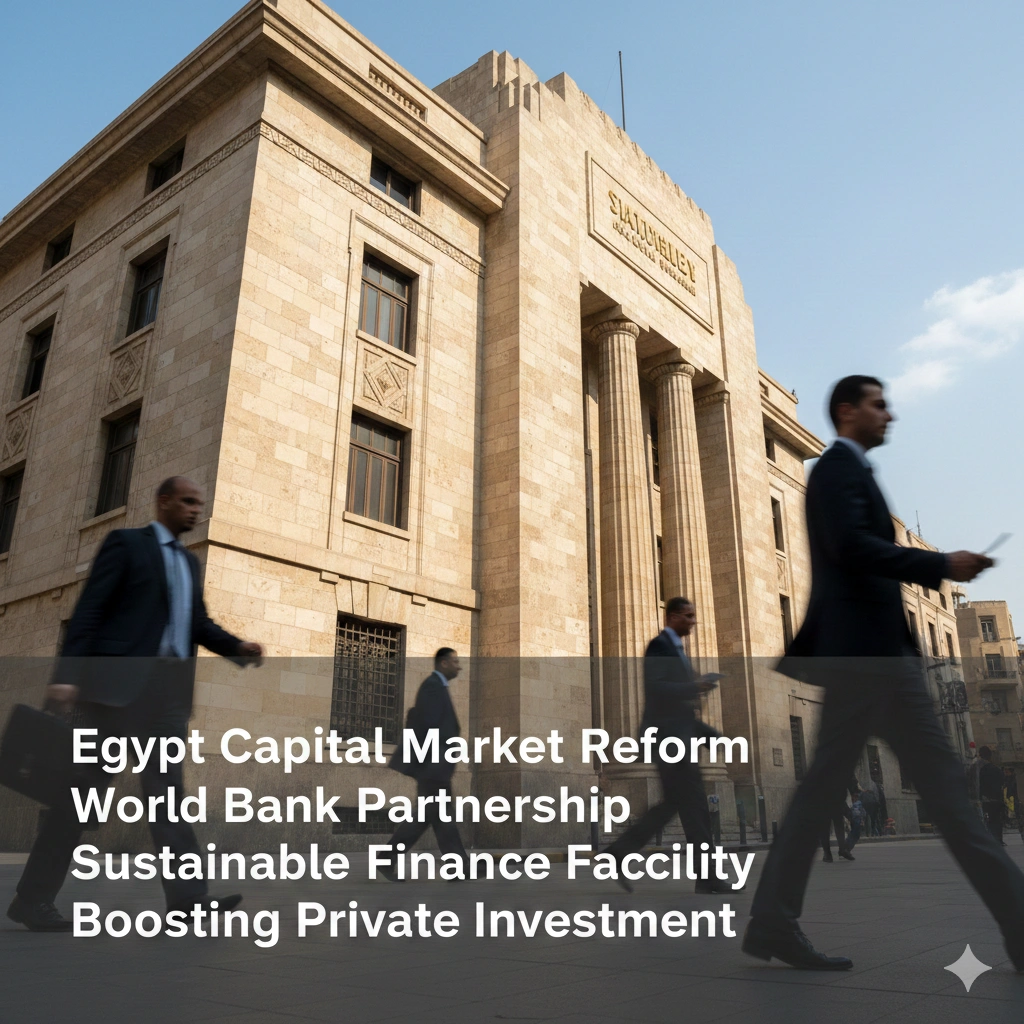
Egypt Sustainable Finance Facility and Capital Market Reform
Egypt Sustainable Finance Facility participation is the culmination of an intensive diagnostic process conducted by World Bank staff in mid-2024. This assessment identified several structural bottlenecks that have historically hindered the growth of the Egyptian stock and bond markets. The resulting reform roadmap focuses on enhancing the legal framework for primary dealers and encouraging a more active secondary market where securities can be traded with ease.
One of the most significant steps taken by the government is the issuance of a new decree regarding primary bond dealers. This regulation is intended to boost liquidity by requiring dealers to maintain active two-way quotes, thereby reducing the bid-ask spread. Such technical improvements are essential for the Egypt Sustainable Finance Facility to succeed in its mission of making government debt more attractive to both domestic and international institutional investors.
Furthermore, the program is helping Egypt develop more sophisticated price discovery mechanisms. By improving the predictability of government auctions, the authorities can lower the long-term cost of borrowing. This fiscal space created by the Egypt Sustainable Finance Facility can then be redirected toward social safety nets and public services, creating a virtuous cycle of stability and growth that benefits the entire national economy.
Unified Insurance Law 2024 and Private Pensions
The success of the Egypt Sustainable Finance Facility is intrinsically linked to the enactment of the Unified Insurance Law 2024. This landmark legislation provides the necessary legal scaffolding for the creation of new private pension funds and insurance products. Currently, Egypt’s institutional investor base is significantly lower than that of its peer countries, a gap that this new law aims to close by encouraging long-term savings.
By fostering a robust insurance and pension sector, Egypt is creating a steady stream of domestic capital that can be reinvested into the local markets. These “patient capital” sources are vital for the Egypt Sustainable Finance Facility because they provide a buffer against the flighty nature of short-term foreign portfolio investments. The new law also introduces stricter solvency requirements, which enhances the overall credibility of the financial system.
The World Bank’s role in this transition involves providing technical assistance to the Financial Regulatory Authority. Together, they are drafting the executive regulations that will govern these new entities, ensuring they meet international standards for transparency and risk management. This alignment with global norms is a key selling point for the Egypt Sustainable Finance Facility as it seeks to market Egyptian assets to a wider global audience.
Small Business Funding and Securitization Initiatives
Egypt Sustainable Finance Facility objectives extend beyond large-scale government debt to include the vital sector of small and medium-sized enterprises (SMEs). Recognizing that SMEs are the backbone of the Egyptian economy, the program is developing alternative funding avenues through securitization. This allows banks to bundle their SME loan portfolios into tradable securities, freeing up capital to issue even more loans to budding entrepreneurs.
- Development of a standardized credit scoring system for Egyptian SMEs.
- Creation of “SME Bond” frameworks to attract impact investors.
- Training programs for local banks on the technical aspects of securitization.
- Implementation of a digital platform for real-time tracking of securitized assets.
These initiatives are designed to bridge the financing gap that many Egyptian small businesses face today. By using the Egypt Sustainable Finance Facility to lower the cost of capital for SMEs, the government is effectively fueling job creation and industrial diversification. The securitization market is expected to grow exponentially as more businesses seek to tap into the liquidity provided by the reformed capital markets.
Moreover, the focus on securitization helps to distribute risk more evenly across the financial system. Instead of risks being concentrated solely on bank balance sheets, they are shared with a diverse group of investors. This systemic resilience is a core pillar of the Egypt Sustainable Finance Facility, ensuring that the financial sector can withstand localized shocks without requiring massive government bailouts.
Real Estate Investment Trusts and Carbon Markets
The Egypt Sustainable Finance Facility is also spearheading the development of innovative financial instruments such as Real Estate Investment Trusts (REITs) and carbon markets. Egypt’s massive urban development projects, including the New Administrative Capital, offer a wealth of opportunities for REITs to thrive. These trusts allow everyday citizens to invest in large-scale commercial real estate, providing a liquid alternative to traditional property ownership.
In addition to real estate, the program is supporting the legal framework for the continent’s most advanced carbon market. As global pressure to decarbonize increases, the Egypt Sustainable Finance Facility is helping local industries monetize their emission reductions. This not only supports Egypt’s climate goals but also provides a new source of revenue for companies that invest in green technologies and sustainable business practices.
The integration of these “alternative” assets into the domestic market is a key priority for 2026. By diversifying the types of securities available, the Egypt Sustainable Finance Facility makes the Egyptian market more resilient and attractive. Investors are no longer limited to government bonds or traditional stocks; they can now build balanced portfolios that include everything from green energy credits to prime commercial real estate.
Dampening the Effects of Global Volatility
The primary strategic reason for joining the Egypt Sustainable Finance Facility is to dampen the effects of volatile international financial conditions. In recent years, trade disruptions and global interest rate hikes have put immense pressure on emerging market currencies and debt levels. By strengthening the local capital market, Egypt is building a “domestic fortress” that can absorb these external shocks more effectively.
When a country relies too heavily on foreign-denominated debt, it becomes vulnerable to currency fluctuations. The Egypt Sustainable Finance Facility encourages the issuance of local currency bonds, which reduces the exchange rate risk for the government. This shift toward domestic financing is a critical component of Egypt’s national security and economic sovereignty, ensuring that the country’s fiscal future is determined in Cairo rather than in overseas capitals.
Furthermore, a deep local market provides a reliable source of liquidity during global crises. When international investors retreat from emerging markets, a strong domestic investor base can step in to provide the necessary funding. The Egypt Sustainable Finance Facility is working to ensure that Egyptian banks, pension funds, and insurance companies have the capacity and the confidence to play this stabilizing role in the years to come.
Egypt Sustainable Finance Facility and Regulatory Certainty
One of the most valuable benefits of the Egypt Sustainable Finance Facility is the regulatory certainty it provides to the private sector. Investors are often more concerned with the “rules of the game” than with the specific returns on an asset. By adopting World Bank-approved standards, Egypt is signaling that its markets are fair, transparent, and predictable, which is essential for attracting long-term foreign direct investment.
The program includes a heavy emphasis on “governance and disclosure.” Companies listed on the exchange are being encouraged to adopt better reporting standards, particularly regarding their environmental and social impact. This focus on ESG (Environmental, Social, and Governance) factors is a core part of the Egypt Sustainable Finance Facility and aligns perfectly with the global trend toward sustainable investing.
As regulatory certainty improves, the “risk premium” associated with investing in Egypt is expected to decrease. This means that Egyptian companies will be able to borrow money at lower interest rates, making them more competitive on the global stage. The Egypt Sustainable Finance Facility is thus not just a financial program; it is a comprehensive upgrade to the very operating system of the Egyptian economy.
Expanding the Institutional Investor Base
The Egypt Sustainable Finance Facility recognizes that a market is only as strong as the investors within it. To this end, the program is actively working to broaden the institutional investor base, which has historically been dominated by a few large state banks. By opening the doors to private asset managers and international hedge funds, Egypt is creating a more diverse and competitive investment landscape.
- Incentivizing the entry of regional Gulf-based investment firms.
- Simplifying the registration process for foreign institutional investors.
- Launching educational campaigns to increase financial literacy among the public.
- Introducing “green” and “social” bonds to attract specialized global funds.
This expansion of the investor base leads to better price discovery and more efficient capital allocation. When more people are looking at an asset, its price is more likely to reflect its true value. The Egypt Sustainable Finance Facility is the catalyst for this transformation, turning a once-insular market into a vibrant and open financial hub for the entire Middle East and North Africa region.
The role of the private sector in this expansion cannot be overstated. The government is moving away from being the sole driver of the market to becoming its facilitator. This shift in philosophy is a central theme of the Egypt Sustainable Finance Facility and is essential for creating a sustainable and self-growing financial ecosystem that does not require constant state intervention.
Future Outlook for 2027 and Beyond
Looking ahead, the impact of the Egypt Sustainable Finance Facility will be measured by the resilience of the Egyptian economy in the face of future global challenges. With GDP growth projected to hit 4.6 percent by 2027, the stakes are incredibly high. The reforms being implemented today are the foundation upon which this future growth will be built, providing the capital needed to modernize the nation’s industry and infrastructure.
The World Bank and the Egyptian government have committed to a multi-year partnership under the Egypt Sustainable Finance Facility framework. This ensures that the reforms are not just a “one-off” event but part of a continuous process of improvement. As the market matures, new challenges will undoubtedly arise, but the institutional capacity being built today will ensure that Egypt is well-equipped to handle them.
In conclusion, the Egypt Sustainable Finance Facility is a bold and necessary step toward a more prosperous future. By modernizing its capital markets, Egypt is not just looking for more money; it is looking for better money—capital that is stable, transparent, and committed to the long-term growth of the country. This is the ultimate promise of the partnership between Cairo and the World Bank.
Strengthening Secondary Market Liquidity
A cornerstone of the Egypt Sustainable Finance Facility is the focus on secondary market liquidity. While primary auctions are often successful, the ability of investors to sell those bonds before maturity has historically been limited. The program is addressing this by introducing market-making incentives and electronic trading platforms that make it easier for buyers and sellers to find each other.
Improved liquidity reduces the “liquidity premium” that investors demand, effectively lowering the interest rates the government has to pay. This is a technical but vital part of the Egypt Sustainable Finance Facility that directly impacts the national budget. Every percentage point saved on interest payments represents billions of pounds that can be spent on education, healthcare, and public infrastructure.
The transition to a more liquid market also makes the Egypt Sustainable Finance Facility more attractive to international “index” funds. These funds typically only invest in markets that meet certain liquidity thresholds. By crossing this hurdle, Egypt can tap into a massive pool of global capital that was previously out of reach, further solidifying its position as a leading emerging market destination.
Conclusion: The Road to Financial Sovereignty
The successful integration of the Egypt Sustainable Finance Facility marks a new chapter in the nation’s economic history. It is a journey toward financial sovereignty, where the nation’s growth is fueled by a strong, local, and sustainable capital market. The partnership with the World Bank provides the roadmap, but the ultimate success depends on the continued commitment of the Egyptian authorities and the private sector.
As the program moves into its implementation phase throughout 2026, the global financial community will be watching closely. Egypt has the potential to become a model for other developing nations seeking to modernize their markets under the Egypt Sustainable Finance Facility. The path is challenging, but the rewards—a stable, growing, and inclusive economy—are well worth the effort.
The Egypt Sustainable Finance Facility is more than a policy; it is a vision of an Egypt that is no longer at the mercy of global financial tides. It is an Egypt that builds its own future, one bond and one investment at a time. The groundwork has been laid, the decree has been signed, and the market is now open for a new era of sustainable prosperity.
For more details & sources visit: World Bank
For the latest updates from Egypt, visit our Egypt news page.