
AfD Nepotism Scandal Leaders Face New Harsh Scrutiny as the party attempts to navigate a growing political crisis within the Bundestag. The Alternative for Germany (AfD) is currently embroiled in a series of allegations concerning illegal hiring practices and the potential misuse of taxpayer funds for personal gain. This controversy has reached the highest levels of the party leadership, forcing prominent figures to defend their internal ethics in front of a skeptical national media.
For a party that has built its entire reputation on an anti-establishment platform, these accusations of cronyism represent a significant threat to its core identity. The AfD Nepotism Scandal has prompted a wave of internal audits aimed at verifying the employment contracts of parliamentary staff members across various regional offices. As the investigation deepens, the pressure on party co-leaders Alice Weidel and Tino Chrupalla continues to mount, with many questioning the transparency of their administrative oversight.
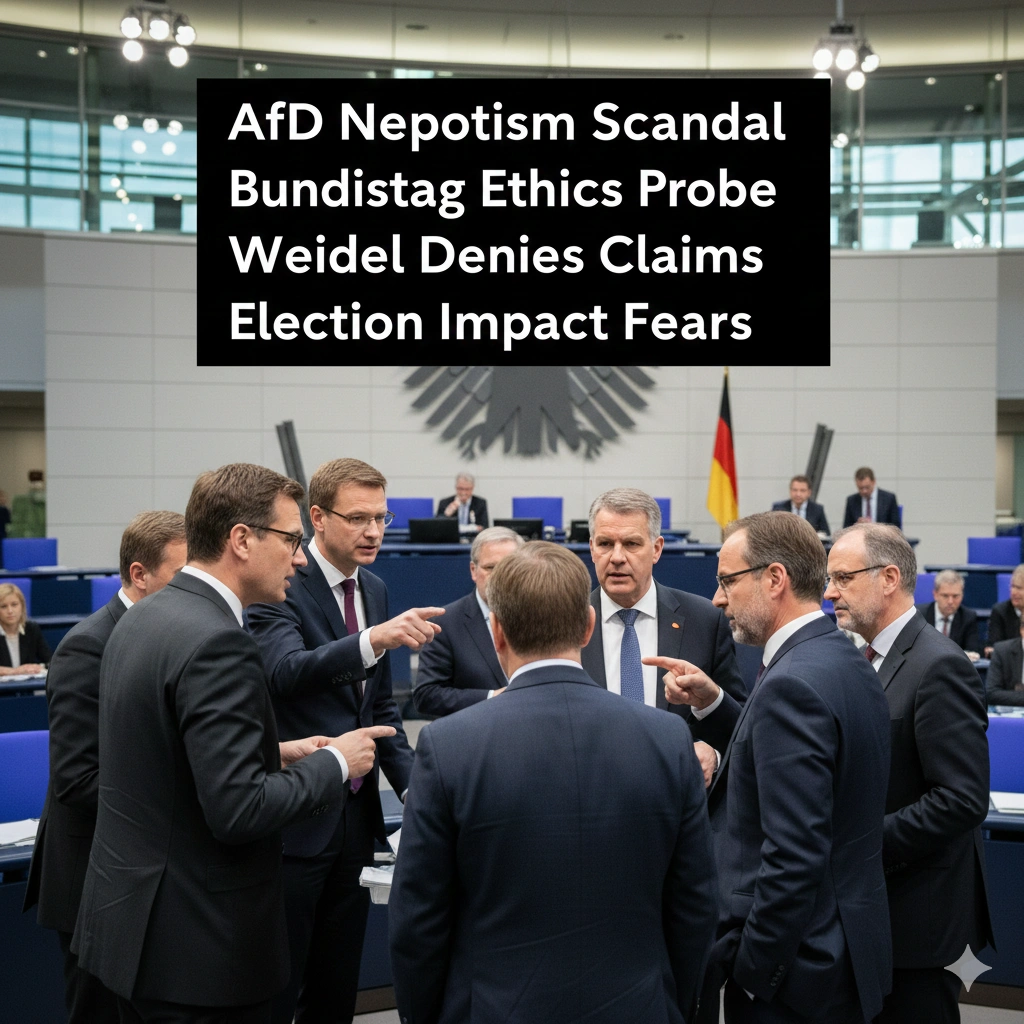
The Growing Pressure of the AfD Nepotism Scandal
The current political climate in Germany is increasingly focused on the integrity of parliamentary institutions, making the situation a focal point of national debate. Recent reports suggest that several lawmakers may have circumvented strict hiring bans by employing the relatives of their colleagues. This practice, often referred to as “cross-hiring,” is seen as a way to bypass legal restrictions that prevent members of the Bundestag from hiring their own direct family members. While the party maintains that no laws have been broken, the moral implications of these actions are being heavily scrutinized by rival political factions.
Public perception of the AfD Nepotism Scandal is particularly damaging given the party’s frequent criticism of traditional German political elites. By allegedly engaging in the same types of cronyism they once condemned, the party risks alienating its voter base ahead of critical regional elections. Internal warnings from within the party’s own ranks suggest that the brewing trouble is far from over, as more employees come forward with information regarding suspicious hiring processes. The leadership’s decision to dismiss these claims as “unfounded” has done little to quiet the growing chorus of critics demanding a full independent inquiry.
The logistical challenges of managing dozens of parliamentary offices mean that oversight can often be inconsistent, leading to the AfD Nepotism Scandal. Alice Weidel has argued that individual conversations with staff have revealed no problematic behavior, yet the optics remains problematic for the party’s public image. As the Bundestag administration begins its own review of the contracts, the party must find a way to reconcile its administrative practices with its public rhetoric. The outcome of this controversy will likely determine the party’s trajectory in the upcoming legislative sessions and its ability to maintain its position as a major opposition force.
AfD Nepotism Scandal
The current situation has exposed deep divisions within the party’s leadership regarding how to handle allegations of internal corruption. Tino Chrupalla has taken a noticeably more cautious tone than his counterpart, admitting that the current situation leaves a “bad taste” in the mouth of the general public. This divergence in messaging highlights the internal struggle to balance party loyalty with the need for ethical accountability. The specific case of a Berlin lawmaker employing a domestic partner has become the centerpiece of the AfD Nepotism Scandal, serving as a catalyst for broader investigations.
As the AfD Nepotism Scandal unfolds, the party has been forced to set strict deadlines for its members to provide formal clarifications regarding their staffing choices. One senior lawmaker has been given until next week to prove that his employment of a partner sharing his registered address complies with Bundestag rules. These individual cases are being used by political opponents to paint a picture of systemic ethical failure within the organization. The controversy is no longer just a series of isolated incidents; it has evolved into a comprehensive test of the party’s internal governance and its commitment to transparency.
The financial implications of the AfD Nepotism Scandal are also a point of concern, as parliamentary employees are funded by German taxpayers. Any evidence of illegal hiring could lead to demands for the repayment of salaries and potential legal action against the lawmakers involved. This adds a layer of legal jeopardy to the already volatile political situation, making the matter a primary concern for the party’s legal advisors. The ongoing audits are intended to identify any further vulnerabilities before they are uncovered by investigative journalists or government regulators.
Strategic Consequences for Upcoming Regional Elections
The timing of the AfD Nepotism Scandal is particularly unfortunate for the party, as Germany prepares for a series of high-stakes regional elections. Political analysts suggest that the crisis could depress voter turnout among those who were drawn to the party’s promise of “clearing out” the political establishment. If the allegations continue to dominate the headlines, it may overshadow the party’s policy positions on immigration and the economy. Candidates on the ground are reportedly frustrated that they must spend their time defending the party’s hiring practices rather than campaigning on local issues.
- Voters in eastern regions are traditionally more sensitive to issues of political corruption and self-enrichment.
- The AfD Nepotism Scandal provides a powerful talking point for the CDU and SPD to regain lost ground.
- Internal dissent is rising as younger party members demand a complete overhaul of the current staffing system.
- Social media campaigns are being used by opponents to highlight the hypocrisy of the leadership.
Navigating Media Scrutiny and Public Relations
Managing the AfD Nepotism Scandal in the digital age requires a sophisticated public relations strategy that the party is currently struggling to implement. Every dismissal of the allegations by senior leadership is met with a new wave of investigative reports that seem to contradict the official narrative. The controversy has become a staple of the evening news, ensuring that the matter remains fresh in the minds of the electorate. By refusing to admit to even minor administrative errors, the party leadership risks appearing out of touch with the concerns of ordinary citizens.
The AfD Nepotism Scandal has also strained the party’s relationship with various media outlets, which they often accuse of being biased against their platform. However, the evidence presented in several cases of cross-hiring appears documented, making it harder to dismiss the claims as mere “fake news.” The party’s press office is working overtime to frame the investigation as a coordinated attack by the establishment, but this narrative is losing steam as more internal details emerge. Success in moving past the AfD Nepotism Scandal will require a shift toward more transparent communication and genuine reform.
- Press conferences regarding the controversy have become increasingly tense and confrontational.
- Official statements are being parsed by legal experts for any signs of admission or liability.
- The party’s online forums are divided, with some members calling for the resignation of those involved.
- A dedicated task force has been established to counter the negative narrative surrounding the AfD Nepotism Scandal.
Institutional Rules of the German Bundestag
To understand the full scope of the AfD Nepotism Scandal, one must look at the specific regulations governing the German parliament. The Bundestag has strict rules designed to prevent the funneling of public funds to the families of lawmakers. These rules were strengthened after previous scandals involving other major parties, which makes the current issue all the more significant. The law explicitly forbids the hiring of spouses, parents, or children, but the AfD Nepotism Scandal suggests that the spirit of the law may have been violated through more complex arrangements.
The investigation is not just a party matter; it involves the Bundestag administration, which oversees the disbursement of staff salaries. If the administration finds that the AfD Nepotism Scandal involves a breach of these rules, the financial penalties could be severe. This institutional pressure ensures that the scandal cannot be simply brushed aside as an internal party dispute. The controversy serves as a reminder that all political entities, regardless of their ideology, are subject to the same standards of fiscal and ethical conduct.
- Parliamentary assistants must perform verifiable work that contributes to the lawmaker’s legislative duties.
- The situation highlights the difficulty of monitoring relationships that are not officially registered.
- New digital tools are being proposed to better track the connections between different parliamentary staff members.
- Compliance officers are now being embedded within party groups to prevent a repeat of the AfD Nepotism Scandal.
Internal Disarray and Leadership Challenges
The AfD Nepotism Scandal has revealed a lack of cohesion within the party’s upper echelons, with different factions taking opposing views on the best way forward. While some see the trouble as an opportunity to purge the party of “old-school” politicians, others fear that too much transparency will lead to a total collapse. Alice Weidel’s leadership is under particular pressure, as she is often the public face of the party’s defense. The AfD Nepotism Scandal has forced her to spend significant political capital on a crisis that many feel was entirely preventable.
As the AfD Nepotism Scandal continues to simmer, the party’s internal court system is being overwhelmed with complaints and requests for mediation. This internal friction is a direct result of the controversy, as members turn on each other to protect their own reputations. The long-term impact on party morale cannot be overstated, as many grassroots activists feel betrayed by the actions of their representatives in Berlin. For the AfD to survive the AfD Nepotism Scandal, it must find a way to unite its factions under a common set of ethical standards.
- Regional leaders are distancing themselves from the Berlin-based issues to save their own campaigns.
- Donations to the party have reportedly seen a slight decline since the story broke.
- Youth wings of the party are the most vocal in their criticism of the AfD Nepotism Scandal.
- The party’s executive committee is meeting more frequently to manage the fallout from the scandal.
Ethical Standards in Modern German Politics
The AfD Nepotism Scandal is part of a broader trend in German politics where voters are demanding higher levels of accountability from their leaders. In recent years, several high-profile politicians have been forced to resign over ethical lapses, and this situation fits squarely into this pattern. The German public’s intolerance for political self-interest means that the trouble will likely have lasting consequences for the party’s brand. By failing to police its own ranks, the party has allowed the AfD Nepotism Scandal to become a symbol of everything voters dislike about the political process.
The resolution of the AfD Nepotism Scandal will serve as a bellwether for the future of the party. If they can successfully implement reforms and move past the crisis, they may yet maintain their influence. However, if the matter leads to further revelations of corruption, the party could find itself permanently marginalized. The ethical standards of the 21st century leave no room for the types of practices alleged in the AfD Nepotism Scandal, regardless of which party is involved.
- Transparency International has been monitoring the situation with great interest.
- The scandal has sparked a wider conversation about the role of lobbyists and staff in the Bundestag.
- Educational programs for new lawmakers are being updated to include specific case studies from the AfD Nepotism Scandal.
- Public trust in the AfD is at its lowest point since the peak of the recent allegations.
Future Outlook and Final Considerations
As the investigation into the AfD Nepotism Scandal moves toward its conclusion, the political landscape in Germany remains uncertain. The party’s ability to weather the storm depends on its willingness to take decisive action against those found to be in violation of the rules. The scandal has already caused significant damage, but it also presents an opportunity for the party to demonstrate that it can actually govern itself. Whether or not the leadership will seize this opportunity remains to be seen, as the AfD Nepotism Scandal continues to unfold.
The broader implications of the AfD Nepotism Scandal for German democracy are significant. It highlights the importance of strong institutional safeguards and a vigilant free press in holding power to account. For the AfD, the path forward is fraught with challenges, as every move they make will be analyzed through the lens of the current investigation. The world is watching to see if the party can truly live up to its anti-corruption rhetoric or if the AfD Nepotism Scandal marks the beginning of its decline.
In conclusion, the AfD Nepotism Scandal is a complex and multifaceted crisis that touches on issues of law, ethics, and political strategy. It has forced the party’s leadership into a defensive posture and created significant internal friction. As the final reports on the matter are prepared, the party must prepare for a long and difficult road toward restoring its public image. The lessons learned from the AfD Nepotism Scandal will undoubtedly shape the future of German politics for years to come.
For more details & sources visit: Deutsche Welle
For the latest news from Germany, visit our Germany news page.