
The recent diplomatic standoff between Khartoum and Kampala has reached a boiling point following the high-level reception of a controversial figure. Sudan Condemns Ugandan President Yoweri Museveni for his decision to host the leader of the Rapid Support Forces, Mohamed Hamdan Dagalo, at the presidential palace in Entebbe. This meeting has sparked a fierce verbal assault from the Sudanese Foreign Ministry, which views the gesture as a direct endorsement of a paramilitary group accused of widespread atrocities. The tension underscores the fragile nature of regional stability in East Africa as the Sudanese conflict continues to spill over its borders.
The Sudanese government has characterized the meeting as a blatant disregard for the suffering of millions of Sudanese civilians caught in the crossfire of the ongoing war. Sudan Condemns Ugandan President because the move is seen as an unprecedented step that contradicts the long-standing principles of good neighborliness and regional cooperation. Officials in Khartoum argue that by providing a platform to the RSF commander, Uganda is effectively legitimizing a rebel force that has been internationally documented for its involvement in genocidal crimes. This development marks a significant shift in the geopolitical landscape of the Nile Basin.
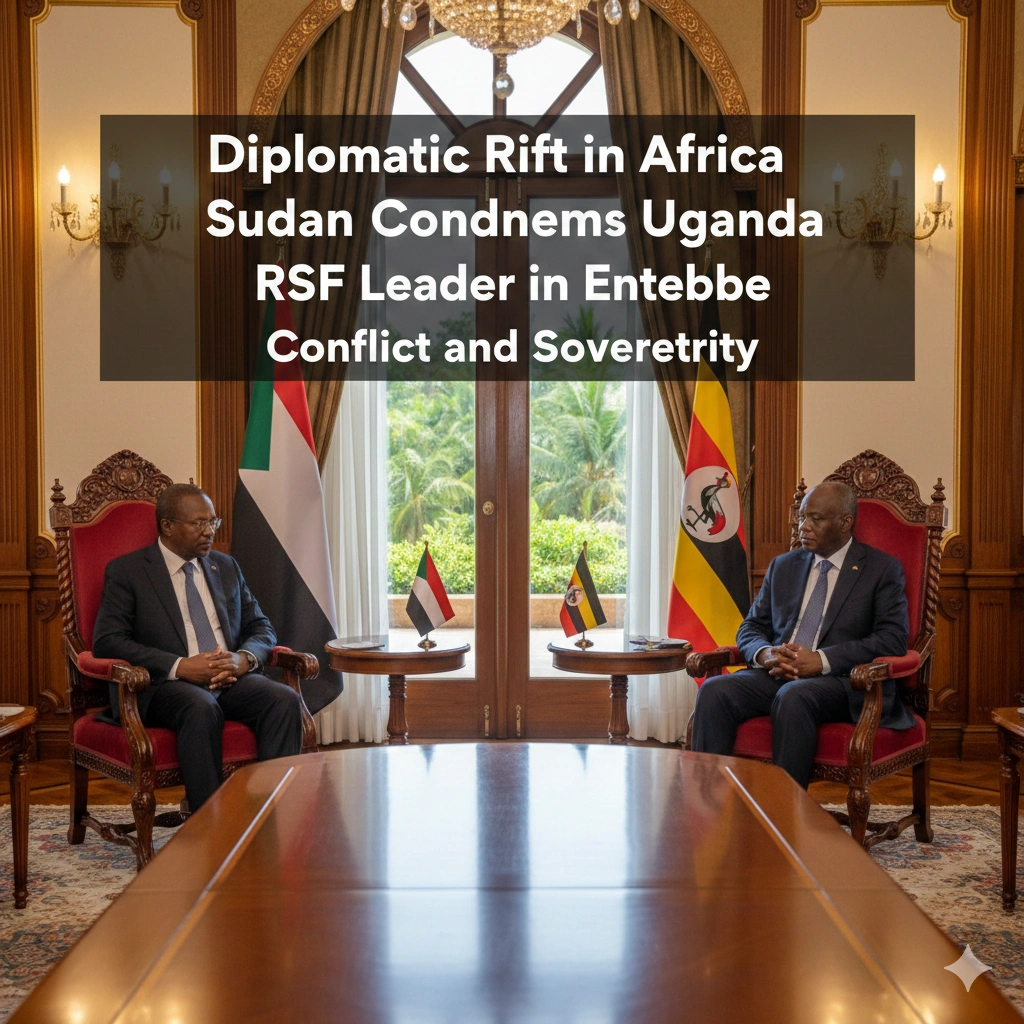
Sudan Condemns Ugandan President
The official statement from the Sudanese Foreign Ministry was both swift and uncompromising in its language regarding the Entebbe meeting. Sudan Condemns Ugandan President for hosting a man they describe as a war criminal responsible for the displacement of millions. The ministry highlighted that the international community and the African Union have documented numerous atrocities linked specifically to the paramilitary group led by Dagalo. By according him the honors usually reserved for a head of state, Uganda has deeply offended the transitional government in Port Sudan.
Furthermore, the diplomatic fallout suggests that the relationship between the two nations may remain strained for the foreseeable future. Sudan Condemns Ugandan President while asserting that such actions provide political cover for those seeking to dismantle the legitimate Sudanese state. This formal condemnation serves as a warning to other regional players who might be tempted to engage with the RSF leadership. The Sudanese leadership insists that any engagement with rebel forces undermines the sovereignty of the nation and prolongs the devastating internal conflict.
Geopolitical Implications of the Entebbe Meeting
The meeting at the Entebbe palace is not just a bilateral issue but a regional crisis with far-reaching consequences for East Africa. Sudan Condemns Ugandan President as it believes this shift in policy could embolden other paramilitary groups across the continent. Analysts suggest that Uganda’s move might be an attempt to position itself as a central mediator, yet this has clearly backfired with the current administration in Khartoum. The perception of Uganda as a neutral arbiter has been severely damaged by the high-profile nature of Dagalo’s reception.
International observers are closely watching how this development affects the Intergovernmental Authority on Development (IGAD) and its peace efforts. Sudan Condemns Ugandan President because the act is perceived as a violation of regional diplomatic commitments designed to isolate rebel factions. If more African nations follow Uganda’s lead, the Sudanese army may become further isolated, potentially leading to a harder stance in future peace negotiations. This diplomatic friction complicates an already intricate web of alliances and rivalries in the Horn of Africa.
Human Rights Concerns and International Reaction
The atrocities committed during the Sudanese civil war have been described by the United Nations as some of the worst in recent history. Sudan Condemns Ugandan President for ignoring the plight of the thirteen million people who have been forced to flee their homes. Human rights organizations have noted that the RSF has been linked to ethnic cleansing in Darfur and various other war crimes since the conflict began in 2023. By hosting Dagalo, Uganda is accused of washing away the blood of these crimes for the sake of political expediency.
Global powers have also expressed concern over the lack of a unified African response to the crisis in Sudan. Sudan Condemns Ugandan President at a time when the world is calling for accountability and an immediate ceasefire between the warring factions. The lack of a strong rebuke from other neighboring countries suggests a divided continent regarding how to handle the Sudanese generals. This division only serves to benefit those who profit from the continued instability and violence within the Sudanese borders.
The Role of Mohamed Hamdan Dagalo
Mohamed Hamdan Dagalo, widely known as Hemedti, has been seeking international legitimacy since the war broke out against the Sudanese Armed Forces. Sudan Condemns Ugandan President for providing the very legitimacy that Hemedti has been desperately chasing through his regional tours. This visit to Uganda was his first major international appearance since his reported activities in South Darfur late last year. For Hemedti, the meeting with Museveni is a significant PR victory that portrays him as a viable political leader rather than a militia commander.
However, the cost of this victory is the further alienation of the official Sudanese government from the Ugandan leadership. Sudan Condemns Ugandan President because it views Hemedti’s diplomatic tour as a calculated effort to bypass the official channels of the Sudanese state. The paramilitary leader’s ability to move freely and meet with heads of state raises questions about the effectiveness of international sanctions. Khartoum remains adamant that there can be no peace as long as rebel leaders are treated with such high-level diplomatic protocols.
- Sudanese diplomatic staff may be recalled from Kampala.
- Trade agreements between the two nations could face immediate suspension.
- Regional security pacts are now under intense scrutiny by the African Union.
- Humanitarian corridors might be affected by the increasing political hostility.
Uganda’s Silence and the Future of Bilateral Ties
As of now, the authorities in Kampala have not issued a formal rebuttal to the sharp criticisms coming from Khartoum. Sudan Condemns Ugandan President while the Museveni administration maintains a strategic silence, possibly evaluating the long-term impact of their hospitality. This silence is being interpreted by some as a sign of defiance, while others see it as a cautious approach to a volatile situation. The lack of communication further fuels rumors about the underlying motives behind the sudden warm reception of the RSF leader.
The future of bilateral ties between Sudan and Uganda hangs in a delicate balance following this controversial event. Sudan Condemns Ugandan President as a precursor to potentially severing diplomatic ties if a correction in policy is not made. If Uganda continues to engage with the RSF, it could lead to a permanent rift that affects regional trade and security cooperation. Both nations have historically shared interests, but the current conflict has placed those interests in direct opposition to one another.
Impact on the Sudanese Humanitarian Crisis
The political bickering at the top levels of government has a direct and often negative impact on the humanitarian situation on the ground. Sudan Condemns Ugandan President because the focus on high-level diplomacy often detracts from the urgent need for aid delivery. With thirteen million people displaced, the priority should be on creating safe zones and ensuring that food and medicine reach those in need. Instead, the narrative has shifted toward diplomatic insults and the legitimacy of various military commanders.
The international community must press both sides to prioritize human life over political points and diplomatic posturing. Sudan Condemns Ugandan President as a distraction from the real work of ending the violence and restoring a civilian-led government. Every day that the war continues, the infrastructure of Sudan is further destroyed, making future recovery even more difficult. The escalation of words between Khartoum and Kampala only adds another layer of complexity to an already dire humanitarian emergency.
- UN reports highlight a massive shortage of clean water in conflict zones.
- Over 70% of hospitals in Khartoum are currently non-functional.
- Displacement camps in neighboring countries are reaching their breaking points.
Strategic Shifts in East African Power Dynamics
The meeting in Entebbe signals a potential shift in how East African nations view the power struggle within Sudan. Sudan Condemns Ugandan President as it fears a domino effect where other nations might also choose to recognize the RSF’s influence. This power struggle is not just about control of Khartoum but about who will dictate the future of Sudanese resources and foreign policy. Uganda’s involvement suggests that it sees a future where the RSF plays a permanent and significant role in the region.
This strategic shift could lead to a reconfiguration of alliances within the African Union and the United Nations. Sudan Condemns Ugandan President because it challenges the traditional status quo where only the national army is recognized as the legitimate representative of the state. As the war enters its third year, the patience of regional neighbors is wearing thin, leading to these bold and often controversial diplomatic maneuvers. The outcome of this spat will likely set the tone for how the continent deals with internal conflicts in the years to come.
Conclusion of the Diplomatic Standoff
The resolution of this crisis will require more than just a formal apology or a change in rhetoric from either side. Sudan Condemns Ugandan President as a matter of national dignity and sovereign survival, which are not easily negotiated away. For the tension to ease, there must be a clear commitment from regional leaders to support a unified and peaceful Sudan. Until then, the shadow of the Entebbe meeting will continue to loom large over the diplomatic relations of East Africa.
Ultimately, the people of Sudan are the ones who pay the price for these high-level disagreements and military maneuvers. Sudan Condemns Ugandan President because the stakes involve the very existence of their nation and the safety of its citizens. As the world watches, the hope remains that diplomacy will eventually prevail over the drumbeats of war and the bitterness of political betrayal. The path to peace is long, but it must begin with a mutual respect for the sovereignty and the suffering of the Sudanese people.
- Peace talks in Jeddah remain stalled despite international pressure.
- The African Union is considering a new fact-finding mission to the region.
- Local grassroots organizations continue to provide aid where the state has failed.
For more details & sources visit: TRT World
Read more on global developments: 360 News Orbit – Extended Orbit