
Bad Bunny Brazil breakthrough moments are redefining the landscape of South American music consumption following his historic performances this past weekend. The Puerto Rican global icon successfully navigated a market that has traditionally been dominated by local talent, selling out two consecutive nights at the iconic Allianz Parque in Sao Paulo. This shift marks a significant pivot in how Spanish-language music is perceived within the Portuguese-speaking giant.
As the artist continues to shatter glass ceilings, his recent success in Brazil serves as a blueprint for international crossover appeal. The cultural impact of these shows extends far beyond the stadium walls, signaling a new era of Latin American unity. Fans and critics alike are pointing to the recent Super Bowl halftime show as the primary catalyst for this unprecedented explosion in regional popularity.
The Historic Significance of Allianz Parque
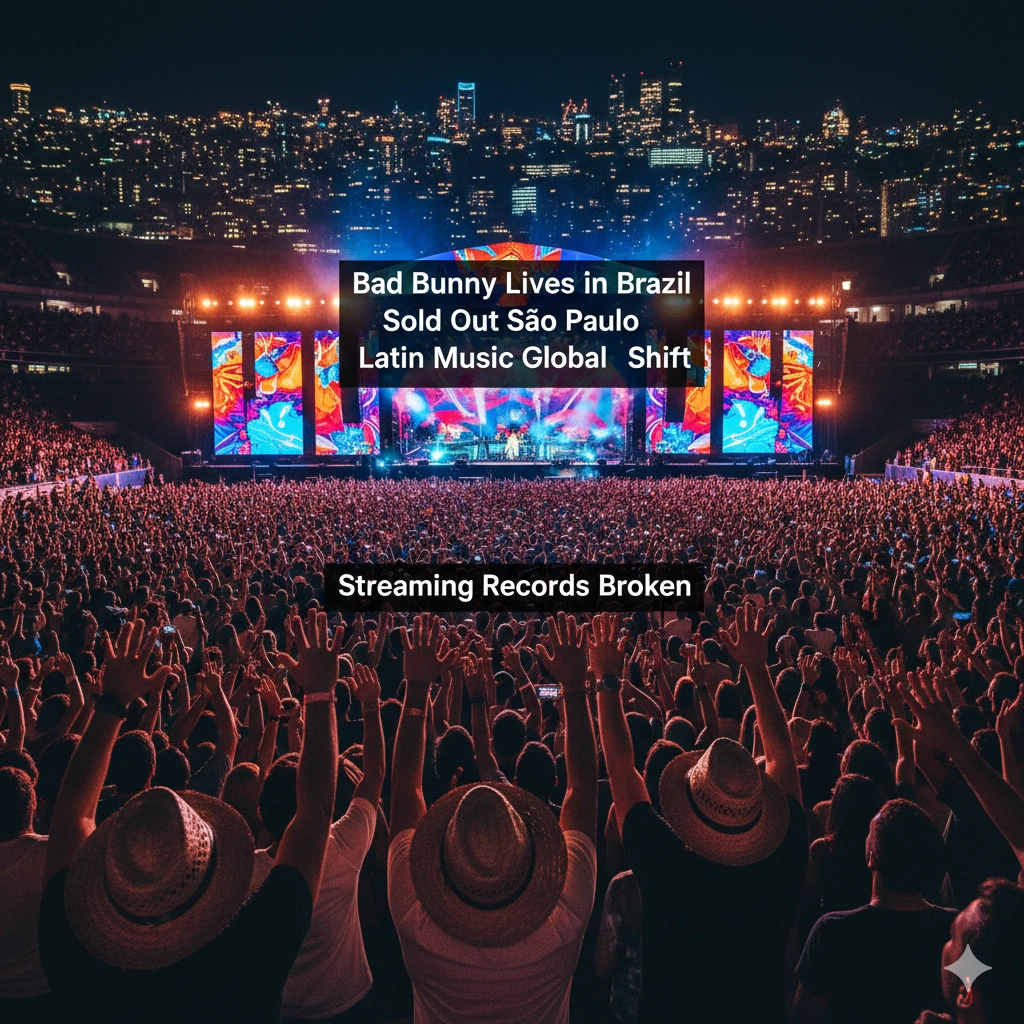
The Bad Bunny Brazil breakthrough was solidified when the artist added a second date at the Allianz Parque arena after the initial show sold out within minutes. Historically, Brazil has been a difficult territory for Spanish-speaking artists to conquer, with nearly 75 percent of all music streaming in the country focusing on domestic genres. By filling a stadium with a capacity of over 45,000 people for two straight nights, the singer has proven that his brand transcends linguistic barriers. This achievement is particularly noteworthy given the high cost of attendance, which saw resale tickets exceeding $830. For many local fans, this was a once-in-a-lifetime opportunity to see the world’s most-streamed artist in their home city.
The atmosphere inside the venue was electric, with thousands of fans sporting traditional straw hats as a tribute to the artist’s Puerto Rican heritage. This visual display of solidarity highlighted the deep emotional connection the audience felt toward the performer. The Bad Bunny Brazil breakthrough is not just about ticket sales; it is about the emotional resonance of his music in a new territory. Analysts suggest that this level of engagement is rarely seen for foreign acts who do not sing in English or Portuguese. The success of these shows effectively places the artist in a league of his own within the South American market.
The Super Bowl Halftime Catalyst
Public interest in the artist spiked significantly following his high-profile performance at the Super Bowl halftime show earlier this year. This massive American sporting event served as a global megaphone, introducing his vibrant aesthetic to millions of new listeners across the continent. The Bad Bunny Brazil breakthrough can be traced directly to the data following that performance, which showed a meteoric rise in interest. According to Spotify, his average daily streams in Brazil grew by a staggering 426 percent in the week immediately following the game. This surge provided the necessary momentum to justify a stadium-level tour in a previously untapped market.
The “Super Bowl effect” is a well-documented phenomenon, but its impact on the Brazilian market was particularly profound for a Latin artist. While the artist was already a global superstar, the halftime show acted as a seal of approval that resonated with the Brazilian middle class. This newfound visibility helped the Bad Bunny Brazil breakthrough transition from a niche interest to a mainstream obsession. The timing of the tour, coming just weeks after the televised performance, was a masterstroke of professional scheduling. It allowed the artist to capitalize on peak cultural relevance while the memory of his performance was still fresh in the minds of the public.
Bad Bunny Brazil Breakthrough
The Bad Bunny Brazil breakthrough is perhaps most visible in the streaming data for his classic tracks and new hits. The song “Yo Perreo Sola” experienced an unbelievable streaming surge of 2,536 percent among Brazilian listeners during the post-Super Bowl period. This level of growth is almost unheard of for a track that has been in circulation for several years, proving that a whole new demographic was discovering his catalog. The data suggests that the artist is successfully piercing a social bubble that previously viewed Spanish-language music as a secondary genre. As these numbers continue to hold steady, the long-term viability of his career in Brazil looks incredibly promising.
Luminate’s 2025 midyear report identified Brazil as the country with the highest consumption of its own domestic music genres. Breaking into such a self-sufficient market requires more than just a hit song; it requires a cultural movement. The Bad Bunny Brazil breakthrough represents that movement, as local influencers and celebrities flocked to the Sao Paulo shows to document the experience. The artist’s ability to dominate the charts in a country that typically prioritizes Samba and Sertanejo is a testament to his unique appeal. This shift in listening habits could open the doors for other Spanish-speaking artists to follow in his footsteps.
The Impact of “Debí Tirar Más Fotos”
The recent success in the region also follows the release of his latest Grammy-winning album titled Debí Tirar Más Fotos. This project showcased a more introspective side of the artist, which resonated deeply with the Brazilian audience’s appreciation for melodic storytelling. The Bad Bunny Brazil breakthrough was fueled by the critical acclaim of this album, which blended traditional Caribbean sounds with modern trap influences. By winning top honors at the Grammys, the artist solidified his status as a serious musician rather than just a fleeting pop star. This prestige was a major factor in convincing Brazilian fans to invest in high-priced concert tickets.
- The album’s lead single topped the local “Viral 50” charts for three consecutive weeks.
- Collaborative tracks featuring other Latin stars helped bridge the gap between different fanbases.
- The production quality of the new material was cited by local critics as a new benchmark for urban music.
- Social media engagement surrounding the album’s release reached record highs in major Brazilian cities.
The Bad Bunny Brazil breakthrough was therefore a multi-layered achievement involving strategic releases and high-profile performances. Each element of the rollout was designed to chip away at the resistance of the Brazilian market. With the Grammy win serving as a backdrop, the live performances became a victory lap for an artist at the absolute peak of his creative powers. The cultural exchange facilitated by this album has created a lasting bond between the artist and his Brazilian “cult” following.
Economic Realities and Fan Dedication
The financial aspect of the Bad Bunny Brazil breakthrough is a story of incredible dedication from the local fanbase. Resale tickets for the Sao Paulo shows reportedly reached prices exceeding $830, which is more than double the local monthly minimum wage in Brazil. This economic discrepancy highlights the “must-see” nature of the event, as fans saved for months or took on debt to attend. The willingness of the public to spend such significant amounts of money is a clear indicator of the Bad Bunny Brazil breakthrough’s depth. It shows that the artist is viewed as a premium cultural export worth any price.
Despite the high costs, both nights at Allianz Parque were packed to capacity, with fans arriving hours early to secure prime spots. This level of fervor is usually reserved for legacy acts or massive English-language pop stars like Taylor Swift or Beyoncé. The Bad Bunny Brazil breakthrough has effectively elevated the artist to that same tier of global superstardom. For the Brazilian music industry, the success of these shows provides a clear signal that there is a massive appetite for international Latin music. This realization is likely to spark a wave of new investments in bringing similar acts to the country in the coming years.
Cultural Analysts Weigh In
Cultural analysts suggest that the artist is successfully piercing a social bubble that previously viewed Spanish-language music as niche. For a long time, the linguistic divide between Portuguese-speaking Brazil and the rest of Latin America created a “musical wall” that was rarely breached. The Bad Bunny Brazil breakthrough is being hailed as the moment that wall finally crumbled. Analysts point out that his fashion sense, gender-fluid expression, and political activism resonate with the youth of Sao Paulo and Rio de Janeiro. These shared values often prove more powerful than a shared language.
The Bad Bunny Brazil breakthrough is also seen as a strategic effort by the artist to unlock the largest music market in South America. By dedicating time and resources to a full stadium production in Brazil, he has shown a level of respect for the local culture that other artists often skip. This “boots on the ground” approach has paid off immensely, turning casual listeners into lifelong supporters. The artist’s team has been praised for their localized marketing efforts, which included collaborations with Brazilian digital creators. This ground-up strategy ensured that the concerts were not just performances, but major cultural events.
Breaking the Domestic Music Dominance
Brazil’s music market is notoriously self-reliant, with local genres like Funk Carioca and Sertanejo usually occupying the top 100 spots on streaming platforms. The Bad Bunny Brazil breakthrough is significant because it represents a rare instance of a foreign artist disrupting this hierarchy. Even global English-language hits often struggle to outshine the local giants of Brazilian music. However, the energy of the Sao Paulo shows suggests that the public is ready for more variety. The Bad Bunny Brazil breakthrough has proven that a Spanish-speaking artist can not only compete but thrive at the highest level of the Brazilian entertainment industry.
- His tracks have begun appearing on mainstream Brazilian radio stations that typically play only local hits.
- Local artists have started expressing interest in collaborating with the Puerto Rican star to reach his global audience.
- Streaming platforms in Brazil have created curated playlists specifically focusing on the “Bad Bunny effect.”
- The success of the tour has prompted other stadium venues in Brazil to reach out to Latin music promoters.
This shift in the status quo is perhaps the most lasting legacy of the Bad Bunny Brazil breakthrough. It challenges the assumption that Brazil is an island unto itself in the music world. As the boundaries continue to blur, the integration of the Latin American music market seems more inevitable than ever. The artist’s success serves as a bridge, connecting two of the most vibrant musical cultures on the planet.
Future Prospects and Tour Legacy
The concerts represent a strategic effort by the artist to unlock the largest music market in South America during the peak of his career. Looking forward, the Bad Bunny Brazil breakthrough is expected to lead to more frequent visits and perhaps even a dedicated Portuguese-language collaboration. The artist himself expressed his gratitude to the Brazilian fans on social media, calling the Sao Paulo nights “unforgettable.” This positive reinforcement ensures that the relationship between the performer and the country will continue to grow. The Bad Bunny Brazil breakthrough has set a new standard for what international artists can achieve in the region.
As the 2026 touring season continues, the momentum from the Brazil dates will likely carry over into other global markets. However, the specific achievement of “cracking” the Brazilian market will remain a highlight of his career biography. The Bad Bunny Brazil breakthrough is a reminder that in the modern digital age, cultural barriers are meant to be broken. For the thousands of fans who sang along in Spanish at Allianz Parque, the music was the only language that mattered. The legacy of these shows will be felt for years to come as the next generation of artists looks to replicate this historic success.
Conclusion: A New Era of Latin Unity
The Bad Bunny Brazil breakthrough is a landmark event in the history of Latin music, proving that charisma and talent can overcome any linguistic divide. By leveraging the massive exposure of the Super Bowl and the critical success of his latest album, the artist has claimed his throne in South America’s biggest market. The sell-out shows in Sao Paulo are more than just a financial victory; they are a cultural milestone that brings the continent closer together.
As we look back on the events of February 2026, the Bad Bunny Brazil breakthrough will be remembered as the moment a Puerto Rican star became a Brazilian icon. The future of global music is here, and it is more diverse and interconnected than ever before.
For more details & sources visit: Jamaica Gleaner
For more regional updates and industry insights, visit our Brazil News Page.