
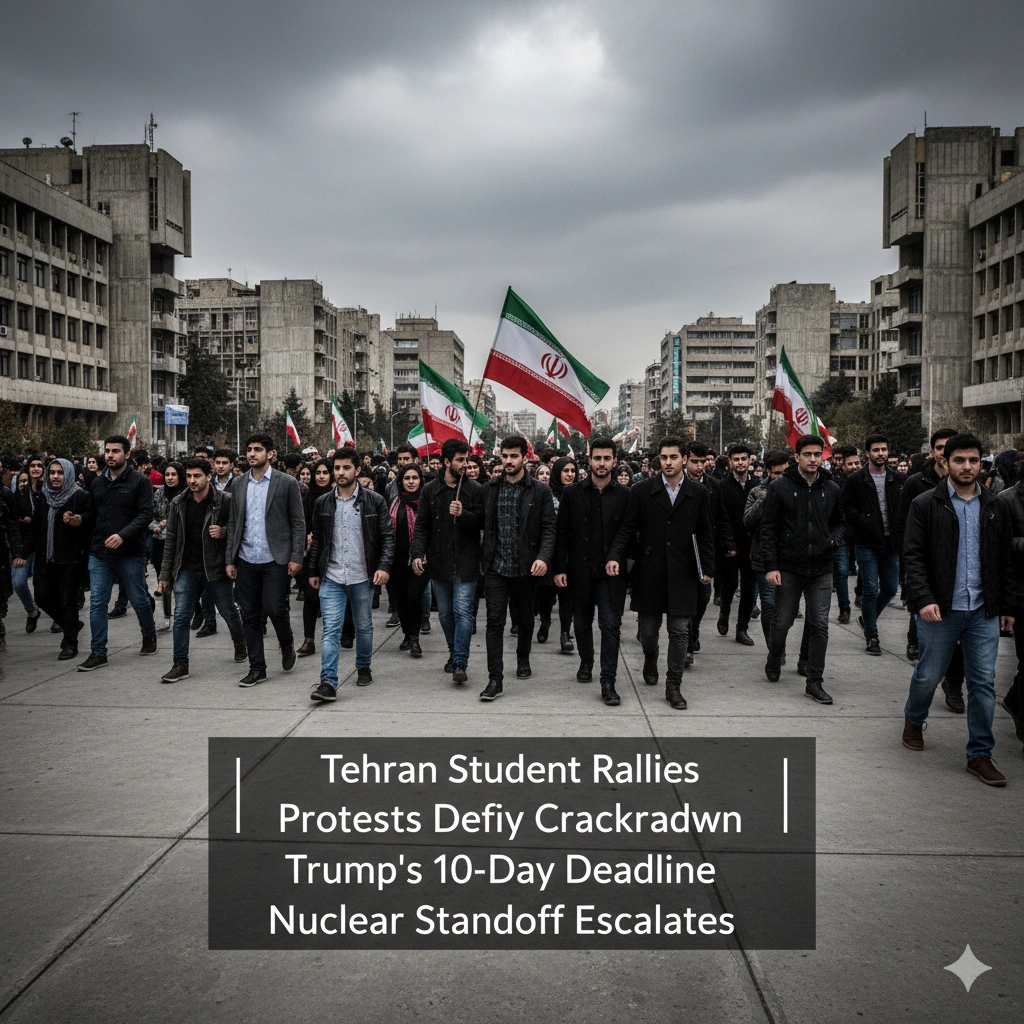
Iranian Student Protests are erupting across major academic institutions today, marking a significant escalation in domestic unrest that threatens the current regime’s stability. As students at Sharif University of Technology lead a new wave of rallies, the intersection of internal defiance and external pressure has reached a boiling point. These demonstrations follow a brutal January crackdown that left thousands of civilians dead according to international observers. Now, as the spring semester begins, the youth-led movement is demanding accountability for those lost in recent violence. The atmosphere in Tehran is thick with tension as security forces maintain a heavy presence around campus gates.
The scale of the Iranian Student Protests indicates that the government’s previous attempts to stifle dissent through internet blackouts have largely failed. In Mashhad and other secondary cities, the movement has gained momentum, drawing in diverse demographic groups who share the students’ frustrations. Economic stagnation and social restrictions have fueled this fire for months, but the current surge is specifically focused on human rights violations. Observers note that the coordination among various university departments suggests a sophisticated level of organization. This internal pressure is mounting just as the geopolitical landscape becomes increasingly perilous for the leadership in Tehran.
The Historical Context of Academic Defiance in Iran
Historically, the university system has served as the heartbeat of political transformation within the Iranian landscape for many decades. The Iranian Student Protests of 2026 are deeply rooted in a tradition of intellectual resistance that dates back to the mid-twentieth century. Students view themselves as the moral conscience of the nation, often taking risks that older generations might avoid. This specific wave of anger is particularly potent because it honors those killed during the “Bloody January” crackdown of last month. By transforming campuses into focal points of mourning and activism, the youth are challenging the state’s narrative of order.
The government’s response to these Iranian Student Protests has been predictably harsh, yet the students remain undeterred by the threat of imprisonment. Reports from within the Sharif University of Technology suggest that even faculty members are beginning to show quiet support for the movement. This shift in academic alignment represents a dangerous development for the ruling elite who rely on institutional stability. While the state media attempts to downplay the numbers, leaked footage shows thousands of protesters chanting slogans against the supreme leadership. Such defiance is rare in its consistency and geographical spread across the country.
Iranian Student Protests
The current Iranian Student Protests represent the most significant challenge to the regime’s domestic authority in over three decades. Unlike previous movements that were confined to specific economic grievances, this uprising is fundamentally about the right to exist without fear of state violence. The students are utilizing decentralized communication tools to bypass the digital barriers erected by the telecommunications ministry. This technological cat-and-mouse game has allowed the Iranian Student Protests to stay one step ahead of the security apparatus. Consequently, the government is finding it difficult to decapitate the movement’s leadership.
Furthermore, the Iranian Student Protests are being bolstered by a sense of global solidarity that was absent in prior years. International human rights organizations are documenting every arrest and instance of police brutality in real-time. This visibility provides a layer of protection, albeit thin, for the brave individuals standing on the front lines of the Tehran rallies. As the protests spread to Mashhad, the cultural and religious heart of the country, the regime faces a symbolic crisis. If they cannot hold the support of the youth in these traditional strongholds, their long-term survival is in serious doubt.
Trump’s Ten-Day Ultimatum and the Nuclear Factor
While the Iranian Student Protests rage in the streets, President Donald Trump has introduced a massive geopolitical complication with a strict ten-day deadline. The U.S. administration is demanding a comprehensive nuclear deal that would effectively strip Tehran of all domestic uranium enrichment capabilities. This ultimatum is backed by the presence of multiple carrier strike groups currently positioned in the Middle East. Trump has signaled that limited military strikes are “on the table” if a signed agreement is not reached within the specified window. This dual pressure of internal revolt and foreign military threat is unprecedented.
The timing of this ultimatum is viewed by many analysts as a strategic move to exploit the chaos caused by the Iranian Student Protests. By forcing the regime to choose between domestic survival and international capitulation, the U.S. is pushing Tehran into a corner. Negotiations in Switzerland have reportedly shown some progress, but the hardliners in the Iranian government are resistant to surrendering their nuclear ambitions. However, the economic cost of continued sanctions is a primary driver behind the popular anger seen in the Iranian Student Protests today. A failure to reach a deal could lead to an even worse economic collapse.
Military Escalation and the Risk of Regional Conflict
The military buildup in the Persian Gulf is not merely a symbolic gesture; it is a clear preparation for potential kinetic action. As the Iranian Student Protests continue to drain the regime’s internal resources, the U.S. military is refining its target lists. President Trump’s rhetoric suggests that he is willing to use force to ensure that Iran never achieves a nuclear weapon. This hawkish stance has put regional leaders on high alert, as any strike could trigger a wider conflict. Meanwhile, the Iranian military has conducted its own exercises to demonstrate a capability for asymmetric warfare.
- Carrier strike groups are currently patrolling the Strait of Hormuz to ensure global energy security remains intact.
- Advanced missile defense systems have been deployed to allied nations in the region to counter potential Iranian retaliation.
- U.S. intelligence assets are reportedly monitoring the Iranian Student Protests to gauge the level of government instability.
These factors create a volatile environment where a single miscalculation could lead to disaster. The Iranian Student Protests are being watched closely by Pentagon officials who see the unrest as a sign of a weakening regime. If the government uses extreme force against the students again, it might provide the moral justification for international intervention. The next ten days will likely determine the trajectory of the Middle East for the next decade.
The Role of Human Rights and Global Observation
International observers have been vocal about the atrocities committed during the January crackdown, which set the stage for the current Iranian Student Protests. The use of live ammunition against unarmed civilians has been documented by various NGOs and news agencies. These reports have led to a surge in global sympathy for the student movement, further isolating the Tehran government. Despite the internet blackouts, activists have managed to smuggle out video evidence of the brutal tactics used by the Basij militia. This evidence is now being used to lobby for even stricter international sanctions.
The Iranian Student Protests are also highlighting the plight of political prisoners who have been detained without trial. Many of those arrested in January remain in the notorious Evin Prison, where reports of torture are frequent. The students are demanding the immediate release of their peers as a condition for stopping the rallies. However, the government views these prisoners as leverage in both domestic and international negotiations. As the Iranian Student Protests grow, the calls for justice are becoming louder, echoing through the halls of the United Nations.
Economic Collapse as a Catalyst for Social Unrest
It is impossible to discuss the Iranian Student Protests without acknowledging the devastating impact of the current economic crisis. Inflation has reached record levels, making basic goods unaffordable for the average family. The youth, who face high unemployment rates despite their education, see no future under the current leadership. This economic despair is what drives the persistence of the Iranian Student Protests even in the face of violent suppression. They feel they have nothing left to lose, which makes them a formidable force against the state.
- The local currency has lost significant value against the dollar, wiping out the savings of the middle class.
- Sanctions have crippled the oil industry, which is the primary source of revenue for the Iranian government.
- Internal corruption has further diverted resources away from public services and into the hands of the elite.
The Iranian Student Protests are a direct response to this perceived mismanagement and systemic theft of the nation’s wealth. While the nuclear negotiations focus on enrichment levels, the protesters are focused on the price of bread and the right to work. If the government cannot provide economic relief, no amount of security force will be able to permanently end the Iranian Student Protests. The intersection of hunger and political aspiration is a potent mix that has toppled many regimes in the past.
Potential Outcomes of the Ten-Day Nuclear Window
As the clock ticks on President Trump’s ultimatum, the world is waiting to see if Tehran will deliver a viable counterproposal. The Iranian Student Protests have limited the regime’s ability to project a unified front to the international community. If they concede to U.S. demands, they risk looking weak to their own hardline supporters. Conversely, if they reject the deal, they face the prospect of U.S. bombs and even more intense Iranian Student Protests. It is a classic “lose-lose” scenario for the Iranian leadership, which is currently divided on how to proceed.
Some analysts believe that the regime might offer a partial concession to buy more time and dampen the Iranian Student Protests. By promising some level of reform or economic relief, they might hope to peel away the more moderate protesters. However, the core of the student movement seems committed to fundamental structural change rather than minor policy tweaks. The Iranian Student Protests have evolved beyond simple reformist goals into a full-scale revolutionary movement. Whether the ten-day window ends in a deal or a strike, the domestic situation in Iran has changed forever.
Security Forces and the Tactics of Suppression
The Iranian government has a long history of using specialized units to crush dissent, and these are now being deployed against the Iranian Student Protests. The Islamic Revolutionary Guard Corps (IRGC) has been put on high alert to assist local police in maintaining order. These forces use a combination of tear gas, water cannons, and “snatch-and-grab” tactics to disperse crowds. Despite these aggressive measures, the Iranian Student Protests have shown a remarkable ability to regroup in different locations. This fluidity makes it difficult for the security forces to maintain a permanent perimeter around the protest zones.
Moreover, the psychological warfare being waged by the state is intense. Officials have labeled the participants in the Iranian Student Protests as “foreign agents” and “terrorists” to justify the use of force. This narrative is intended to alienate the protesters from the broader population, but it appears to be having the opposite effect. Many citizens are tired of the government’s rhetoric and see the students as the true patriots. The Iranian Student Protests are thus winning the battle for public opinion, even if they are losing the physical battle in the streets.
The Role of Technology in Modern Iranian Resistance
In 2026, technology plays a more critical role in the Iranian Student Protests than ever before. Satellite internet kits have been smuggled into the country, providing a lifeline for activists during government-imposed blackouts. Encrypted messaging apps allow for the rapid dissemination of protest locations and safety tips. The Iranian Student Protests are essentially being live-streamed to the world, making it impossible for the regime to hide its actions. This digital resistance is a key pillar of the movement’s endurance and global reach.
The government has responded by investing heavily in cyber-warfare capabilities to track and identify those leading the Iranian Student Protests. There are reports of sophisticated phishing attacks targeting student leaders and their families. However, the youth are tech-savvy and have developed counter-measures to protect their identities. This high-tech struggle is a defining feature of the Iranian Student Protests, illustrating the gap between the aging leadership and the digital-native population. The outcome of this struggle will likely influence how future protests are conducted globally.
International Reaction and Diplomatic Maneuvers
The response from the international community to the Iranian Student Protests has been mixed but generally supportive of the demonstrators. European nations have called for “utmost restraint” from the Iranian authorities while urging a return to the negotiating table. Meanwhile, the United Nations has discussed the possibility of an independent fact-finding mission to investigate the January deaths. These diplomatic efforts provide a moral boost to the Iranian Student Protests but have yet to produce tangible changes on the ground. The U.S. remains the most aggressive actor, using the protests as leverage in its broader “maximum pressure” campaign.
- The UK and France have expressed concern over the “disproportionate use of force” against the student rallies.
- China and Russia have urged for non-interference in Iran’s internal affairs, citing national sovereignty.
- A coalition of Middle Eastern nations has expressed support for a peaceful resolution that ensures regional stability.
The Iranian Student Protests have effectively forced the world to pay attention to the internal dynamics of the country. For too long, the international focus was solely on the nuclear issue, ignoring the aspirations of the Iranian people. Now, the Iranian Student Protests have made it clear that any long-term solution must address the human rights and democratic desires of the population. Diplomacy is no longer just about centrifuges; it is about the future of a nation’s youth.
The Strategic Importance of Sharif University
Sharif University of Technology is often referred to as the “MIT of Iran,” and its involvement in the Iranian Student Protests is highly significant. The students here are among the brightest in the country, many of whom have prospects for international careers. When these elites choose to join the Iranian Student Protests, it signals a profound rejection of the state by the very people intended to lead its future. The government’s decision to raid this specific campus in the past has only served to radicalize the student body further.
The protests at Sharif are characterized by intellectual rigor and a clear set of political demands. They are not merely venting frustration; they are proposing a new vision for their country. The Iranian Student Protests at this institution often set the tone for the rest of the nation. If Sharif remains in a state of revolt, other universities are likely to follow suit. The regime knows this, which is why the security presence around the campus is so suffocating. Yet, the spirit of the Iranian Student Protests remains unbroken among the researchers and engineers of tomorrow.
Future Outlook: A Nation at a Crossroads
The next several weeks will be the most critical period for the Iranian Student Protests and the regime they oppose. With the ten-day U.S. deadline looming, the pressure is mounting from every direction. If a nuclear deal is reached, it might provide some economic breathing room, but it will not solve the underlying issues that sparked the Iranian Student Protests. If no deal is reached and military strikes occur, the country could descend into a state of chaos or even civil war. The students are prepared for any outcome, having already sacrificed so much for their cause.
Ultimately, the Iranian Student Protests are a testament to the enduring human desire for freedom and justice. No matter how the current geopolitical crisis is resolved, the voice of the youth has been heard. They have shown that they are willing to stand up to one of the most repressive apparatuses in the world to demand a better life. The Iranian Student Protests of 2026 will be remembered as a turning point, the moment when the future of Iran was reclaimed by those who will actually live in it. The world continues to watch with bated breath as the story of this brave generation unfolds.
Final Assessment of the Political Landscape
As we analyze the current state of the Iranian Student Protests, it is clear that the status quo is no longer sustainable. The regime is facing a “perfect storm” of internal dissent, economic failure, and foreign military threat. The Iranian Student Protests have stripped away the mask of the government’s invincibility, revealing a leadership that is fearful and reactive. While they still possess the tools of violence, they have lost the consent of the governed. This loss of legitimacy is the most significant achievement of the Iranian Student Protests to date.
Whether the regime falls or manages to cling to power through even greater brutality remains to be seen. However, the Iranian Student Protests have ensured that things will never go back to the way they were. The seeds of change have been planted in the minds of millions, and no amount of suppression can uproot them. As the sun sets over Tehran, the chants from the universities continue to echo, a reminder that the Iranian Student Protests are far from over. The struggle for the soul of Iran continues, driven by the courage of its youngest citizens.
For more details & sources visit: BBC News
Read more on Iran news: 360 News Orbit – Iran.