
Taoyuan Airport Terminal 3 expansion marks a pivotal moment for Taiwan’s aviation infrastructure as the facility officially opens its doors to global travelers today. This massive development represents more than just an architectural feat; it signifies a monumental shift in how the island nation connects with the world. The commencement of operations at the northern concourse on February 22, 2026, serves as a testament to Taiwan’s commitment to modernization and efficiency.
The newly inaugurated northern concourse is designed to alleviate the significant congestion issues that have historically plagued Terminal 1 and Terminal 2. By introducing a state-of-the-art open boarding layout, the airport has effectively moved away from the restrictive, enclosed lounges of the past. This transition reflects a broader national movement toward transparency and fluid movement, ensuring that every passenger experience at the terminal is seamless, modern, and representative of Taiwan’s democratic values.
The Architectural Vision of a Global Hub
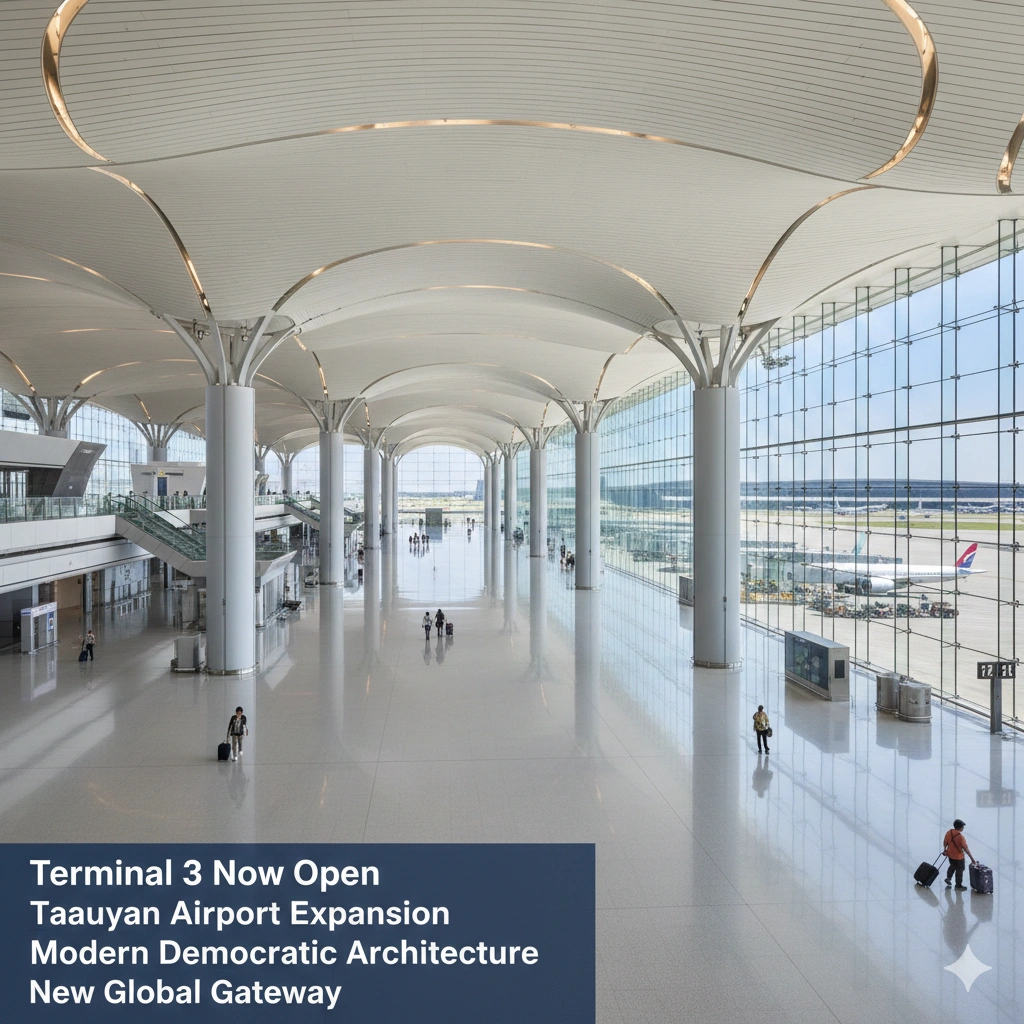
The architectural design of Taoyuan Airport Terminal 3 was spearheaded by a prestigious British-led consortium, including the renowned firm founded by Pritzker Prize winner Richard Rogers. Their vision was to create a space that feels both infinite and intimate, utilizing an undulating roof structure that mimics the rolling landscapes of Taiwan. This design choice ensures that Taoyuan Airport Terminal 3 stands out as a global landmark, blending high-tech functionality with aesthetic beauty that welcomes millions of annual visitors.
Inside the facility, the column-free interior halls of Taoyuan Airport Terminal 3 provide a sense of openness that was previously missing in older structures. This structural innovation allows for massive volumes of natural light to flood the terminal, reducing the need for artificial lighting and creating a more pleasant environment for weary travelers. Furthermore, the integration of Taoyuan Airport Terminal 3 with existing infrastructure ensures that the transition between terminals is intuitive and requires minimal effort for transit passengers.
The commitment to a “legible” passenger space means that navigating Taoyuan Airport Terminal 3 is remarkably easy, even for first-time visitors. Clear sightlines and a centralized layout ensure that travelers can identify their gates, retail zones, and security checkpoints without confusion. This focus on user experience is a core pillar of the Taoyuan Airport Terminal 3 project, setting a new gold standard for international airport design within the Asia-Pacific region.
Taoyuan Airport Terminal 3
The operational launch of Taoyuan Airport Terminal 3 has introduced a revolutionary open-plan boarding concept that fundamentally changes the passenger journey. In contrast to the older terminals where passengers were often confined to small, isolated holding areas, the new layout allows for free movement across a single-level hall. This flexibility empowers passengers to enjoy the amenities, such as high-end retail and diverse dining options, right up until the moment they board their flight.
This open layout is not merely a convenience; it is a deliberate design choice intended to symbolize Taiwan’s transition from a history of control to a future of openness. By removing physical barriers at the gates, the airport fosters an atmosphere of trust and freedom. Consequently, the aviation hub has seen a marked improvement in passenger satisfaction scores since the northern concourse began its soft operations earlier this year.
Furthermore, the technical infrastructure supporting the expansion is among the most advanced in the world. From automated baggage handling systems to biometrically enabled security gates, every aspect of the facility is optimized for speed and safety. The implementation of these technologies ensures that the airport can handle the increasing influx of international tourists and business travelers who view Taiwan as a critical hub.
Historical Significance and Political Evolution
To understand the impact of the new terminal, one must look back at the design philosophy of Terminal 1, constructed during an era of high-control security protocols. During that time, movement was restricted, and the architecture reflected a more rigid societal structure. The emergence of the 2026 expansion breaks these old patterns, offering a physical manifestation of Taiwan’s modern democratic identity through its transparent and accessible design.
The evolution from the 1970s-era infrastructure to the contemporary brilliance of the current project highlights the rapid progress of the nation. While the older terminals served their purpose during Taiwan’s initial economic boom, the modern requirements of global travel necessitated a radical rethink. This project successfully bridges the gap between historical necessity and future ambition, positioning the airport as a leader in regional connectivity.
Moreover, the collaborative nature of the project is worth noting. By pairing international architectural expertise with local Taiwanese engineering firms, the project has benefited from a global perspective while remaining deeply rooted in local culture. This synergy has ensured that the building is not just another generic airport structure, but a unique landmark that carries the DNA of Taiwan’s vibrant and evolving society.
Enhancing Global Connectivity and Trade
The primary goal of the development is to significantly increase the total passenger capacity of the airport, which had been operating at its limits. With the northern concourse now fully functional, the facility provides the much-needed space to accommodate larger aircraft and more frequent flight schedules. This expansion is crucial for maintaining Taiwan’s status as a key transit point for flights between North America and Southeast Asia.
- The concourse features 12 new boarding gates specifically for wide-body aircraft.
- The undulating roof design helps in natural rainwater harvesting for airport landscaping.
- Centralized security screening reduces average wait times by approximately 30 percent.
Airlines have already begun shifting their primary operations to the new gates to take advantage of the superior facilities. This shift is expected to reduce taxiing times and improve overall on-time performance for the airport. Additionally, the integrated transport links surrounding the site, including the airport MRT and high-speed rail connections, make it easier than ever for passengers to reach the heart of Taipei.
The economic implications of the expansion are equally significant. By facilitating a higher volume of international visitors, the terminal acts as a catalyst for growth in the tourism and hospitality sectors. The increased cargo capacity also supports Taiwan’s vital semiconductor and electronics industries, ensuring that high-value exports can reach global markets with maximum efficiency and minimal delay during peak seasons.
Sustainability and Innovative Engineering
Sustainability was a core consideration throughout the construction and planning of the new facility. The building utilizes advanced green building materials and energy-efficient climate control systems to minimize its environmental footprint. By incorporating these features, the project aligns with global trends toward eco-friendly infrastructure, proving that massive industrial projects can still prioritize environmental stewardship.
The use of natural ventilation and smart lighting significantly reduces energy consumption compared to traditional airport designs. Furthermore, the terminal includes extensive water recycling systems to manage the resource demands of such a large-scale facility. These innovations demonstrate Taiwan’s leadership in sustainable development and its commitment to meeting strict international environmental standards.
In addition to environmental sustainability, the project focuses on social sustainability by providing a workspace that is comfortable and efficient for employees. From ground crews to retail staff, the ergonomic design ensures that the human element of airport operations is never overlooked. This holistic approach to design makes the facility a model for future infrastructure projects worldwide.
The Future of the Passenger Journey
As we look toward the future, the facility will continue to evolve with the integration of even more passenger-centric features. Plans are already in place to expand the digital services available, allowing travelers to interact with the facility via mobile apps for everything from wayfinding to ordering food. The building is designed to be a “living” entity that can adapt to the changing needs of the modern traveler.
The retail and leisure offerings are also set to expand, with more local Taiwanese brands gaining a platform to showcase their products. This focus on local culture within a global context ensures that the visit remains a memorable part of every traveler’s journey. Whether it is a quick layover or a final destination, the facility offers an experience that is uniquely Taiwanese.
- Taoyuan Airport Terminal 3 incorporates over 20,000 square meters of glass for transparency.
- The terminal features dedicated zones for cultural exhibitions showcasing heritage.
- High-speed 6G connectivity is available throughout the halls for all passengers.
The completion of the northern concourse is just the beginning for the airport. As the remaining sections are finalized, the total capacity will reach unprecedented levels, further solidifying Taiwan’s role as a dominant player in international aviation. The success of the project is a clear indicator that when vision, technology, and culture converge, the results are truly world-class for the region.
Operational Excellence and AI Integration
The day-to-day operations are managed by a sophisticated command center that utilizes artificial intelligence to predict passenger flows. This proactive approach ensures that the facility remains efficient even during peak travel seasons, such as the Lunar New Year. By utilizing data-driven insights, the airport management can deploy staff and resources exactly where they are needed most to avoid bottlenecks.
Safety remains the top priority, with the latest in surveillance and emergency response technology integrated into the building’s fabric. The open-plan design actually assists in safety protocols, as it allows for clearer visibility and easier evacuation routes if necessary. Every detail has been scrutinized to ensure that it meets or exceeds international safety regulations for civil aviation and public transport.
The training programs for staff have also been overhauled to match the high standards of the new facility. Employees are trained in the latest customer service techniques and are fluent in multiple languages to assist the diverse range of visitors. This commitment to excellence ensures that the “software” of the airport—its people—is just as impressive as the architectural hardware.
Conclusion and Global Impact
The expansion stands as a beacon of progress and a symbol of Taiwan’s bright future on the global stage. By moving away from the restrictive designs of the past and embracing a philosophy of openness, the project has redefined what an airport can be. The successful launch of the northern concourse is a milestone that will be remembered for decades as a transformation for the 21st century.
As international travel continues to rebound, the strategic importance of this infrastructure cannot be overstated. It provides the necessary framework to support Taiwan’s economic ambitions and its desire to welcome the world with open arms. Travelers passing through the gates today are witnessing the beginning of a new era in aviation—one that is defined by freedom, efficiency, and stunning architectural beauty.
The impact of the project will be felt far beyond the borders of Taiwan, as it sets a new benchmark for airports globally. By prioritizing the passenger experience and environmental sustainability, the project proves that large-scale infrastructure can be both functional and inspirational. This is not just a building; it is a gateway to the future, and its journey has only just begun for the island.
Finalizing the expansion will involve further integration with the surrounding “Aerotropolis” project, a massive urban development. This synergy will ensure that the facility remains at the center of Taiwan’s economic life, providing jobs and opportunities for thousands. The future is bright, and its impact will continue to grow as more sections of the facility open to the public in the coming months.
Key Features of Taoyuan Airport Terminal 3 Infrastructure
The sheer scale of Taoyuan Airport Terminal 3 is difficult to grasp until one walks through its expansive halls. The terminal is designed to handle up to 45 million passengers annually once fully completed, a figure that highlights the massive leap in capacity provided by Taoyuan Airport Terminal 3. This growth is essential for supporting Taiwan’s expanding role as a regional financial and technological hub, attracting investment and talent from around the world.
One of the most praised aspects of Taoyuan Airport Terminal 3 is its commitment to inclusivity. The facility features world-class accessibility options for travelers with disabilities, ensuring that everyone can navigate the terminal with dignity and ease. From tactile flooring for the visually impaired to spacious, modern family rooms, Taoyuan Airport Terminal 3 is a space designed for everyone. This inclusivity is a hallmark of the Taoyuan Airport Terminal 3 philosophy, reflecting the compassionate nature of Taiwanese society.
For more details & sources visit: Taiwan Insight
Read more on Taiwan news: 360 News Orbit – Taiwan.