
BIST 100 Index performance was the highlight of the week as the Istanbul Stock Exchange concluded Friday with a significant 0.94 percent rise. This positive movement reflects a strengthening confidence among both local and international investors as specific industrial sectors propelled the broader market higher. Financial analysts noted that 401 individual stocks finished the session in green territory, a robust figure that easily outpaced the 182 shares facing price declines.
The BIST 100 Index experienced a steady climb throughout the afternoon trading hours, primarily supported by high demand in the technology and factoring sectors. Destek Finans Faktoring stood out as a premier performer during this timeframe, reaching a historic all-time high of 1,275.00 points per share. This surge underscores the underlying strength of the specialized financial services currently operating within the Turkish economic framework.
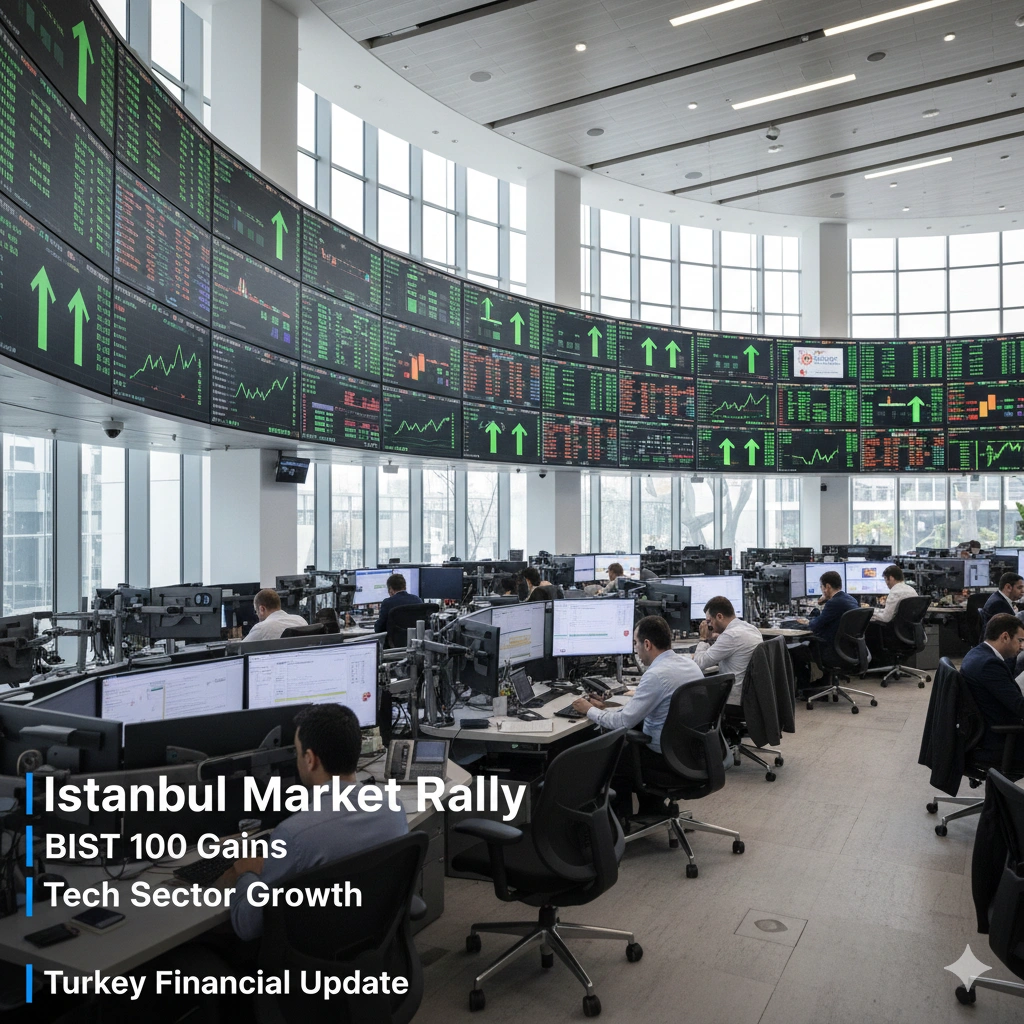
Market Drivers for Regional Performance
Market participants focused their attention on the leasing and factoring industries, which provided the most substantial boost to the benchmark. These specific sectors often act as a barometer for corporate liquidity and the general investment appetite across the country. Because the equity market relies on a diversified growth strategy, the active participation of both energy and tech firms was essential for the Friday rally.
Institutional investors appeared to be strategically rebalancing their portfolios in favor of high-growth technology firms during the final hours of the week. This institutional support helped the benchmark maintain its technical position above key psychological resistance levels as the closing bell approached. Furthermore, the positive sentiment was reinforced by a broader rise in global emerging market risk appetite.
Top Gainers Supporting the Benchmark
Destek Finans Faktoring led the charge by gaining more than nine percent, setting an aggressive pace for the rest of the Istanbul exchange. This specific company performance provided a significant mathematical lift to the local index calculation throughout the entirety of the trading day. Other notable contributors included Izdemir Enerji Elektrik Uretim and Aksa Akrilik Kimya Sanayi, both showing price resilience.
The benchmark benefited from a broad-based rally where advancing stocks nearly doubled the number of declining counterparts. Traders observed that the trading volume in these top-performing shares was notably higher than the monthly average, suggesting genuine long-term buying pressure. Such dynamics usually indicate a very healthy underlying structure for the Istanbul exchange moving into the next fiscal period.
BIST 100 Index
The BIST 100 Index encountered some isolated downward pressure from the real estate and polyester sectors, which struggled to maintain pace with the general rally. Kiler Holding experienced the most significant single-day drop, falling more than seven percent by the close of the trading session. These specific losses prevented the index from testing even higher percentage gains during the final hour of active trade.
Despite these laggards, the Turkish benchmark remained resilient due to the overwhelming strength of the banking and information technology components. Large companies like SASA Polyester and Emlak Konut faced heavy selling pressure, yet their negative impact was mitigated by widespread optimism. This balance of trade demonstrates a sophisticated rotation of capital within the Turkish equity landscape this year.
Energy and Commodity Impact on Stocks
Gold futures for April delivery saw a notable increase of nearly one percent, which often influences the market via mining and treasury-linked equities. As gold prices rose, many investors looked toward safe-haven assets while simultaneously maintaining their positions in high-yield Turkish stocks. This dual-track approach helped stabilize the exchange during periods of moderate currency fluctuation on Friday.
Conversely, the market had to navigate a slight downturn in energy sectors as crude oil and Brent contracts fell during the global session. While lower energy costs typically benefit manufacturing firms, they can weigh on the energy-heavy components of the local stock exchange. The net effect on Friday was a slight tempering of the early morning gains seen across the board.
Currency Trends Affecting Valuation
The Turkish Lira showed a slight weakening trend against both the U.S. Dollar and the Euro, a factor that always influences the total index valuation. For international fund managers, the exchange rate remains a critical component of their total return calculations when trading Istanbul equities. A weaker Lira can sometimes make Turkish industrial exports more competitive on the global stage.
However, local stocks often face a headwind when the U.S. Dollar Index strengthens, as it increases the cost of dollar-denominated debt. On Friday, the U.S. Dollar Index registered a minor decline, which provided a more favorable backdrop for local equities to move higher. This synergy between global currencies and local stocks remains a primary focus for professional Istanbul traders.
Technical Analysis of the Recent Surge
Technically speaking, the market is currently approaching a price zone that many analysts consider to be a primary resistance level. The 0.94 percent gain is viewed as a highly constructive move that validates the support levels established earlier in the month. Maintaining the index above its 50-day moving average is now the main objective for bullish market participants.
If the market can break through the current ceiling, it may invite further institutional inflows from European and Asian hedge funds. The current breadth of the market, with over 400 advancing shares, suggests that there is enough internal strength to attempt a significant breakout. Continuous monitoring of the technology sector will be essential for predicting the next leg of this bull run.
Sector-Specific Growth in Turkey
The information technology sector has become an increasingly vital part of the Turkish equity structure over the last several years. These innovative firms are often less sensitive to traditional commodity price swings, providing a buffer for the market during volatile sessions. On Friday, technology stocks were among the first to see a surge in buying volume from retail investors.
Leasing and factoring also contributed heavily to the daily performance, reflecting a high demand for credit and financial intermediation. As these businesses grow, they provide a stable foundation for the broader market to build upon during the 2026 fiscal year. Investors are encouraged by the diversified nature of the current rally, which spans multiple uncorrelated industries.
Global Economic Influence on Local Trade
International economic data continues to play a massive role in how the Istanbul exchange performs on a daily basis. With global inflation cooling in some western regions, the local market stands to benefit from a potential shift in central bank policies. Any hint of rate cuts in the West usually translates to increased liquidity for emerging market equities.
Furthermore, Turkey is often seen as a gateway to emerging markets for those looking to diversify away from saturated Western bourses. The Friday gain demonstrates that the local exchange remains a preferred destination for risk-tolerant global capital. Economic stability in the Mediterranean region will be the “north star” for investors throughout the remainder of 2026.
Future Outlook for the Exchange
Looking ahead, the market appears poised for a brief period of consolidation before its next major directional move. Traders will be looking at the 1,300-point level as the next psychological milestone for the Istanbul benchmark. If the leasing and factoring sectors continue their dominance, the market could see another record-breaking week.
However, risks such as geopolitical tensions or sudden shifts in energy prices could still impact the market negatively in the short term. Constant vigilance is required as the exchange navigates the complexities of the 2026 financial landscape. For now, the bulls remain in control of the situation, supported by strong corporate earnings and positive breadth.
Investor Strategy for Istanbul Trading
Individual investors are increasingly utilizing exchange-traded funds to gain exposure to the market without the risk of single-stock volatility. This trend has provided a more stable base of capital for the exchange, reducing the likelihood of sudden flash crashes. Diversification remains the best strategy for those tracking the market over the long term.
Active traders are focusing on the top-tier names within the index to capitalize on short-term momentum shifts and technical patterns. By analyzing the relationship between the local index and the USD/TRY pair, one can better time entries into the market. The current climate suggests that the market is entering a mature phase of its current bull cycle.
Summary of Recent Trading Activities
The Istanbul exchange closed the week on a high note, leaving many analysts optimistic about the future of Turkish equities. With a gain of 0.94 percent, the benchmark proved its resilience against a backdrop of fluctuating commodity prices. The leadership shown by the leasing and technology sectors was the highlight of the Friday session.
As we move into next week, the performance of the BIST 100 Index will remain the focal point for regional financial news. Whether the market can maintain its 0.94 percent momentum is a question that only the upcoming sessions can answer. For now, the exchange sits comfortably in a green zone, rewarding those who stayed the course.
Final Thoughts on Market Health
The performance of the market today is a testament to the growing sophistication of the Istanbul exchange and its regulators. Despite the pressures on the Lira, the exchange managed to find a path to growth through industrial and financial strength. This performance highlights why Turkey remains a key player in the global emerging market space.
Investors should keep a close eye on the BIST 100 Index as it reacts to global macro data in the coming days. The 0.94 percent increase is not just a number but a signal of the market’s potential for the remainder of the quarter. Understanding the BIST 100 Index requires a deep dive into these sectoral shifts and global trends.
Analyzing Local Market Volatility
Volatility in the Istanbul exchange has remained relatively stable compared to previous months, which is a positive sign for holders. A stable market attracts more conservative institutional capital that might otherwise avoid high-growth emerging markets. The steady climb on Friday suggests a controlled and healthy buying environment for all participants.
Reducing volatility within the BIST 100 Index is often a primary goal for market regulators who want to ensure fair trading. As the exchange matures, we expect to see more consistent gains rather than the wild swings of the past decade. This evolution of the market is part of a broader trend of financial modernization in Turkey.
Regional Impact of Local Growth
The Istanbul exchange serves as a leader for other regional exchanges in the Middle East and Southeast Europe. When the BIST 100 Index performs well, it often lifts the sentiment of neighboring markets that share similar economic ties. Therefore, the 0.94 percent gain has implications beyond the physical borders of Turkey.
Trade partnerships and cross-border investments are often reflected in the industrial sector of the local exchange. As the benchmark gains strength, it signals to the world that the Turkish economy is open for business. The BIST 100 Index will continue to be a vital metric for assessing the health of the entire region.
The Role of Technology in Growth
Technology stocks are no longer just a small niche but a primary engine of growth for the entire Istanbul exchange. These companies provide the market with a modern edge that appeals to younger, tech-savvy domestic investors. On Friday, the tech sub-index outperformed the general benchmark, showing where the smart money is moving.
As digital transformation continues, the BIST 100 Index will likely see more high-profile tech listings in the near future. This will further diversify the market and reduce its historical reliance on traditional banking and heavy manufacturing. The Istanbul exchange is effectively rebranding itself as a hub for 21st-century innovation.
Macro Trends for Market Participants
Market participants must stay informed about the shifting sands of global finance to be successful in this environment. With the market rising nearly one percent, the focus shifts to how interest rate decisions in the US will play out. A lower-rate environment is generally viewed as a “green light” for the BIST 100 Index.
Furthermore, the benchmark is sensitive to trade agreements that Turkey signs with its major international partners. Any expansion of trade usually results in a direct boost to the industrial stocks within the exchange. The BIST 100 Index is a complex machine with many moving parts, all of which worked in harmony this Friday.
Historical Context of Friday’s Rally
Looking back at historical data, Friday’s performance aligns with seasonal trends often seen in the first quarter of the year. The BIST 100 Index tends to show strength as companies report annual earnings and set guidance for the year ahead. This historical pattern provides a sense of comfort for those invested in the market.
However, past performance in the BIST 100 Index is never a guarantee of future results, and caution is always warranted. The exchange has faced many challenges over the years, yet it has always managed to recover and reach new heights. This resilience is the hallmark of the BIST 100 Index and its companies.
Market Breadth and Financial Health
A healthy market is one where many stocks participate in the rally, not just a few large-cap names. With 401 stocks advancing, the BIST 100 Index is currently showing excellent market breadth and participation. This indicates that the rally is sustainable and not just a result of a few heavyweights moving the needle.
Market breadth is a key indicator for analysts who want to confirm the validity of a significant price move. When the BIST 100 Index rises on broad participation, it suggests that there is widespread agreement on the market’s value. This Friday’s action was a textbook example of a healthy and functioning equity market.
Conclusion of Friday’s Market Analysis
In conclusion, the Istanbul exchange has ended the week with a strong and convincing performance across most sectors. The 0.94 percent gain reflects a market that is finding its footing despite global economic and inflationary pressures. As the BIST 100 Index continues to evolve, it will undoubtedly remain a focal point for global growth.
We look forward to seeing how the BIST 100 Index handles the challenges and opportunities of the coming months. With a strong base in technology and finance, the exchange is well-positioned for continued success in 2026. The BIST 100 Index remains a beacon of opportunity in a complex and shifting global market.
For more details & sources visit: Investing.com
Read more on Turkey news: 360 News Orbit – Turkey