
Investigations into the Danika Mason party reports suggest that the presenter had been enjoying the vibrant Italian nightlife just days before the incident occurred. Fans and critics alike have been dissecting the footage of her dancing in local nightclubs, questioning if her social calendar interfered with her professional duties. Despite the controversy, Mason has remained transparent about the situation, addressing the public with a mix of humility and professional regret that has sparked a nationwide debate on workplace culture.
The incident highlights the immense pressure placed on international correspondents who must balance grueling time zones with the expectation of constant availability. Mason specifically pointed to the combination of high altitude and the lack of a proper meal as primary factors that exacerbated the effects of a few drinks. As the video continues to circulate globally, the focus has shifted toward how major networks manage the well-being and public image of their star reporters during high-stakes global events.
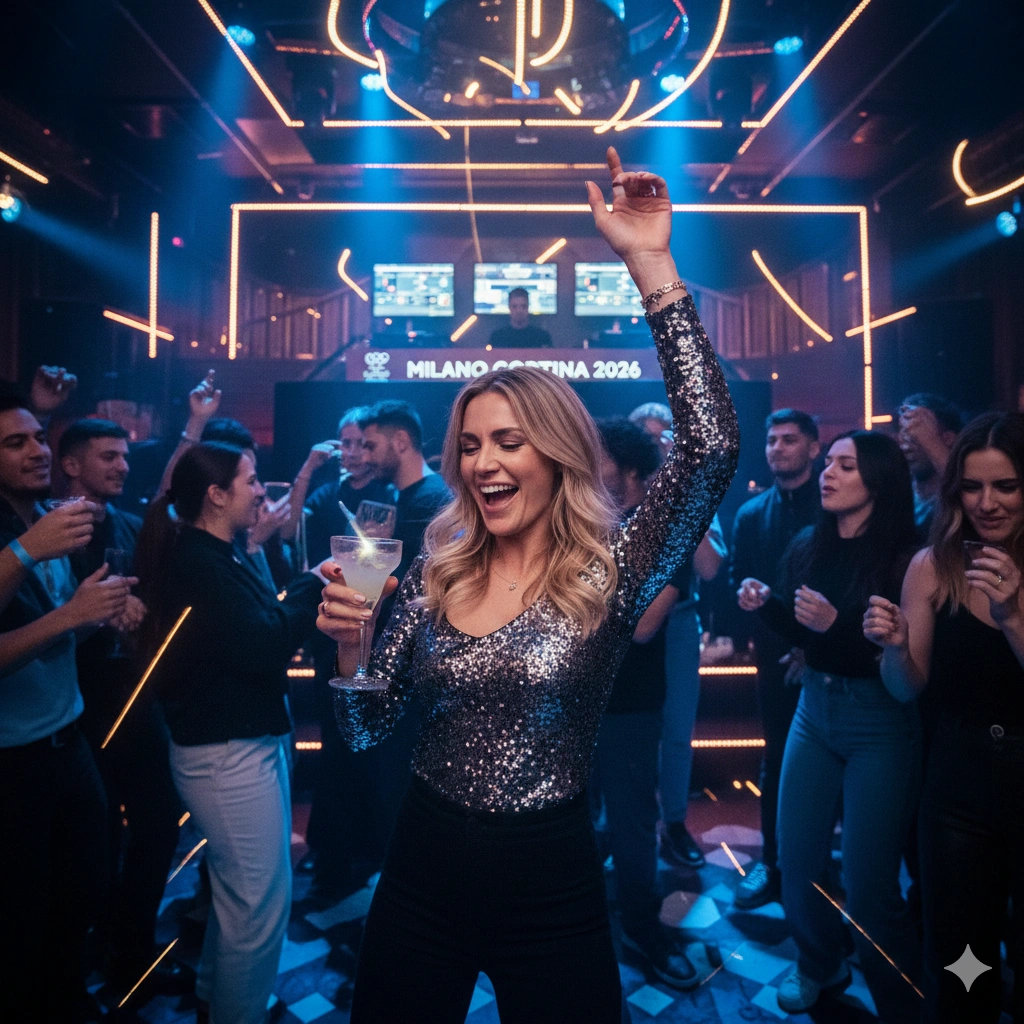
Danika Mason Party Allegations Surface After Broadcast
The timeline of events leading up to the slurred broadcast suggests that the Danika Mason party lifestyle in Italy was more active than many initially realized. Footage obtained by social media users shows the reporter infiltrating a crowded nightclub in the heart of Milano, surrounded by cheering locals and Australian tourists. The atmosphere was electric, with neon lights and heavy bass providing the backdrop for what appeared to be a night of genuine celebration.
While there is nothing inherently wrong with a journalist enjoying their downtime, the proximity of these celebrations to her live appearance has raised eyebrows. Critics argue that as the face of the Today Show’s Olympic coverage, Mason had a responsibility to maintain a certain level of decorum and readiness. However, her supporters argue that a single night of revelry should not define a career built on years of hard work and insightful sports commentary.
The network’s reaction to the party footage has been relatively measured, though internal discussions are reportedly focused on tightening schedules for remote teams. In the high-pressure environment of the Winter Olympics, the line between personal time and professional readiness can often become blurred, especially when working in a city known for its social allure. This Danika Mason party narrative continues to evolve as more witnesses from the Italian club scene share their accounts of the evening.
Examining the Viral Slurred Olympics Report
When the live cross began, it was immediately apparent to viewers that something was amiss with the usually sharp Danika Mason. Instead of delivering a concise update on the day’s athletic achievements, she began a wandering monologue that touched on the surprising cost of Italian espresso. The confusion grew when she began making snow angels on the ground while attempting to explain the migration patterns of iguanas in the United States, a topic entirely unrelated to the Winter Games.
Karl Stefanovic and Jayne Azzopardi, hosting from the Sydney studio, attempted to steer the conversation back on track with lighthearted jokes. They attributed her behavior to the “mountain madness” and the extreme cold of the Milano Cortina region, which can certainly impact cognitive function. However, the sheer randomness of her statements made it difficult for the hosts to maintain the segment’s professional tone, leading to a clip that went viral within minutes.
Social media platforms were flooded with memes and snippets of the broadcast, with the Danika Mason party rumors gaining traction shortly after. The juxtaposition of a professional news setting with such erratic behavior created a perfect storm for internet engagement. While some viewers found the segment hilarious and relatable, others expressed concern for her health or disappointment in the perceived lack of professionalism during a major international sporting event.
Professional Standards and the Empty Stomach Defense
Following the backlash, Danika Mason took to the airwaves to offer a sincere and direct apology for her performance. She admitted that she had misjudged her limits, specifically noting that she had consumed alcohol on an empty stomach after a long day of filming. The combination of exhaustion, high altitude, and the freezing Italian air created a physiological reaction that she did not anticipate, leading to the slurred speech and confusion.
Mason emphasized that her behavior during the broadcast did not reflect her standard of work or her respect for the Channel Nine audience. She described the feeling of “horrible embarrassment” upon watching the footage back, realizing how far she had strayed from the script. This level of honesty is rare in the media industry, and many praised her for taking full responsibility rather than blaming technical errors or other external factors.
The “empty stomach” defense is one that many travelers can relate to, especially when navigating the hospitality of a country like Italy. However, in the context of a Danika Mason party atmosphere, the apology served as a necessary damage control measure for her career. By owning the mistake, she attempted to pivot the conversation from her night out to the lessons learned about maintaining peak performance under extreme environmental conditions.
Prime Minister Anthony Albanese Defends the Reporter
In a surprising turn of events, the Danika Mason party controversy reached the highest levels of Australian government. Prime Minister Anthony Albanese was asked about the incident during a press conference and chose to offer a spirited defense of the reporter. He pointed out the grueling nature of international journalism, citing the “horrible time zones” and the physical toll of traveling across the globe to cover the Olympics.
The Prime Minister’s comments suggested that the public should show more empathy toward professionals who make mistakes while working under intense pressure. He noted that journalists are human beings who are susceptible to fatigue and the challenges of adapting to new environments. This high-profile support provided Mason with a significant shield against some of the more vitriolic online criticism she had been receiving since the broadcast.
Albanese’s intervention also sparked a broader discussion about the “tall poppy syndrome” in Australia, where successful individuals are often targeted when they stumble. By framing the Danika Mason party rumors as a minor lapse in judgment by a dedicated professional, the Prime Minister helped shift the narrative toward a more forgiving tone. This political backing was instrumental in stabilizing Mason’s reputation during a week of intense scrutiny.
Impact of Milano Cortina High Altitude on Alcohol
Scientific experts have noted that the Danika Mason party incident might have been physically inevitable given the geographical conditions. Milano Cortina is situated at a significant elevation, where the air is thinner and oxygen levels are lower than at sea level. Studies have shown that altitude can significantly lower a person’s tolerance for alcohol, meaning that a small amount can have a much more profound effect on the brain and motor skills.
When you add freezing temperatures to the mix, the body works overtime to maintain its core temperature, leaving fewer resources for metabolizing substances. Mason’s admission that she hadn’t eaten properly only served to accelerate the absorption of alcohol into her bloodstream. In such an environment, the transition from feeling fine to being visibly impaired can happen in a matter of minutes, often catching the individual by surprise.
- Altitude increases the speed of intoxication due to lower oxygen levels in the blood.
- Cold weather can mask the initial feelings of tipsiness until it is too late.
- Dehydration, common in mountain air, further intensifies the physical effects of drinking.
- Lack of food prevents the stomach from slowing down alcohol absorption.
These physiological factors provide a credible explanation for why the Danika Mason party activities resulted in such a dramatic on-air gaffe. Understanding the science behind the incident doesn’t excuse the professional lapse, but it does offer context that moves the conversation beyond simple negligence. For journalists heading to future Winter Games, this serves as a cautionary tale about the unique environmental hazards of mountain reporting.
The Future of Danika Mason at Channel Nine
Despite the viral nature of the Danika Mason party reports, her future at Channel Nine appears to be secure for the time being. The network has a history of supporting its talent through public mishaps, especially when the individual is as well-regarded as Mason. Her track record as a top-tier sports presenter carries significant weight, and the apology she delivered was seen as a professional and mature way to handle a crisis.
However, the incident will likely lead to stricter protocols for reporters on overseas assignments. There is a renewed focus on ensuring that staff have adequate rest and nutrition, particularly when working in extreme climates or across vast time zone differences. The Danika Mason party footage may serve as a training example for future Olympic delegations on how to navigate the social expectations of a host city without compromising the integrity of the live broadcast.
Mason herself has expressed a desire to move past the incident and return to focusing on the athletes and the competition. She remains one of the most recognizable faces in Australian sports media, and her ability to bounce back from this “shock” event will be a testament to her resilience. The public’s fascination with the Danika Mason party story will eventually fade, but the lessons learned by the network and the presenter will likely remain a part of their operational strategy for years to come.
Lessons in Media Resilience and Public Perception
The Danika Mason party saga is a masterclass in how modern celebrities must navigate the intersection of social media and traditional journalism. In an era where everyone has a smartphone, a night out at a club is no longer a private affair. The speed at which the nightclub footage was synchronized with the live broadcast shows how quickly a narrative can be built and disseminated across the globe.
Resilience in this context means more than just apologizing; it involves a consistent return to high-quality work. Mason’s supporters are eager to see her get back to the sideline, delivering the expert analysis that made her a household name. The “Danika Mason party” tag might follow her in search results for a while, but it is her subsequent reporting that will ultimately define her legacy in the industry.
- Public apologies must be swift, sincere, and take full ownership of the mistake.
- Supporting colleagues in the studio can help mitigate the immediate impact of a live error.
- Contextualizing a mistake with environmental factors can help the public understand the “why.”
- Maintaining a strong professional record provides a “buffer” when occasional errors occur.
As the Milano Cortina 2026 games continue, the focus is slowly returning to the snow and the ice. While the Danika Mason party will be remembered as one of the more colorful moments of the broadcast, the resilience shown by the reporter has earned her a new level of respect from those who value honesty in the face of public failure. Moving forward, the balance between work and play for international correspondents will remain a delicate but essential part of the job.
Cultural Nuances of the Milano Cortina 2026 Games
The Italian setting played a significant role in the Danika Mason party narrative. Italy is a country that celebrates life, food, and social gatherings with a passion that is often infectious for visitors. For a reporter stationed there for weeks, the temptation to immerse oneself in the local culture is immense. The nightclubs and bars of Milano are world-renowned, and for many Australians, the chance to experience that atmosphere is a highlight of any European trip.
This cultural backdrop explains why Mason was in the nightclub to begin with, as part of a lively report on the local atmosphere. The “Danika Mason party” was not just a personal outing but a piece of experiential journalism that perhaps went a step too far. It highlights the difficulty of being a “lifestyle and sports” reporter, where the job literally requires you to be in the middle of the party one moment and delivering serious news the next.
The local Italian community in Milano Cortina has been largely supportive, viewing the incident as a minor mishap during a month of high-energy celebrations. They understand the “vibe” of their city and the effect it can have on those unaccustomed to the altitude and the pace of life. As the games progress, the Danika Mason party story serves as a reminder of the vibrant, sometimes unpredictable energy that the Winter Olympics bring to a host city.
Navigating Social Media Criticism in the Modern Age
One of the most difficult aspects of the Danika Mason party controversy has been the relentless nature of social media commentary. Once the slurred broadcast became a “meme,” it took on a life of its own, detached from the human being behind the screen. Anonymous accounts often lead the charge in demanding “accountability,” which can sometimes border on harassment. Mason’s ability to stay off social media during the height of the storm was a wise tactical move.
By addressing the issue on the Today Show, she reclaimed the narrative from the keyboard warriors. She spoke directly to her loyal viewers, bypassing the noise of the viral algorithms. The Danika Mason party rumors were effectively neutralized by her candor, proving that a human voice is often the best antidote to digital vitriol. This approach has become a blueprint for other media personalities facing similar “cancel culture” moments.
It is also important to note the gendered nature of some of the criticism. Female reporters often face harsher scrutiny for their social lives than their male counterparts. The obsession with the Danika Mason party footage often ignored the fact that many male journalists have had similar lapses without the same level of global “shock.” Highlighting this double standard has been an important part of the conversation surrounding her treatment in the press.
The Role of Alcohol in High-Pressure Environments
The Danika Mason party incident has reopened the discussion about alcohol consumption in the media and sporting industries. Many high-pressure jobs have a “work hard, play hard” culture that can sometimes lead to situations like the one seen in Milano. While alcohol is a legal and social part of many cultures, its place in a professional work environment—especially one involving live broadcasting—is increasingly being questioned.
Health experts suggest that the “Danika Mason party” scenario is a perfect example of how stress and alcohol interact. When the body is under high stress, as it is during a major international assignment, the effects of depressants like alcohol can be amplified. This serves as a reminder for all professionals that self-care and moderation are not just personal choices but professional necessities when the eyes of the world are watching.
- Stress hormones can change how the liver processes toxins like alcohol.
- Alcohol acts as a temporary relief for stress but often leads to a “rebound” effect.
- In professional settings, the “one drink” rule is often safer than a complete ban.
- Hydration and nutrition are the best defenses against unexpected intoxication.
The Danika Mason party gaffe will likely be cited in future media ethics and health seminars as a case study. It isn’t about shaming the individual, but about understanding the biological and psychological triggers that lead to such events. By being open about her “empty stomach” and the altitude, Mason has contributed to a more nuanced understanding of this issue within the industry.
Evaluating the Today Show’s Response Strategy
The producers of the Today Show deserve credit for how they handled the Danika Mason party fallout. Rather than suspending her immediately or issuing a cold corporate statement, they allowed her to speak her truth. Karl Stefanovic and Jayne Azzopardi played a crucial role in “softening” the blow on the morning of the broadcast, using humor to bridge the gap between the awkward live cross and the eventual apology.
This strategy humanized the network and showed a level of loyalty to their staff that is often missing in corporate media. The Danika Mason party narrative was managed as a human error rather than a fireable offense. This approach preserved the show’s “family” atmosphere and likely prevented a total PR disaster. The audience generally responds well to authenticity, and the Today Show delivered that in spades.
By keeping Mason on the air, the network sent a message that they value her long-term contributions over a single viral moment. This has likely strengthened the bond between the presenter and her viewers, many of whom have reached out with messages of support. The Danika Mason party incident, while embarrassing, has ultimately showcased the strength of the team behind the scenes at Channel Nine.
How to Avoid a Similar Live Broadcast Gaffe
For aspiring journalists, the Danika Mason party story offers several practical lessons for avoiding a similar fate. The first is the importance of a “pre-flight” routine before any live cross. This includes ensuring you are hydrated, have eaten a balanced meal, and have had adequate rest. In the excitement of an event like the Olympics, these basics are often the first things to be neglected.
Another lesson is the importance of situational awareness. If you know you are in a high-altitude environment or are dealing with extreme cold, you must adjust your behavior accordingly. The Danika Mason party footage shows her having a great time, but the physiological price was paid during the broadcast. Being aware of how your body reacts to the environment is a skill as important as knowing how to read a teleprompter.
- Always eat a high-protein meal before a long night of reporting.
- Monitor your hydration levels, especially in dry, cold mountain air.
- Practice your “lead-in” lines several times to check for clarity of speech.
- Have a “safety word” or signal with your producer if you feel unwell.
Following these simple steps can prevent the kind of disorientation that led to the Danika Mason party controversy. Professionalism is often about the things people don’t see—the preparation, the discipline, and the self-awareness that happens off-camera. While the gaffe was unfortunate, it serves as a powerful reminder of the discipline required to stay at the top of the media game.
Danika Mason Party News: The Final Word
As the news cycle moves on, the Danika Mason party incident will be remembered as a brief but intense moment of human fallibility in the high-stakes world of sports media. Mason has shown remarkable grace in the face of international scrutiny, turning a potential career-ending mistake into a moment of growth and transparency. Her apology was well-received, and her return to professional form has been swift.
The Milano Cortina 2026 games will continue to provide thrills and spills on the ice, but the Danika Mason party story has added a layer of human drama to the coverage. It reminds us that the people bringing us the news are just as susceptible to the charms of Italy and the pressures of the job as anyone else. With the support of her network, her colleagues, and even the Prime Minister, Danika Mason is poised to move forward with her head held high.
For more details & sources visit: Daily Mail
For the latest updates from the Italy, visit our Italy news page.