
Japan Science Advisor Matsumoto leads a delegation to the United States to strengthen critical bilateral ties through high-level technology diplomacy and strategic research collaboration. Professor Yoichiro Matsumoto, the Science and Technology Advisor to the Minister for Foreign Affairs, recently concluded a comprehensive tour across major American innovation hubs including Los Angeles, San Francisco, and Boston. This Japan Science Advisor Matsumoto initiative serves as a cornerstone for the nation’s “International Brain Circulation” strategy, ensuring that Japanese researchers abroad remain integrated with domestic growth.
The primary objective of this diplomatic mission was to engage with the Japanese academic diaspora while addressing modern challenges in research security and technological competition. By meeting with leaders at world-class institutions like Caltech, Stanford, and MIT, the advisor facilitated a dialogue on how both nations can protect sensitive data while fostering open innovation. This Japan Science Advisor Matsumoto visit highlights the increasing importance of science as a tool for soft power and geopolitical stability in the 21st century.
Strategic Engagements in Los Angeles and Pasadena
The tour commenced in Southern California, where the advisor focused on mapping the influence of Japanese Principal Investigators across the region’s dense academic landscape. During these sessions, the Japan Science Advisor Matsumoto discussed the necessity of creating a robust network that allows for the seamless flow of talent and information between Tokyo and Los Angeles. These discussions are vital for maintaining Japan’s competitive edge in aerospace and engineering sectors.
A significant portion of the Los Angeles leg was dedicated to high-level briefings at NASA’s Jet Propulsion Laboratory and the California Institute of Technology. The Japan Science Advisor Matsumoto met with Vice Provost Dr. Jennifer Jackson and Associate Vice Provost Dr. Grace Fisher-Adams to examine the nuances of US research security policies. These meetings underscored the shared commitment of both nations to prevent the unauthorized transfer of emerging technologies while sustaining academic freedom.
Japan Science Advisor Matsumoto
The delegation’s arrival in the San Francisco Bay Area marked a shift toward commercialization and the integration of basic science with industry-leading ventures. The Japan Science Advisor Matsumoto hosted a roundtable for local PIs, providing a platform for researchers to voice their concerns regarding the current funding environment and administrative hurdles in international joint ventures. This feedback is expected to inform future Japanese policy regarding overseas research support.
At the Japan Society for the Promotion of Science gathering, the advisor delivered a keynote address that emphasized the role of individual researchers as diplomatic envoys. The Japan Science Advisor Matsumoto noted that the strength of the bilateral relationship relies heavily on the grassroots connections formed in laboratories and seminar rooms. This perspective reinforces the idea that technology diplomacy is as much about human capital as it is about advanced machinery.
Research Security Dialogues at Stanford and Hoover
In Northern California, the advisor engaged with the Hoover Institution to discuss the geopolitical implications of scientific transparency. Working with Dr. Glenn Tiffert, the Japan Science Advisor Matsumoto explored ways to harmonize research security protocols between the G7 nations. These talks are crucial as Japan prepares to update its domestic guidelines for handling dual-use technologies that have both civilian and military applications.
Beyond security, the visit also touched upon health and wellness innovations through a tour of Stanford University’s Sleep Lab with Director Professor Seiji Nishino. The Japan Science Advisor Matsumoto expressed great interest in how data-driven medicine can address the challenges of an aging global population. Such collaborations signify a broadening of the science diplomacy scope to include societal well-being alongside traditional industrial goals.
Launching the J-NEXUS Innovation Platform in Boston
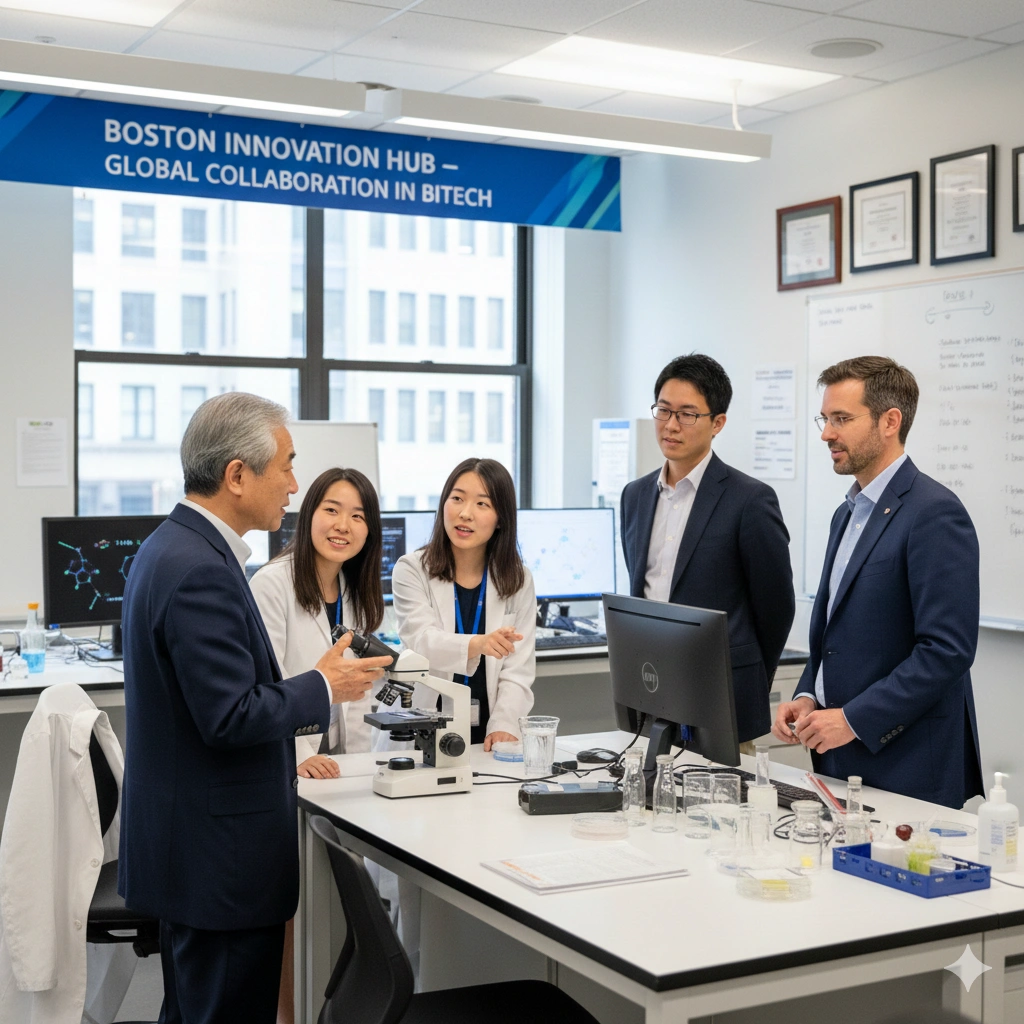
The final leg of the journey took the delegation to Boston and Cambridge, the world’s premier biotechnology and life sciences cluster. A major highlight was the launch of the J-NEXUS platform, a digital and physical hub designed to bridge the gap between Japanese innovators and the Boston ecosystem. The Japan Science Advisor Matsumoto championed this initiative as a vital tool for accelerating drug discovery and biomedical breakthroughs.
While in Massachusetts, the advisor participated in several drug discovery forums, connecting Japanese pharmaceutical representatives with local venture capitalists. The Japan Science Advisor Matsumoto facilitated these introductions to ensure that Japanese startups have access to the scaling expertise found in the Kendall Square area. This proactive approach to market integration is a hallmark of Japan’s new economic statecraft.
Strengthening Institutional Ties at MIT and CIC
Meetings at the Massachusetts Institute of Technology further solidified the academic foundations of the visit. The Japan Science Advisor Matsumoto held extensive talks with Vice Provost Dr. Duane Boning regarding the future of faculty exchanges and joint research centers. Both parties agreed that the Japan Science Advisor Matsumoto mission has set a new benchmark for how universities can collaborate on high-stakes projects like artificial intelligence and quantum computing.
The tour concluded with a visit to the Cambridge Innovation Center, where the advisor observed how flexible workspaces foster serendipitous innovation. The Japan Science Advisor Matsumoto emphasized that Japan must adopt similar “collision-based” models to revitalize its domestic research parks. By learning from the Boston model, Japan aims to transform its traditional laboratory structures into more dynamic and outward-facing entities.
Enhancing Global Talent Networks and Brain Circulation
One of the recurring themes throughout the ten-day mission was the concept of international brain circulation. The Japan Science Advisor Matsumoto reiterated that the goal is not to bring every researcher back to Japan, but to ensure they are connected to the Japanese ecosystem regardless of their physical location. This “virtual return” strategy is essential for a nation looking to leverage its global talent pool in a decentralized world.
The Japan Science Advisor Matsumoto encouraged researchers to take advantage of new government grants designed to facilitate short-term returns and collaborative projects. These incentives are part of a broader effort to make the Japanese research environment more attractive to international standards. By fostering these networks, the advisor is building a sustainable pipeline for future technological advancements.
Future Outlook for Japan-US Technology Diplomacy
The success of this US tour signals a new era of proactive science policy for the Ministry of Foreign Affairs. Following the Japan Science Advisor Matsumoto recommendations, it is expected that the Japanese government will increase its presence in key US tech hubs through expanded science attaché roles. This will ensure that the momentum generated during the February visit is translated into long-term institutional agreements.
The Japan Science Advisor Matsumoto has successfully identified the critical intersections where Japanese innovation can meet American scale. As global competition intensifies, the strategic clarity provided by this mission will be indispensable. The Japan Science Advisor Matsumoto continues to be a pivotal figure in navigating the complex landscape of international science, ensuring that Japan remains a top-tier partner in the global quest for knowledge.
Conclusion and Strategic Impact
Reflecting on the tour, it is clear that the role of the science advisor has evolved into a key diplomatic function. The Japan Science Advisor Matsumoto demonstrated that effective technology diplomacy requires a deep understanding of both high-level policy and the day-to-day realities of laboratory research. This balanced approach has earned the respect of both the academic community and government officials on both sides of the Pacific.
The Japan Science Advisor Matsumoto visit has paved the way for more integrated research security frameworks and robust talent exchanges. By addressing these issues head-on, the advisor has strengthened the foundation of the US-Japan alliance for years to come. The Japan Science Advisor Matsumoto efforts reflect a visionary commitment to a future where science and diplomacy work hand in hand for the benefit of all.
Through these engagements, the Japan Science Advisor Matsumoto has proven that innovation is the most effective language of international cooperation. The Japan Science Advisor Matsumoto continues to champion the idea that open collaboration, protected by smart security, is the only way to solve the world’s most pressing challenges. This mission stands as a testament to Japan’s enduring leadership in the global scientific community.
- Professor Matsumoto focused on the Principal Investigator (PI) map to track Japanese talent in the US.
- Discussions at Caltech and Stanford emphasized the balance between openness and research security.
- The J-NEXUS platform launch in Boston is set to revolutionize biotech collaboration.
- Meetings with MIT leadership focused on the next generation of AI and quantum research.
The Japan Science Advisor Matsumoto initiative will likely lead to new bilateral funding opportunities for young researchers. The Japan Science Advisor Matsumoto also highlighted the importance of the Japan Society for the Promotion of Science (JSPS) in maintaining these links. Ultimately, the Japan Science Advisor Matsumoto visit ensures that Japanese science remains globally relevant and domestically prosperous.
- Research security protocols are being synchronized between Japanese and American universities.
- Brain circulation strategies are shifting from physical relocation to digital and project-based networking.
- The Japan Science Advisor Matsumoto remains a central figure in these transformative policy shifts.
The Japan Science Advisor Matsumoto visit underscores the necessity of high-level engagement in the tech sector. By visiting NASA and MIT, the Japan Science Advisor Matsumoto has reinforced the prestige of Japanese science on the world stage. This Japan Science Advisor Matsumoto mission is a clear victory for Japanese diplomacy.
The Japan Science Advisor Matsumoto concluded the tour with a renewed sense of purpose. The Japan Science Advisor Matsumoto noted that the enthusiasm of Japanese researchers in the US is a powerful asset. Therefore, the Japan Science Advisor Matsumoto will continue to advocate for policies that empower these global citizens.
For more details & sources visit: Ministry of Foreign Affairs of Japan
For the latest updates from Japan, visit our Japan news page.