
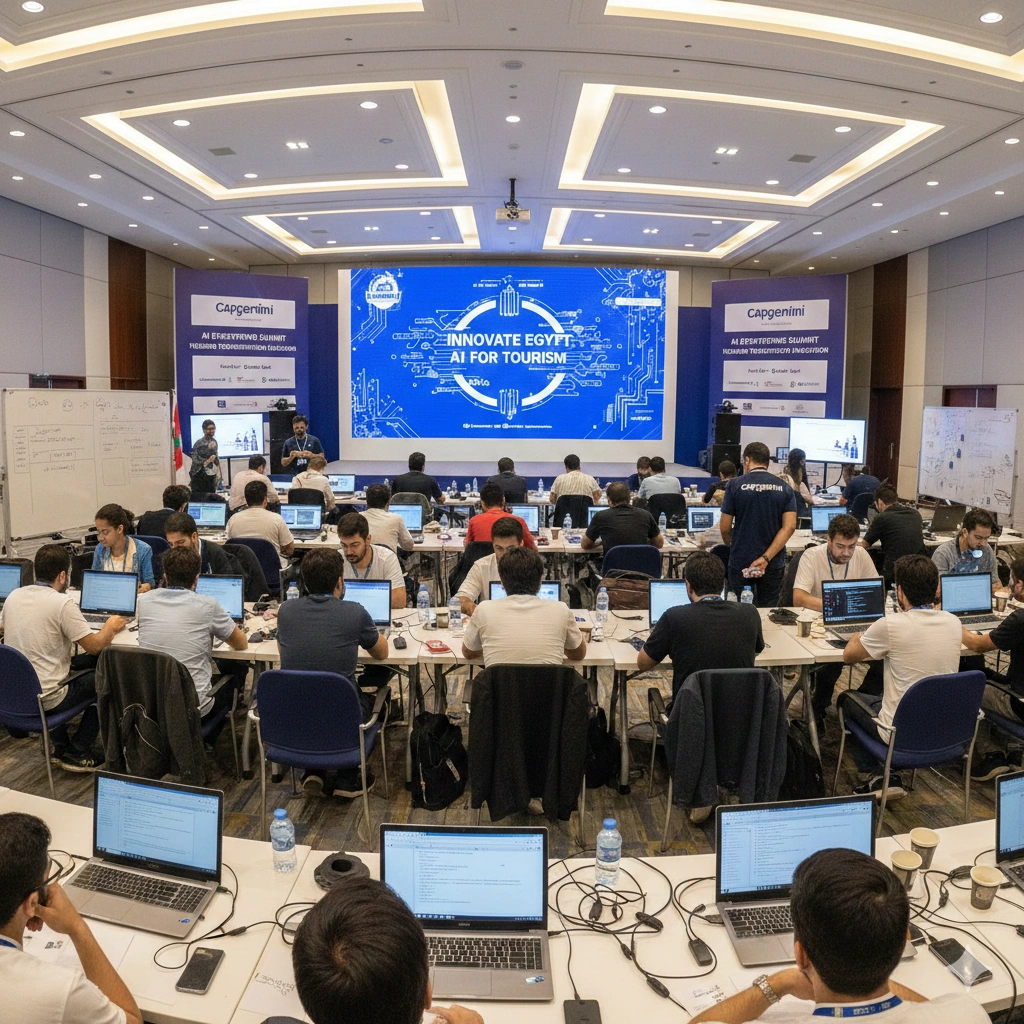
The Egypt AI tourism revolution reached a historic milestone this week during the prestigious AI Everything Middle East & Africa 2026 Summit. Young innovators gathered in Cairo to tackle the modern challenges facing the travel sector through high-tech solutions. Capgemini orchestrated this movement by hosting the “Hack the Future of Tourism in Egypt” event, which drew talented graduates. This initiative aims to redefine how visitors experience ancient landmarks and modern amenities across the country.
By merging artificial intelligence with hospitality, the summit organizers hope to create a seamless digital journey. The energy at the Cairo summit reflects a broader national commitment to technological excellence and economic diversification. As the world watches, Egypt is positioning itself as a premier destination for tech-enabled travel experiences. This strategic push is expected to yield significant growth in visitor satisfaction and operational efficiency nationwide.
The Genesis of Egypt AI Tourism Revolution
The current Egypt AI tourism revolution is built upon years of strategic planning and digital investment by the government. Recognizing that traditional methods were no longer sufficient for global competition, officials turned toward automation and data science. Capgemini has played a pivotal role in this transition by establishing a dedicated AI Center of Excellence in Cairo. This facility serves as the nerve center for developing localized tools that cater specifically to the Egyptian market. The recent hackathon is merely the latest chapter in this ongoing saga of digital modernization.
During the two-day summit, participants were challenged to rethink the entire traveler lifecycle using the Egypt AI tourism revolution framework. From the moment a tourist begins searching for flights to their final departure, every touchpoint was analyzed for potential optimization. The focus was not just on convenience but on creating emotional connections through technology. By using predictive modeling and machine learning, developers can now anticipate what a traveler needs before they even ask. This proactive approach is a hallmark of the new digital landscape in Cairo.
Success in the Egypt AI tourism revolution also depends on the collaboration between the public and private sectors. Capgemini’s Global Delivery Center has worked closely with local universities to ensure that the talent pool is ready for these challenges. The 24 students who participated in the hackathon represent the future of the nation’s workforce. Their ability to prototype complex AI systems in under 48 hours demonstrates the high level of technical proficiency present in Egypt. This synergy is creating a robust ecosystem where innovation can thrive and scale rapidly.
Egypt AI Tourism Revolution
The most visible aspect of the Egypt AI tourism revolution is the emergence of smart assistants that act as personal concierges. These AI-driven tools provide tailored recommendations based on real-time user data and historical preferences. For instance, a history buff might receive a notification about a newly opened wing at the Grand Egyptian Museum. Meanwhile, a foodie might be guided to a hidden culinary gem in Old Cairo. This level of customization ensures that no two trips to Egypt are ever the same.
Another critical component of the Egypt AI tourism revolution involves the use of augmented reality to narrate history. Six teams at the Cairo summit worked on prototypes that animate cultural landmarks through a smartphone lens. Imagine standing before the Sphinx and seeing a digital reconstruction of its original state while hearing stories of the pharaohs. These immersive narratives make history accessible and engaging for younger, tech-savvy generations. By blending the physical and digital worlds, Egypt is setting a new standard for cultural heritage tourism.
The technical backbone of the Egypt AI tourism revolution relies on sophisticated demand forecasting for local operators. Hotel managers and tour agencies can use AI to predict surges in visitor numbers with incredible accuracy. This allows for better resource management, from staffing levels to inventory procurement. Reducing waste and optimizing costs makes the entire industry more resilient to global economic shifts. As these tools become more widespread, the economic impact on Egypt’s GDP is expected to be overwhelmingly positive and sustainable.
Strategic Impact of the Cairo AI Summit
The Cairo AI Everything Summit served as the perfect backdrop for launching the next phase of the Egypt AI tourism revolution. Industry leaders from across the Middle East gathered to share insights on how machine learning can solve regional pain points. The hackathon provided a practical application of these theoretical discussions, proving that AI is ready for prime time. Capgemini’s leadership during the event highlighted the company’s commitment to social and economic impact in the region. This summit has effectively turned Cairo into a regional hub for tourism-related technology.
- Establishment of the Cairo AI Center of Excellence to support long-term research.
- Integration of AI modules into university curricula to prepare the next generation.
- Launch of a national digital tourism map powered by real-time data analytics.
- Development of a multilingual AI translation layer for all major historical sites.
Innovation Through Young Talent and Hackathons
The role of the youth in the Egypt AI tourism revolution cannot be overstated, as they bring fresh perspectives to old problems. The six teams at the summit were composed of students who grew up in the digital age. They naturally understand how to utilize mobile platforms to enhance user experiences. Their prototypes included smart itinerary planners that optimize both time and budget for travelers. Such tools are essential for the modern backpacker and the luxury traveler alike, ensuring maximum value for every visit.
Capgemini’s mentorship during the Egypt AI tourism revolution hackathon ensured that these young developers focused on scalability. It is one thing to build a prototype and another to implement it across a national infrastructure. The experts from the Global Delivery Center provided guidance on cloud integration and data security. Ensuring that tourist data is handled ethically and safely is a top priority for the PFF and the government. This focus on professional standards elevates the quality of the resulting innovations significantly.
- Six unique AI prototypes developed within a 48-hour intensive sprint.
- Direct access to industry mentors from Capgemini’s global network of experts.
- Focus on solving real-world tourism pain points like language barriers.
- Creation of a recruitment pipeline for top-performing students into the tech sector.
Enhancing Global Visitor Experiences
The ultimate beneficiary of the Egypt AI tourism revolution is the international traveler visiting the Land of the Pharaohs. Instant translation services were a key highlight of the hackathon projects, bridging the gap between visitors and locals. By reducing friction in communication, AI fosters a more welcoming and inclusive environment. Travelers feel more confident exploring off-the-beaten-path locations when they have a digital translator in their pocket. This democratization of travel is a major goal of the current digital push.
Furthermore, the Egypt AI tourism revolution is making travel more accessible for people with disabilities. AI-driven apps can now provide specialized routes for wheelchair users or audio descriptions for the visually impaired. These inclusive technologies ensure that Egypt’s wonders are available to everyone, regardless of their physical abilities. The Cairo summit emphasized that innovation should leave no one behind. This ethical approach to technology is gaining international praise and attracting a more diverse range of visitors.
The efficiency of business operations is also seeing a massive boost from the Egypt AI tourism revolution. Automated booking systems and AI chatbots handle routine inquiries, freeing up human staff to provide high-touch service. This hybrid model of “high-tech and high-touch” is the future of luxury hospitality in Cairo and beyond. As guest satisfaction scores rise, the reputation of Egypt as a tech-forward destination continues to grow. This shift is essential for staying competitive in the rapidly evolving global tourism market.
Mapping the Future of Digital Hospitality
The roadmap for the Egypt AI tourism revolution extends far beyond the 2026 Cairo Summit. Capgemini plans to continue its support for the “Hack the Future” alumni through incubator programs. These programs will help turn the most promising hackathon prototypes into fully functional commercial products. By fostering a local startup ecosystem, Egypt can export its tourism technology to other nations. This positions the country as a leader in the global “TravelTech” industry.
As part of the Egypt AI tourism revolution, there is a heavy focus on sustainable and green travel. AI algorithms are being developed to monitor the environmental impact of tourism on fragile sites like the Pyramids of Giza. These systems can suggest alternative visiting hours to prevent overcrowding and reduce the carbon footprint. Protecting the nation’s heritage while welcoming millions of guests is a delicate balance that only data-driven solutions can achieve. This commitment to sustainability is attracting eco-conscious travelers from around the world.
- AI-powered crowd management systems for the Valley of the Kings.
- Sustainable transport routing using real-time traffic and emissions data.
- Energy-efficient smart hotel systems developed by local Egyptian startups.
Cultural Preservation and AI Storytelling
One of the most profound impacts of the Egypt AI tourism revolution is the preservation of intangible heritage. AI can record and archive traditional music, crafts, and oral histories that might otherwise be lost. These digital archives can then be integrated into visitor experiences through interactive kiosks and mobile apps. Tourists can learn about the craftsmanship of ancient papyrus making directly from a digital master. This preserves the soul of Egypt while presenting it in a modern, engaging format.
The Egypt AI tourism revolution also allows for a more nuanced portrayal of the country’s diverse history. Beyond the pharaohs, AI can highlight the Islamic, Coptic, and modern eras of Egyptian history with equal depth. This holistic storytelling enriches the traveler’s understanding and encourages longer stays. By showcasing the full spectrum of Egyptian culture, the government can diversify its tourism revenue streams. This approach ensures that all regions of the country benefit from the digital transformation.
Digital twins of historical artifacts are also being created as part of the Egypt AI tourism revolution. These high-resolution 3D models allow researchers and tourists to examine objects in detail without touching the originals. If a site needs to be closed for restoration, virtual reality experiences can fill the gap. This ensures that the tourism economy remains stable even during necessary maintenance periods. The integration of high-fidelity imaging is a game-changer for cultural tourism management.
Economic Growth and Job Creation
The Egypt AI tourism revolution is a significant driver of high-value job creation for the local population. As the sector becomes more tech-intensive, the demand for data scientists, developers, and digital marketers is skyrocketing. Capgemini’s Cairo AI Center of Excellence is at the forefront of this employment boom. These are not just jobs; they are careers that provide young Egyptians with global-standard skills. This reduces the “brain drain” and keeps the nation’s brightest minds working on local challenges.
Small and medium-sized enterprises (SMEs) are also benefiting from the Egypt AI tourism revolution. Affordable AI tools allow local tour operators to compete with massive international conglomerates. By using AI for digital marketing and customer service, a small family-run guesthouse can reach a global audience. This democratization of the marketplace ensures that the economic benefits of tourism are spread more equitably. Supporting SMEs is a core pillar of Egypt’s broader economic vision for the next decade.
- Creation of over 5,000 high-tech jobs in the Cairo tourism tech hub.
- Incentives for startups developing AI solutions for the hospitality sector.
- Grant programs for traditional artisans to digitize their businesses.
- Training workshops for rural tourism boards on using data analytics.
Challenges in the Digital Transformation Journey
While the Egypt AI tourism revolution is progressing rapidly, there are still hurdles to overcome. Ensuring high-speed internet connectivity across remote desert sites and rural villages is a logistical challenge. The government is currently investing in satellite and fiber-optic infrastructure to support these digital tools. Without a reliable connection, many of the most advanced AI features cannot function effectively. This infrastructure push is happening in parallel with the software development efforts.
Data privacy remains a top concern within the Egypt AI tourism revolution framework. As more traveler data is collected to provide personalized experiences, robust cybersecurity measures are essential. Capgemini has been instrumental in implementing international data protection standards across its projects in Cairo. Public trust in digital systems is vital for their widespread adoption. Clear communication about how data is used and protected is a key part of the national strategy.
- Bridging the digital divide between urban centers and rural tourist sites.
- Standardizing data protocols across different government departments.
- Ensuring the ethical use of facial recognition technology in public spaces.
- Upgrading legacy systems in older hotels to support modern AI integrations.
Global Leadership in Tech-Enabled Hospitality
The success of the Egypt AI tourism revolution is being studied by other nations as a blueprint for success. By hosting events like the Cairo Summit, Egypt is demonstrating its ability to lead the regional conversation. The combination of ancient history and cutting-edge technology is a unique selling proposition that few other countries can match. This “Pharaonic-Tech” brand is becoming a powerful magnet for both tourists and investors. The world is seeing a new side of Egypt—one that is innovative, ambitious, and digitally savvy.
As we look toward the 2030 goals, the Egypt AI tourism revolution will continue to evolve with emerging technologies. Concepts like the “Metaverse” and blockchain for travel insurance are already being discussed for future hackathons. The partnership with Capgemini ensures that Egypt stays at the absolute forefront of these developments. The Cairo Summit was not an end point, but a starting gun for a marathon of innovation. The momentum generated here will carry the nation’s tourism industry into a prosperous digital future.
In conclusion, the Egypt AI tourism revolution is a testament to what is possible when vision meets talent. The “Hack the Future” event has sparked a flame of creativity that will illuminate the path forward for years to come. With smart assistants, AR narratives, and data-driven management, Egypt is truly revolutionizing the travel experience. The collaboration between Capgemini and the Egyptian youth is a shining example of sportsmanship in the arena of technology. The future of travel has arrived in Cairo, and it is powered by artificial intelligence.
For more details & sources visit: Travel and Tour World
For the latest updates from Egypt, visit our Egypt news page.