
China Consumption Growth is now the central pillar of international economic discourse as global institutions weigh in on the future of the world’s second-largest economy. The International Monetary Fund recently underscored the urgent necessity for Beijing to transition away from its traditional export-heavy reliance toward a more sustainable, domestic-driven strategy. This shift is not merely a suggestion but a critical requirement to address the persistent property market crisis and the structural imbalances that have hampered internal demand for years. As the 2026 fiscal forecasts emerge, the pressure on Chinese policymakers to implement aggressive social safety net reforms has reached a historic peak, marking a definitive turning point for global trade stability.
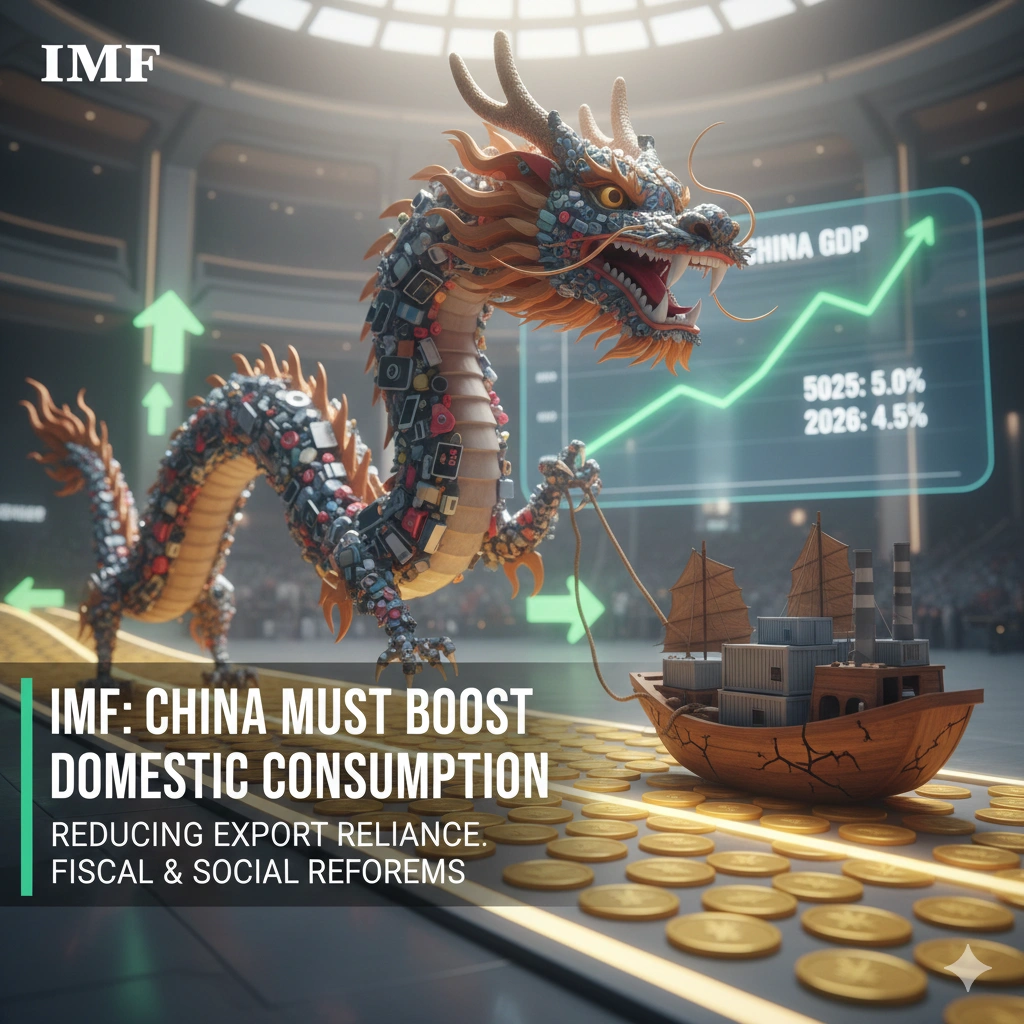
Following a period of intense global volatility, the IMF has released a comprehensive framework designed to stabilize the regional economy through enhanced social protections. The organization argues that by bolstering health insurance and pension systems, the government can effectively reduce the high precautionary savings rate currently stifling local markets. This transition toward China Consumption Growth is expected to mitigate the risks associated with a shrinking labor force and the long-term decline in the real estate sector. Experts suggest that a failure to pivot now could lead to a prolonged era of low inflation and mounting external trade tensions that would negatively impact both domestic prosperity and international relations.
China Consumption Growth
The primary objective of the latest economic recommendations involves a massive redistribution of fiscal resources to empower the individual consumer. For decades, the nation has relied on massive infrastructure projects and industrial subsidies to maintain high GDP figures, but this model is showing signs of exhaustion. By prioritizing China Consumption Growth, officials aim to create a more resilient economic foundation that is less susceptible to the whims of foreign demand and shifting geopolitical landscapes. This strategy requires a bold departure from current investment patterns, focusing instead on direct support for households and the expansion of the service sector to create high-quality employment.
To achieve this ambitious transformation, the IMF suggests a series of coordinated policy actions that include significant hukou reforms for internal migrants. Granting equal access to public services for all citizens regardless of their origin would unlock a massive wave of urban spending power that has been sidelined for generations. Strengthening the social safety net is the only viable path to ensuring that the legendary high savings rates of Chinese families are finally converted into active market participation. Such a shift would not only rebalance the internal economy but also serve as a powerful engine for global recovery during these uncertain times.
Strategic Reforms for Domestic Market Stability
Implementing a consumption-led model requires more than just optimistic rhetoric; it demands a fundamental overhaul of the existing tax and social structures. The current reliance on indirect taxes often places a disproportionate burden on lower-income households, thereby limiting their ability to contribute to China Consumption Growth. Transitioning toward a more progressive income tax system would provide the government with the necessary revenue to fund critical public services while simultaneously increasing the disposable income of the average citizen. This fiscal recalibration is essential for fostering a middle class that can sustain long-term prosperity without the crutch of state-led industrial stimulus.
Furthermore, the resolution of the ongoing property sector crisis remains a prerequisite for restoring consumer confidence across all demographic segments. When a significant portion of household wealth is tied up in stagnant or declining real estate assets, the natural inclination is to cut back on discretionary spending. Addressing the liquidity issues of major developers and ensuring the completion of housing projects will play a vital role in stimulating China Consumption Growth. A stable housing market provides the psychological security necessary for families to invest in high-end consumer goods, travel, and education services that drive modern economies.
Global Implications of Shifting Trade Dynamics
As the nation moves toward a domestic focus, the global trade landscape will undergo a profound transformation characterized by reduced surpluses and balanced exchange. The current model of relying on massive trade surpluses to drive growth has led to increasing friction with major trading partners who feel the pressure of industrial overcapacity. By fostering China Consumption Growth, the government can naturally reduce these external imbalances and contribute to a more harmonious international trade environment. This evolution is particularly important as nations seek to diversify their supply chains and reduce their dependency on a single manufacturing hub.
The IMF has highlighted that a stronger yuan, driven by market forces, would naturally complement the shift toward a more consumer-centric economic structure. A flexible exchange rate allows for better adjustment to internal economic conditions while making imported goods more affordable for the local population. This synergy between monetary policy and China Consumption Growth creates a virtuous cycle of increasing purchasing power and diversifying market availability. As the domestic market expands, it offers new opportunities for international brands to engage with a sophisticated and growing consumer base, further integrating the nation into the global high-value economy.
Addressing the Labor Market and Demographic Shifts
The reality of a shrinking labor force presents one of the most significant challenges to maintaining a high growth trajectory in the coming decades. Automation and technological advancements can offset some of the productivity losses, but the ultimate solution lies in enhancing the quality of human capital. By investing in education and vocational training that aligns with a service-oriented economy, the state can ensure that China Consumption Growth remains robust despite demographic headwinds. Workers with higher skills earn better wages, which in turn fuels the very domestic demand that the IMF is currently advocating for so strongly.
In addition to skill development, the government must also consider the needs of an aging population that requires specialized services and healthcare. The silver economy represents a massive untapped opportunity for China Consumption Growth, provided that the pension systems are secure enough to encourage spending among the elderly. Developing a comprehensive elder-care infrastructure will not only provide jobs but also ensure that the senior demographic remains an active participant in the marketplace. This holistic approach to demographic change ensures that every segment of society contributes to and benefits from the new economic paradigm.
- Implement hukou reforms to grant migrants full access to urban social services.
- Increase government spending on healthcare and pensions to reduce household saving rates.
- Phase out industrial subsidies that contribute to global overcapacity and trade disputes.
- Transition toward a progressive tax system to increase middle-class disposable income.
Monetary Policy and Inflationary Management
Managing inflation while stimulating demand requires a delicate balance of monetary easing and structural adjustments to ensure long-term stability. The central bank has been encouraged to maintain an accommodative stance to support China Consumption Growth during this transitionary period of the 2020s. Lower interest rates can reduce the cost of borrowing for small and medium-sized enterprises, which are the backbone of the service sector and primary employers of the urban workforce. However, these measures must be paired with transparency and clear communication to prevent the buildup of new speculative bubbles in the financial markets.
Correcting the deflationary pressures seen in recent quarters is essential for maintaining the momentum of the consumption-led growth model. When prices are expected to fall, consumers often delay purchases, leading to a stagnant economy that is difficult to jumpstart without significant intervention. By targeting a healthy level of inflation through China Consumption Growth, the authorities can encourage a steady flow of commerce that benefits producers and consumers alike. This environment fosters business confidence and encourages long-term investment in innovation rather than short-term survival strategies focused purely on cost-cutting.
The Role of Technological Innovation in Spending
Technology continues to play a pivotal role in shaping the way people shop, save, and interact with the broader financial ecosystem. The integration of advanced digital payment systems and e-commerce platforms has already laid the groundwork for a rapid expansion of China Consumption Growth across rural and urban areas. Further advancements in artificial intelligence and big data analytics allow companies to better understand consumer preferences and deliver personalized experiences that drive engagement. These digital tools are essential for reaching the next generation of consumers who prioritize convenience, quality, and brand authenticity in their purchasing decisions.
Beyond simple retail, technology is also transforming the delivery of social services, making them more efficient and accessible to the general public. Digital health platforms and online educational resources contribute to the overall quality of life, which is a key component of sustainable China Consumption Growth. By reducing the “out-of-pocket” costs for essential services through technological efficiency, more household income is freed up for discretionary spending in other sectors. This digital transformation is a critical enabler of the structural reforms recommended by international financial institutions to rebalance the national economy.
Fiscal Stimulus and Social Protection Enhancements
A robust fiscal response is required to bridge the gap between the old investment-led model and the new consumption-focused future. The IMF recommends that the government utilize its fiscal space to provide direct support to the social protection system, rather than traditional infrastructure projects. This approach directly fuels China Consumption Growth by giving citizens the confidence that their basic needs will be met regardless of economic fluctuations. High-quality social safety nets act as an automatic stabilizer, ensuring that demand remains relatively constant even during periods of global uncertainty or domestic transition.
Targeted transfers to low-income households can have a significant multiplier effect on the economy, as these groups are more likely to spend additional income immediately. This immediate injection of liquidity into the marketplace is a proven method for stimulating China Consumption Growth in a relatively short timeframe. Furthermore, such policies promote social equity and reduce the wealth gap, which is essential for maintaining social harmony during a period of significant structural change. A more equitable distribution of growth ensures that the benefits of modernization are shared by all members of the population, regardless of their geographic location.
Long-Term Outlook for Global Trade Relations
The shift toward a domestic demand model will likely redefine the country’s role in the global supply chain, moving from a low-cost manufacturer to a high-value consumer market. This evolution is beneficial for global trade stability, as it creates a more balanced relationship between major economies and reduces the likelihood of trade wars. As China Consumption Growth becomes the primary engine of the national economy, foreign firms will find new avenues for growth within the Chinese market. This mutual dependency fosters a more collaborative international environment where economic success is not viewed as a zero-sum game.
However, the path to this new reality is fraught with challenges that require persistent political will and international cooperation to overcome. The transition involves moving away from entrenched interests that have profited from the export-oriented model for decades, which can create internal friction. Monitoring the progress of China Consumption Growth will be a key task for international observers and investors as they navigate the complexities of the 2026 economic landscape. The success of these reforms will ultimately determine whether the global economy enters a period of sustainable growth or continues to grapple with the imbalances of the past.
- Establish a centralized database for social security to streamline benefit distribution.
- Encourage private sector participation in the service and healthcare industries.
- Monitor household debt levels to ensure that consumption growth is sustainable.
Strengthening Corporate Governance and Market Fair Play
To support a healthy consumer market, the government must also focus on strengthening corporate governance and ensuring fair competition among all market participants. A level playing field encourages innovation and ensures that consumers have access to the best products at the most competitive prices. China Consumption Growth is most effective when it is driven by a diverse array of businesses, from small startups to large multinational corporations, all competing for the consumer’s favor. Improving the legal framework for consumer protection and intellectual property rights will further bolster confidence in the domestic marketplace.
Transparency in corporate reporting and financial health is also vital for maintaining the trust of both domestic and international investors. As the economy shifts toward a model focused on China Consumption Growth, the quality of corporate earnings will become more important than simple volume. Investors will look for companies that demonstrate strong brand loyalty and the ability to adapt to changing consumer tastes in a fast-paced environment. By fostering a culture of accountability and excellence, the nation can ensure that its economic transformation is built on a solid foundation of market integrity and long-term value creation.
Environmental Sustainability and the Green Consumer
The transition to a consumption-led model provides a unique opportunity to integrate environmental sustainability into the core of the economic strategy. The modern Chinese consumer is increasingly conscious of the environmental impact of their choices, leading to a surge in demand for green products and services. Aligning China Consumption Growth with national carbon neutrality goals can drive a new wave of innovation in renewable energy, electric vehicles, and sustainable packaging. This “green consumption” not only helps the environment but also creates new industries and jobs that are compatible with a high-income society.
Government incentives for energy-efficient appliances and eco-friendly housing can further accelerate this trend while providing a temporary boost to domestic demand. Integrating sustainability into the China Consumption Growth narrative ensures that the economic expansion does not come at the cost of the environment. As the nation leads the world in many green technologies, the domestic market serves as a vital testing ground for products that can eventually be exported to a world increasingly focused on climate change. This dual approach reinforces the nation’s position as a leader in the global transition to a sustainable and consumer-driven future.
Conclusion and Future Projections
The recommendations from the IMF represent a clear roadmap for a more stable and prosperous future, centered on the concept of domestic empowerment. By embracing China Consumption Growth, the nation can overcome its current structural challenges and emerge as a more balanced and resilient global actor. The journey toward this goal will require significant reforms, fiscal shifts, and a renewed focus on the social well-being of the individual citizen. While the transition may be complex, the potential rewards for the national and global economy are immense, promising an era of more sustainable and equitable growth for all.
Looking ahead to the remainder of 2026 and beyond, the success of these initiatives will be measured by the rising share of household consumption in the total GDP. A successful pivot will signify that the nation has moved beyond the “middle-income trap” and is ready to compete at the highest levels of the global service economy. As China Consumption Growth takes center stage, the world will be watching closely, recognizing that the health of the global economy is intrinsically linked to the spending power and confidence of the Chinese people. The transformation is underway, and its impact will be felt for generations to come in every corner of the international marketplace.
For more details & sources visit: Anadolu Agency
For more China-related updates, visit our China News page.