
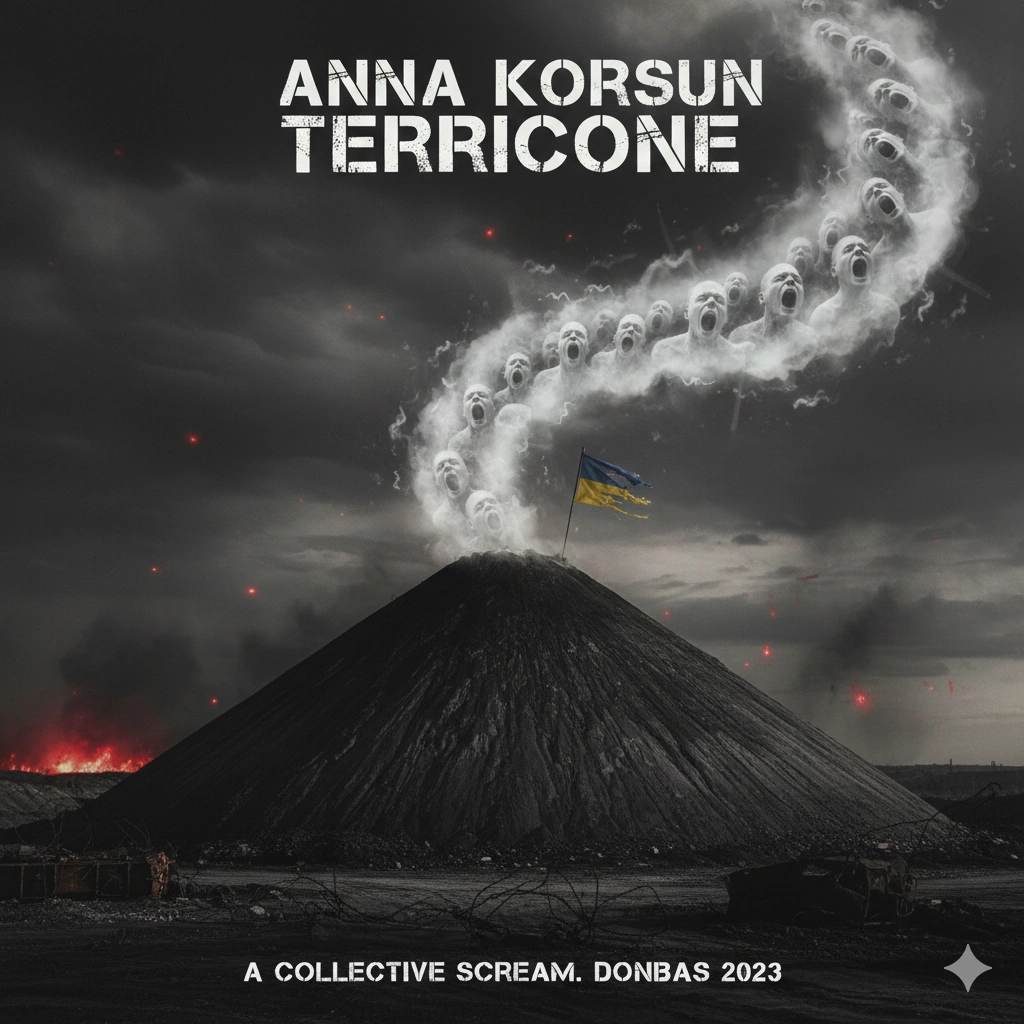
Ukrainian artistic defiance has emerged as a powerful cultural front in 2026, as musicians and composers transform the scars of the ongoing invasion into a visceral auditory experience. At the center of this movement is Anna Korsun, whose orchestral masterpiece Terricone continues to shock global audiences with its raw emotional intensity. By integrating a literal collective scream from the orchestra, Korsun ensures that the pain of the Donbas region is heard in concert halls from Bournemouth to London, forcing listeners to confront the human cost of industrial and territorial ruin.
The Ukrainian artistic defiance movement is not just about grief; it is a strategic effort to reclaim national identity through music. While Western “war fatigue” has begun to set in, Ukrainian artists are doubling down on cultural resistance by reimagining classical staples and pushing the boundaries of contemporary performance. These works serve as a reminder that while territory can be occupied, a nation’s creative voice remains sovereign and unbreakable.
Ukrainian Artistic Defiance
Ukrainian artistic defiance represents a shift from passive victimhood to active cultural combat. Composers like Anna Korsun are leading this charge by creating works that are intentionally difficult to ignore. Her piece Terricone is named after the slag heaps that dominate the horizon of her native Donbas, transforming these symbols of industrial waste and environmental degradation into metaphors for the emotional wreckage left by the invasion.
The performance of Terricone in London by the London Philharmonic Orchestra, conducted by the Russian-born Putin critic Vladimir Jurowski, highlights the complex geopolitical layers of the current music scene. By placing Ukrainian works alongside those of Russian masters, Jurowski creates a dialogue that exposes the violent energy and struggle inherent in the region’s history. This approach challenges audiences to look beyond traditional classical aesthetics and engage with the harsh reality of modern warfare.
Furthermore, Ukrainian artistic defiance is manifest in the systematic decolonization of the musical repertoire. Many institutions are now prioritizing Ukrainian composers who were historically overshadowed or misidentified as Russian. This rediscovery of cultural heritage is a vital part of the broader resistance effort, ensuring that the sound of Ukraine is preserved and celebrated on its own terms, free from imperial narratives.
The Shattering Power of Terricone
The opening of Terricone is often described as a “shattering creative act” because it breaks the traditional decorum of the symphony hall with a coordinated scream from every player. This sonic eruption is designed to mirror the sudden, violent onset of the 2022 invasion and the persistent agony that has followed. For Anna Korsun, the scream is not just a musical effect but a necessary testimony to the trauma experienced by her people.
Audiences in the UK, particularly those who attended the Bournemouth Symphony Orchestra premiere in 2023 and the London performances in early 2026, have noted the piece’s “unnerving simplicity.” By moving beyond standard harmony and melody, Korsun uses the orchestra as a vast sound object to recreate the atmosphere of a war zone. The piece does not offer a resolution or a “happy ending,” reflecting the ongoing and unresolved nature of the conflict itself.
The success of Terricone has solidified Anna Korsun’s reputation as one of the most important voices in contemporary classical music. Her ability to channel a “cry of pain from every player” into a cohesive artistic statement has made the piece a staple of 2026’s boldest programming. It stands as a definitive record of the psychological landscape of modern Ukraine, capturing the fear, desolation, and ultimate resilience of its citizens.
Ukrainian Freedom Orchestra and Peace Anthems
The Ukrainian Freedom Orchestra (UFO), founded by conductor Keri-Lynn Wilson, has become a global ambassador for Ukrainian artistic defiance. In a landmark 2024–2026 project, the orchestra recorded and performed Beethoven’s Ninth Symphony with a significant twist: the “Ode to Joy” lyrics were translated into Ukrainian. This choice reframes the piece not just as a universal call for brotherhood, but as a specific anthem for Ukrainian liberation and survival.
By changing the opening word of the chorus from “Freude” (Joy) to “Slava” (Glory), the UFO directly evokes the “Slava Ukraini” rallying cry of the resistance. This adaptation, inspired by Leonard Bernstein’s 1989 “Ode to Freedom” performance at the fall of the Berlin Wall, has resonated deeply with refugees and international supporters alike. The orchestra, composed of musicians who have either stayed in Ukraine or sought refuge abroad, embodies the spirit of a nation that refuses to be silenced.
In 2026, the UFO’s tours have served as a vital counterpoint to the “normalization” of the war in Western media. Their performances are often accompanied by visual tributes to fallen cultural figures and damaged heritage sites, making every concert a political and memorial act. By reclaiming the great European classics for the cause of freedom, the orchestra ensures that Ukrainian artistic defiance remains a high-profile presence in the world’s most prestigious venues.
Opera Aperta and Post-Apocalyptic Trauma
Beyond the traditional concert hall, the duo of Roman Grygoriv and Illia Razumeiko of Opera Aperta are exploring Ukrainian artistic defiance through experimental “archaeological” opera. Their acclaimed work Chornobyldorf blends folk-punk, electronic soundscapes, and video art to depict a post-apocalyptic future built on the ruins of nuclear power plants. The work draws direct parallels between the Chernobyl disaster and the current threats to Ukraine’s energy infrastructure.
Chornobyldorf was featured at the Huddersfield Contemporary Music Festival and other UK events in 2026, where it stunned audiences with its “brutalist” aesthetic and visceral use of space. The opera uses prepared traditional instruments and field recordings from the Chernobyl Exclusion Zone and the Zaporizhzhia Nuclear Power Plant. This multi-layered approach allows the artists to confront post-Soviet trauma and the existential dread of modern technological warfare.
The “archaeological” aspect of the opera suggests that future generations will have to piece together the remains of Ukrainian culture from the debris of the 21st century. This perspective is a core element of Ukrainian artistic defiance, as it acknowledges the risk of cultural erasure while simultaneously performing an act of radical preservation. By staging these traumas, Opera Aperta provides a space for collective processing that transcends the limitations of traditional news reporting.
Exposing Classical Music Hypocrisies
The rise of Ukrainian artistic defiance has forced a long-overdue reckoning within the global classical music industry. For years, major institutions ignored the political ties of Russian stars like Valery Gergiev and Anna Netrebko, prioritizing prestige and funding over ethical considerations. The 2022 invasion—and its continuation into 2026—has made this “business as usual” approach untenable, leading to widespread cancellations and a shift in leadership.
In 2026, many critics and artists are calling out the “classical music hypocrisies” that allowed Russian state-sponsored culture to be used as a soft-power tool. The current focus on Ukrainian composers is seen by many as a necessary “decolonization” of the art form. This involves not only programming new works like those of Korsun but also correcting the historical record for 19th and 20th-century composers who were inaccurately labeled as Russian due to imperial occupation.
This shift has not been without controversy, as some argue against “canceling” all Russian culture. However, the prevailing sentiment in 2026 is that as long as the invasion continues, there can be no neutral ground. Ukrainian artistic defiance demands that the international community acknowledge the link between culture and power. By centering Ukrainian voices, the industry is finally beginning to address the blind spots that allowed the current crisis to be normalized for so long.
Cultural Resistance and Western Fatigue
As the war enters its fourth year in February 2026, “Western fatigue” has become a significant threat to the Ukrainian cause. The initial shock of the invasion has faded, and the conflict is often relegated to the back pages of international news. Ukrainian artistic defiance serves as a critical antidote to this apathy, using the visceral power of live performance to re-engage the public’s empathy and attention.
Musicians in Ukraine continue to perform in bomb shelters and underground metro stations, providing a sense of normalcy and psychological support to a weary population. These “underground” concerts are often live-streamed to global audiences, bridging the gap between those living in the line of fire and those in the safety of the West. This constant stream of creative output makes it harder for the international community to look away.
Ultimately, cultural resistance is about sustaining the “vitality” of the nation. By producing new operas, symphonies, and folk-punk anthems, Ukrainian artists are proving that their culture is not a relic of the past to be archived, but a living, breathing force. Ukrainian artistic defiance ensures that even as the world grows tired of the headlines, the music—and the people behind it—will continue to be heard.
For more details & sources visit: The Guardian
Read more on global developments: 360 News Orbit – Extended Orbit.