
Malaysia Health Service Commission is the critical structural reform required to address the deteriorating state of the nation’s public healthcare infrastructure. As the Ministry of Health faces an unprecedented vacancy rate among house officers, experts argue that the current administrative framework is no longer fit for purpose. This systemic failure has led to a significant drain on human resources, leaving existing medical staff overwhelmed and patients at risk.
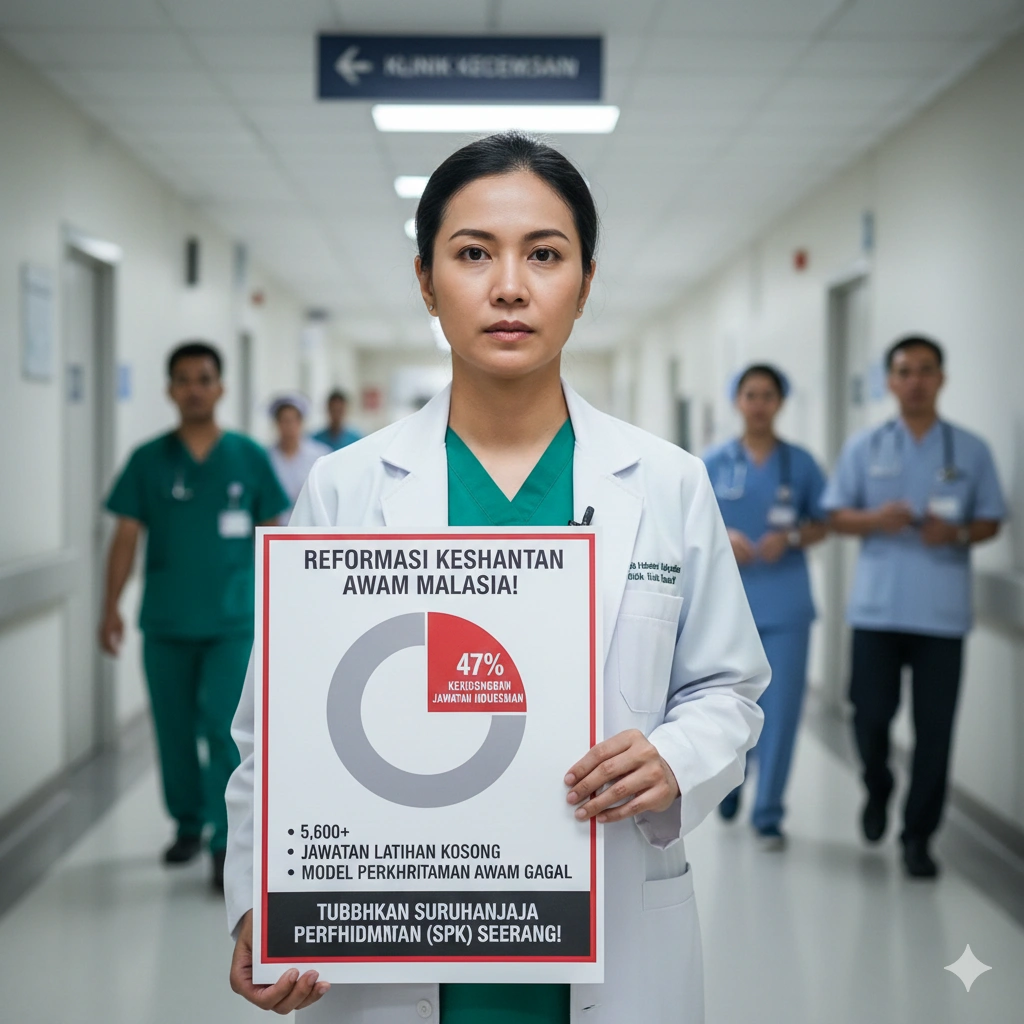
The primary argument for this shift is that the generalist civil service model fails to account for the unique demands of a 24/7 clinical environment. Currently, healthcare staffing is managed by the Public Services Department (JPA), which applies the same bureaucratic rules to doctors as it does to administrative clerks. A dedicated commission would allow for specialized recruitment, faster promotion tracks, and better retention strategies for medical professionals.
By granting the Ministry of Health autonomy over its own workforce, Malaysia can finally move away from the restrictive contract system that has plagued the industry for years. This autonomy is essential for creating a sustainable career path for young doctors who currently feel undervalued and overworked. Without immediate intervention, the brain drain to the private sector and neighboring countries will only accelerate, further destabilizing the public health safety net.
Malaysia Health Service Commission
The establishment of a Malaysia Health Service Commission would serve as a transformative milestone in the history of the nation’s public administration. For decades, the healthcare sector has been tethered to the broader civil service, which often prioritizes administrative uniformity over clinical urgency. By creating an independent body, the government can ensure that medical staffing decisions are made by those who understand the complexities of hospital operations and patient care.
This proposed commission is modeled after successful entities like the Education Service Commission (SPP), which manages the specific needs of the teaching profession. The healthcare sector is arguably more complex, requiring a nuanced approach to shift work, specialized training, and emergency response capabilities. An independent commission would have the power to create bespoke salary scales and incentive packages that reflect the high-stress nature of medical work.
Furthermore, a Malaysia Health Service Commission would streamline the process of filling vacancies in rural and underserved areas. Currently, the centralized recruitment process is slow and often fails to match the right candidates with the right locations. With a dedicated body, the Ministry of Health could implement regional incentives and mandatory placements more effectively, ensuring that every Malaysian has access to quality care regardless of their geography.
Addressing the Houseman Vacancy Crisis
The current houseman vacancy rate has reached a staggering 47 percent, a statistic that highlights the absolute necessity of a Malaysia Health Service Commission. With over 5,600 trainee doctor posts remaining empty as of February 2026, the burden on existing staff has become unsustainable. This shortage is not merely a numbers game; it represents a fundamental breakdown in the pipeline of future medical specialists.
Health Minister Dzulkefly Ahmad has acknowledged that the first intake of the year only covered 10 percent of the actual requirement. This massive gap suggests that the current recruitment and placement system is fundamentally broken and requires a complete overhaul. A dedicated commission would be able to analyze these trends in real-time and adjust recruitment strategies to attract more graduates into the public system.
The vacancy crisis is exacerbated by the fact that many medical graduates are choosing to wait for better opportunities or leave the profession entirely. A Malaysia Health Service Commission could address this by offering immediate permanent posts and clear career progression pathways. By removing the uncertainty of the contract system, the government can restore confidence among young doctors and stabilize the healthcare workforce for the long term.
Overhauling the Generalist Civil Service Model
One of the most significant hurdles to healthcare reform is the continued reliance on the generalist civil service model managed by the JPA. Under this system, administrative decisions are often made by PTD officers who may lack the clinical background necessary to understand hospital needs. A Malaysia Health Service Commission would replace this outdated model with a more specialized and responsive administrative structure.
There are currently over 700 PTD officers managing various administrative functions within the Ministry of Health. While these officers are skilled administrators, their lack of medical expertise can lead to delays in critical decisions regarding promotions and allowances. A dedicated commission would ensure that administrative roles are filled by individuals with specific training in healthcare management and policy.
The transition to a Malaysia Health Service Commission would also allow for a more merit-based hiring process. Instead of following the rigid seniority-based systems of the general civil service, the commission could prioritize skills, performance, and clinical outcomes. This shift would encourage a culture of excellence and accountability within the public healthcare sector, ultimately benefiting the millions of Malaysians who rely on it.
Impact of Staff Shortages on Patient Safety
The severe shortage of medical personnel has a direct and measurable impact on patient safety across the country. In hospitals like Sultanah Aminah in Johor Bahru and Kinabatangan, doctors are working excessively long hours to cover the gaps left by vacant positions. A Malaysia Health Service Commission is the only viable long-term solution to ensure that staffing levels are maintained at safe and effective levels.
When doctors are overworked and exhausted, the likelihood of clinical errors increases significantly. This puts lives at risk and creates a high-stress environment that leads to burnout and further resignations. By establishing a dedicated commission, the government can implement strict guidelines on work hours and ensure that hospitals are adequately staffed at all times.
Moreover, the lack of house officers means that senior doctors are often forced to perform basic tasks, diverting their attention from complex surgeries and specialized consultations. A Malaysia Health Service Commission would prioritize the efficient distribution of labor, ensuring that every level of the medical hierarchy is functioning optimally. This organizational efficiency is crucial for maintaining the high standards of care that the Malaysian public expects.
Regional Disparities and Rural Healthcare Challenges
Malaysia’s rural healthcare system is currently facing a crisis that only a Malaysia Health Service Commission can effectively solve. Hospitals in East Malaysia and remote parts of the Peninsula often struggle to attract and retain qualified medical staff. The centralized JPA system has struggled to address these regional disparities, leading to a significant gap in the quality of care available to rural populations.
A dedicated commission would have the flexibility to create localized recruitment strategies and financial incentives for those willing to serve in remote areas. This could include higher allowances, faster promotion tracks, or specialized training opportunities for rural doctors. Such measures are essential for ensuring that healthcare equity is achieved across all states and territories.
The Malaysia Health Service Commission would also be responsible for monitoring the patient-to-doctor ratio in every district. By using data-driven insights, the commission could proactively move staff to areas experiencing sudden surges in patient load. This level of agility is impossible under the current bureaucratic framework, which requires multiple layers of approval for even minor staffing adjustments.
Ending the Era of Contract Medical Officers
The controversial contract system has been a major point of contention for Malaysian doctors for years, and a Malaysia Health Service Commission is seen as the way out. For too long, young doctors have been kept in a state of professional limbo, lacking the security and benefits of permanent employment. This has led to widespread dissatisfaction and was a primary driver of the “Hartal Doktor Kontrak” movement.
A dedicated commission would have the financial and administrative autonomy to convert these temporary roles into permanent positions based on clinical need. By doing so, the government can provide a sense of stability and belonging to the thousands of doctors who are currently considering leaving the public service. Permanent status is not just about a paycheck; it is about providing a clear future for those who dedicate their lives to saving others.
The shift toward permanent employment through a Malaysia Health Service Commission would also improve the quality of postgraduate training. Contract doctors often face difficulties in accessing specialist training programs due to their temporary status. By ensuring that all qualified doctors have a path to permanency and specialization, the commission would strengthen the entire medical ecosystem in Malaysia.
Financial Autonomy and Resource Allocation
One of the most powerful arguments for a Malaysia Health Service Commission is the potential for better financial management of human resources. Currently, the Ministry of Health must lobby the Treasury and the JPA for every new position or allowance increase. This fragmented process often results in delayed payments and a lack of funding for critical staffing needs.
With its own budget for personnel, the Malaysia Health Service Commission could allocate resources more strategically. This includes the ability to adjust salaries to remain competitive with the private sector and neighboring countries like Singapore. Financial autonomy would also allow the commission to invest in digital infrastructure to streamline administrative tasks, further reducing the burden on medical staff.
Effective resource allocation via a Malaysia Health Service Commission would also involve better planning for future healthcare needs. As Malaysia’s population ages, the demand for geriatric care and chronic disease management will grow. A dedicated body can plan for these shifts decades in advance, ensuring that the workforce is trained and ready to meet the evolving needs of the nation.
Strengthening the Public Healthcare Workforce
The ultimate goal of establishing a Malaysia Health Service Commission is to create a robust and resilient public healthcare workforce. This body would be responsible for the entire lifecycle of a medical professional’s career, from initial recruitment to retirement. By focusing exclusively on the needs of healthcare workers, the commission can foster a more supportive and professional environment.
Under the guidance of a Malaysia Health Service Commission, the Ministry of Health can implement comprehensive wellness programs for staff. Burnout and mental health issues are prevalent among doctors, yet the current system offers little in the way of systemic support. A dedicated commission would recognize these challenges and provide the necessary resources to ensure that the healers are also cared for.
Furthermore, the Malaysia Health Service Commission would facilitate better collaboration between the public and private sectors. By creating standardized qualifications and flexible working arrangements, the commission could allow for more seamless transitions and knowledge sharing between different parts of the healthcare industry. This holistic approach is essential for building a healthcare system that is truly world-class.
Future Outlook for Malaysian Healthcare Reform
The call for a Malaysia Health Service Commission is not just a request for administrative change; it is a demand for a fundamental shift in how the nation values its healthcare workers. As we move further into 2026, the urgency of this reform has never been clearer. The vacancy rates and systemic inefficiencies are warning signs that cannot be ignored by the government or the public.
Implementing a Malaysia Health Service Commission will require significant political will and legislative changes. However, the costs of inaction are far higher, including a collapsed public health system and a permanent loss of medical talent. The government must act decisively to decouple healthcare administration from the general civil service and empower the Ministry of Health to manage its own destiny.
In conclusion, the creation of a Malaysia Health Service Commission is the most viable solution to the myriad of problems facing the Malaysian healthcare system. From solving the houseman shortage to ending the contract system and improving rural care, the benefits of such a move are undeniable. It is time for Malaysia to prioritize the health of its citizens by first prioritizing the health of its medical profession. Health Service Commission Amid Doctor Shortage is the best way to uphold that law in the years to come.
For more details & sources visit: CodeBlue
Read more about Malaysia news on 360 News Orbit – Malaysia.