
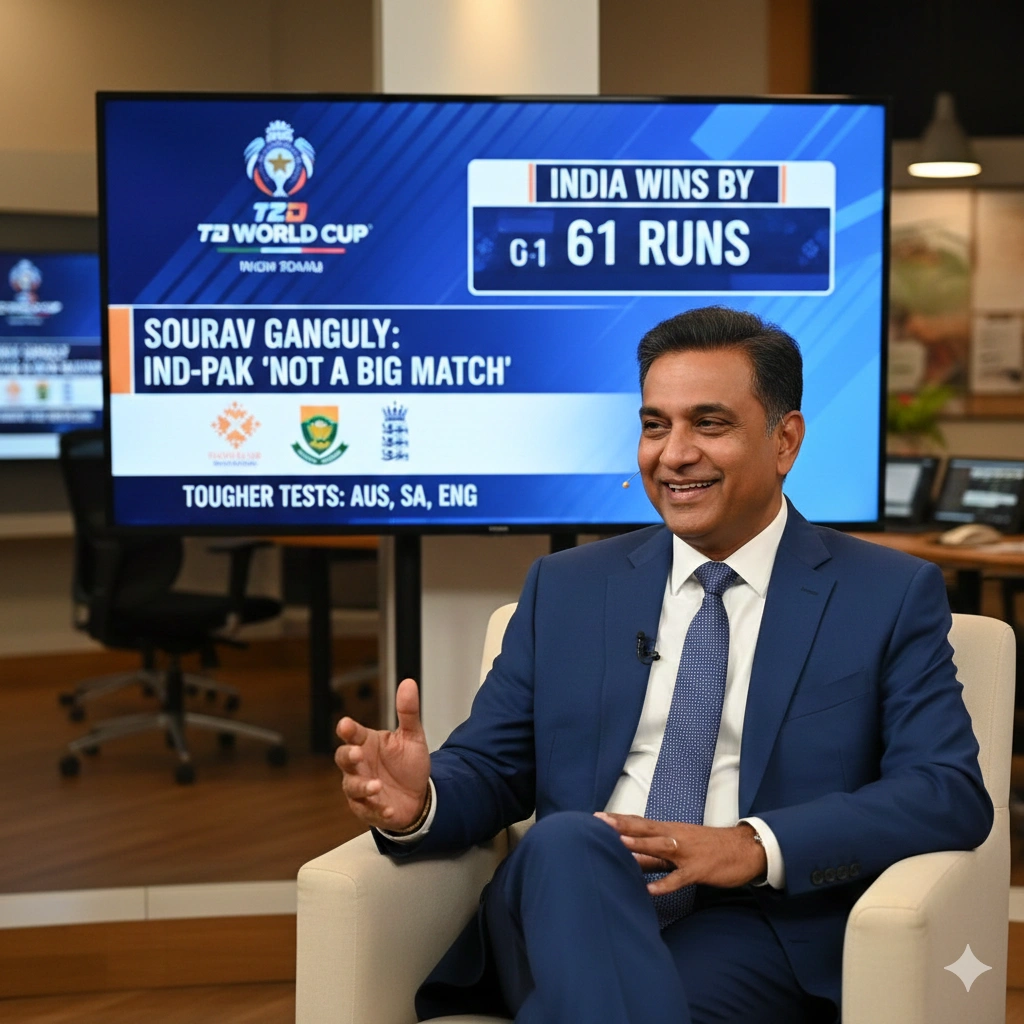
India-Pakistan clash quality gap is the defining narrative of modern cricket following the recent T20 World Cup encounter in Colombo. Former Indian captain Sourav Ganguly has sparked a massive debate across the cricketing world by suggesting that the historic rivalry has lost its competitive edge. Following India’s comprehensive 61-run victory, the legendary cricketer pointed out that the performance disparity between the two nations is now too vast to ignore. This assessment comes at a time when fans and broadcasters continue to promote the fixture as the pinnacle of the sport, yet the on-field results tell a much more lopsided story of dominance.
The India-Pakistan clash quality gap was on full display as the Men in Blue secured their place in the Super 8s with clinical efficiency. While the atmosphere in the stadium remained electric, the actual contest lacked the back-and-forth tension that characterized matches in previous decades. Ganguly believes that the aura of the rivalry is being sustained by memories of the past rather than the realities of the present. As India continues its strong title defense, the cricketing fraternity is now forced to reconcile with the fact that the gap between these two neighbors has widened into a significant gulf.
Historical Context of the Rivalry
The history of matches between these two nations was once defined by world-class players on both sides of the border. During the 1980s and 1990s, the games were often decided in the final over or by moments of individual brilliance from legendary figures. Sourav Ganguly noted that fans often look at the current Green Shirts through the lens of icons like Javed Miandad, Saeed Anwar, or Wasim Akram. However, he argues that those days are long gone and the current squad lacks the depth to challenge a balanced Indian unit consistently.
The evolution of the Indian domestic structure, specifically the IPL, has created a steady stream of elite talent that Pakistan has struggled to match. This systemic advantage has contributed heavily to the India-Pakistan clash quality gap seen in recent ICC tournaments. While Pakistan produces individual stars, the collective strength and tactical discipline of the Indian side have reached a level that few teams can currently rival. Consequently, the predictability of these results has started to impact the perceived prestige of the encounter among former players and analysts.
India-Pakistan clash quality gap
The India-Pakistan clash quality gap is most evident in the way India handles pressure during high-stakes World Cup matches. In the recent 61-run rout, India’s batting lineup showed a level of composure that allowed them to set a target well beyond Pakistan’s reach. Sourav Ganguly highlighted that the modern Indian cricketer is conditioned for these moments, whereas the opposition often appears overwhelmed by the occasion. This mental edge is a crucial component of the widening performance divide that defines the rivalry in 2026.
Beyond the mental aspect, the technical proficiency of the Indian players in all three departments—batting, bowling, and fielding—has surged ahead. The bowling attack, led by world-class pacers and crafty spinners, consistently finds ways to exploit the technical flaws in the Pakistani batting order. As the India-Pakistan clash quality gap grows, the narrative of a “clash of titans” feels increasingly like a marketing strategy rather than a sporting reality. Ganguly’s blunt assessment serves as a wake-up call for those who expect a competitive thriller every time these teams meet.
Shifting Focus to Global Giants
According to Sourav Ganguly, the real challenges for the Indian cricket team now lie in matches against Australia, South Africa, and England. These teams possess the depth and variety to push India to their limits, creating the kind of uncertainty that makes for a truly “big match.” The India-Pakistan clash quality gap has become so pronounced that Ganguly admitted to switching channels during the mid-innings break. He chose to watch the Manchester Derby instead, signaling that the cricket match had already reached its foregone conclusion in his mind.
This shift in focus is reflected in how the Indian team prepares for major tournaments nowadays. The coaching staff and players prioritize strategies for teams that can match them in power-hitting and death-bowling execution. While the India-Pakistan clash quality gap remains a talking point for the media, the internal metrics of the team suggest they are looking at more competitive benchmarks. To maintain their status as world leaders, India must continue to evolve, even if their traditional rivals are currently struggling to keep pace.
Impact of the 61-Run Rout
The margin of victory in Colombo was not just about the runs but the manner in which India dominated every session of play. Chasing a formidable total, the Pakistani batsmen looked devoid of ideas against a disciplined Indian attack that never allowed the run rate to settle. This specific defeat has intensified the scrutiny on the state of white-ball cricket in Pakistan and the lack of development in their middle order. The India-Pakistan clash quality gap was arguably at its most visible during those fifteen overs that Ganguly described as decisive.
- India’s top order provided a blistering start that demoralized the bowlers early on.
- The middle-overs spin squeeze prevented any meaningful partnerships from forming for Pakistan.
- Exceptional fielding from the Indian side saved at least 15-20 runs, further increasing the pressure.
- Tactical bowling changes by the Indian captain ensured that the set batsmen were never comfortable.
These tactical nuances illustrate why the India-Pakistan clash quality gap is no longer just a matter of opinion. It is a statistical reality backed by consistent results in global tournaments over the last decade. For Pakistan to bridge this gap, significant structural changes are required within their cricketing board and domestic circuits. Until those changes occur, the one-sided nature of these contests is likely to persist, further validating Ganguly’s controversial comments.
The Role of Nostalgia in Modern Cricket
Nostalgia plays a powerful role in how cricket fans perceive the India-Pakistan rivalry, often masking the current India-Pakistan clash quality gap. Many viewers still tune in expecting the fierce competition of the 90s, where any player could turn the game on its head. Sourav Ganguly believes that fans “fool themselves” by expecting the current generation to replicate the heroics of past legends. This emotional attachment to the past creates a false sense of parity that the actual gameplay frequently contradicts.
The commercial success of these matches relies heavily on this nostalgia, ensuring high viewership and massive ad revenue. However, if the India-Pakistan clash quality gap continues to expand, there is a risk that the neutral audience might lose interest in a predictable outcome. Ganguly’s decision to watch football over the conclusion of a World Cup match against Pakistan is a telling sign of this potential trend. If a former captain and administrator feels this way, it suggests a broader shift in the sporting value of the fixture.
Analyzing Pakistan’s White-Ball Crisis
The decline of Pakistan’s competitiveness in the shorter formats is a major contributor to the India-Pakistan clash quality gap. While they have produced exceptional fast bowlers, their batting approach often feels outdated compared to the aggressive style adopted by India. In the T20 format, where every ball counts, the lack of innovative stroke-making and strike rotation has left them behind. This technical stagnation is a primary reason why the India-Pakistan clash quality gap has become a permanent fixture of recent discussions.
- The absence of a reliable power-hitter in the lower-middle order limits their chasing capability.
- A high percentage of dot balls during the powerplay puts immense pressure on the subsequent batsmen.
- Inconsistent selection policies have prevented the team from building a core group of players.
Addressing these issues is the only way to narrow the India-Pakistan clash quality gap in the future. Without a modern approach to the game, Pakistan will continue to struggle against top-tier teams like India. The critique from Ganguly, while harsh, reflects a genuine concern regarding the lack of balance in one of cricket’s most storied rivalries.
India’s Dominance and Future Path
For the Indian team, the widening India-Pakistan clash quality gap is a testament to their professional growth and investment in sports science. The players are fitter, faster, and more tactically aware than ever before, allowing them to execute plans with surgical precision. Even when key players are rested, the bench strength is capable of maintaining the high standards required to win matches comfortably. This systemic excellence ensures that the India-Pakistan clash quality gap remains wide regardless of the venue or conditions.
Looking ahead, India’s primary goal remains winning ICC trophies and maintaining their number one ranking across formats. While the victory over Pakistan was essential for their Super 8s qualification, the team is already looking toward the knockout stages. They understand that the India-Pakistan clash quality gap might not exist when they face teams like Australia or England in the finals. Therefore, the focus remains on constant improvement and not getting complacent after a dominant win over a struggling rival.
Comparing High-Stakes Fixtures
When comparing different rivalries, it becomes clear why Ganguly views the India-Pakistan clash quality gap as a reason to look elsewhere for excitement. Matches against Australia often involve high-quality tactical battles between two teams with similar skill levels. Similarly, encounters with South Africa and England test India’s ability to handle extreme pace and innovative batting strategies. These are the games where the outcome is truly in doubt until the final stages, unlike the recent lopsided affair in Colombo.
- Australia offers a relentless competitive spirit and world-class bowling depth.
- England provides a blueprint for aggressive batting that challenges Indian bowlers.
- South Africa’s pace attack remains one of the most difficult challenges in world cricket.
By focusing on these opponents, India can ensure they are prepared for the highest level of competition. The India-Pakistan clash quality gap may be wide, but the margin for error against other top nations is incredibly thin. Ganguly’s preference for the Premier League over the conclusion of the Pakistan match highlights a desire for high-quality, unpredictable sporting drama.
The Future of the Rivalry
The future of the India-Pakistan rivalry depends on whether the Men in Green can reinvent their cricketing philosophy to bridge the India-Pakistan clash quality gap. If the trend continues, the match may lose its “crown jewel” status in international cricket, becoming just another group-stage fixture. Sourav Ganguly’s comments might be seen as provocative, but they are rooted in a desire to see a more competitive global landscape. A strong Pakistan is good for cricket, but currently, the India-Pakistan clash quality gap is too significant to ignore.
As India moves forward in the T20 World Cup 2026, the victory over Pakistan will be remembered as a stepping stone rather than a peak. The fans will continue to celebrate these wins, but the analytical community will keep pointing to the India-Pakistan clash quality gap as a sign of changing times. Whether Pakistan can find the next generation of greats to restore the balance remains to be seen. For now, the narrative is firmly controlled by India’s excellence and Ganguly’s candid observations about the state of the game.
Technical Superiority of the Indian Squad
The technical superiority of the Indian squad is a foundational element of the India-Pakistan clash quality gap. From the wrist-spinners’ ability to extract turn on flat tracks to the openers’ proficiency against the new ball, India’s skill set is comprehensive. In contrast, Pakistan’s reliance on a few individuals has made them predictable and easy to plan against for sophisticated coaching staffs. This disparity in technical execution is why the India-Pakistan clash quality gap often results in such large margins of victory.
During the 61-run rout, India’s bowlers utilized a variety of slower balls and wide yorkers that the Pakistani batsmen failed to navigate. This level of execution requires not just talent but rigorous training and data analysis. The India-Pakistan clash quality gap is, in many ways, a gap in the application of modern cricketing technology and sports intelligence. As long as India remains at the forefront of these advancements, they will likely maintain their dominance over their neighbors.
Fans’ Perspective on the Quality Gap
While experts like Ganguly discuss the India-Pakistan clash quality gap, the fans often remain divided between logic and emotion. Many supporters still view the match as a matter of national pride where anything can happen on the day. However, a growing segment of the audience is beginning to acknowledge the reality of the performance difference. The India-Pakistan clash quality gap is becoming a topic of conversation in fan forums and social media, reflecting a shift in public perception.
- Social media engagement remains high for these matches due to the cultural significance.
- Ticket sales are always robust, showing that the “brand” of the rivalry is still strong.
- However, post-match discussions are increasingly focused on the lack of competition.
If the India-Pakistan clash quality gap persists, the commercial value might eventually decline, though that day seems far off. For the time being, the spectacle remains, even if the sport itself has become one-sided. Ganguly’s remarks serve as a reminder that for a rivalry to truly thrive, both sides must bring a level of quality that makes the result uncertain.
For more details & sources visit: A Sports / IANS
For the latest updates from India, visit our India news page.