
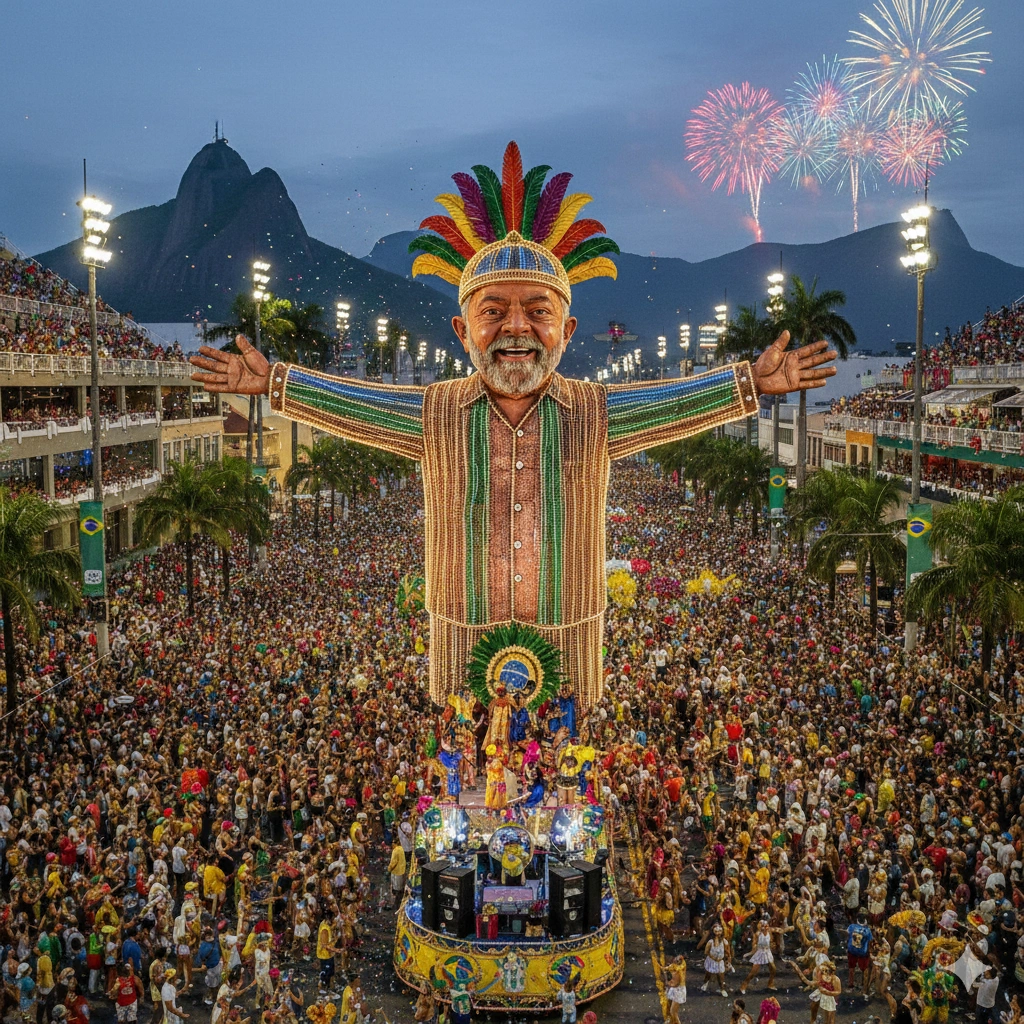
The vibrant streets of Brazil have transformed into a sea of glitter and rhythm as the Rio Carnival 2026 officially commenced on Friday night. Authorities and tourism officials are projecting a record-breaking turnout, with approximately six million revelers expected to participate in the week-long festivities. This year’s celebration is not merely a display of samba and sequins; it has taken on a significant political dimension with the unveiling of a 22-meter metal effigy of President Luiz Inácio Lula da Silva. As King Momo accepted the keys to the city, the 2026 edition of this world-famous event began its journey, blending traditional “carioca” joy with modern national discourse. The massive influx of tourists underscores the enduring global appeal of the festival.
The Rio Carnival 2026 promises to be a landmark event, captivating audiences both locally and internationally. As millions gather to celebrate, the blend of cultural heritage and contemporary issues is poignantly highlighted by the towering tribute to President Lula, symbolizing a fusion of art and political expression. This festival not only showcases Brazil’s rich traditions but also serves as a platform for dialogue, reflecting the nation’s spirit and resilience. The anticipation surrounding this year’s celebration is a testament to the carnival’s significance in promoting unity and cultural exchange.
Economic Impact and Scale of Rio Carnival 2026
The logistical scale of the Rio Carnival 2026 is unprecedented, serving as a primary engine for the local and national economy. Riotur, the city’s tourism arm, has coordinated with thousands of vendors and hospitality providers to manage the surge. Beyond the music, the festival represents a multi-billion reais industry that sustains the livelihoods of artisans, dancers, and service workers across the metropolitan area.
- Unprecedented Attendance: With six million people expected, city infrastructure is being tested at a maximum capacity.
- Hospitality Boom: Hotel occupancy rates in the South Zone have surpassed 98%, driven by a spike in international arrivals.
- Job Creation: From costume designers to street food vendors, the event supports over 50,000 temporary and permanent roles.
The atmosphere during the opening night was electric, as the first of hundreds of “blocos”—informal street parties—began their processions through neighborhoods like Ipanema and Centro. For many, the Rio Carnival 2026 marks a definitive return to the grand-scale public gatherings that define Brazilian summer culture.
The Political Giant: Lula’s 22-Meter Tribute
Central to the narrative of the Rio Carnival 2026 is the 22-meter tall metal figure of President Lula. This towering installation has become the most photographed and debated landmark of the current street circuit. Designed by a collective of local metalworkers and carnival artists, the effigy is meant to symbolize the “outsized” influence of the president on the nation’s history and the labor movements that are deeply intertwined with the origins of samba.
While many participants view the statue as a tribute to social progress and working-class representation, it has sparked a dialogue regarding the role of political imagery in public festivals. Critics have voiced concerns over the potential for such displays to be perceived as state-sponsored messaging. However, historians of the Rio Carnival 2026 point out that the event has always been a platform for political expression, satire, and social commentary, ranging from environmental pleas to critiques of previous administrations.
Samba Schools Prepare for the Sambadrome 2026
While the street parties offer chaotic joy, the elite competition at the Sambadrome remains the heart of the Rio Carnival 2026. The top-tier samba schools have invested millions in technological innovations for their floats, including drone-integrated lighting and animatronics. The themes this year are heavily focused on Brazil’s diverse heritage and the protection of its natural biomes.
- Technological Integration: Schools are using augmented reality cues to enhance the experience for television audiences.
- Sustainability: Several major schools have committed to 100% recycled materials for their primary floats.
- Cultural Narratives: Themes range from the history of Afro-Brazilian resistance to the future of the Amazon rainforest.
The tension at the Sambadrome is palpable as the “Special Group” schools prepare for their judged processions. For these schools, the Rio Carnival 2026 is the culmination of a year of intense labor and community fundraising. The winner will not only claim the prestigious title but also secure vital funding for their social outreach programs throughout the coming year.
Managing Public Safety for Six Million People
The sheer density of the Rio Carnival 2026 requires a sophisticated security and health apparatus. The municipal government has deployed a specialized task force involving over 15,000 personnel to monitor the main parade routes. Utilizing advanced crowd-analytics software, authorities can now predict potential bottlenecks and redirect “bloco” routes in real-time to prevent overcrowding.
In addition to security, the intense summer heat has prompted the installation of “cooling zones” and mobile hydration stations. Health officials are working around the clock to ensure that the six million visitors can celebrate safely. The Rio Carnival 2026 management team has also prioritized environmental cleanup, deploying a fleet of eco-friendly waste management vehicles to clear the streets of debris immediately following the conclusion of each daily parade.
International Significance and Media Coverage
The global spotlight remains firmly fixed on Brazil as the Rio Carnival 2026 unfolds. International news agencies and cultural critics are monitoring the event not just for its entertainment value, but as a reflection of Brazil’s soft power on the world stage. The 2026 festivities serve as a testament to the country’s ability to host massive, complex events that blend high-art competition with grassroots celebrations.
Journalists from across the globe have converged on Rio to document the “Giant Lula” effigy and the evolving nature of the parades. The consensus among cultural observers is that the Rio Carnival 2026 is a pivotal moment for the city, proving that even amidst political polarization, the unifying power of the samba rhythm remains a potent force. The festival continues to evolve, incorporating new digital trends and social dialogues while remaining rooted in the traditions that made it famous over a century ago.
Looking Toward the Final Parade
As the week progresses, the intensity of the Rio Carnival 2026 is expected to peak during the final weekend of parades. The city remains in a state of perpetual motion, with music echoing from the hills to the beaches. The success of this year’s event will likely set a new benchmark for future celebrations in terms of both attendance and cultural impact.
Whether it is the 22-meter metal president or the intricate costumes of the drum queens, every element of the Rio Carnival 2026 contributes to a narrative of national pride and artistic excellence. As the revelers continue to dance through the streets, the message of the 2026 festivities is clear: Rio de Janeiro remains the undisputed capital of the world’s most vibrant cultural expression. The celebration will officially conclude on Ash Wednesday, leaving behind a legacy of music, debate, and a renewed sense of community.
For more details & sources visit: France 24
For more regional updates and industry insights, visit our Brazil News Page.