
The Wavv AI music system is emerging as a bold experiment in blending artificial intelligence with human creativity, as Bay Area startup Wavv expands from high-profile U.S. events to Taiwan’s commercial soundscapes. On February 14, 2026, the company confirmed it is rolling out its adaptive platform, Musica, across public venues — testing whether machine-generated audio can enhance environments without infringing copyright or sidelining composers.
After debuting at Super Bowl LX during NFL Culture Club hospitality events in San Francisco, the Wavv AI music system is now fully integrated into Taipei’s retail spaces, signaling a new chapter in AI-powered sound design.
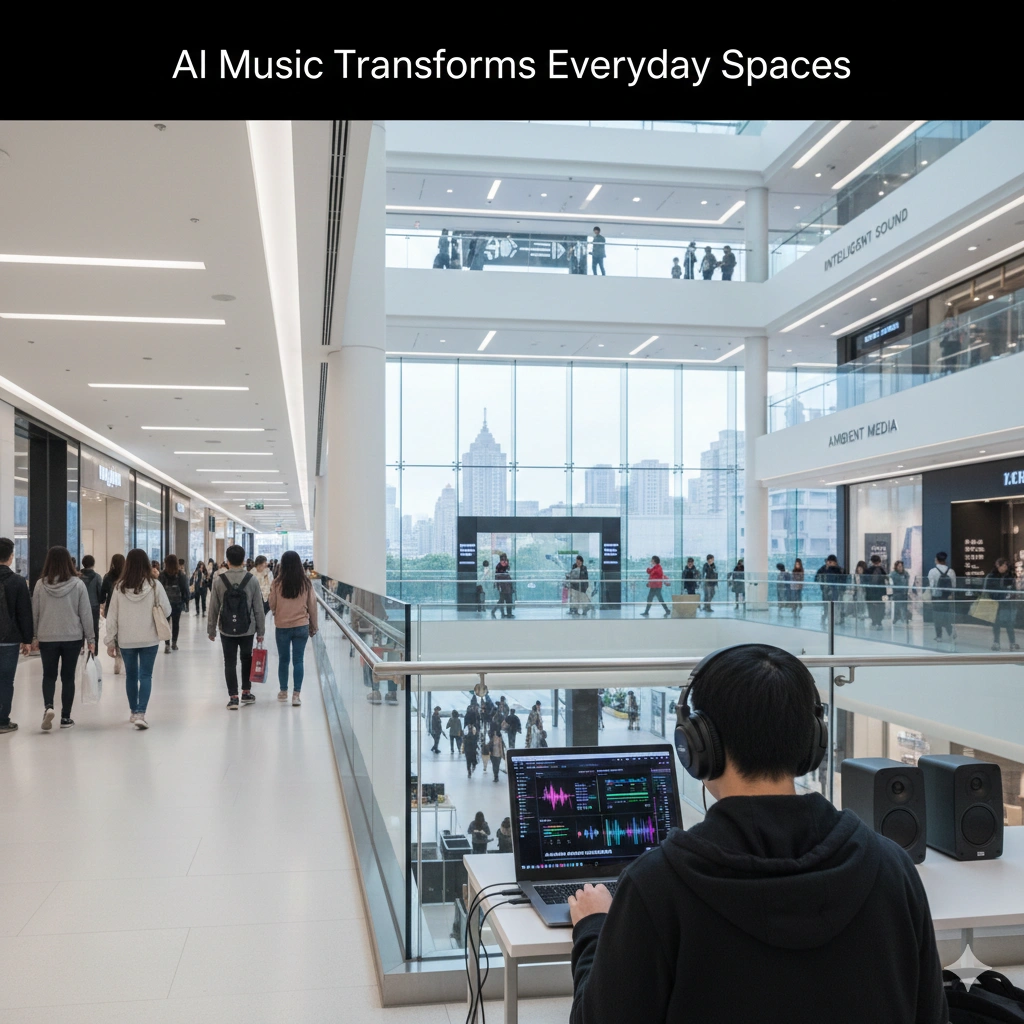
From Super Bowl LX to Taipei’s Retail Floors
At Super Bowl LX’s NFL Culture Club gatherings, Musica generated real-time, responsive music that adapted to guest movement and crowd energy. Rather than functioning as background noise, the system created a dynamic audio layer synchronized with the atmosphere of the event.
That same technology now powers the full sound environment at NOKE shopping mall in Taipei. There, Musica analyzes foot traffic and shopper behavior to adjust music tempo, mood, and intensity throughout the day. The deployment reflects research suggesting that adaptive soundscapes can influence consumer mood, dwell time, and purchasing behavior.
By positioning sound as an interactive experience rather than a static playlist, the Wavv AI music system aims to redefine how public and commercial spaces use music strategically.
Building AI Music Without Copyright Risk
One of the central debates surrounding generative AI in music involves copyright protection and ethical sourcing. Wavv’s leadership says its model avoids scraping copyrighted catalogs.
Founder and CEO Ivan Linn — a classically trained pianist known for work connected to the Final Fantasy franchise and the Assassin’s Creed Symphony World Tour — explains that Musica is trained on the “alphabet” of music: notes, harmony, rhythm, and theory rather than copyrighted recordings.
Operations head Dean Ludgate compares the process to building language from phonetics instead of copying books. This theory-level training allows enterprise clients to deploy music outputs in commercial environments without licensing complications.
In an era where AI companies face increasing scrutiny, the Wavv AI music system is positioning itself as a compliant, ethical alternative designed for business use.
Human–Machine Co-Working, Not Replacement
Wavv describes Musica as a “co-working” tool that augments composers rather than replaces them. Linn emphasizes that AI can serve as a collaborative instrument — generating base layers, adaptive arrangements, or environmental scoring — while leaving artistic direction in human hands.
The company previously collaborated with NASA and OpenAI on a generative score for the 2024 total solar eclipse, demonstrating how AI-composed sound can enhance live scientific and cultural events.
By framing AI as a creative partner, Wavv aims to ease industry fears that automation will erase local artistic identity.
Taiwan as a Test Case for Ethical AI Audio
Taiwan’s music sector is closely watching the Wavv AI music system as a potential blueprint for balancing innovation with cultural preservation. Artists and labels have voiced concerns globally about AI systems exploiting creative work or diluting local sound traditions.
In this context, Wavv’s expansion into Taiwan represents more than a commercial rollout. It serves as a real-world test of whether machine-generated soundscapes can coexist with a distinct cultural ecosystem while meeting strict copyright and ethical standards.
As adaptive environments become more common in retail, hospitality, and public spaces, Taiwan may offer insights into how AI-driven audio can be deployed responsibly — enhancing experience without compromising creativity.
The broader question remains: can artificial intelligence harmonize with human artistry rather than compete against it? Through its Taiwan experiment, Wavv is betting the answer is yes.
For more details & sources visit: Taiwan Business TOPICS (AmCham Taiwan)
Read more on Taiwan news: 360 News Orbit – Taiwan.