
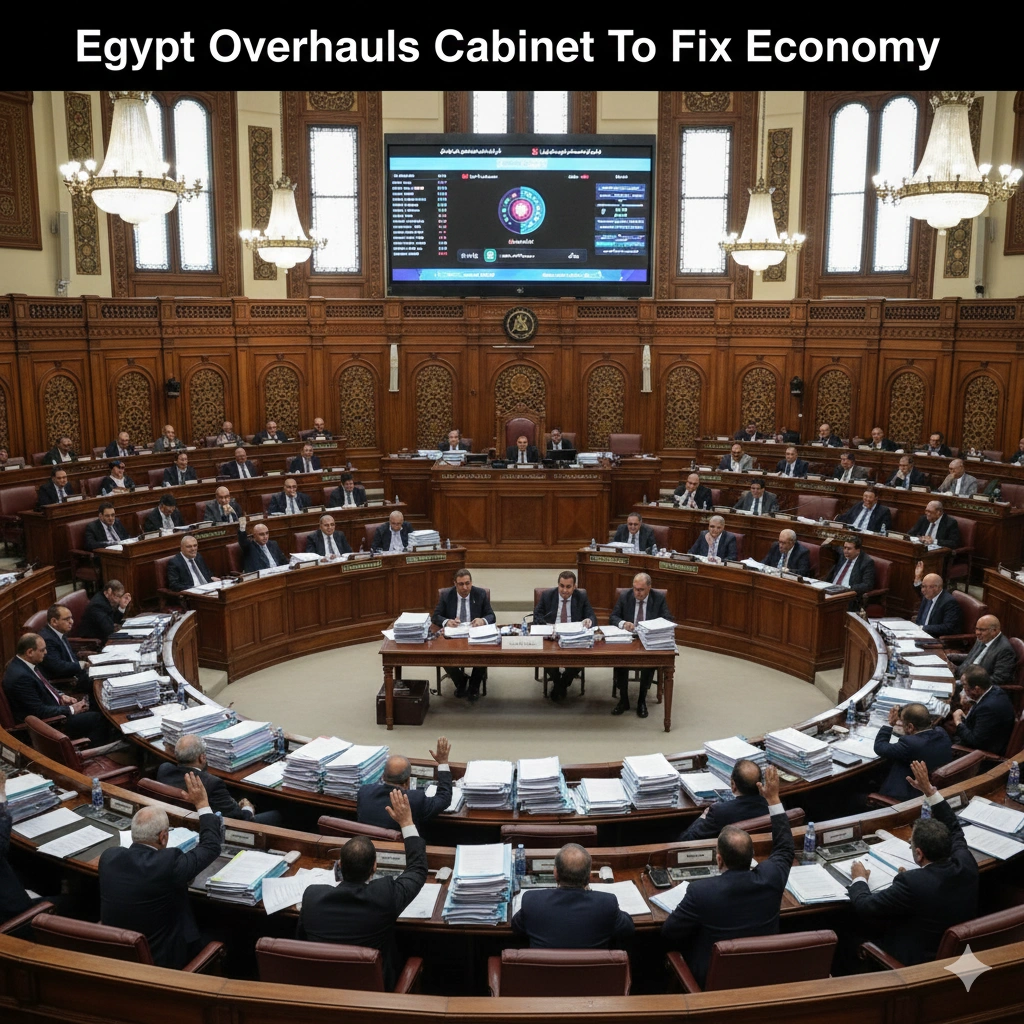
Egypt Economy-Focused Cabinet has taken decisive steps to address the country’s ongoing financial challenges following the approval of President Abdel Fattah el-Sisi’s reshuffle by the House of Representatives. The overhaul introduces 13 new ministers and creates a deputy prime minister for economic affairs, highlighting a strategic focus on stabilizing Egypt’s floundering economy.
This cabinet revamp aims to accelerate the delivery of Egypt’s national development program, improve government performance, and bring specialized expertise to critical economic and service ministries. Analysts view the reshuffle as a proactive measure to confront chronic inflation, foreign currency shortages, and mounting national debt.
World Bank Expertise and Economic Leadership
A key highlight of the reshuffle is the appointment of Ahmed Rostom, a former World Bank economist and experienced financial-sector policymaker, as planning minister. His role is expected to strengthen Egypt’s economic strategy, drawing on international best practices to manage fiscal pressures and drive long-term growth.
Mohamed Farid Saleh, former chair of the Financial Regulatory Authority, was appointed minister of investment and foreign trade, tasked with attracting investment, enhancing trade frameworks, and boosting economic competitiveness. These appointments form the core of the government’s new “economic cluster,” charged with delivering tangible results amid a turbulent financial environment.
Female Representation and Government Restructuring
The reshuffle also emphasizes gender inclusion, with Randa al-Menshawi promoted to housing minister and academic Gihane Zaki appointed as culture minister. These changes reflect a broader commitment to enhancing female participation in senior government roles and ensuring diverse perspectives in policymaking.
In addition, the government reinstated the State Ministry of Information, which had been dissolved in 2021, naming State Information Service chief Diaa Rashwan as minister. This move is intended to strengthen communication, transparency, and the government’s capacity to inform the public during times of economic uncertainty.
Economic Pressures Driving the Cabinet Changes
Egypt’s economy has faced sustained pressures from multiple external and domestic factors. Years of austerity linked to the 2016 IMF program, COVID-19 disruptions, and the ripple effects of Russia’s invasion of Ukraine have strained public finances. Recent geopolitical tensions, including Israel’s war on Gaza, and Houthi attacks on Red Sea shipping, have further impacted Suez Canal revenues, creating urgent need for skilled economic management.
The Egypt economy-focused cabinet is expected to prioritize tackling these challenges, balancing the need for fiscal discipline with social and political stability. Officials emphasize that the new economic cluster will be under significant pressure to deliver effective reforms quickly.
Strategic Goals of the Reshuffle
The cabinet reshuffle underscores Egypt’s intention to accelerate development while stabilizing its macroeconomic situation. By bringing in experts with international experience and focusing on key economic portfolios, the government aims to strengthen fiscal management, attract foreign investment, and modernize critical sectors.
Observers note that the move signals a strategic effort to restore confidence among international investors and domestic stakeholders alike. It also highlights the importance of aligning economic reform with political stability, particularly as Egypt navigates complex regional and global challenges.
Egypt Economy-Focused Cabinet Strengthens Public-Private Partnerships
The Egypt Economy-Focused Cabinet is expected to play a pivotal role in enhancing collaboration between the government and private sector. By leveraging the expertise of newly appointed ministers, officials aim to create an environment that encourages private investment in infrastructure, energy, and technology projects. These partnerships could accelerate job creation and support sustainable economic growth across key industries.
Additionally, the cabinet’s focus on investment facilitation is likely to improve regulatory frameworks, streamline approval processes, and boost confidence among domestic and international investors. Experts note that these reforms could help Egypt diversify its economy and reduce reliance on volatile revenue sources such as the Suez Canal and oil exports.
Regional Cooperation and International Economic Relations
The new cabinet is also expected to strengthen Egypt’s engagement with regional and global economic partners. By actively participating in trade negotiations, bilateral investment agreements, and cross-border development projects, the government aims to position Egypt as a stable and attractive hub for commerce and innovation in the Middle East and North Africa (MENA) region.
Officials emphasize that economic diplomacy will be a core priority, with the cabinet facilitating dialogue with international organizations such as the World Bank and the International Monetary Fund. Analysts suggest that this proactive approach could enhance access to development financing, support major infrastructure initiatives, and reinforce Egypt’s long-term economic resilience.
Future Outlook for Egypt’s Economy
With the newly appointed ministers in place, Egypt is positioned to implement reforms that address inflation, debt management, and foreign currency shortages. The inclusion of international financial expertise, combined with targeted domestic leadership, could foster more resilient economic growth and enhanced investment climate.
Analysts suggest that successful execution of this cabinet’s mandate may set a precedent for future governance reforms, demonstrating how technical expertise and strategic planning can be deployed to stabilize and modernize Egypt’s economy.
For more details & sources visit: Al Jazeera
For the latest updates from Egypt, visit our Egypt news page.