
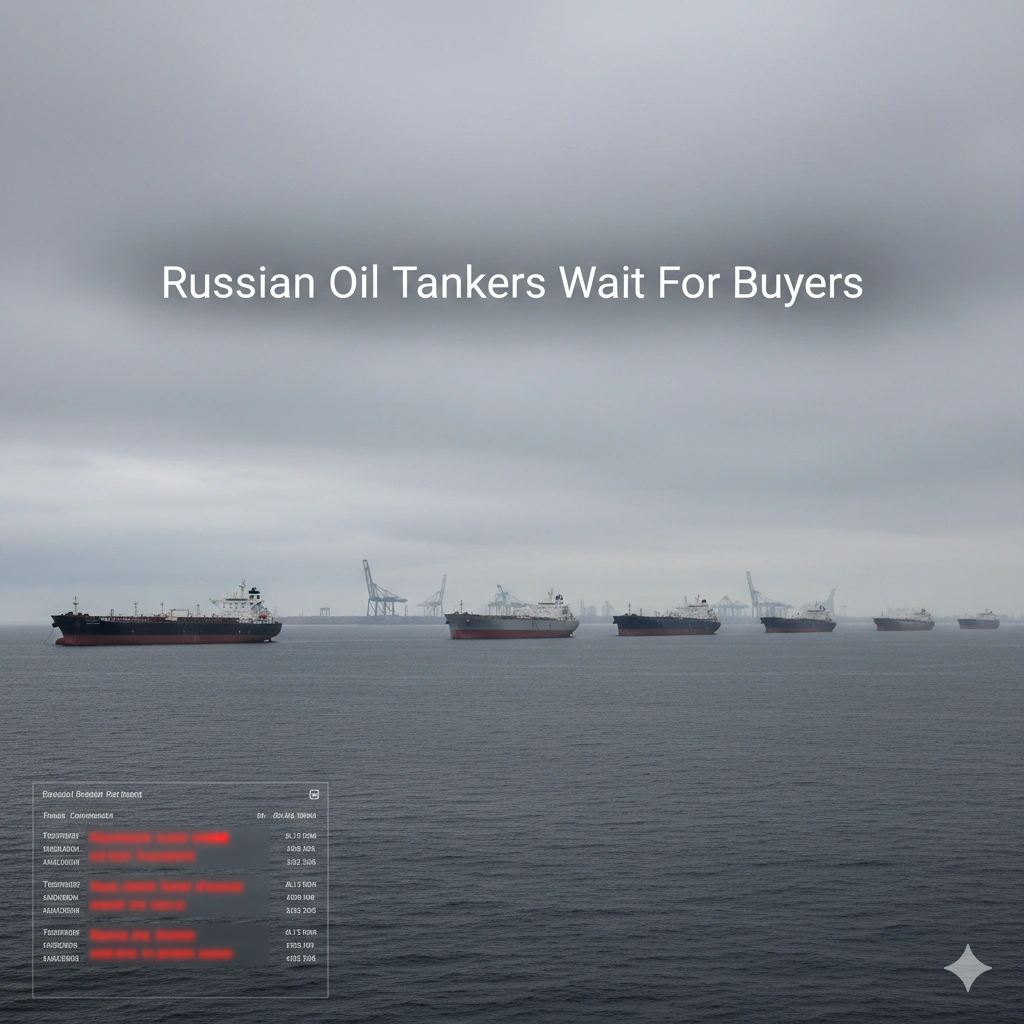
India Russian oil imports have dropped sharply, leaving multiple tankers carrying Urals crude stranded near Asian waters. This shift highlights how geopolitical pressures and trade agreements are reshaping global energy markets in 2026. More than a dozen tankers with millions of barrels of Russian Urals crude are reportedly navigating the Indian Ocean, as well as the coasts of Malaysia, China, and Russia’s Far East, waiting for buyers or delivery instructions.
Indian Oil Imports from Russia Drop Sharply
India was once the largest buyer of discounted Russian crude following Moscow’s invasion of Ukraine in 2022. However, India Russian oil imports have fallen from peaks above 2 million barrels per day in 2024 to around 1.2 million barrels per day by January 2026, with further declines expected.
U.S. pressure and emerging trade deals have played a role in this shift. In early 2026, a trade agreement between the United States and India was announced that included lower tariffs on Indian goods in exchange for India phasing out Russian crude oil purchases over time, a factor that has contributed to reduced Indian demand.
Stranded Tankers Illustrate Growing Surplus
The decline in India Russian oil imports has left a backlog of unsold Russian crude at sea. At least 12 tankers, carrying up to 12 million barrels of Urals crude, are currently circling near Asian ports, with Singapore often marked as a provisional destination while buyers are sought.
This situation underscores how dependent Moscow became on Indian demand. With Indian refiners cutting back and other buyers hesitant, Russia is struggling to find reliable markets for some of its crude exports.
China and Other Buyers Adjust Purchases
While India’s imports have slid, other Asian buyers like China have played a role in keeping Russian barrels moving. Chinese independent refiners have modestly increased their purchases of Urals crude, but typically prefer lighter grades such as ESPO and Sokol, leaving only part of Russia’s surplus cargoes absorbed into the market.
Indonesia and a handful of other regional buyers occasionally take on Russian cargoes, but these volumes remain limited. Many Asian refiners are also cautious about sanctions risks, particularly given ongoing Western scrutiny and compliance concerns.
Trade Politics and Global Oil Strategies in Flux
The shift in India’s oil sourcing comes amid broader geopolitical pressures and trade negotiations. The recent U.S.‑India trade deal not only reduced punitive tariffs on Indian exports but also tied energy purchases to broader strategic cooperation.
India is also exploring alternative crude sources, including Venezuelan oil, as part of a diversification strategy aimed at reducing reliance on any single supplier. These moves reflect a deeper reassessment of global crude supply chains and energy security priorities.
Impact on Russian Oil Exports and Prices
Russia’s oil export strategy is facing growing challenges. As traditional buyers pull back and tanker cargoes accumulate at sea, the country’s ability to sustain export volumes is increasingly constrained. Analysts have noted how a combination of sanctions, market diversification by buyers, and logistical hurdles have contributed to lower demand for Urals crude.
This has also impacted pricing. Heavy discounts on Russian crude, which once made it attractive to buyers like India, have widened further, reflecting both surplus supply and cautious buyer behavior under geopolitical pressure.
What This Means for Global Energy Markets
The reduction in India Russian oil imports underscores the vulnerability of Moscow’s export strategy to geopolitical shifts. Meanwhile, India’s move to diversify energy sources is expected to stabilize domestic supply while strengthening relations with alternative suppliers like the U.S.
For India, diversifying oil imports and balancing trade relationships with both the United States and the Middle East is part of a broader push to secure energy needs while managing diplomatic pressures. As refiners adapt their supply strategies, global crude flows are likely to continue shifting in the months ahead.
For more details & sources visit: TVP World (citing Bloomberg)
For more regional updates and industry insights, visit our Russia News Page