
Russia agri exports to Iraq recorded a sharp and politically significant rise in 2025, climbing 2.2-fold in value to $178 million, according to data released by Russia’s Agroexport center. Export volumes also surged, increasing 2.1 times to 750,000 tonnes, underscoring Russia’s growing footprint in Iraq’s food supply chain amid shifting trade routes and procurement strategies.
The surge highlights Moscow’s broader success in redirecting agricultural exports toward Middle Eastern and Asian markets as global trade patterns continue to realign.
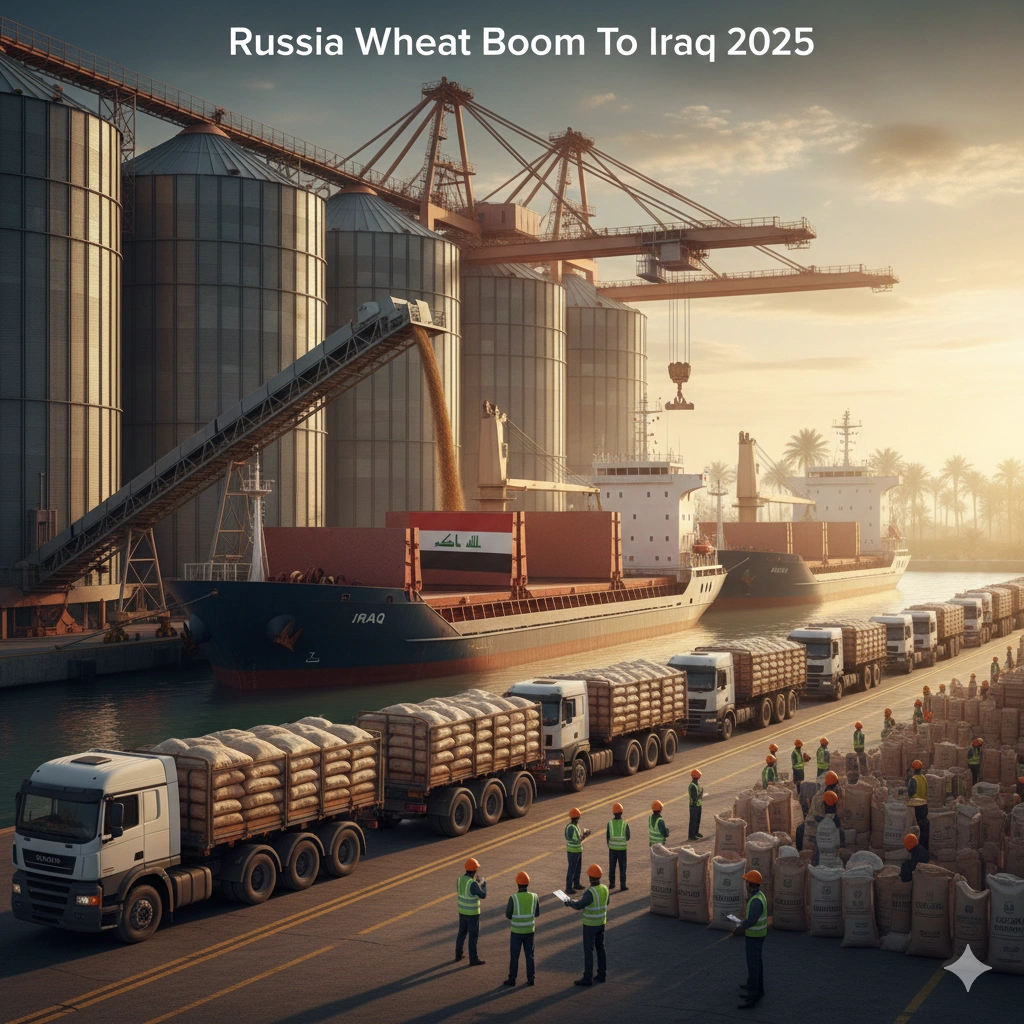
Wheat Leads Russia’s Export Expansion
Wheat emerged as the dominant driver of export growth, with Russia shipping approximately 400,000 tonnes of wheat to Iraq in 2025. This reflects Iraq’s continued reliance on imported wheat to support its Public Distribution System (PDS), which provides subsidized food staples to millions of citizens.
Despite Baghdad’s stated ambition to achieve wheat self-sufficiency, Iraq still plans to import between 2 and 2.4 million metric tonnes of wheat during the 2024/25 marketing year to meet domestic demand.
Russia’s position as the world’s largest wheat exporter, with shipments reaching 42.6 million tonnes in the 2024–25 season, has made it a natural supplier as Iraq diversifies away from traditional partners.
Broader Grain Shipments Strengthen Trade Ties
Beyond wheat, Russia’s agricultural exports to Iraq covered a wide range of grain and grain-based products in 2025. According to Agroexport figures, shipments included:
- 108,000 tonnes of barley
- 91,000 tonnes of other grains
- 61,000 tonnes of flour
- 28,000 tonnes of millet
The rise in flour exports is particularly notable, as Iraq has gradually reduced its dependence on Turkish flour, opening space for Russian suppliers in the processed grain segment.
Five-Year Boom Signals Structural Shift
The 2025 figures cap a dramatic longer-term trend. Over the past five years, Russia’s agricultural shipments to Iraq have expanded by an estimated 37-fold, signaling a structural shift rather than a short-term spike.
This growth reflects a combination of factors: competitive pricing, abundant Russian harvests, and improved logistics linking Russia to Middle Eastern markets.
Transport Corridors Reshape Grain Trade
A key enabler of the surge in Russia agri exports to Iraq has been the development of the International North–South Transport Corridor (INSTC). The corridor, running through the Caspian Sea and Iran, has significantly improved connectivity between Russian producers and Iraqi buyers.
By reducing transit times and lowering transportation costs, the corridor has strengthened Russia’s ability to compete in markets traditionally served by regional exporters. Analysts note that improved logistics are now as important as production capacity in determining global grain trade flows.
Iraq’s Food Policy at a Crossroads
While Iraq continues to invest in domestic agriculture, climate stress, water shortages, and population growth have complicated its push toward self-sufficiency. As a result, imports remain a central pillar of national food security policy.
Russia’s growing role comes at a time when Iraq is actively diversifying suppliers to reduce vulnerability to regional disruptions and price volatility. The recent surge in Russia agri exports to Iraq is helping Baghdad secure a stable supply of staple foods while balancing geopolitical risks.
Russia’s Broader Pivot to Non-Western Markets
The expansion of agricultural exports to Iraq fits into Russia’s broader pivot toward Asia and the Middle East, where demand for staple foods remains strong and less politically constrained.
Agricultural exports have become one of Russia’s most resilient economic sectors, benefiting from high global demand and relatively limited exposure to sanctions compared with energy or finance.
Outlook for 2026 and Beyond
With Russia maintaining its status as the world’s top wheat exporter and logistics corridors continuing to mature, analysts expect Russia agri exports to Iraq to remain strong in 2026. Further gains may depend on Iraq’s harvest outcomes, global grain prices, and the pace of infrastructure development along regional trade routes.
For now, the 2025 figures mark a clear milestone, cementing Russia’s role as a key supplier in Iraq’s evolving food import landscape.
For more details & sources visit: Russia’s Pivot to Asia
Read more about Iraq news on 360 News Orbit – Iraq.