
Kuwait Sukuk Legislation is moving to the center of the country’s fiscal strategy as policymakers seek new financing tools to reduce reliance on oil revenues and align with the Gulf’s rapidly expanding Islamic finance market.
The initiative was highlighted by Prime Minister Sheikh Ahmad Abdullah Al-Ahmad Al-Sabah during discussions at Dubai’s World Governments Summit, where he confirmed plans to introduce Kuwait’s first law regulating the issuance of sukuk both domestically and internationally.
The proposed framework aims to create a structured, Sharia-compliant financing channel that can support long-term development spending while improving access to global capital markets.
Government Push for Sharia-Compliant Financing Framework
Officials say the Kuwait Sukuk Legislation will establish clear rules for issuing Islamic bonds, enabling the government to raise funds through instruments aligned with Islamic finance principles.
Such instruments allow investors to participate in asset-backed or profit-sharing structures rather than conventional interest-based bonds, making them attractive across regional and international markets.
The move is part of a broader effort to build more sustainable and diversified financing sources as Kuwait seeks alternatives to hydrocarbon-driven revenue streams.
Fiscal Reform Efforts Intensify After Recent Borrowing Moves
Kuwait’s renewed focus on debt instruments follows its return to global markets in 2025, when the country issued $11.25 billion in sovereign bonds, its first major international issuance in several years.
Regional analysts note that governments across the Gulf are increasingly using debt markets to finance infrastructure, manage refinancing needs, and address fiscal deficits linked to fluctuating oil prices.
By adding sukuk to its financing toolkit, Kuwait aims to gain more flexibility in medium- and long-term funding while supporting domestic capital market development.
GCC Debt Market Boom Creates Favorable Timing
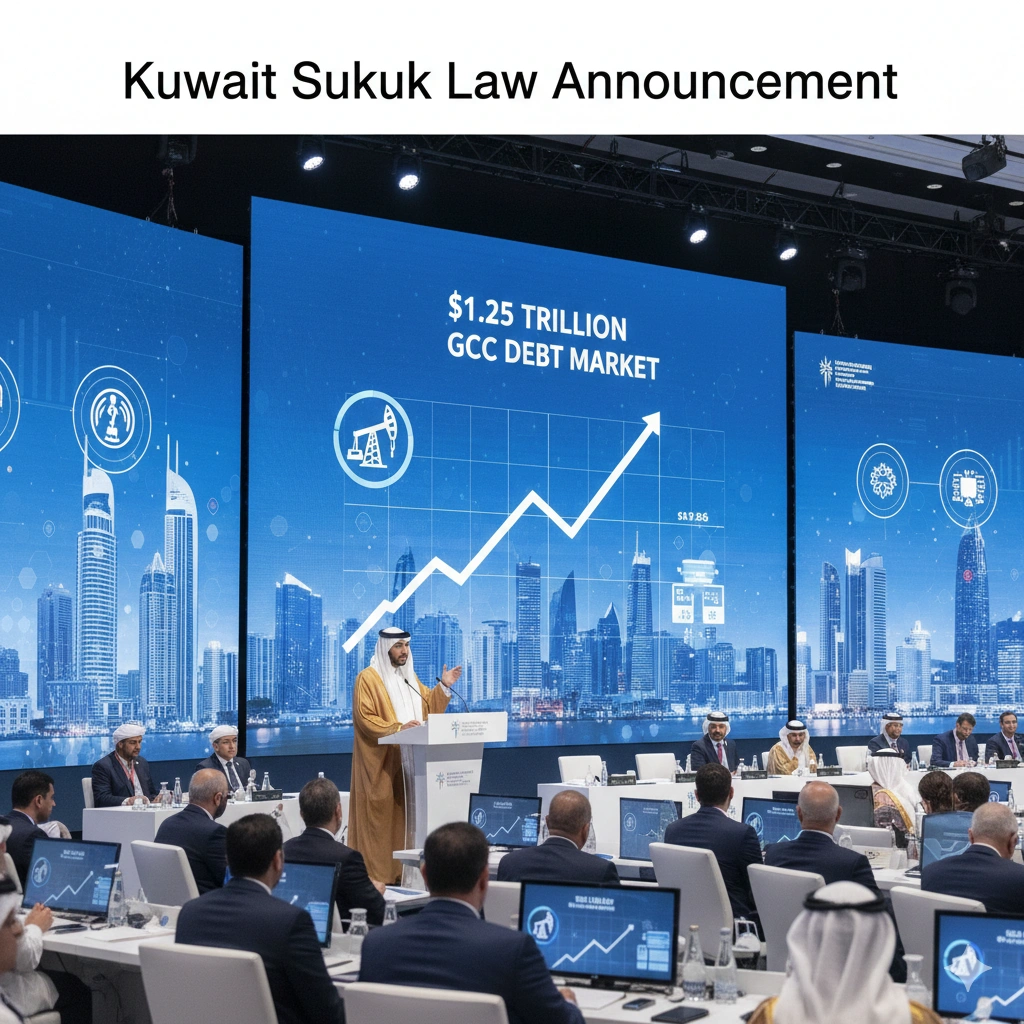
The timing of Kuwait Sukuk Legislation aligns with strong growth across Gulf debt markets. According to Fitch Ratings, the GCC’s debt capital market reached about $1.1 trillion by the third quarter of 2025 and is projected to exceed $1.25 trillion by 2026.
Sukuk issuance has been a major driver of this expansion, growing significantly faster than conventional bond sales and accounting for more than 40 percent of outstanding GCC debt.
The region has also become one of the largest sources of US-dollar-denominated debt among emerging markets, reflecting strong investor appetite for Gulf sovereign and corporate issuances.
This environment offers Kuwait a favorable window to enter or expand participation in Islamic debt markets.
Economic Diversification Remains Central Policy Goal
Reducing dependence on hydrocarbons remains a long-standing objective for Kuwait’s economic planners. Oil revenues have historically dominated public finances, leaving the budget exposed to global price swings.
Experts say expanding sukuk issuance can support diversification by channeling funding into infrastructure, development projects, and private-sector growth initiatives.
Across the Gulf, governments are increasingly using Islamic finance alongside conventional borrowing to support transformation agendas and long-term investment programs.
The Kuwait Sukuk Legislation therefore reflects a regional pattern where sovereign issuers seek broader funding bases while building deeper local capital markets.
Regional Finance Strategy Signals Long-Term Shift
The broader outlook for GCC debt markets remains positive, with expectations of continued issuance driven by project financing, refinancing cycles, and fiscal planning needs.
Credit agencies also note that most rated sukuk in the region carry investment-grade status, reinforcing confidence among institutional investors.
For Kuwait, establishing a legal structure for sukuk could strengthen financial resilience by diversifying funding sources and improving access to both regional and global liquidity pools.
As Gulf economies accelerate reforms aimed at post-oil sustainability, Kuwait’s move to formalize Islamic bond issuance marks a significant step toward aligning fiscal policy with evolving regional capital market trends.
For more details & sources visit: Arab News
Read more about Kuwait news on 360 News Orbit – Kuwait.