
Jordan’s King, Turkish President Urge Support For Syria And Gaza Ceasefire during high-level talks in Istanbul, highlighting the urgent need for regional stability, humanitarian action, and renewed diplomatic momentum across the Middle East. The meeting between King Abdullah II of Jordan and Turkish President Recep Tayyip Erdogan focused on Syria’s sovereignty, the enforcement of the Gaza ceasefire, and long-term prospects for peace in the Palestinian territories.
The leaders met on February 7, 2026, at Istanbul’s Dolmabahçe Palace, where they reviewed key regional developments and explored ways to deepen bilateral and trilateral cooperation aimed at reducing tensions and supporting reconstruction.
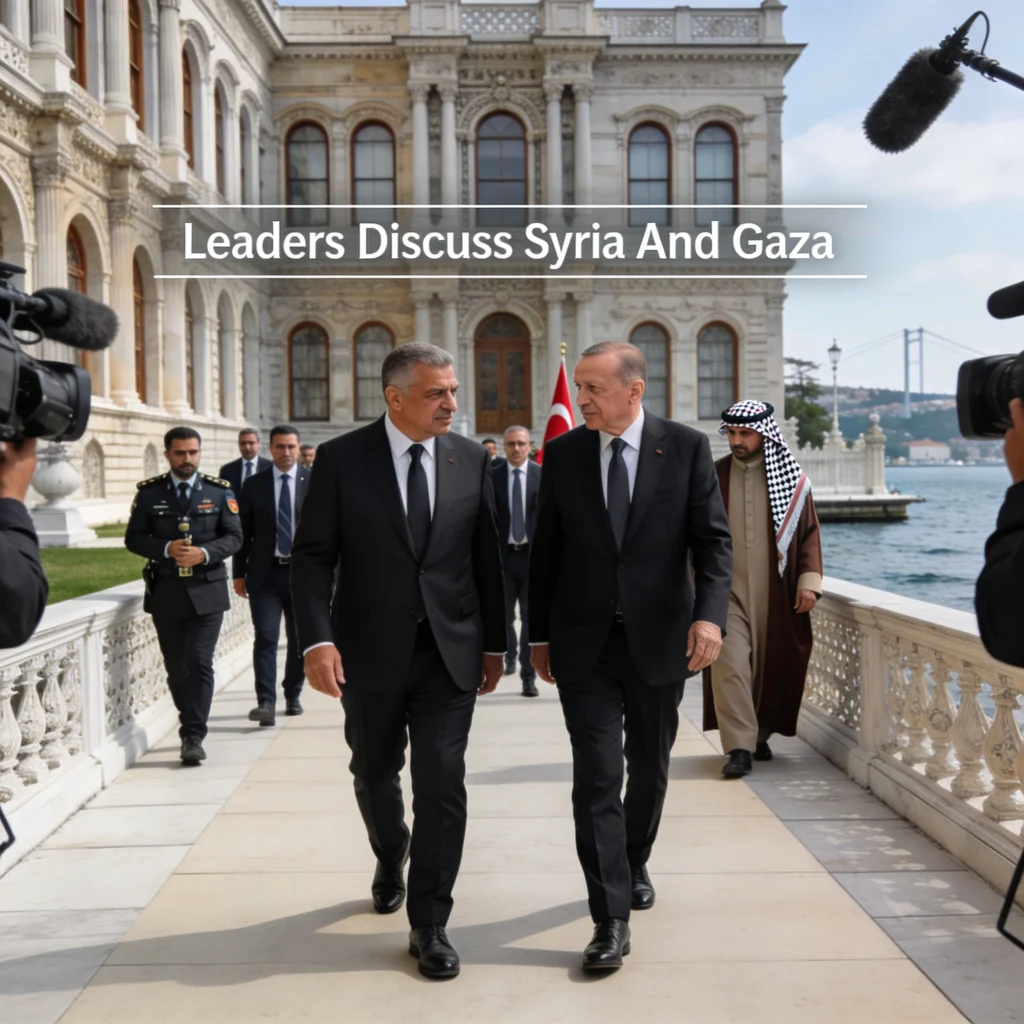
Jordan’s King, Turkish President Urge Support For Syria’s Security And Sovereignty
As Jordan’s King, Turkish President Urge Support For Syria And Gaza Ceasefire, both leaders emphasized that supporting Syria’s security, stability, territorial integrity, and sovereignty is essential for achieving broader regional peace. They agreed that continued instability in Syria poses risks not only to neighboring countries but to the wider Middle East.
King Abdullah II reiterated Jordan’s longstanding position in favor of preserving Syria’s unity and strengthening state institutions as a foundation for recovery. President Erdogan echoed this view, stressing that coordinated regional support is critical to preventing renewed conflict and fragmentation.
The discussion reflected growing regional consensus around practical steps to stabilize Syria after years of conflict.
Trilateral Cooperation With Syria Focuses On Transport And Trade
A key outcome of the meeting, as Jordan’s King, Turkish President Urge Support For Syria And Gaza Ceasefire, was renewed interest in trilateral cooperation between Jordan, Turkey, and Syria, particularly in the transport sector. The leaders discussed implementing a recently approved memorandum of understanding aimed at upgrading land transport corridors and exploring future rail links.
Improved connectivity is seen as vital for facilitating the movement of goods and passengers, supporting trade, and accelerating economic recovery in Syria and neighboring states. Officials noted that enhanced transport infrastructure could also strengthen regional supply chains and promote cross-border cooperation.
Both sides agreed that economic integration can serve as a stabilizing force in post-conflict environments.
Calls For Full Implementation Of Gaza Ceasefire
On Gaza, Jordan’s King, Turkish President Urge Support For Syria And Gaza Ceasefire by calling for the full enforcement of the ceasefire agreement, increased humanitarian aid deliveries, and the immediate launch of reconstruction efforts. The leaders stressed that easing the humanitarian crisis is a priority and requires sustained international engagement.
They also firmly rejected unilateral Israeli actions, including annexation plans, forced displacement of Palestinians, and any attempts to alter the legal or historical status of Jerusalem. Both leaders warned that such measures threaten regional stability and undermine prospects for peace.
The talks highlighted the need for coordinated diplomatic pressure to ensure that ceasefire commitments are respected.
Commitment To Two-State Solution And Palestinian Statehood
As Jordan’s King, Turkish President Urge Support For Syria And Gaza Ceasefire, both leaders reaffirmed their commitment to a just and lasting peace based on a two-state solution. They emphasized that this path remains the only viable framework for achieving security and stability for both Palestinians and Israelis.
King Abdullah II reiterated Jordan’s role under the Hashemite Custodianship in safeguarding Jerusalem’s Muslim and Christian holy sites, underscoring Amman’s responsibility to protect the city’s religious and historical character. President Erdogan expressed Turkey’s continued support for Palestinian rights and statehood.
The discussion reinforced shared diplomatic positions that have long shaped Jordanian and Turkish foreign policy.
Expanding Jordan–Turkey Cooperation Amid Regional Tensions
Beyond immediate regional crises, the meeting also addressed the future of Jordan–Turkey relations. President Erdogan voiced interest in expanding cooperation and expertise-sharing across economic, strategic, and development sectors, as the two countries approach the 80th anniversary of their diplomatic relations.
Officials described the visit as part of broader efforts to calm regional tensions and strengthen partnerships that contribute to long-term stability. Both sides agreed that closer bilateral coordination enhances their ability to respond to shared challenges.
Regional Diplomacy Aimed At De-escalation
The discussions underscore how Jordan’s King, Turkish President Urge Support For Syria And Gaza Ceasefire fits into wider regional diplomacy focused on de-escalation, reconstruction, and political solutions. With conflicts in Syria and Gaza continuing to shape regional dynamics, coordinated leadership engagement remains crucial.
By aligning positions on sovereignty, humanitarian access, and peace frameworks, Jordan and Turkey are signaling a shared commitment to diplomacy as the primary tool for resolving regional crises.
For more details & sources visit: SANA
Read more about Jordan news on 360 News Orbit – Jordan.