
UNDP Syria jobs recovery efforts must prioritize rapid employment generation and private sector revival if the country is to stabilize communities and rebuild livelihoods after years of conflict, according to a new analysis by the United Nations Development Programme (UNDP). The agency says Syria’s post-2024 political transition presents a rare opportunity to reset economic rules and pursue inclusive, job-rich growth.
UNDP argues that job creation is the most urgent economic priority facing Syria today. Years of war have devastated incomes, eroded household savings, and left millions struggling to meet basic needs. At the same time, Syria’s labor force is expanding rapidly, driven by a young population entering the job market amid limited opportunities.
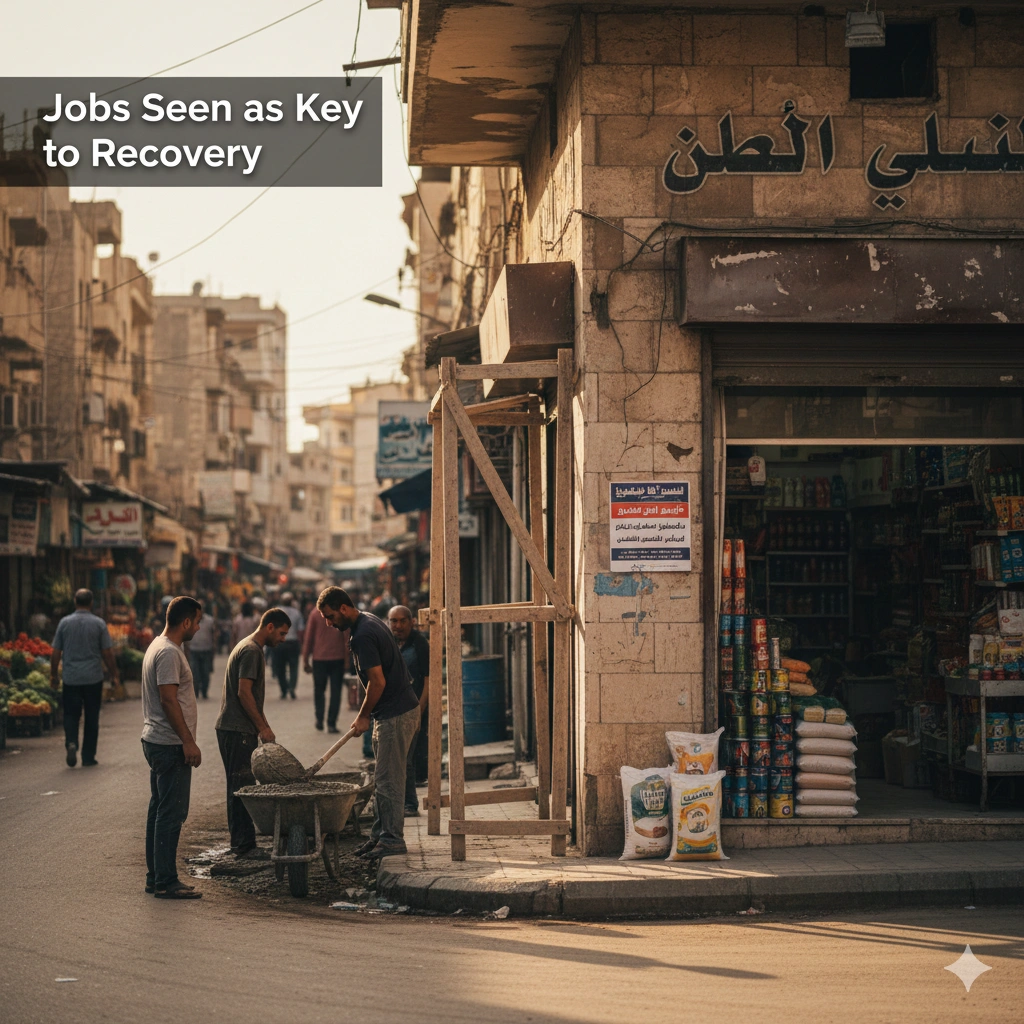
Job-Rich Growth as the Foundation of Recovery
According to UNDP, Syria’s recovery will not be achieved through capital-intensive megaprojects alone. Instead, UNDP Syria jobs recovery strategies must focus on labor-intensive sectors that can absorb large numbers of workers quickly and spread income across communities.
The agency identifies agriculture, construction, light manufacturing, agro-processing, and local service industries as the fastest pathways to broad-based employment. These sectors require relatively low upfront investment, rely on local supply chains, and can deliver immediate income gains for families affected by displacement and conflict.
Reviving agriculture is particularly critical, UNDP notes, given its role in food security, rural employment, and social stability. Construction and housing reconstruction can also generate large-scale employment while addressing urgent infrastructure and shelter needs.
Private Sector Revival Is Central to UNDP Syria Jobs Recovery
UNDP emphasizes that the private sector—especially small and medium-sized enterprises (SMEs), family businesses, and local firms—remains Syria’s most important economic asset. However, years of instability, regulatory uncertainty, and limited access to finance have constrained private sector growth.
For UNDP Syria jobs recovery to succeed, the agency argues that Syria must simplify business regulations, improve policy predictability, and reduce barriers that discourage entrepreneurship. Clearer rules, transparent licensing processes, and fair enforcement would allow local enterprises to expand operations and hire more workers.
Access to finance is another major constraint. UNDP highlights the need for improved credit mechanisms, microfinance, and risk-sharing tools to help small businesses invest, rebuild, and scale. Without functioning financial channels, even viable enterprises struggle to generate jobs.
Domestic and Diaspora Investment Over Foreign Capital
While foreign investment often dominates post-conflict recovery narratives, UNDP takes a more pragmatic view. It argues that domestic capital and Syrian diaspora investment are likely to play a much larger role in the near term than large-scale foreign inflows.
UNDP Syria jobs recovery efforts should therefore focus on creating conditions that encourage Syrians—both inside the country and abroad—to invest in productive activities. Trust in institutions, legal clarity, and protection of property rights are seen as essential to mobilizing this capital.
Diaspora investors, in particular, bring not only funding but also skills, networks, and market access. UNDP suggests targeted incentives and risk-reduction mechanisms could help channel diaspora resources into job-creating sectors.
Skills, Training, and Youth Employment
Another pillar of UNDP Syria jobs recovery is aligning education and vocational training with real labor market needs. UNDP warns that mismatches between skills and available jobs risk leaving young Syrians unemployed even as employers struggle to find qualified workers.
The agency calls for expanded vocational training, apprenticeships, and skills programs tied directly to demand in agriculture, construction, manufacturing, and services. Youth employment is especially critical, as prolonged joblessness among young people can undermine social cohesion and long-term stability.
UNDP’s Role on the Ground
UNDP says it is already supporting community livelihoods through public works programs, local enterprise support, and cash-for-work initiatives. These efforts provide immediate income while rebuilding infrastructure and essential services.
Beyond direct support, UNDP is convening policy dialogue among national and local stakeholders to strengthen governance, improve economic coordination, and create an enabling environment for job-creating investment. The agency stresses that sustainable recovery depends on Syrian-led solutions rather than externally imposed models.
A Narrow Window for Economic Reset
UNDP concludes that Syria’s post-2024 transition represents a narrow but critical window to redefine economic priorities. Without decisive action on employment and private sector revival, poverty, inequality, and instability could deepen.
By focusing on UNDP Syria jobs recovery, job-rich growth, and empowered local enterprises, the agency believes Syria can begin restoring livelihoods, stabilizing communities, and laying the groundwork for long-term economic resilience.
For more news, visit 360 News Orbit