
The Iran economic crisis has intensified amid renewed diplomatic engagement and escalating pressure from the United States under President Donald Trump. While indirect talks in Oman signal a possible thaw in relations, Washington’s simultaneous military and economic pressure underscores the fragile nature of any potential agreement.
Tehran is now caught between seeking sanctions relief and resisting broader demands that could reshape its nuclear and regional strategy.
Indirect Talks in Oman Mark First Contact After Military Strikes
The United States and Iran recently held indirect diplomatic talks in Muscat, mediated by Oman’s foreign minister. This marks the first engagement since joint US–Israeli strikes on Iranian targets in June. Instead of face-to-face discussions, Omani officials acted as intermediaries, shuttling messages between delegations in separate rooms.
President Trump described the opening round as a “very good” start, hinting at cautious optimism. However, the absence of direct talks reflects deep mistrust and unresolved tensions between the two nations.
Naval Power and Military Signals Shadow the Diplomacy
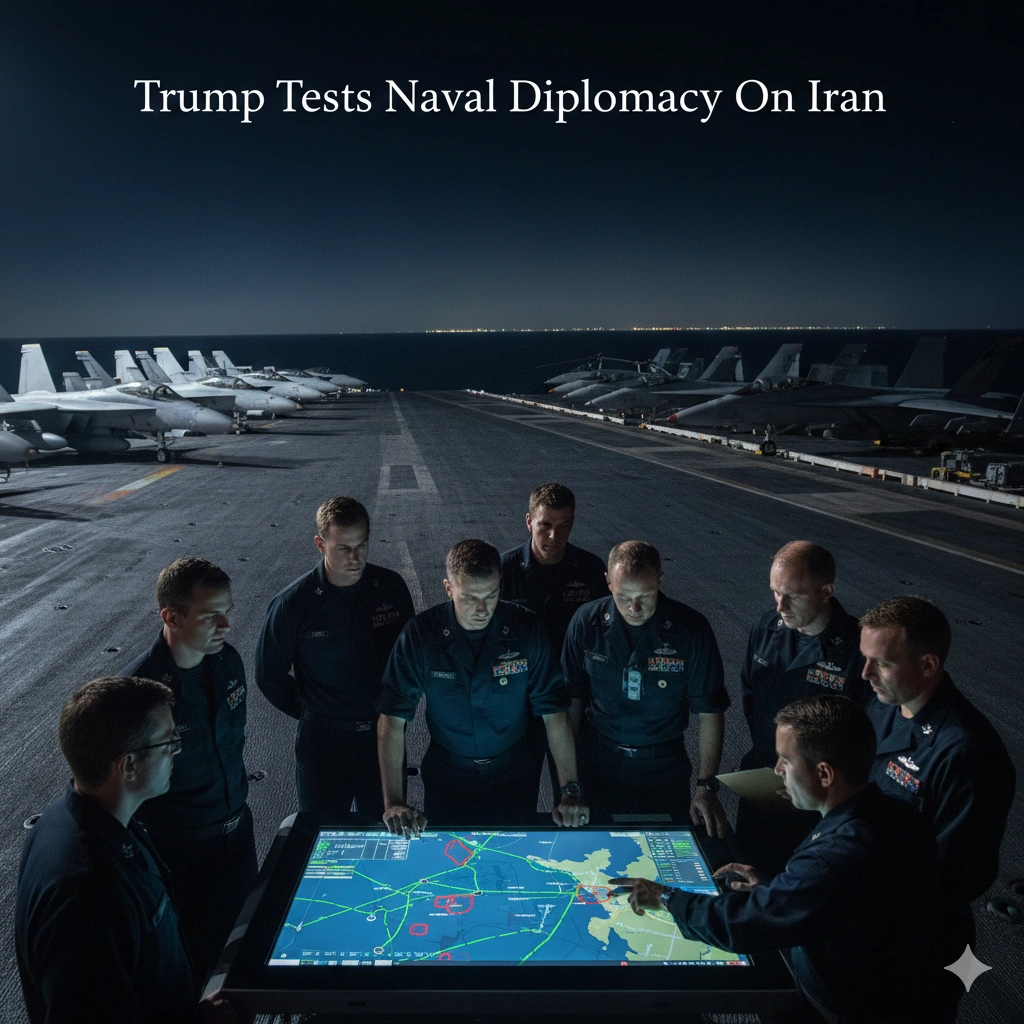
Despite diplomatic overtures, Trump emphasized that a large American naval fleet led by the USS Abraham Lincoln remains deployed in the region. This military posture sends a clear signal that Washington is prepared to back diplomacy with force if negotiations fail.
By combining naval presence with diplomatic engagement, the US is pursuing a strategy often described as “coercive diplomacy,” aiming to pressure Tehran into making broader concessions.
Core Dispute: Uranium Enrichment and Regional Influence
At the heart of the negotiations is Iran’s uranium enrichment program. Washington is pushing for Iran to halt domestic enrichment or move the process abroad. The US also seeks a broader agreement that addresses Iran’s missile program and regional proxy networks.
Tehran, however, insists that its enrichment activities and regional alliances are non-negotiable, offering only limited discussions on the nuclear issue in exchange for sanctions relief. This fundamental disagreement makes any comprehensive deal difficult to achieve.
New Sanctions and Tariff Threats Escalate Pressure
Alongside diplomacy, the US announced fresh sanctions targeting Iranian shipping companies and vessels linked to Tehran’s “shadow fleet.” These measures aim to disrupt Iran’s ability to export oil and conduct international trade.
Trump also issued an executive order threatening tariffs of up to 25% on countries doing business with Iran, a move that could impact major trading partners such as China, India, and Turkey. Such secondary sanctions and tariffs could significantly reduce Iran’s global economic connections.
Iran’s Economy Nearing a Breaking Point
Iran’s economy has been under severe strain for years due to sanctions, mismanagement, and political instability. The Iran economic crisis is characterized by:
- A collapsing currency
- Rising inflation and unemployment
- Mass protests over living costs
- Declining oil revenues and trade restrictions
The latest sanctions and tariff threats further exacerbate these challenges, potentially pushing the economy closer to collapse.
Domestic Unrest Adds to Tehran’s Dilemma
Beyond external pressure, Iran faces growing domestic unrest. Protests over high prices, unemployment, and corruption have increased, reflecting widespread frustration with the government’s handling of the economy.
Tehran now faces a difficult choice: accept a constrained nuclear deal to secure sanctions relief or maintain its current stance and risk deeper economic and social instability.
Global Markets Watch the Iran Economic Crisis With Rising Concern
The ongoing Iran Economic Crisis is drawing close attention from global markets and policymakers, particularly in energy and currency sectors. Investors are closely monitoring whether escalating tensions could disrupt oil exports or trigger wider instability across the Middle East, which remains a critical hub for global energy supply chains.
Financial analysts warn that prolonged uncertainty could increase oil price volatility and impact emerging markets with strong trade ties to Iran. Any sudden escalation—whether diplomatic failure or military confrontation—could send shockwaves through global commodity markets and financial systems.
Regional Allies and Rivals React to Iran’s Economic and Political Pressures
Regional powers are closely watching how the Iran Economic Crisis influences Tehran’s foreign policy decisions. Allies and proxy groups supported by Iran may feel the impact of reduced funding, potentially altering dynamics in conflict zones across the Middle East. At the same time, rival nations could see the situation as an opportunity to expand their influence.
Diplomats across the region suggest that Iran’s economic strain could push Tehran toward either compromise or increased assertiveness abroad, depending on internal political calculations. The situation remains fluid, with regional stability increasingly tied to the outcome of negotiations and Iran’s domestic resilience.
High-Stakes Diplomacy With Global Implications
The outcome of these talks could reshape regional and global geopolitics. A limited nuclear agreement could stabilize markets and reduce tensions, while failure could escalate military confrontations and disrupt global energy supplies.
Trump’s approach—combining diplomacy with military and economic pressure—signals a shift toward a hardline negotiating strategy that aims to extract broader concessions from Iran.
For more details & sources visit: Daily News Egypt
Read more on Iran news: 360 News Orbit – Iran.