
Iran Launches Portal For Missing Protest Victims in a controversial move following the government’s release of an official list documenting 3,117 deaths during nationwide protests in late December 2025. The new online platform allows families to report relatives who were allegedly killed but omitted from the official count, raising fresh questions about transparency, censorship, and accountability.
The announcement comes amid growing criticism from human rights organizations and international observers, who claim the true death toll may be significantly higher.
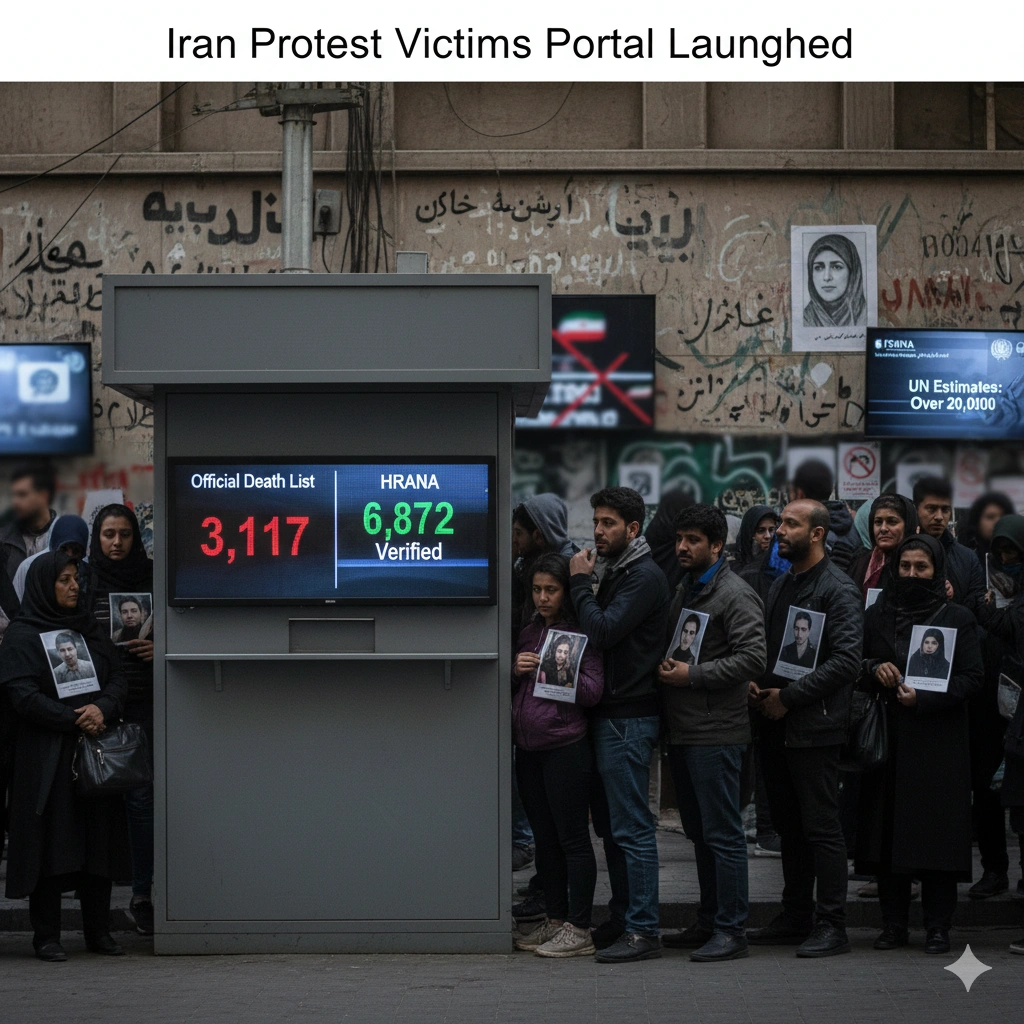
Government Releases Official Protest Death List
Iranian authorities published a list of 2,986 verified names connected to the protests, though the document reportedly lacks critical details such as locations, circumstances of death, and alleged perpetrators. Officials said the list was compiled through state verification processes and aimed at addressing public concerns over casualties.
However, the release has sparked skepticism among activists and rights groups, who argue that the government is attempting to control the narrative and downplay the role of security forces in the violence.
Online Portal Aims to Identify Missing Victims
As Iran Launches Portal For Missing Protest Victims, authorities have invited families to submit information about relatives who were not included in the official tally. The government claims the portal is intended to improve data accuracy and allow citizens to participate in documenting the deaths.
Families can reportedly submit names, identifying details, and supporting evidence, though concerns remain about potential surveillance, data security, and repercussions for those who participate.
Human Rights Groups Dispute Official Figures
Human rights organization HRANA has reported a significantly higher number of fatalities, verifying 6,872 deaths and investigating more than 11,000 additional cases. Meanwhile, a United Nations special rapporteur has estimated that over 20,000 people may have been killed, highlighting the vast discrepancy between official figures and independent estimates.
Rights groups accuse the Iranian government of systematically undercounting deaths and suppressing evidence of state violence during the protests, which erupted over political, economic, and social grievances.
Allegations of Narrative Control and State Responsibility
Activists argue that the release of the official list and the launch of the portal are part of a broader effort to shape public perception of the protests and deflect responsibility from state security forces.
Critics say the list omits key details that would clarify how victims died, where incidents occurred, and who was responsible. By excluding this information, the government is accused of denying or obscuring the role of security forces in the crackdown.
Internet Restrictions Hamper Verification Efforts
The rollout of the portal comes amid heavy internet filtering and censorship in Iran, which has made independent verification of protest deaths difficult. Social media platforms have been restricted, and journalists and activists face significant challenges in documenting events.
Despite these restrictions, activists have used digital platforms and encrypted messaging to share victim identities and evidence, contributing to the higher death estimates reported by independent organizations.
President Pezeshkian’s Role and Government Response
The portal was launched under the administration of President Masoud Pezeshkian, whose office published the official list of verified names. While the government has framed the initiative as a step toward transparency, critics argue that it falls short of meaningful accountability.
Pezeshkian’s administration has faced international pressure to investigate the protest deaths and ensure justice for victims, but concrete steps toward independent investigations remain unclear.
International Reaction and UN Concerns
The United Nations and various international human rights organizations have expressed deep concern over the protest deaths and the lack of transparent investigations. The UN special rapporteur’s estimate of more than 20,000 fatalities underscores the severity of the alleged crackdown and the need for independent verification.
Global governments and rights groups have called on Iran to allow international investigators, protect witnesses, and end censorship that hampers documentation of human rights abuses.
Broader Implications for Iran’s Human Rights Record
The announcement that Iran Launches Portal For Missing Protest Victims highlights ongoing tensions between the Iranian government and civil society, as well as persistent concerns over human rights, freedom of expression, and accountability.
The discrepancy between official and independent death tolls raises questions about transparency and the effectiveness of state-led documentation processes. Analysts warn that without independent investigations, mistrust between the government and the public is likely to deepen.
What Comes Next
While the portal could theoretically help identify missing victims, its effectiveness will depend on public trust, data transparency, and protections for participants. Rights groups emphasize that a government-managed platform cannot replace independent investigations, judicial accountability, and international oversight.
As families continue searching for answers, the portal may become a focal point in the broader struggle for truth and justice following Iran’s deadly protest crackdown.
For more details & sources visit: Al Jazeera
Read more on Iran news: 360 News Orbit – Iran.