
Displaced filmmakers IFFR took center stage at the International Film Festival Rotterdam (IFFR) on January 30, 2026, as five short films premiered under the Displacement Film Fund. The initiative, supported by actress Cate Blanchett and the festival’s Hubert Bals Fund, highlights voices of filmmakers forced into exile due to conflict, repression, and instability in their home countries.
The program awarded grants to filmmakers from Iran, Syria, Afghanistan, Somalia, and Ukraine, offering them a platform to tell stories shaped by displacement, survival, and identity. The screenings took place at Rotterdam’s historic Oude Luxor theater, drawing attention to cinema as both an artistic and political tool.
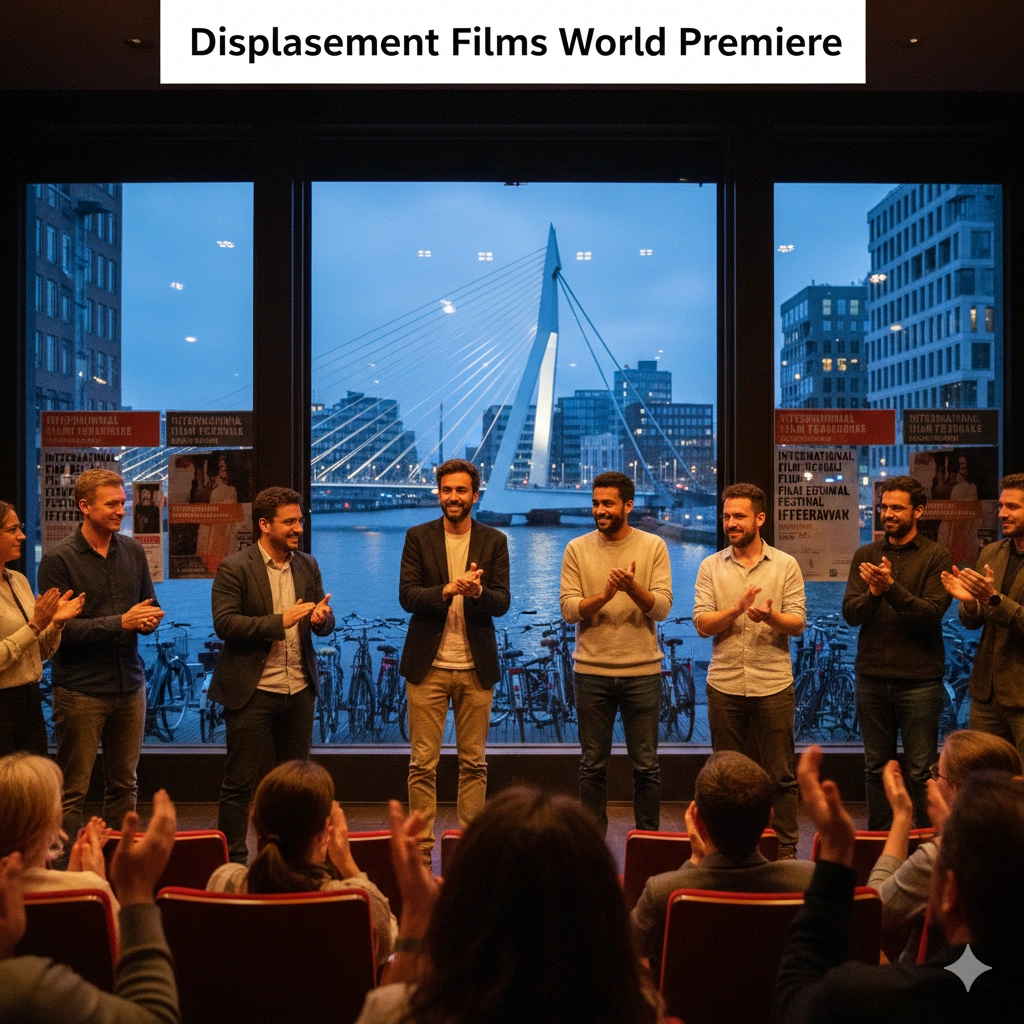
Displaced Filmmakers IFFR Spotlight Voices From Conflict Zones
The Displacement Film Fund, launched last year, provided €100,000 ($120,000) grants to five filmmakers affected by exile. Recipients include Mohammad Rasoulof (Iran), Maryna Er Gorbach (Ukraine), Mo Harawe (Somalia/Austria), Shahrbanoo Sadat (Afghanistan), and Hasan Kattan (Syria).
The fund aims to amplify silenced voices, enabling filmmakers to continue working despite forced displacement. Organizers emphasized that the initiative is designed to provide both financial support and international visibility.
Cate Blanchett, a key backer of the program, has previously highlighted the importance of storytelling for displaced communities, noting that cinema can preserve memory and advocate for justice.
Hasan Kattan Explores Exile and Memory Through Documentary
Syrian director Hasan Kattan, part of the Displaced filmmakers IFFR program, presented his 40-minute documentary “Allies in Exile,” which chronicles his journey from filming the Syrian revolution to navigating the asylum process in the United Kingdom. The film features Kattan and his friend Fadi Al Halabi, reflecting on their shared experiences and revolutionary footage captured during the uprising.
Kattan described filmmaking as a means of mental survival, stating that each frame serves as a powerful record of memory and resistance. He emphasized that storytelling helps maintain emotional and cultural ties to his homeland while raising global awareness about dictatorship and repression.
The documentary also explores the psychological toll of bureaucracy, hostility, and uncertainty faced by asylum seekers, offering an intimate and personal look at life in exile and the struggles of displaced communities.
Mo Harawe Portrays Internal Displacement and Social Judgment
Somali-Austrian director Mo Harawe premiered “Whispers of a Burning Scent,” a 28-minute film centered on a Somali wedding musician entangled in a court case that exposes his marriage. The narrative explores themes of guilt, societal judgment, and internal displacement within one’s own culture.
Harawe shot portions of the film in Somalia to help build local filmmaking infrastructure, reflecting his commitment to nurturing creative communities despite displacement. He noted that exile often forces individuals to adapt, reshaping identity and social connections.
Harawe also stressed that the fund plays a crucial role in healing, connection, and artistic continuity for displaced artists.
Cinema as Survival and Advocacy
The Displacement Film Fund underscores how cinema can function beyond entertainment. For many displaced filmmakers, storytelling is a tool for survival, advocacy, and historical documentation.
Kattan highlighted that filmmaking helps combat erasure, allowing displaced individuals to assert their narratives in a global context. Harawe echoed this sentiment, describing the responsibility of artists to speak for those whose voices are suppressed.
Festival organizers said the program seeks to bridge the gap between displaced artists and global audiences, ensuring their stories reach international platforms.
International Film Festival Rotterdam’s Role in Global Cinema
IFFR has long been known for championing independent and politically engaged cinema. By supporting displaced filmmakers, the festival reinforces its commitment to diverse voices and socially relevant storytelling.
The Hubert Bals Fund has historically backed filmmakers from underrepresented regions, and the Displacement Film Fund expands this mission by focusing on creators forced into exile.
Industry observers note that such initiatives are increasingly vital as conflicts and political repression continue to displace artists worldwide.
Broader Implications for Film and Human Rights
The premiere of these films highlights the intersection of art, migration, and human rights. Displaced filmmakers often face financial hardship, censorship, and limited access to production resources, making programs like this essential for sustaining their work.
By showcasing these films, IFFR not only provides visibility but also fosters dialogue on displacement, identity, and freedom of expression.
Conclusion
The Displaced filmmakers IFFR program marks a significant step in supporting exiled artists and preserving their voices through cinema. The five short films premiered in Rotterdam demonstrate how storytelling can endure amid exile, bureaucracy, and social upheaval.
As global displacement continues to rise, initiatives like the Displacement Film Fund offer a powerful model for how festivals and cultural institutions can support artists, promote human rights, and keep suppressed narratives alive on the world stage.
For more details & sources visit: The Hollywood Reporter
Read more on Netherland news: 360 News Orbit – Netherland