
Spain’s PP and Vox are locked in a high-stakes standoff over Extremadura coalition talks, threatening regional stability and foreshadowing national tensions ahead of 2027 elections. Vox’s surge to 16.9% vote share has emboldened demands for key ministries with budgets to push migration and gender policies, halting negotiations just before the assembly’s formation.
This clash underscores growing constraints on the centre-right PP as far-right Vox rises, complicating alliances amid polls showing a potential joint majority.
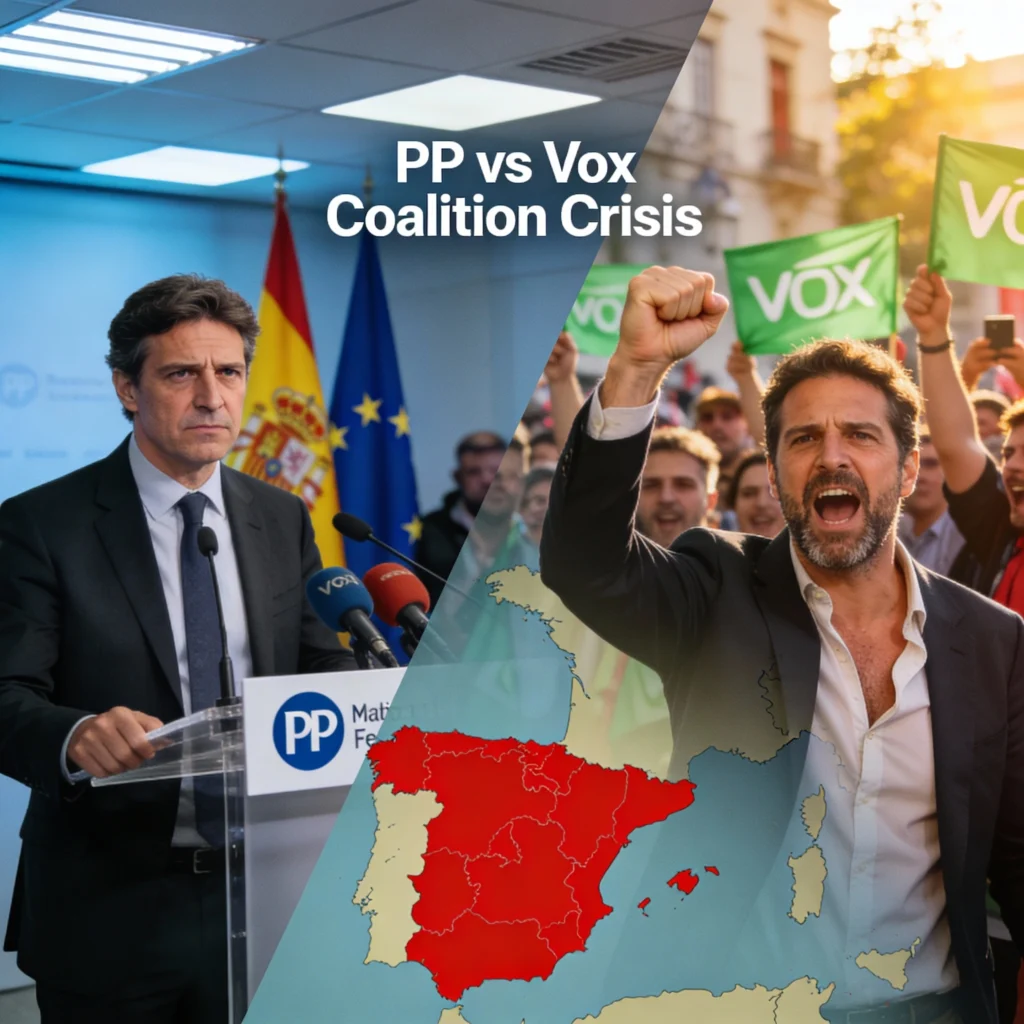
Extremadura Standoff Halts Coalition Progress
In Extremadura, Vox spokesperson José Antonio Fúster paused talks, accusing PP leader María Guardiola of refusing ministries with budgets like Agriculture to enforce the far-right agenda. Vox doubled its seats to 11 in the December 2025 election, while PP secured 29—four short of a majority—forcing reliance on Vox support.
The dispute echoes Vox’s 2024 exits from coalitions in Aragón, Valencia, and Murcia over migration rows, with Vox now threatening fresh elections if unmet. Despite PP clinching the assembly presidency, coalition math remains precarious, amplifying political risk in this Socialist former stronghold.
Guardiola’s minority government collapsed earlier over budget disputes, setting up this snap vote and renewed friction.
Vox Surge Pressures PP Nationally
Nationally, Vox polls at 18% against PP’s 31.5%, hinting at a workable majority but fraught with ideological rifts. PP leader Alberto Núñez Feijóo resists Vox’s “anti-system” tag, lacking other partners to sideline the far-right amid PSOE scandals.
Vox leader Santiago Abascal leverages regional gains to demand policy wins on immigration and gender, testing PP’s unity strategy. This dynamic previews 2026-2027 polls in multiple regions, where toxic PP-Vox relations could block budgets and governments.
Spain’s PP and Vox Influence on Policy Priorities
Spain’s PP and Vox are increasingly shaping the legislative agenda in regions where their coalition is necessary, even before formal agreements are finalized. Vox’s insistence on controlling ministries with budget authority highlights how far-right leverage can directly influence policy decisions on migration, education, and gender reforms. PP leaders must navigate these pressures carefully to avoid alienating centrist voters while maintaining coalition functionality.
Analysts note that this dynamic also affects policy timelines. Infrastructure projects, social programs, and budget approvals are now subject to negotiation between PP and Vox representatives, potentially delaying implementation. This interplay illustrates how regional gains by a smaller party can disproportionately affect governance, signaling challenges for national cohesion.
Electoral Implications of Spain’s PP and Vox Tensions
The standoff between Spain’s PP and Vox in Extremadura offers a preview of potential national election volatility. With Vox’s rising vote share, the PP faces a dilemma: align closely with a controversial partner or risk instability in regional governments. Political strategists warn that voter perception of coalition wrangling could influence turnout and party support in the 2027 general elections.
Moreover, Vox’s assertiveness may encourage other far-right or fringe parties to push for similar demands in different regions. For PP, this underscores a delicate balancing act between consolidating power and mitigating reputational risks. Observers suggest that how PP manages Vox’s influence in Extremadura could set the tone for Spain’s broader center-right strategy over the next election cycle.
Implications for National Unity Ahead
The Extremadura coalition impasse highlights how Vox’s rise constrains PP maneuvering, eroding confidence in right-wing governance predictability. PSOE’s historic losses—shedding votes equal to Vox’s gains—intensify pressure on PM Pedro Sánchez’s coalition.
For Spain’s 2027 general elections, this tests whether PP can govern without full Vox dependence, balancing voter appeal against far-right volatility. Stability hinges on compromise, as ongoing clashes risk prolonged uncertainty in key regions.
Political turbulence like Extremadura’s mirrors broader European trends, where far-right leverage challenges centre-right dominance.
For more details & sources visit: Reuters
For more updates, visit 360 News Orbit.