
Japan’s Prime Minister Sanae Takaichi has dissolved the lower house and announced a Japan snap election following just 16 months of the chamber’s term, sparking debate over timing and political strategy. The move sets a fast 16-day campaign, with voting scheduled for February 8, 2026, amid ongoing economic challenges and political scrutiny.
Analysts interpret the early election call as an attempt to capitalize on high approval ratings, limit opposition preparation, and reduce parliamentary scrutiny ahead of the upcoming Diet session.
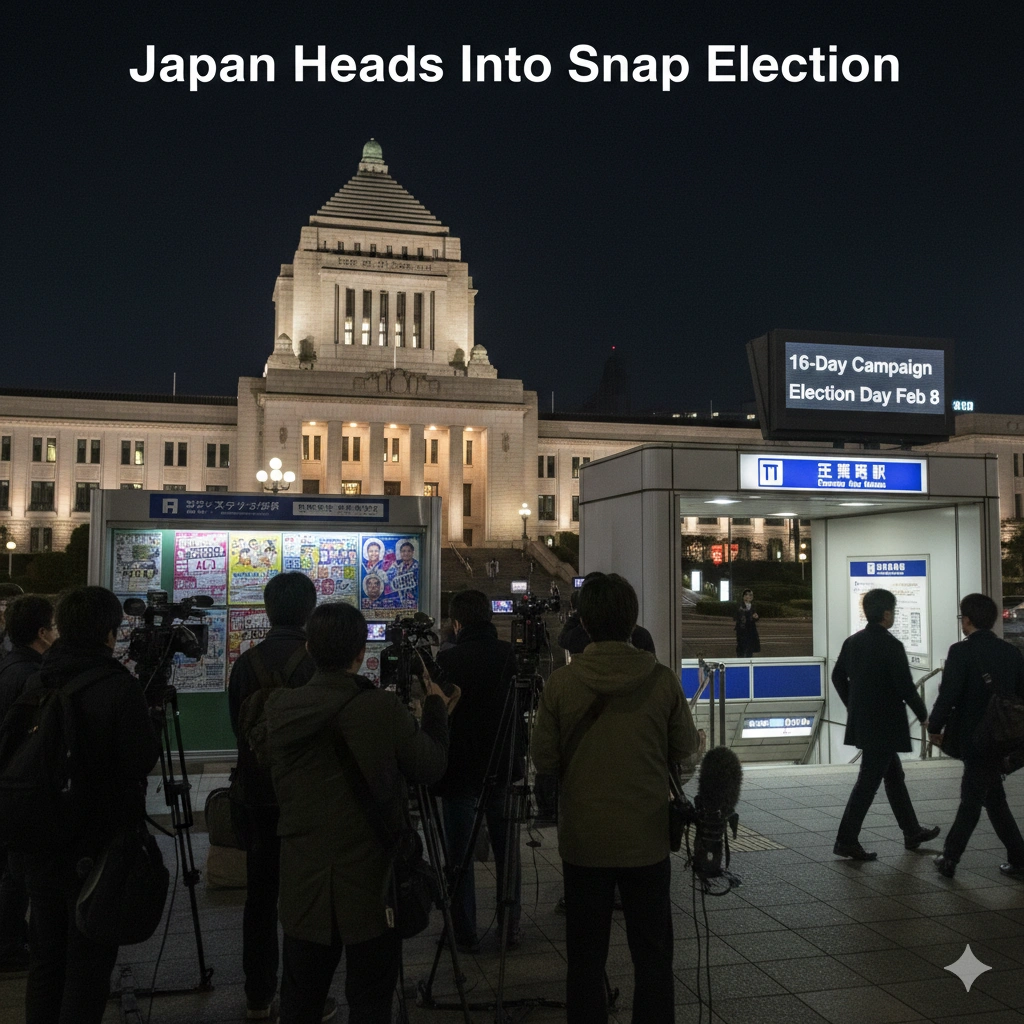
Dissolution of the Lower House and Election Timeline
The House of Representatives was officially dissolved on January 23, 2026, and campaigning began on January 27, giving parties only 16 days to organize for the Japan snap election. Voting and ballot counting are set for February 8, 2026.
This early election comes without a major legislative crisis, prompting criticism from opposition parties and segments of the public over the necessity and timing of the dissolution. Observers note that such a short campaign may favor the ruling Liberal Democratic Party (LDP) while limiting the ability of challengers to mount an effective campaign.
Political Strategy Behind the Snap Vote
Prime Minister Takaichi, who assumed office after winning LDP leadership in October 2025, is widely seen as leveraging her high approval ratings to secure a stronger electoral mandate through the Japan snap election.
Key objectives appear to include:
- Avoiding intensive questioning in the Diet over sensitive policy issues
- Preempting opposition readiness, particularly the newly formed Centrist Reform Alliance, which combines the Constitutional Democratic Party with Komeito
- Strengthening her position before tackling long-term economic and defense agendas
Political analysts argue that this strategy could shape Japan’s governance trajectory over the next term while limiting public debate on major policy decisions.
Opposition Dynamics and the Centrist Reform Alliance
The opposition coalition, the Centrist Reform Alliance, may provide a more competitive challenge than individual parties alone. By combining the Constitutional Democratic Party and Komeito, the alliance consolidates local organizational strength and parliamentary influence ahead of the Japan snap election.
This coalition is expected to:
- Pool resources and voter bases for a coordinated campaign
- Sharpen electoral competition, potentially reducing the ruling party’s advantage from a short campaign period
- Offer a counterweight in debates over defense policy, economic reform, and regional security concerns
Analysts suggest that the opposition’s ability to unify quickly will be critical to the Japan snap election outcome.
Key Policy Debates: Defense and Regional Security
The Japan snap election also highlights ongoing discussions around defense policy, particularly regarding military exports and budget expansion. Critics warn that Takaichi’s agenda may increase regional tensions, regardless of the election outcome, while supporters argue that strengthening Japan’s defense capabilities is a strategic necessity.
The election is seen not only as a test of political popularity but also as a referendum on Japan’s role in regional security and economic management.
Implications for Japan’s Political Landscape
Calling a snap election under these circumstances underscores the strategic use of parliamentary mechanisms to influence political advantage. Short campaigns can:
- Limit opposition preparation
- Concentrate media attention on ruling party messaging
- Accelerate policy approval mandates
As Japan heads to the polls, the results will shape parliamentary dynamics, defense policy debates, and economic reform initiatives for the next few years.
For more details & sources visit: CGTN
For the latest updates from Japan, visit our Japan news page.