
Germany is preparing a significant overhaul of its audiovisual policy framework with the introduction of Germany film sector streaming investment rules, requiring major streaming platforms and broadcasters to reinvest a portion of their local revenues into domestic film and television production. The move, announced ahead of the Berlin International Film Festival, positions Berlin as one of Europe’s most proactive markets in regulating global streaming giants.
Under the new rules, platforms such as Netflix, Amazon, and major television broadcasters will be required to reinvest at least 8% of the revenue they generate in Germany back into the country’s film and TV industry. The initiative is paired with a plan to nearly double state funding for domestic film production, delivering a direct stimulus to a sector facing rising costs despite strong demand.
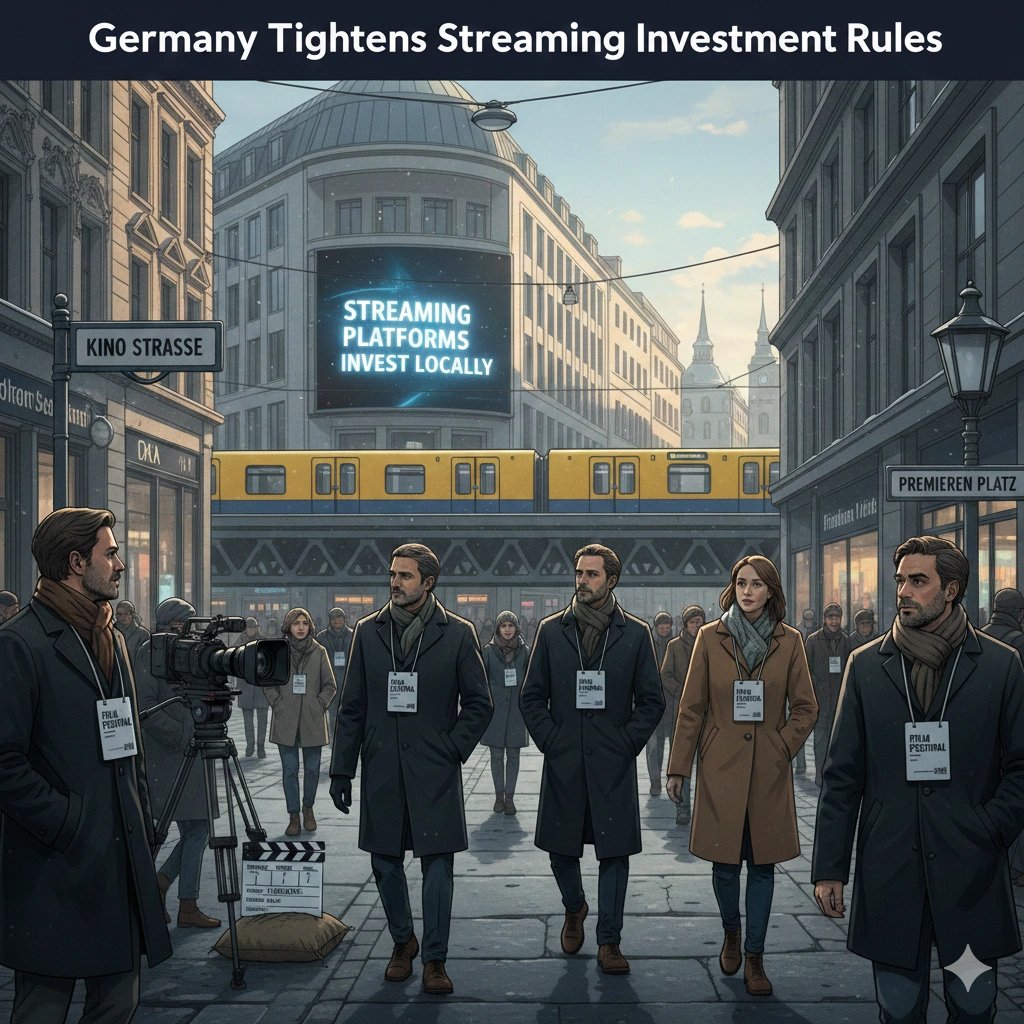
Streaming Platforms Face Mandatory Reinvestment Thresholds
According to Germany’s culture ministry, the Germany film sector streaming investment rules are designed to ensure that international streaming platforms contribute more meaningfully to the local creative economy. The regulation applies to both global streaming services and established broadcasters operating within Germany.
An incentive-based option has also been built into the framework. Companies that choose to reinvest 12% or more of their German revenues into local production will be exempt from additional regulatory obligations. These exemptions may include more complex requirements, such as mandates to produce content specifically in the German language.
Officials framed this approach as a balance between firm regulation and flexibility, encouraging deeper investment while avoiding excessive bureaucracy for companies willing to exceed the minimum threshold.
Nearly Double Film Funding to Support Jobs and Creativity
Alongside the new streaming investment rules, the German government plans to almost double public funding for the domestic film industry. The funding boost is intended to support employment, value creation, and creative output, reinforcing Germany’s position as a leading European production hub.
The culture ministry described the package as a targeted response to mounting pressures on the sector. Production companies have been grappling with higher labor costs, rising energy prices, and increased material expenses, even as streaming-driven demand for content continues to grow.
By combining mandatory reinvestment with increased public funding, Berlin aims to stabilize the industry while ensuring long-term competitiveness.
Germany Joins European Peers in Regulating Streamers
With the rollout of the Germany film sector streaming investment rules, Germany joins more than a dozen European countries that already require streaming platforms to invest in local production. Nations such as France and Italy have implemented similar policies, often credited with strengthening domestic content ecosystems and preserving cultural identity in the digital era.
European policymakers increasingly argue that global streaming services benefit significantly from national markets and should therefore contribute to sustaining local creative industries. Germany’s move aligns with broader European Union efforts to regulate digital platforms while promoting cultural diversity.
Strategic Timing Ahead of Berlin Film Festival
The announcement comes just days before Berlin hosts the Berlin International Film Festival (Berlinale), one of the world’s most prominent cinema events. The timing underscores the government’s intent to send a strong signal to filmmakers, investors, and international studios about Germany’s long-term commitment to its film and television sector.
Industry observers note that the Berlinale provides a global stage for Germany to showcase its evolving policy framework, potentially attracting new co-productions and partnerships under clearer, more supportive investment conditions.
Industry Impact and Global Implications
For streaming platforms, the Germany film sector streaming investment rules mark another step toward tighter regulation in Europe’s largest economy. While the measures increase financial obligations, the incentive structure offers flexibility and predictability, factors often valued by global media companies.
For German producers and creatives, the reforms promise greater funding certainty, expanded job opportunities, and increased local content production. If successful, the policy could help Germany compete more effectively with established European production powerhouses.
As streaming continues to reshape global entertainment, Germany’s approach reflects a growing consensus across Europe: cultural markets must adapt regulation to ensure that digital growth translates into local economic and creative benefits.
For more details & sources visit: Reuters
For the latest news from Germany, visit our Germany news page.