
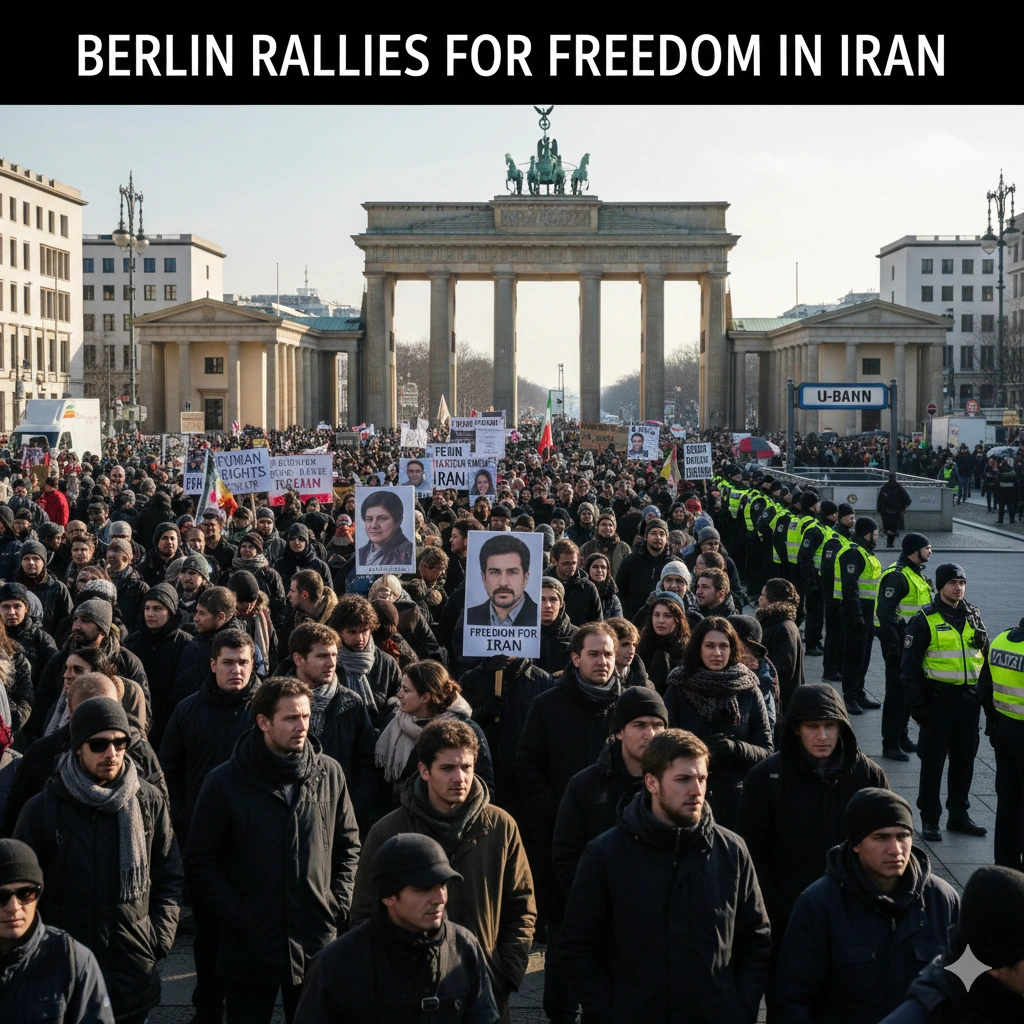
The Berlin Rally Free Iran Protest drew thousands of demonstrators to the German capital on February 7, 2026, in one of the most visible international displays of opposition to Iran’s leadership in recent months. Protesters gathered to denounce Tehran’s ruling establishment while voicing solidarity with demonstrators inside Iran who continue to face arrests, violence, and heavy restrictions on information.
According to German police estimates cited by Deutsche Welle (DW), approximately 8,000 people were present at the start of the march, with numbers increasing as the event progressed. Authorities described the rally as peaceful, deploying around 380 police officers to monitor the demonstration and ensure public safety.
Strong International Backing and Organization
Organizers of the Berlin Rally Free Iran Protest said the demonstration was supported by nearly 340 international organizations and political figures, underscoring the growing global attention surrounding Iran’s internal unrest. The rally was promoted through a coordinated campaign involving social media outreach, flyers, and newspaper advertisements, helping mobilize participants from across Germany and neighboring countries.
The scale and organization of the protest reflected sustained international concern over Iran’s handling of dissent, particularly following recent crackdowns on demonstrations inside the country. While casualty figures from those protests remain contested and difficult to independently verify due to media restrictions in Iran, the Berlin rally provided a platform for voices that are often silenced domestically.
Maryam Rajavi Imagery Prominent at the Rally
A notable feature of the Berlin Rally Free Iran Protest was the visible presence of images and symbols associated with Maryam Rajavi, described by DW as the president of the National Council of Resistance of Iran (NCRI), an opposition coalition banned in Iran. Many participants carried Iranian flags, wore “Free Iran” vests, and displayed photographs of Rajavi as a symbol of organized resistance to Tehran’s leadership.
The prominence of Maryam Rajavi’s imagery highlighted the role of Iran’s opposition groups abroad in shaping international discourse. For supporters, her image represented an alternative political vision and a focal point for mobilizing opposition beyond Iran’s borders.
Voices of Families Affected by Crackdowns
Organizers framed the demonstration as more than a political rally, emphasizing the participation of relatives of people killed or detained during Iran’s recent protest crackdowns. These personal stories added emotional weight to the event, reinforcing claims that repression inside Iran continues despite international scrutiny.
Speakers and participants called for greater global pressure on Iranian authorities, urging governments and international institutions to take stronger stances on human rights violations. Chants and placards emphasized themes of freedom, justice, and solidarity with Iranian protesters, resonating with passersby and drawing media attention.
Police Response and Public Order
German police said the Berlin Rally Free Iran Protest remained calm throughout its early stages. Authorities reported no major incidents and confirmed that the demonstration proceeded as planned. The presence of hundreds of officers was described as precautionary, reflecting Germany’s standard approach to large-scale political gatherings rather than any specific security threat.
DW’s live coverage noted that as the rally continued, more participants joined, reinforcing its status as one of the largest Iran-focused protests held in Berlin in recent years.
Global Implications of the Berlin Rally
The Berlin Rally Free Iran Protest illustrates how opposition to Iran’s leadership is increasingly expressed on international stages, particularly in European capitals. Such demonstrations not only amplify the voices of Iranian dissidents but also keep Iran’s domestic situation in the global media spotlight.
For activists, the rally served as a reminder that protests inside Iran are being watched and echoed abroad. For policymakers, it underscored persistent calls for accountability and reform amid ongoing unrest.
As Iran continues to restrict information and suppress dissent, international rallies like the one in Berlin are likely to remain a key outlet for opposition voices — and a barometer of global concern.
For more details & sources visit: Deutsche Welle (DW)
For the latest news from Germany, visit our Germany news page.