
Algeria economic diversification and digitalization efforts have received high praise from IMF Managing Director Kristalina Georgieva, who highlighted the country’s progress in improving the investment climate and boosting non-hydrocarbon exports.
Speaking to Algerian media, Georgieva commended reforms designed to streamline bureaucracy, improve investor confidence, and modernize public administration. She noted that Algeria has successfully implemented new Investment and Land laws, established the Algeria Agency for Investment Promotion (AAPI), and accelerated digitalization in government services.
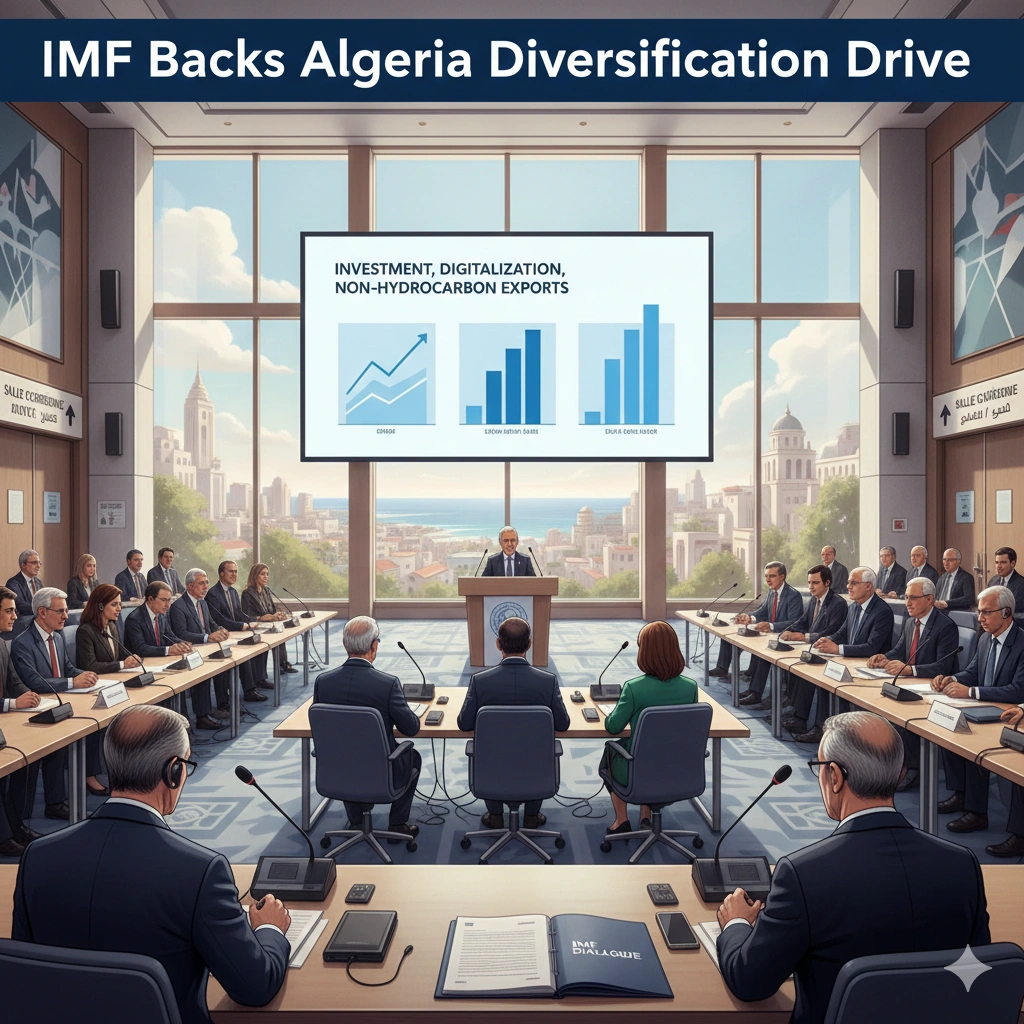
Rising Non-Hydrocarbon Exports Signal Progress
According to Georgieva, Algeria’s efforts have contributed to a sharp increase in non-hydrocarbon exports, which have more than doubled over the past five years. This trend signals a meaningful shift toward a diversified economic model less reliant on oil and gas revenues.
The IMF chief highlighted that the post-pandemic recovery in Algeria has been robust, with resilient growth in 2025 fueled by substantial public investment, easing inflation, and focused spending on digital, transport, and energy infrastructure.
Opportunities from Technology and Renewables
Looking forward, Georgieva identified several opportunities for Algeria economic diversification, including:
- Harnessing technological change and innovation to enhance competitiveness.
- Developing renewable energy sources such as solar power and green hydrogen.
- Upgrading ports, railways, and logistics infrastructure to increase trade efficiency and integration into global value chains.
These initiatives, she argued, position Algeria to benefit from shifting global supply chains while enhancing resilience to geopolitical and trade risks.
Algiers Economic Conference: Strengthening Partnerships
Georgieva framed the upcoming Algiers economic conference as a timely platform for regional cooperation. She emphasized that stronger collaboration could reinforce Algeria’s economic resilience and deepen the IMF’s partnership with Algerian authorities.
The conference is expected to showcase strategies supporting Algeria’s diversification drive, including policies to attract foreign investment, digitalize government services, and expand non-oil sectors.
Strengthening the Private Sector for Algeria Economic Diversification
A critical component of Algeria economic diversification is the growth of the private sector. By encouraging entrepreneurship, supporting small and medium-sized enterprises (SMEs), and simplifying business registration processes, Algeria can foster a more dynamic and resilient economy. These measures not only create jobs but also reduce dependence on the hydrocarbon industry.
Investment incentives and partnerships with international firms are further enhancing opportunities for private companies to contribute to economic diversification. As the private sector expands, it will play a pivotal role in introducing innovation, attracting foreign investment, and integrating Algeria into global value chains.
Education and Workforce Development
Human capital development is key to sustaining Algeria economic diversification over the long term. Modernizing education, emphasizing STEM fields, and providing vocational training programs are vital for equipping the workforce with skills needed in emerging industries like digital services, renewables, and advanced manufacturing.
Moreover, initiatives to improve access to higher education and technical training encourage a culture of innovation and problem-solving. By aligning workforce development with market demands, Algeria ensures that its citizens can actively participate in and benefit from the country’s diversified economy.
Boosting Regional Trade and Investment Links
Expanding regional trade partnerships is an important strategy for Algeria economic diversification. By strengthening ties with North African, European, and Middle Eastern markets, Algeria can access new consumer bases and investment opportunities while reducing reliance on traditional oil and gas exports.
Infrastructure improvements in ports, logistics, and rail networks will further facilitate cross-border trade, allowing Algerian companies to participate more efficiently in regional supply chains. Such connectivity also attracts multinational investors seeking a strategic entry point into the broader African and Mediterranean markets.
Sustainable Development and Green Growth Initiatives
Sustainability forms a core part of Algeria’s approach to economic diversification. Beyond investing in renewable energy like solar and green hydrogen, the country is increasingly promoting eco-friendly projects, green technologies, and energy-efficient industries that can generate long-term economic value.
By integrating environmental goals into its diversification strategy, Algeria can reduce ecological risks while creating new sectors for economic growth. Green initiatives also enhance the country’s appeal to international investors looking to support sustainable and socially responsible projects.
Conclusion: Algeria on the Path to Sustainable Growth
With IMF backing, Algeria is advancing a comprehensive economic diversification strategy that leverages technology, renewables, and modern infrastructure. The combined push for digitalization and expansion beyond hydrocarbons positions Algeria as a rising player in regional trade and investment.
For more details & sources visit: AL24 News (reporting an interview with APS)
For more updates about Algeria, visit the Algeria News Section.