
January 24, 2026
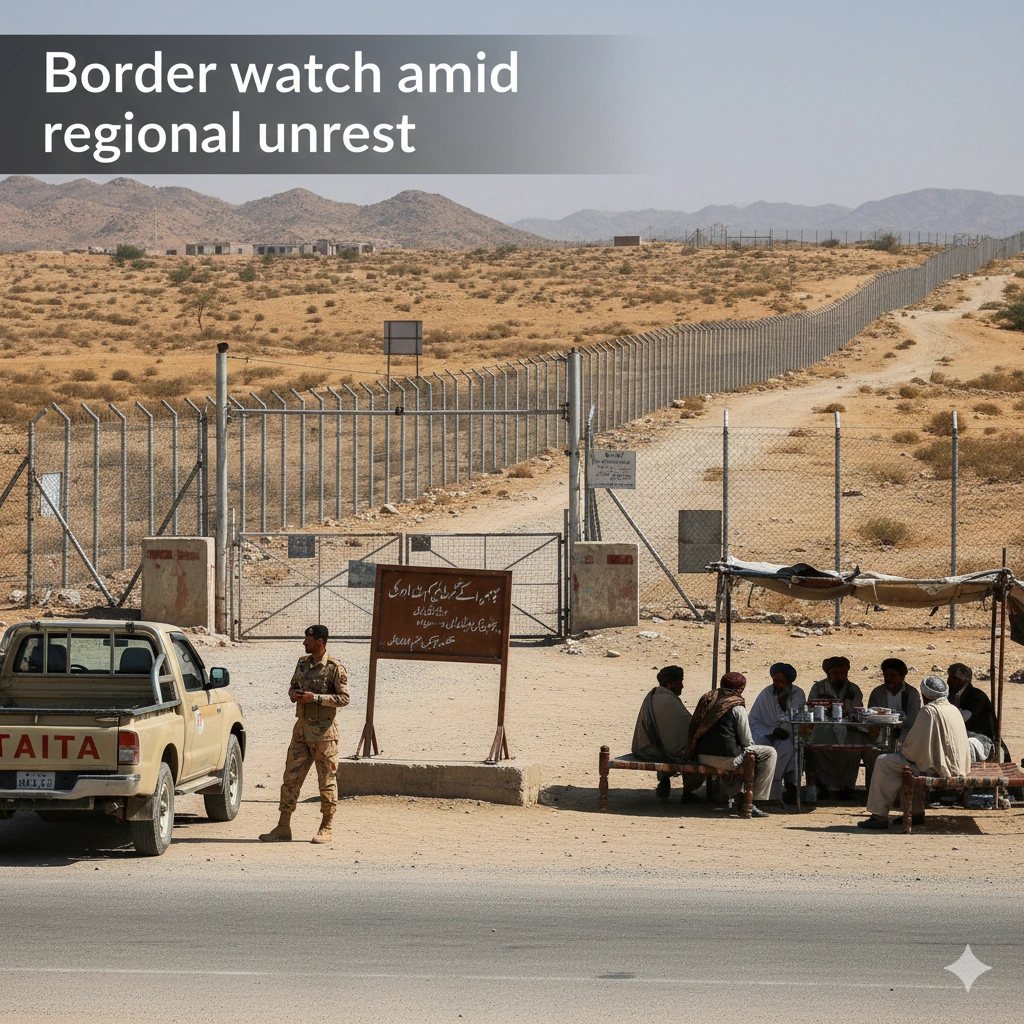
Iran protests Pakistan border security concerns have intensified as escalating unrest inside Iran raises alarms in Islamabad over economic spillovers, supply-chain disruptions, and mounting security risks along the shared frontier. A recent South Asian Voices analysis warns that protests driven by Iran’s deepening economic crisis could quickly destabilize border regions and worsen inflationary pressures inside Pakistan.
What began as demonstrations over Iran’s collapsing economy—marked by food inflation exceeding 70 percent and a rapidly depreciating rial—has evolved into sustained, nationwide anti-government protests. Tehran’s response has relied heavily on force, including mass arrests, internet shutdowns, and strict security measures. Analysts caution that prolonged instability could have direct and indirect consequences for Pakistan unless preventive steps are taken.
Iran’s Economic Collapse and Inflation Spillovers
At the core of the unrest is Iran’s severe economic deterioration. Long-standing sanctions, fiscal mismanagement, and currency weakness have sharply reduced purchasing power, pushing essential goods beyond the reach of many households. South Asian Voices notes that this economic distress has transformed localized protests into broader political mobilization.
For Pakistan, the implications are immediate and tangible. Border communities—particularly in Balochistan—depend heavily on cross-border commerce, much of it informal or barter-based. Iranian fuel, food items, and electricity help stabilize prices in these regions. Disruptions caused by unrest could lead to:
- Sharp fuel shortages in border districts
- Sudden price spikes for food and essentials
- Increased inflationary pressure nationwide
With Pakistan already managing economic fragility, any sustained shock from Iran could amplify domestic inflation and strain public finances.
Iran Protests Pakistan Border Security Risks
A central concern highlighted in the analysis is Iran protests Pakistan border security vulnerability along the roughly 565-mile Iran–Pakistan border. The frontier runs through remote and historically under-governed terrain, linking Iran’s Sistan-Balochistan province with Pakistan’s Balochistan, both regions facing long-standing security challenges.
The report warns that instability could be exploited by:
- Militant and insurgent networks
- Smuggling and trafficking groups
- Criminal organizations operating across porous crossings
Any weakening of Iranian state control in border areas could increase cross-border movement of armed actors, placing additional pressure on Pakistan’s security forces and intelligence agencies.
Worst-Case Scenario: Regional Security Vacuum
South Asian Voices outlines a worst-case scenario in which prolonged unrest or political breakdown in Tehran creates a security vacuum. Such a situation could trigger:
- Refugee flows into Pakistan
- Expansion of militant safe havens
- Greater coordination challenges for border enforcement
This would significantly complicate Pakistan’s counterterrorism and border management efforts, particularly at a time when regional security dynamics remain fragile.
Domestic Political and Sectarian Sensitivities
Beyond physical security and economics, Iran protests Pakistan border security concerns extend into the domestic political arena. Pakistan’s sizeable Shia population creates sensitivities that could be inflamed by prolonged unrest or external intervention in Iran.
The analysis cautions that unmanaged narratives could lead to:
- Street mobilization linked to regional developments
- Heightened sectarian rhetoric
- Political polarization within Pakistan
Islamabad is urged to monitor internal dynamics closely, engage community leaders, and ensure balanced messaging to prevent spillover effects.
Why Islamabad Must Act Proactively
The overarching message is clear: Pakistan cannot afford a reactive posture. Iran’s instability presents interconnected economic, political, and security risks that require early planning and coordination.
Recommended steps include:
- Strengthening border surveillance and management
- Preparing contingencies for fuel and trade disruptions
- Coordinating diplomatically to manage regional fallout
- Monitoring domestic political sentiment proactively
As uncertainty deepens across the region, Pakistan’s preparedness will be critical to maintaining internal stability.
Source: South Asian Voices – “Iran Protests Raise Pakistan Alarm Over Border Security and Inflation Shockwaves”
For more news, visit 360 News Orbit