
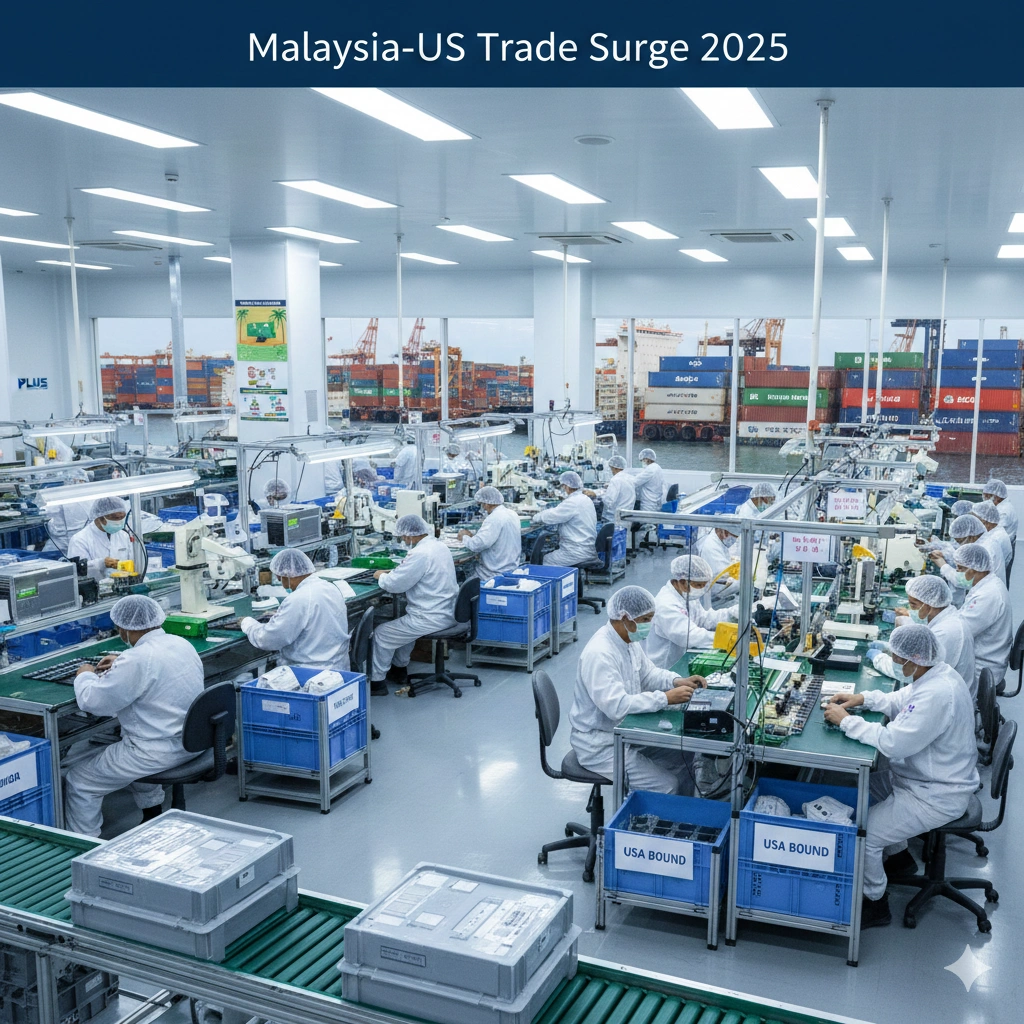
Malaysia has emerged as a key ASEAN exports powerhouse to the United States, with trade data through October 2025 showing imports from Malaysia reaching US$53.9 billion compared to US exports to Malaysia at US$26.4 billion. This gap has resulted in a Malaysia US trade deficit of US$27.5 billion, reflecting strong bilateral ties in electronics, machinery, and other high-value products.
The trade surge highlights Malaysia’s strategic role in global manufacturing networks. As supply chains diversify away from concentrated risks, Malaysia’s logistics and industrial strengths have attracted international firms targeting North American demand, solidifying its position as a critical hub in the ASEAN region.
Monthly Trade Patterns Highlight Consistent Growth
Bilateral trade between Malaysia and the US has shown steady monthly patterns in 2025. US exports to Malaysia averaged between US$2.1 billion and US$2.8 billion, while Malaysian shipments to the US ranged from US$4.4 billion to US$5.6 billion per month.
This consistency positions the US as a top market, accounting for approximately 15 percent of Malaysia’s total exports. Malaysia’s overall trade volume has topped US$702 billion, underscoring its growing integration into global commerce and the resilience of its export sector.
Malaysia’s High-Value Exports to the US
Malaysia’s exports to the United States focus on high-value electronics, electrical equipment, semiconductors, machinery, and medical products. Leveraging its well-established production networks for telecoms and healthcare, Malaysia has positioned itself as a reliable supplier of complex manufactured goods rather than raw commodities.
The rise in exports reflects robust manufacturing ties and highlights the country’s role in supporting global value chains. Investors and trade partners increasingly view Malaysia as a premium ASEAN hub, often integrating inputs from the region for re-export to North America.
US Exports to Malaysia Support Industrial Growth
In return, the United States supplies Malaysia with machinery, aerospace parts, chemicals, and agricultural goods that strengthen the nation’s manufacturing base. This exchange goes beyond simple trade, creating an interdependent flow of goods that benefits both economies.
By supplying equipment and inputs, the US supports Malaysia’s production capacity while maintaining strong demand for its own exports. This mutual reliance reinforces the stability of the Malaysia US trade relationship and promotes long-term economic collaboration.
Supply Chain Diversification Drives Trade Expansion
The trade expansion stems from global supply chain diversification, as companies seek to reduce risk from over-reliance on a single region. Malaysia’s strategic location, robust infrastructure, and industrial expertise have made it a preferred destination for firms targeting North American markets.
Within ASEAN, Malaysia leads alongside Vietnam and Thailand in high-value, premium manufacturing segments. Regional integration allows for efficient sourcing and production, further enhancing the country’s competitive advantage in global trade networks.
Implications for Foreign Investors
For foreign investors, the Malaysia US trade deficit signals both reliable demand and strong investment opportunities. The sustained gap demonstrates Malaysia’s capacity to produce and export goods consistently, making it a favorable investment hub for production facilities tied to US value chains.
Companies looking to leverage Malaysia’s manufacturing ecosystem can benefit from access to both the US market and broader ASEAN supply networks, positioning themselves strategically in high-value sectors such as electronics, semiconductors, and medical devices.
Regional Competitiveness and Trade Policy
The Malaysia US trade deficit also reflects the country’s growing regional competitiveness within ASEAN. Malaysia’s ability to maintain a strong export flow to the US highlights the effectiveness of its trade policies, investment incentives, and industrial modernization programs.
Policymakers are increasingly leveraging these advantages to negotiate favorable trade agreements and attract foreign investors. Continued emphasis on innovation, infrastructure, and workforce skill development ensures that Malaysia can sustain its position as a leading ASEAN exporter to the US for years to come.
Future Outlook for Malaysia US Trade Deficit
Looking ahead, the Malaysia US trade deficit is expected to remain significant, supported by expanding sectors such as electronics, semiconductors, and medical devices. As global supply chains continue to shift, Malaysia’s strategic location and manufacturing expertise will help meet rising North American demand.
Analysts suggest that this persistent trade deficit can be viewed positively, as it underscores robust economic ties, growing industrial capacity, and opportunities for both Malaysian exporters and foreign investors seeking reliable engagement with US markets.
For more details & sources visit: ASEAN Briefing