
Iraq’s Shia Coordination Framework has reaffirmed its backing of former prime minister Nouri al-Maliki as its candidate for the premiership, dismissing warnings from U.S. President Donald Trump that American financial support could be withdrawn if Baghdad deepens ties with Iran-aligned figures.
The stance, announced on January 31, 2026, underscores Iraq’s growing resistance to external pressure and highlights the fragile balance Baghdad is attempting to maintain between Washington and Tehran at a critical political moment.
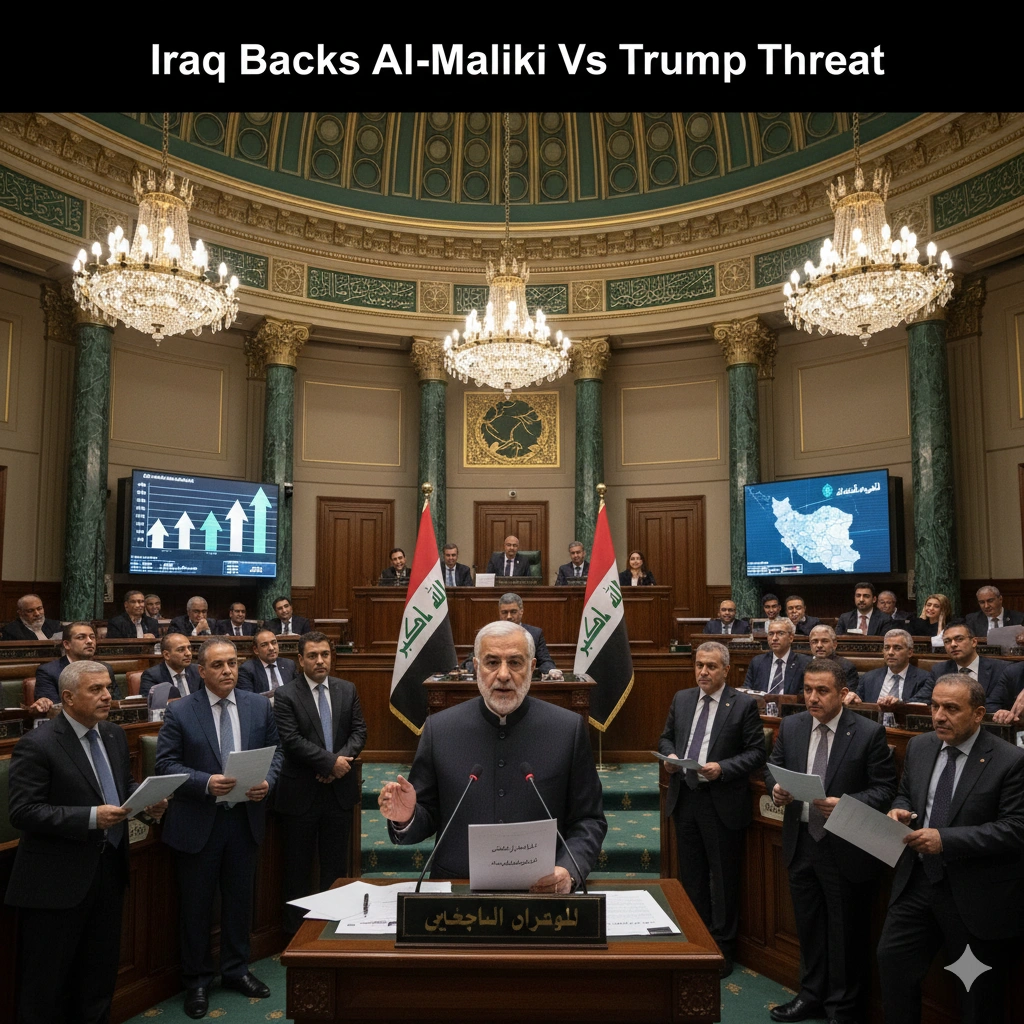
Iraq’s Shia Coordination Framework Rejects U.S. Intervention
The Iraq’s Shia Coordination Framework, the dominant bloc within Iraq’s parliament, described Trump’s comments as unconstitutional foreign interference, emphasizing that the selection of a prime minister is strictly a domestic constitutional matter.
Senior figures within the bloc stressed that Iraq’s political process cannot be dictated by external powers, regardless of financial or diplomatic leverage. The statement reflects a broader sentiment among Shiite factions that national sovereignty must take precedence, even as Iraq remains economically and politically intertwined with the United States.
Al-Maliki Pushes Back on Trump’s Aid Warning
Nouri al-Maliki, 75, categorically rejected the notion that foreign threats could influence Iraq’s leadership choice. He reiterated that he will not withdraw his candidacy, stating that Iraq’s future leadership must be determined solely by Iraqi institutions and voters’ representatives.
Trump’s warning reportedly centered on the potential withdrawal of U.S. assistance and increased scrutiny of Iraqi oil revenues held in New York-based financial institutions, a mechanism established after the 2003 U.S.-led invasion to protect Iraq’s oil income.
Washington’s Strategy: Countering Iran’s Influence
The dispute unfolds against the backdrop of Trump’s renewed push to curb Iran-linked influence in Iraq. His administration has signaled a tougher approach toward Shiite militias and political factions aligned with Tehran, viewing them as destabilizing actors in the region.
By invoking aid and financial oversight, Washington appears to be leveraging economic tools to influence Iraq’s political direction — a tactic that has drawn sharp criticism from Baghdad’s Shiite leadership, who argue it undermines Iraqi sovereignty.
Al-Maliki’s Controversial Legacy Resurfaces
Al-Maliki’s candidacy revives memories of his 2006–2014 tenure, a period marked by:
- Deepening Sunni–Kurd tensions
- Widespread corruption allegations
- The rise of ISIS, which ultimately forced his resignation
Despite this record, al-Maliki remains a powerful figure as head of the State of Law coalition, maintaining strong organizational networks and close ties with Tehran. Supporters within the Shia Coordination Framework argue that his experience and political weight are assets at a time of regional instability.
A Broader U.S.–Iran Tug of War in Baghdad
The standoff illustrates Iraq’s ongoing struggle to navigate between its two most influential external actors. While the United States seeks to limit militia power and reduce Iran’s footprint, Shiite factions are prioritizing political autonomy and resisting what they perceive as coercive diplomacy.
This confrontation also feeds into wider regional tensions, as Iraq remains a key arena where U.S.–Iran rivalry plays out through political, economic, and security channels.
Internal Dynamics Within Iraq’s Shia Coordination Framework
Beyond its public defiance of U.S. pressure, Iraq’s Shia Coordination Framework is also navigating complex internal negotiations among its constituent parties. While unified in backing al-Maliki for now, the bloc includes diverse Shiite factions with differing priorities on governance, economic reform, and relations with regional actors.
These internal dynamics suggest that the endorsement is as much about preserving Shiite political cohesion as it is about supporting a single individual. Maintaining unity within the framework is viewed as essential to preventing fragmentation that could weaken Shiite influence in parliament and open space for rival alliances.
Regional Implications of the Framework’s Political Stance
The firm position taken by Iraq’s Shia Coordination Framework is being closely watched across the Middle East, particularly by neighboring states wary of Iraq becoming further entangled in regional power struggles. Gulf countries and regional investors are assessing whether Baghdad’s political direction could shift economic partnerships or recalibrate diplomatic engagement.
At the same time, the framework’s stance signals to Tehran that Shiite political forces in Iraq remain resilient against Western pressure, potentially reinforcing Iran’s confidence in its regional allies. This could have ripple effects on regional diplomacy, especially as Iraq continues to balance its role as a mediator amid broader geopolitical tensions.
What This Means for Iraq’s Political Future
With the Shia Coordination Framework commanding a parliamentary majority, its endorsement of al-Maliki significantly shapes the government formation process. However, continued friction with Washington could complicate Iraq’s access to financial systems, foreign investment, and diplomatic support.
As Iraq edges closer to finalizing its next government, the question remains whether Baghdad can preserve sovereignty without triggering economic or political fallout — or whether external pressures will further entrench internal divisions.
For more details & sources visit: Al Jazeera