
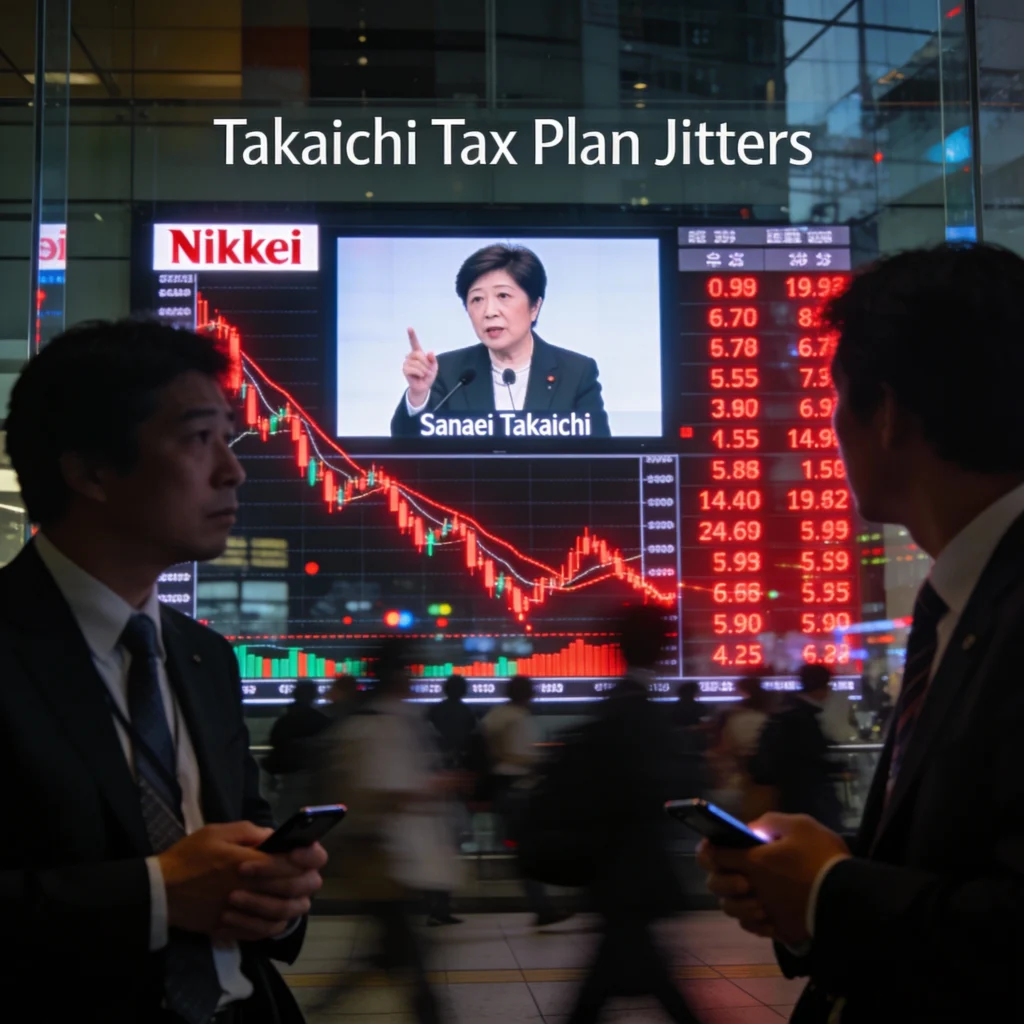
Japan PM Takaichi tax pledge has sent ripples through global financial markets following her announcement to suspend the 8% consumption tax on food and non-alcoholic beverages if she wins the snap election scheduled for February 8, 2026. Investors reacted sharply, pushing 40-year Japanese government bond yields to a record 4%, reflecting fears over fiscal instability in a country already burdened with high public debt.
The Japan PM Takaichi tax pledge comes amid ongoing scrutiny of Japan’s debt-to-GDP ratio, which currently exceeds 230%, raising concerns about the long-term sustainability of government finances. Analysts note that while the proposal is aimed at providing relief to households, it also introduces significant uncertainty in financial markets, particularly regarding how the lost revenue will be funded.
Details of Takaichi’s Tax Suspension Plan
Prime Minister Sanae Takaichi proposed a two-year suspension of the consumption tax on food and non-alcoholic drinks, potentially resulting in an annual revenue shortfall of 5 trillion yen ($31.7 billion). The plan aims to support households while appealing to voters ahead of the election, positioning Takaichi as a reform-focused leader.
While she suggested funding the measure through a review of government expenditures and existing subsidies rather than issuing new deficit bonds, the plan lacked detailed implementation strategies. This ambiguity heightened investor anxiety, with concerns that fiscal discipline could weaken and Japan’s debt trajectory may worsen.
Market Reactions and Bond Sell-Off
The announcement triggered a sharp sell-off in Japan’s long-term government bonds, pushing the 40-year bond yield to an unprecedented 4%. The move also had ripple effects on global markets, briefly driving up US Treasury yields, underscoring the sensitivity of international investors to changes in Japanese fiscal policy.
Market participants cited a combination of factors behind the volatility: Japan’s already high debt, the recent massive stimulus measures, and uncertainties around funding the proposed tax suspension. The situation illustrates how domestic election pledges, such as the Japan PM Takaichi tax pledge, can quickly impact global financial stability.
Context: Japan’s Fiscal Position
The tax pledge follows Japan’s 21.3 trillion yen stimulus package approved in November 2025, the largest since the COVID-19 pandemic. While the stimulus aimed to boost economic growth and consumer spending, it added to concerns over Japan’s debt sustainability. Analysts note that combining the stimulus with a potential 5 trillion yen tax revenue loss could exacerbate fiscal pressures unless offset by spending cuts or alternative revenue measures.
Central bank observers have also raised concerns that heightened market volatility may complicate monetary policy normalization, especially as Japan attempts to balance growth support with inflation targets.
Political Strategy Behind Japan PM Takaichi Tax Pledge
Beyond fiscal concerns, the Japan PM Takaichi tax pledge is a calculated political move aimed at securing voter support ahead of the February 8 snap election. By targeting the consumption tax on essential items like food and non-alcoholic beverages, Takaichi is appealing to households facing rising living costs, positioning herself as a leader attentive to citizens’ daily financial burdens.
Political analysts suggest that such pledges often carry dual objectives: addressing voter needs while signaling reform-oriented leadership. The tax suspension could also serve as a bargaining chip in broader policy discussions with the legislature and party allies, illustrating how domestic fiscal announcements can carry strategic weight beyond their immediate economic impact.
Investor Sentiment and Long-Term Fiscal Risks
The Japan PM Takaichi tax pledge has intensified scrutiny among global investors regarding Japan’s long-term fiscal health. While short-term market reactions focused on bond yield spikes, economists caution that prolonged uncertainty could influence foreign investment patterns, particularly in government debt markets.
Furthermore, sustained questions about funding mechanisms for the proposed tax suspension highlight the delicate balance between political promises and fiscal responsibility. Investors remain alert to how Takaichi’s government plans to offset the estimated 5 trillion yen revenue gap without undermining confidence in Japan’s fiscal management, emphasizing the interconnectedness of domestic policy and international market stability.
Conclusion
Prime Minister Sanae Takaichi’s tax pledge is more than a domestic electoral promise—it has become a key global financial event. By proposing a suspension of the food consumption tax, Takaichi has created immediate market turbulence, raising questions about Japan’s fiscal trajectory and debt sustainability.
As election day approaches, the pledge will remain a focal point for both investors and policymakers, with potential implications for Japan’s economy, bond markets, and global financial stability. The situation underscores how domestic fiscal policy in major economies can reverberate across international markets in today’s interconnected financial system.
For more details & sources visit: Al Jazeera
For the latest updates from Japan, visit our Japan news page.