
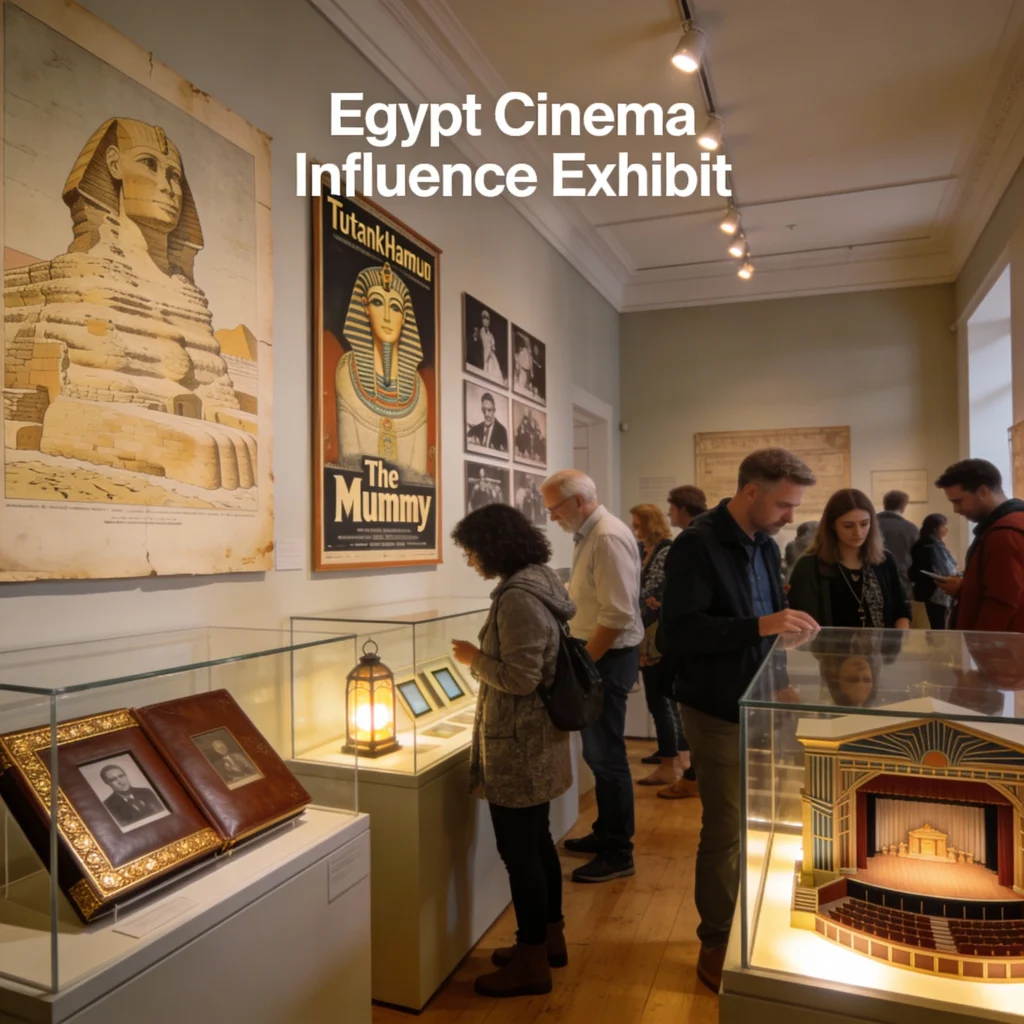
The Egypt on Screen exhibition, at the Bill Douglas Cinema Museum in Exeter, highlighting over 200 years of Egypt’s influence on global cinema. The exhibition, launched shortly after the opening of the Grand Egyptian Museum, offers visitors a comprehensive exploration of Egyptian culture as represented in film, cinema architecture, and artistic memorabilia.
Curated to combine historical artwork with cinematic history, the exhibition demonstrates how Egypt’s landscapes, mythology, and iconic figures have inspired filmmakers and audiences worldwide, from early sketches to blockbuster Hollywood productions.
Historic Lithographs and Early Cinema
A central highlight of the Egypt on Screen exhibition is the collection of lithographs by David Roberts from the 1840s, capturing detailed sketches of the Sphinx and Cairo prior to the invention of photography. These works offer a rare historical perspective on Egypt, bridging fine art and early cinematic imagination.
In addition, the exhibition showcases lantern slides from “Le Sphinx” (1896) and a variety of cinema architectural highlights, including Art Deco Egyptian-style cinemas such as the Streatham Astoria. These elements reveal the ways in which Egyptian aesthetics influenced theater design and early film presentation across Europe.
Iconic Films and Memorabilia
The Egypt on Screen exhibition features memorabilia from some of the most celebrated cinematic interpretations of Egyptian history. Highlights include programs from classic films like “The Ten Commandments” and “Caesar and Cleopatra”, as well as a royal screening program and a Cleopatra-themed matchbook. Modern interpretations, including “The Mummy” series and “Raiders of the Lost Ark”, demonstrate the continued fascination with Egyptian themes in contemporary cinema.
Visitors can also explore the Bill Douglas Egypt photo album, which addresses representation issues and the evolving depiction of Egyptian actors in film. This curated collection provides context for how cinema has shaped—and sometimes distorted—public perceptions of Egyptian culture over time.
Architecture, Art, and Cultural Impact
Beyond film artifacts, the Egypt on Screen exhibition highlights the interplay between architecture and cinema. From Art Deco cinemas to ornate theater facades inspired by Egyptian motifs, the display illustrates how Egypt’s visual culture shaped global cinematic spaces.
The exhibition also draws attention to broader cultural and artistic trends, showing how Egypt inspired designers, filmmakers, and audiences for over two centuries. By connecting early sketches, architectural influences, and film history, the exhibition underscores Egypt’s lasting impact on the cinematic imagination.
Visiting the Egypt on Screen Exhibition
The Egypt on Screen exhibition runs from January 30 until May 2026 at the Bill Douglas Cinema Museum in Exeter. Visitors can explore the exhibition in person, while online resources provide remote access for those unable to attend.
This exhibition offers an unparalleled opportunity for film enthusiasts, historians, and students to trace the relationship between Egyptian culture and cinema, from historical sketches and lantern slides to blockbuster films and contemporary reinterpretations.
Conclusion
The Egypt on Screen exhibition at Exeter’s Bill Douglas Cinema Museum is a landmark showcase that celebrates the profound influence of Egyptian culture on cinema. Through lithographs, cinema architecture, film memorabilia, and photographic archives, the exhibition demonstrates how Egypt has inspired filmmakers, artists, and audiences for over 200 years. Whether exploring early cinema or modern blockbusters, visitors gain insight into the enduring fascination with Egypt on screen and its cultural significance worldwide.
For more details & sources visit: University of Exeter
For the latest updates from Egypt, visit our Egypt news page.