
The Algeria forced return of Tunisian asylum seeker Seifeddine Makhlouf has sparked strong international condemnation, with Amnesty International calling the move a serious violation of international law. Despite being officially registered as an asylum seeker with the United Nations High Commissioner for Refugees (UNHCR), Makhlouf was deported to Tunisia without a risk assessment, legal safeguards, or the right to appeal.
Human rights organizations warn that this action undermines the principle of non-refoulement, a cornerstone of international refugee protection, and sets a dangerous precedent for political dissidents seeking safety in neighboring countries.
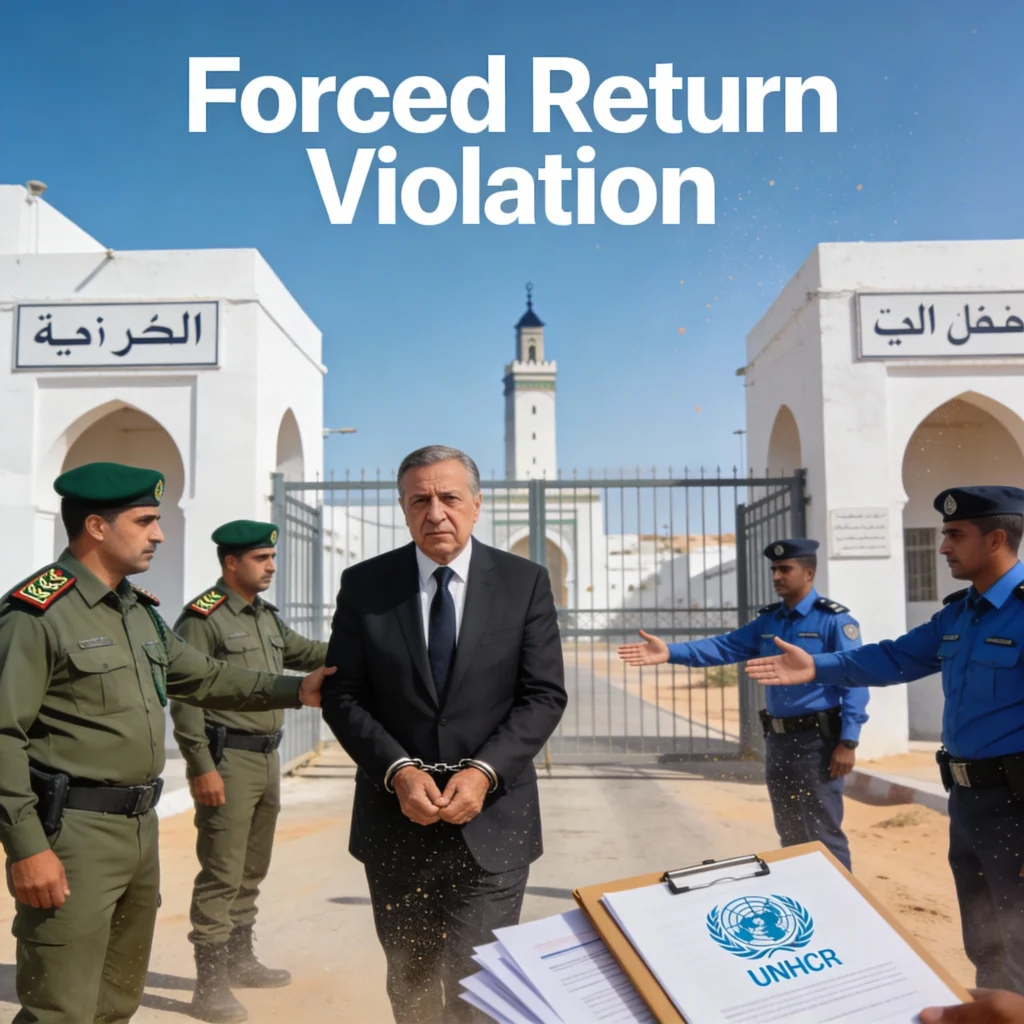
Who Is Seifeddine Makhlouf?
Seifeddine Makhlouf is a former Tunisian parliamentarian, leader of the Al Karama political coalition, and a prominent critic of President Kais Saied’s administration. Following Tunisia’s political crisis in 2024—marked by the dissolution of parliament, revocation of parliamentary immunity, and increased use of military courts against civilians—Makhlouf fled to Algeria in search of protection.
In Tunisia, Makhlouf had been convicted by a military court, a process widely criticized for failing to meet international standards of fair trial and civilian legal protections. Fearing arbitrary detention and politically motivated prosecution, he sought asylum under international law.
Algeria Forced Return of Tunisian Asylum Seeker: What Happened?
On January 18, 2026, Algerian authorities deported Makhlouf to Tunisia, despite his active UNHCR asylum registration. According to Amnesty International, the deportation occurred:
- Without an individual risk assessment
- Without access to UNHCR consultations
- Without legal appeal rights
- Without transparency regarding the legal basis of removal
Earlier, Makhlouf had served a three-month prison sentence in Algeria for illegal entry. Instead of being released or granted due asylum procedures afterward, he was placed in administrative custody, where officials allegedly prevented his lawyers from securing UNHCR access.
Why Amnesty International Calls It a Non-Refoulement Violation
Amnesty International has explicitly labeled the deportation as unlawful refoulement—the forced return of an individual to a country where they face a real risk of persecution, torture, or other serious human rights abuses.
Key Risks Makhlouf Faces in Tunisia
- Extended arbitrary detention
- Politically motivated prosecutions
- Unfair trials in military courts
- Targeting for political opposition
Under international refugee law, including the 1951 Refugee Convention and the Convention Against Torture, states are prohibited from returning individuals to such conditions—regardless of migration status.
Legal and Human Rights Implications for Algeria
The Algeria forced return of a Tunisian asylum seeker raises broader concerns about asylum procedures and human rights compliance in the region. By ignoring UNHCR protections, Algeria risks:
- Violating international treaties it has ratified
- Undermining regional refugee protection systems
- Sending a chilling message to other political dissidents
- Weakening cooperation with international humanitarian bodies
Amnesty International has urged Algerian authorities to publicly disclose the legal justification for Makhlouf’s deportation and to establish clear safeguards preventing future removals without protection reviews.
Growing Regional Crackdown on Political Dissent
Makhlouf’s case is not isolated. Across North Africa, human rights groups report a pattern of shrinking civic space, increased use of security laws, and growing pressure on opposition figures. The Algeria forced return of Tunisian asylum seeker reflects this wider regional trend of intolerance toward political dissent.
The forced return highlights how political considerations are increasingly overriding humanitarian obligations, putting asylum seekers and political dissidents at heightened risk of persecution, arbitrary detention, and unfair trials.
What Amnesty International Demands
Amnesty International is calling on Algeria to:
- Respect the principle of non-refoulement
- Guarantee UNHCR access to detainees
- Ensure legal appeal rights before deportation
- Prevent forced returns without risk assessments
- Align domestic practices with international law
Failure to do so, the organization warns, could result in irreversible harm to individuals fleeing persecution.
Conclusion
The Algeria forced return of Tunisian asylum seeker Seifeddine Makhlouf represents a troubling setback for refugee protection and human rights in the region. Deporting a registered asylum seeker without due process not only endangers one individual—it weakens the global asylum system as a whole.
As international scrutiny intensifies, Algeria now faces mounting pressure to restore trust, uphold its legal obligations, and ensure that political dissidents are not returned to harm under the guise of administrative actions.
For more details & sources visit: Amnesty International
For more updates about Algeria, visit the Algeria News Section.