
Vale ordered to act after mine-water overflow from one of its mining areas caused environmental damage to Brazil’s Maranhao River, according to officials from the state of Minas Gerais. The incident, triggered by heavy rainfall, has prompted emergency intervention by state authorities and renewed scrutiny of mining safety in one of Brazil’s most resource-rich regions.
The overflow occurred over the weekend and affected two nearby, separate mining areas owned by Vale. Officials confirmed that water from the sites flowed into the Maranhao River, raising environmental concerns and prompting regulatory action.
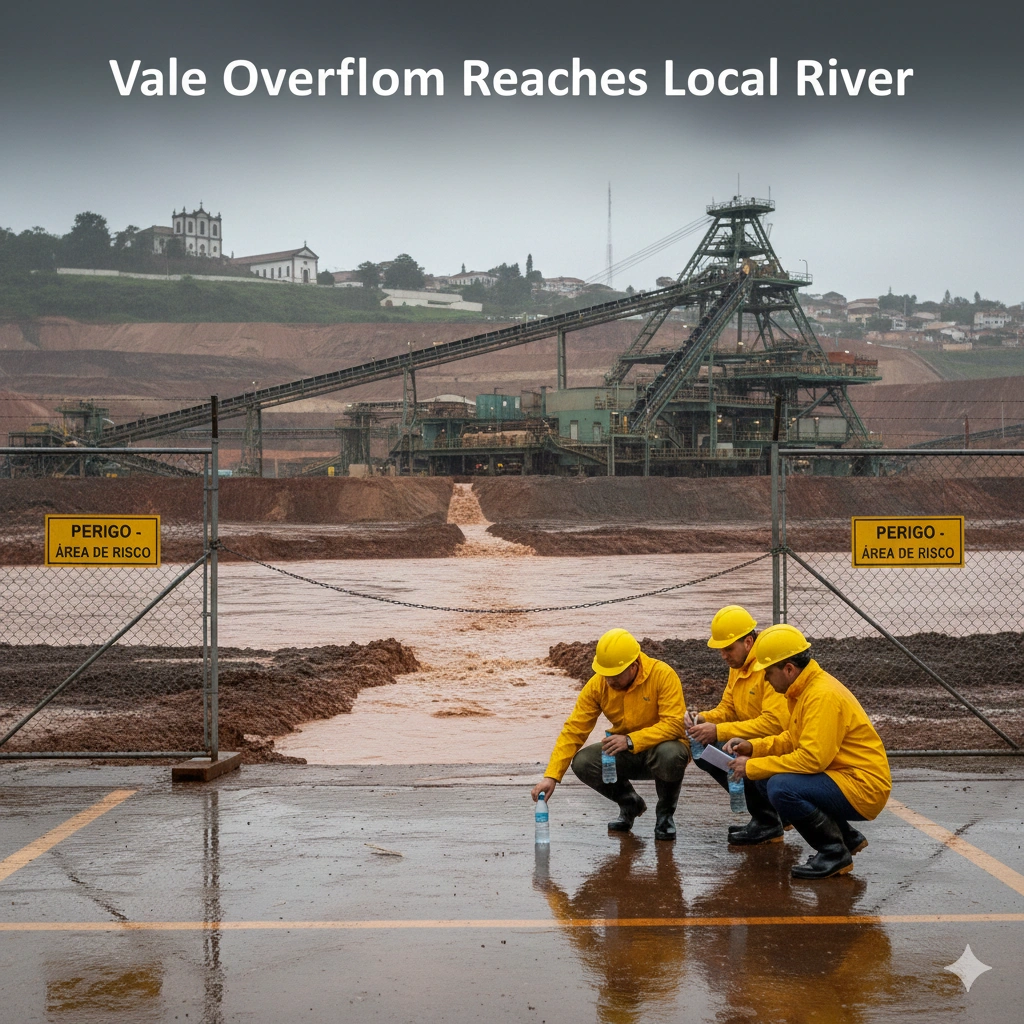
Heavy Rain Triggers Environmental Damage in Minas Gerais
According to the Minas Gerais state government, unusually intense rainfall led to water overflowing from Vale’s mining pits on Sunday. The runoff reached the Maranhao River, a key local waterway, prompting authorities to formally cite environmental harm.
State officials confirmed that the incident was not isolated. Flooding was also reported at a nearby site owned by Brazilian steelmaker CSN, highlighting the broader impact of extreme weather on mining infrastructure in the region.
While Vale did not immediately respond to the government’s latest statement, the company had previously said that local communities were not affected and emphasized that the incident was not related to its tailings dams.
Vale Ordered to Act After Emergency Cleanup and Recovery Plan Mandated
In response to the incident, Minas Gerais authorities moved quickly, issuing a series of directives aimed at minimizing environmental damage and restoring the affected ecosystem.
Vale has been ordered to:
- Carry out immediate cleanup operations in the affected area
- Monitor water quality in the Maranhao River
- Submit a comprehensive environmental recovery plan
- Restore the impacted waterway to acceptable ecological standards
The recovery plan will be reviewed by state environmental agencies and is expected to outline both short-term remediation steps and long-term monitoring measures.
Vale Denies Community Impact, Distances Incident from Dams
Vale ordered to act has maintained that the overflow did not affect nearby communities and stressed that the event was unrelated to its tailings dams — a critical distinction given Brazil’s troubled history with mining disasters.
The company has faced intense public and regulatory scrutiny since the 2019 Brumadinho dam collapse, which killed approximately 270 people and remains one of the deadliest industrial disasters in Brazil’s history, a backdrop that continues to shape why Vale ordered to act carries heightened public attention today.
Although the current incident did not involve a dam failure, its timing — occurring on the anniversary of the Brumadinho disaster — has further intensified public sensitivity around mining safety and environmental responsibility, reinforcing why Vale ordered to act has become a key focus for regulators and environmental authorities.
Mining Safety Under Renewed Scrutiny
Environmental groups and analysts say the overflow underscores the vulnerability of mining operations to extreme weather events, which are becoming more frequent due to climate change.
Minas Gerais, home to some of Brazil’s largest mining operations, has implemented stricter oversight since 2019. However, incidents like this raise questions about whether current safeguards are sufficient to prevent pollution during periods of heavy rainfall.
Experts note that even non-dam-related incidents can cause significant environmental harm if water management systems are overwhelmed.
Broader Impact on Brazil’s Mining Sector
The incident could have broader implications for Brazil’s mining industry, which plays a crucial role in the country’s economy. Vale, one of the world’s largest iron ore producers, is closely watched by regulators, investors, and environmental watchdogs.
Any findings of negligence or inadequate infrastructure could lead to:
- Regulatory penalties
- Operational restrictions
- Increased environmental compliance costs
- Reputational damage
While no fines have yet been announced, authorities said further action would depend on the outcome of ongoing monitoring and Vale’s compliance with recovery requirements.
Conclusion
As Vale ordered to act following the mine-water overflow into the Maranhao River, the incident serves as a reminder of the environmental risks tied to large-scale mining operations—especially in regions prone to extreme weather.
Although officials say communities were not affected and no tailings dams were involved, the environmental damage has reignited concerns about water management, climate resilience, and mining oversight in Brazil.
The coming weeks will be critical as regulators assess Vale’s cleanup efforts and recovery plan, determining whether further enforcement action is necessary.
For more details & sources visit: Reuters
For more regional updates and industry insights, visit our Brazil News Page.