
The Turkey interest rate cut to 37% on January 22, 2026, surprised markets, signaling a cautious approach by the central bank amid persistent inflation pressures. This 100-basis-point reduction is the fifth consecutive cut since last summer, reflecting a careful balance between supporting growth and containing price increases in key sectors such as food and housing.
Despite expectations for a deeper easing, the central bank opted for a measured adjustment, citing volatile January price trends, wage increases averaging 27%, and continuing inflation risks. December’s annual inflation eased slightly to 30.9%, but analysts warn that early 2026 data could create turbulence in consumer prices, challenging the central bank’s disinflation targets.
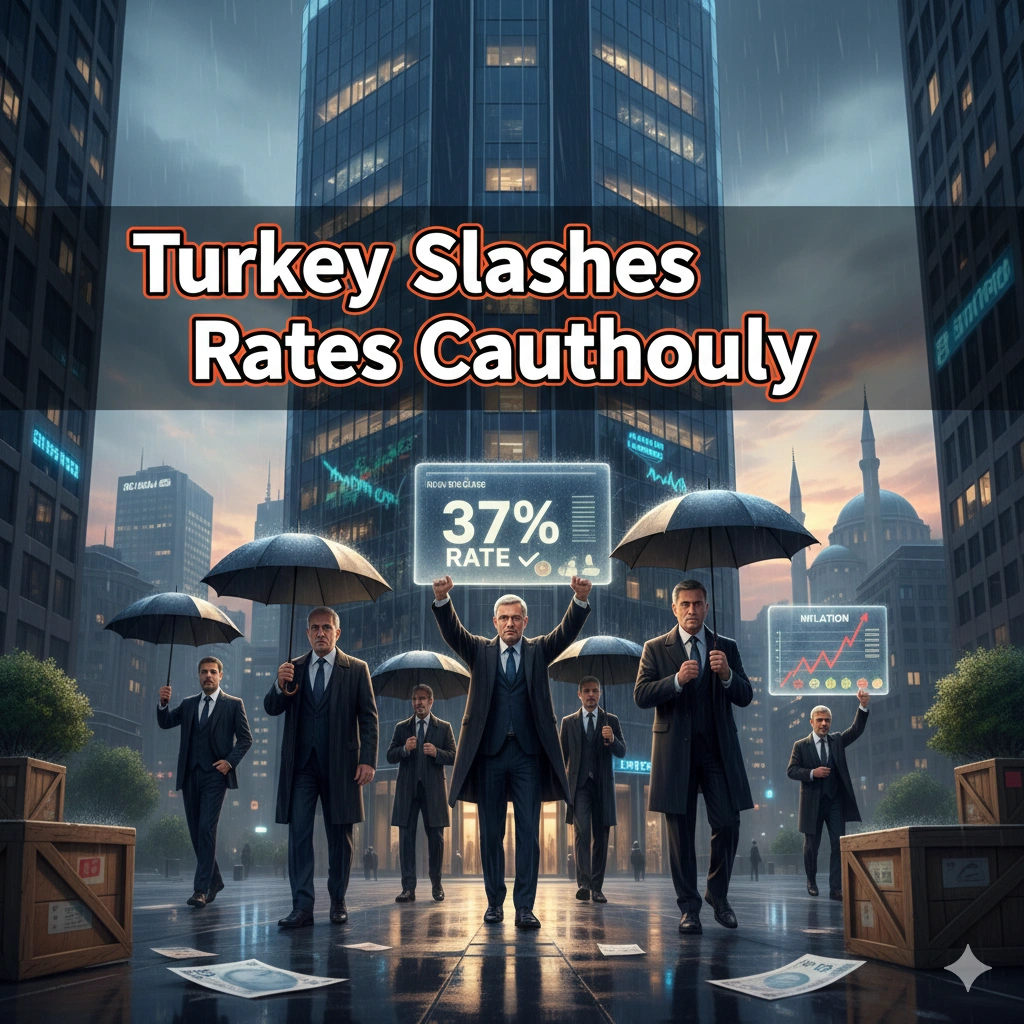
Inflation Trends and Policy Implications
Since July 2025, the total easing amounts to 900 basis points, following a period when rates were held at 50% through 2024 to counter extreme inflation. The central bank projects a year-end inflation range of 13–19%, but skepticism remains as food prices, energy costs, and wage growth continue to pressure households.
President Erdogan has supported lower interest rates to boost consumption, ease rent and food costs, and stimulate domestic growth. However, exporters warn that too aggressive easing could jeopardize Turkey’s $282 billion export target, particularly in volatile global markets.
Market Reactions
Markets reacted cautiously. The Turkish lira depreciated slightly, while government bond yields fluctuated amid uncertainty over inflation control. Leading indicators suggest moderating demand, aided by late-2025 slowdowns, but investors remain concerned about achieving projected year-end inflation.
Economists note that the central bank’s modest 100-basis-point cut signals a shift from aggressive easing to data-driven, cautious policy, likely continuing gradually based on economic performance, inflation metrics, and currency stability.
Outlook for Turkey’s Monetary Policy
The Turkey interest rate cut underscores the central bank’s challenge: promoting growth while controlling persistent inflation. Policymakers are expected to continue incremental rate adjustments, closely monitoring core inflation, wage pressures, and currency trends.
Structural reforms, fiscal discipline, and careful monetary calibration will be crucial for long-term price stability. Analysts suggest that gradual easing, combined with targeted government support for households and exporters, may help balance growth objectives with the need to tame inflation in a volatile emerging market environment.
This cautious approach shows Turkey’s commitment to gradual disinflation, signaling to markets and citizens alike that monetary policy will prioritize stability while still responding to domestic economic pressures.
For more news, visit 360 News Orbit